Swedish Poultry Farm Uses FlowDrya to Produce Biochar
Kisebo Lantbruk AB, a family run poultry farm in Sweden, are demonstrating how biochar technology can be employed to support sustainability in farming while delivering significant added revenue.
By combining their biochar reactor with FlowDrya equipment, the farm co-generates renewable heat for poultry houses on-farm, while producing high-quality biochar for soil improvement, diversifying their revenue streams.
Sweden’s long-standing leadership in renewable energy, forestry, and circular bioeconomy solutions has made farms like Kisebo examples of how waste heat can be transformed into value. Supported by government programs such as the Climate Leap investment scheme, farms are increasingly turning to biochar and heat-recovery technologies to reduce emissions and boost profitability.
Biomacon 400 pyrolysis reactor at Kisebo Lantbruk AB, Sweden
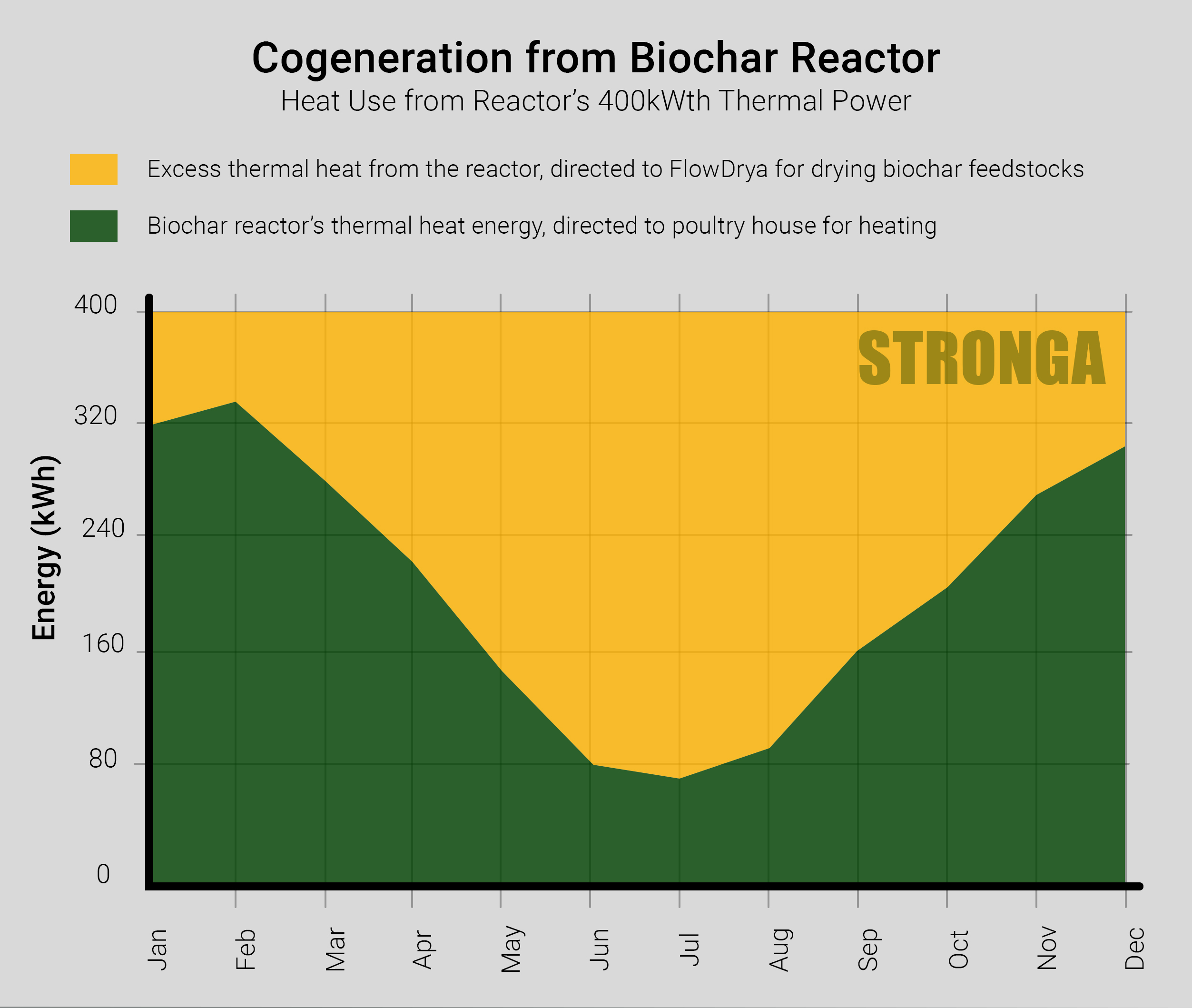
Kisebo raises 250,000 broiler chickens in Lammergarden, where stable heating is essential — especially during early chick development and Sweden’s cold winters. Their Biomacon 400 reactor provides up to 400kWth of hot water at 90°C year-round. While part of this heat warms the poultry houses, seasonal demand fluctuates, leaving large amounts of unused thermal energy.
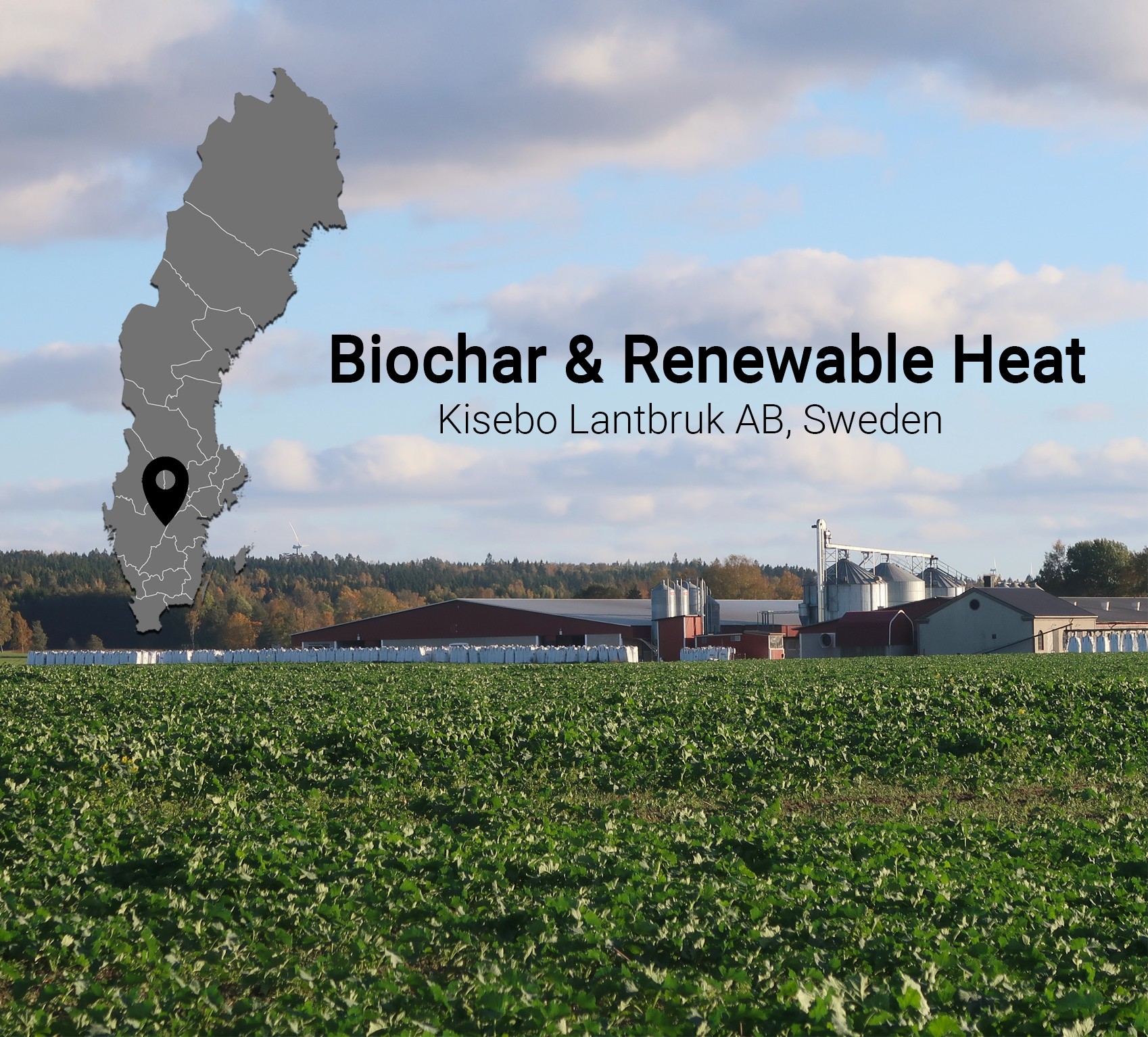
Biochar & Renewable Heat - Kisebo Lantbruk AB, Sweden
Turning Residual Heat into Energy & Biochar Revenue with FlowDrya
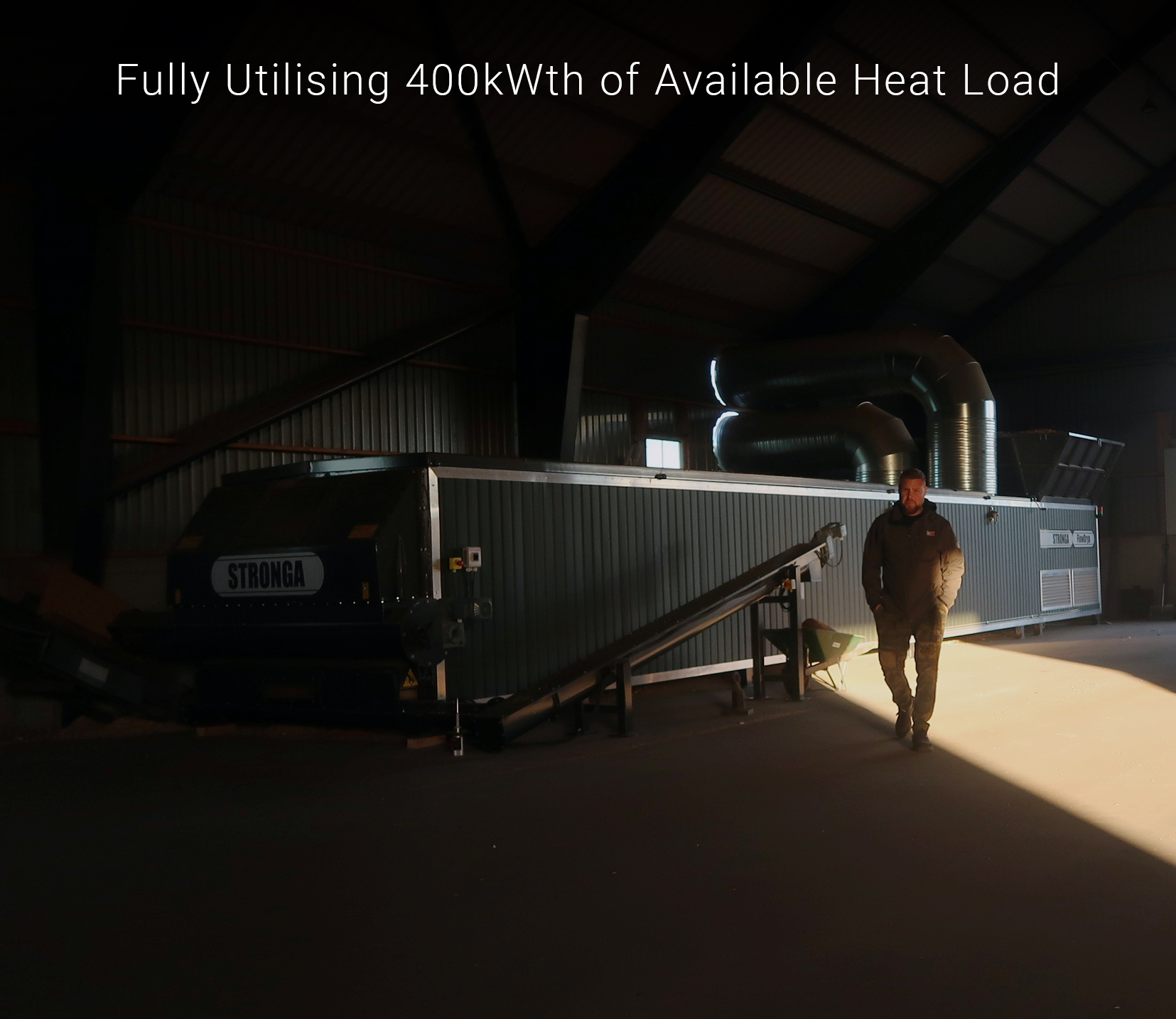
FlowDrya integrates seamlessly with the reactor to ensure complete heat utilisation. When heating demand is low — especially in summer — the full 400kWth is diverted to drying FSC-certified pine woodchips. This creates a stable, low-moisture feedstock for efficient pyrolysis.
Compared to the farm’s previous container-based dryer, which required 3–4 days and more intensive labour, FlowDrya is up to three times more efficient, maximising throughput, reliability and operational cost savings.
This dual-purpose process has increased the energy security and financial stability of the farm, allowing Kisebo to diversify their income streams and add further growth opportunities.
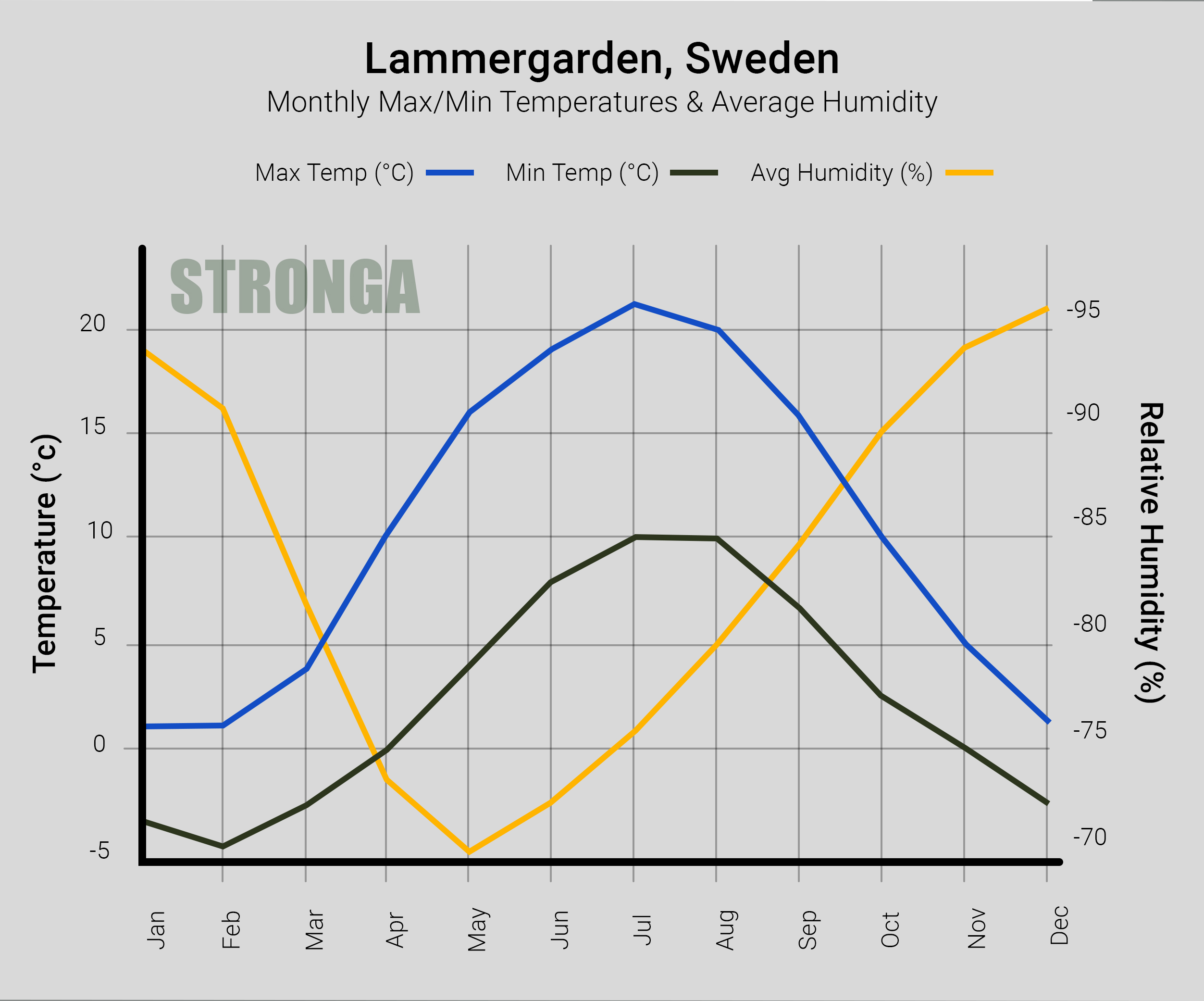
Lammergarden, Sweden - Monthly Max/Min Temperatures & Average Humidity
Co-generation possibility from biochar reactor on Kisebo site
Please note that heat use varies according to weather conditions and poultry growth cycle. Our team are experienced in allocating energy where required. Please talk to our team for bespoke wood-chip drying advice.
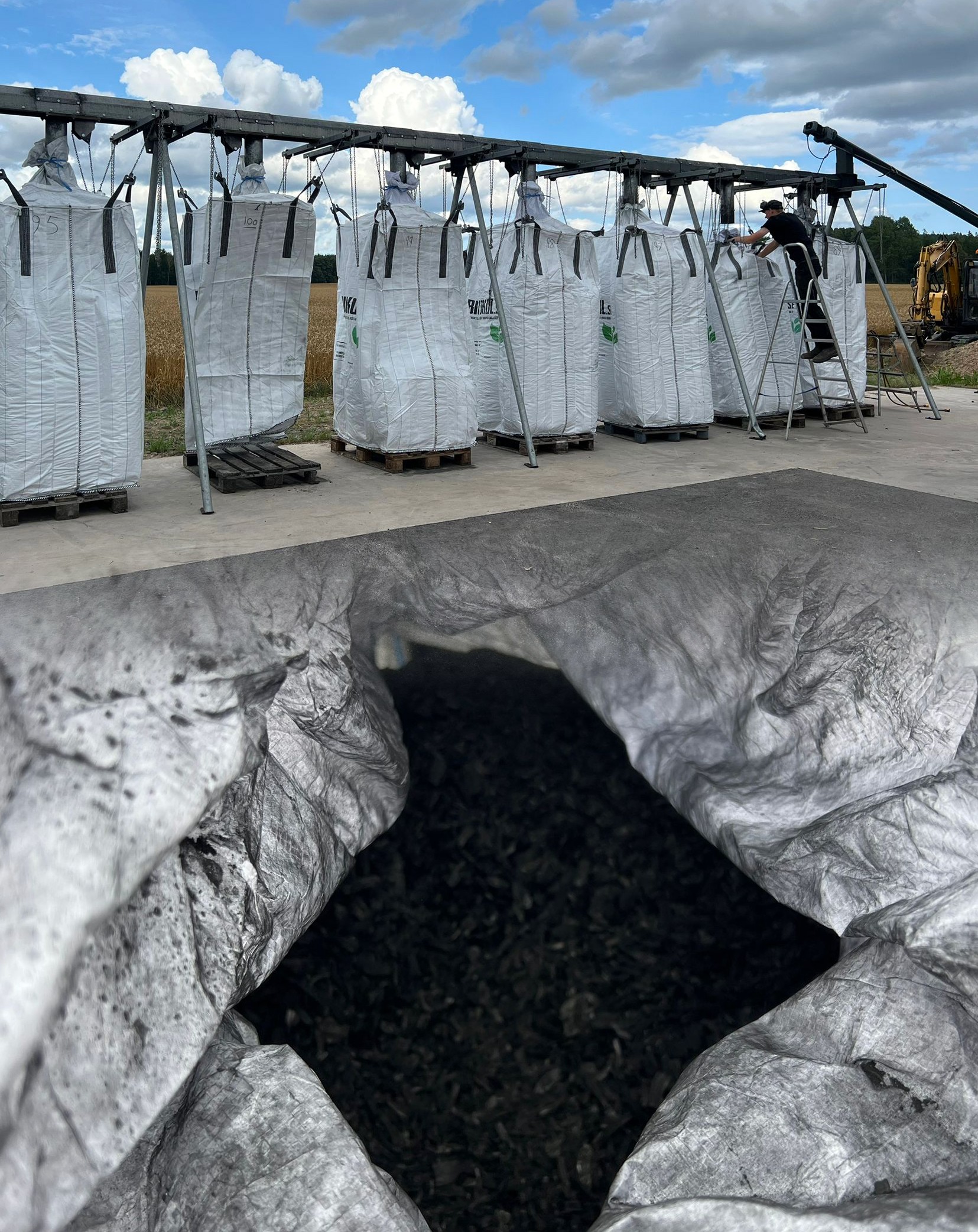
Stronga wood chip dryer - Kisebo Lantbruk AB, Sweden
Benefits of On-Site Energy Supply
Kisebo’s closed-loop approach unlocks several long-term benefits:
| Benefit | Impact |
|---|---|
| Energy independence & security | Heating chicken houses using on-farm biochar reactor energy supply, reduces reliance on LPG, natural gas or fossil fuels – ensuring stable energy supply. |
| Cost stability | Predictable fuel costs, locally sourced woodchips avoid the volatility of the fossil fuel market. |
| Waste management | Circular farm system and operational control. |
| Carbon credits | Producing biochar from sustainably sourced woodchips sequesters carbon, allowing the farm to earn carbon credits and additional revenue. |
| Biochar revenue | High-quality biochar can be sold as a soil amendment, fertiliser or carbon-rich product. |
| Cost savings from heat source | Using residual heat from the biochar reactor cuts fuel costs compared to traditional heating. |
| Sustainable branding | FSC-certified local woodchips enhance the farm's sustainability credentials. |
| Waste utilisation | Local woodchip residues are converted into energy and biochar, minimising waste and maximising resource efficiency. |
| Climate resilience & sustainability | Diversifying energy sources and generating carbon revenue reduces financial vulnerability to fuel price fluctuations. |
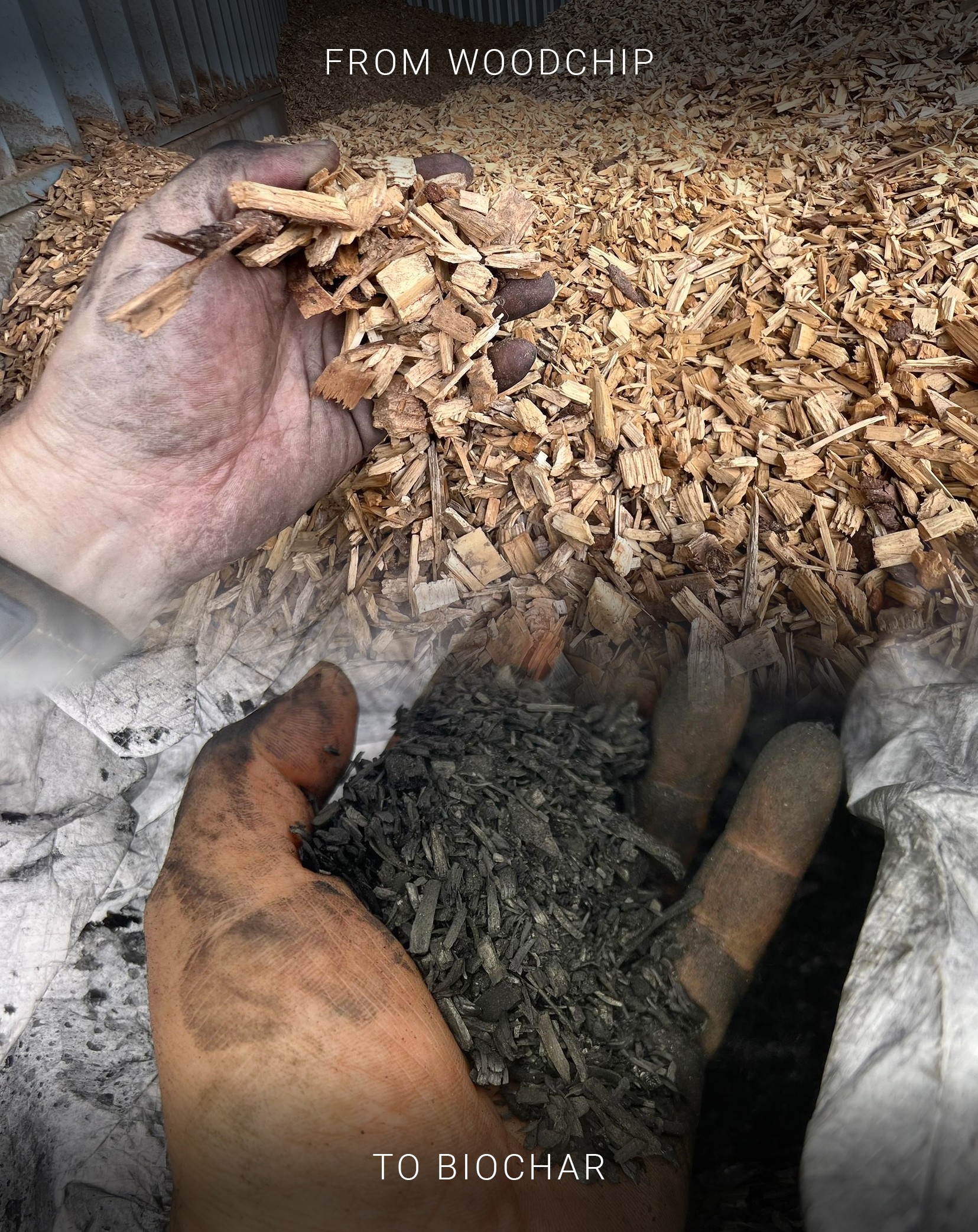
Biochar product produced as a result of woodchip drying and pyrolysis
Benefits of Using FlowDrya for Biochar Production
Dry woodchips dramatically improve pyrolysis efficiency and the quality of the resulting biochar.
| Category | Benefit | Impact |
|---|---|---|
| Biochar yield | Higher biochar yield per ton of woodchip | Dried woodchips have lower moisture content – more biomass converts to biochar and less energy is wasted as evaporation. |
| Carbon quality | Higher fixed carbon content | Drying reduces energy spent on evaporation and increases the carbon concentration of biochar. |
| Chemical properties | Increased cation exchange capacity | Dry woodchip produces biochar with better surface chemistry, nutrient retention and soil fertility. |
| Reactor efficiency | More efficient combustion and pyrolysis | Drier woodchips ignite and pyrolyse more predictability – improving heat generation. |
| Storage & handling | Easier transport and storage | Dried woodchips are less prone to mould and are easier to store on site. |
| Environmental impact | Lower greenhouse gas emissions | Efficient pyrolysis of dry wood reduces incomplete combustion byproducts like methane and tars. |
| Consistency | More uniform biochar quality | Dry feedstock reduces variability in biochar properties = consistent carbon content, pH and nutrient retention. |
| Energy output | Better heat recovery | Reduced moisture allows the reactor to convert more energy into usable heat for other heating applications. |
Benefits of Duality for FlowDrya Integration + Biomacon 400
- Co-generative business case: Flexible synergy between poultry and drying heat requirements.
- Carbon and biochar revenue: Access to new agri-markets and carbon positive credit schemes.
- Poultry performance: Biochar can be used as a bio-fertiliser and for odour reduction within the poultry sector – reducing ammonia and pathogens in litter, improving the house environment.
With the FlowDrya system scaled to Kisebo’s heat availability, the farm now runs an integrated, multi-output energy system that delivers heating, drying, and biochar production in one synergistic loop. Stronga’s engineering team designed the dryer to balance heat between primary use (poultry houses) and secondary use (woodchip drying), ensuring total heat utilisation throughout the year.
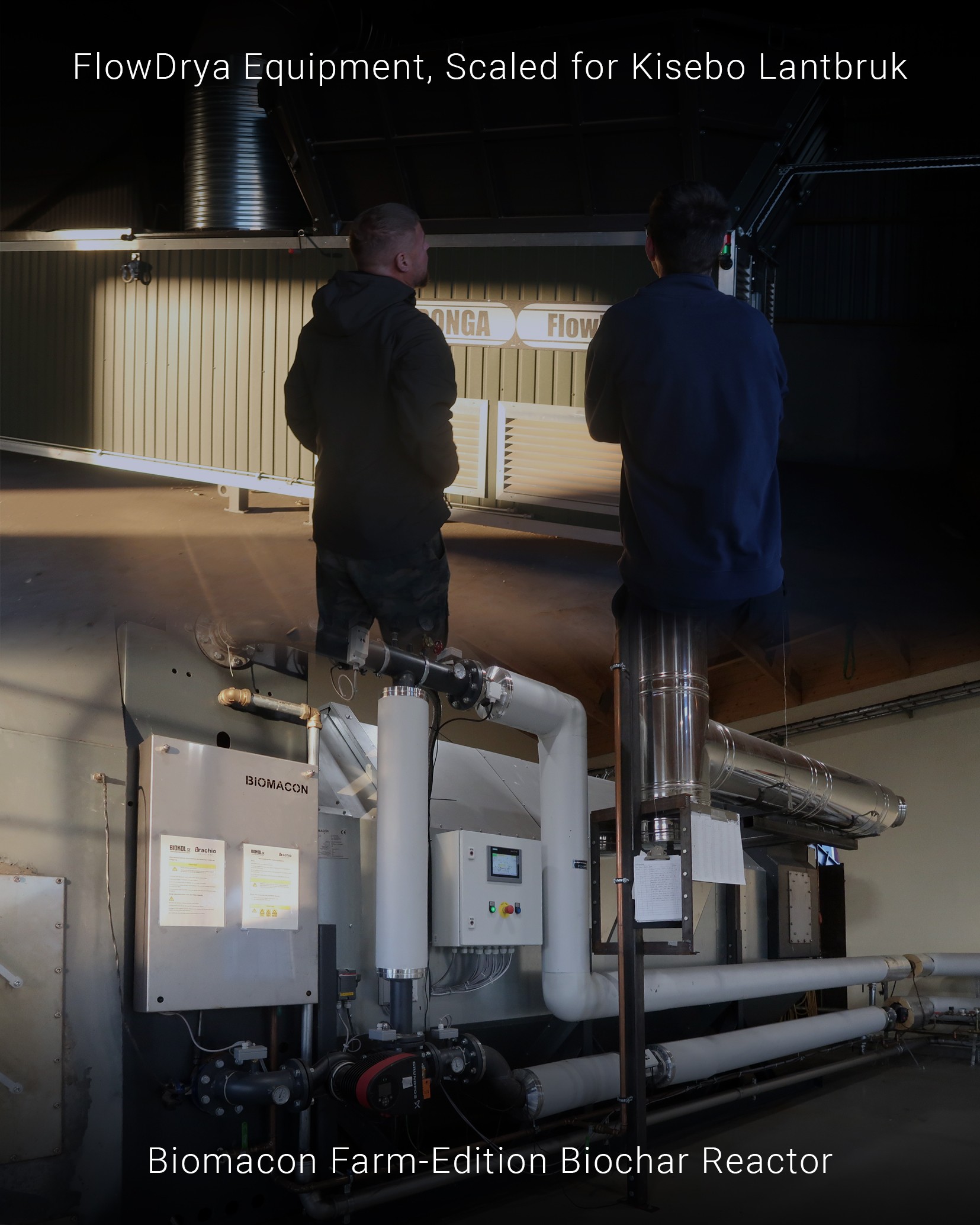
From Woodchip to Biochar - The integrated FlowDrya and Biomacon 400 system