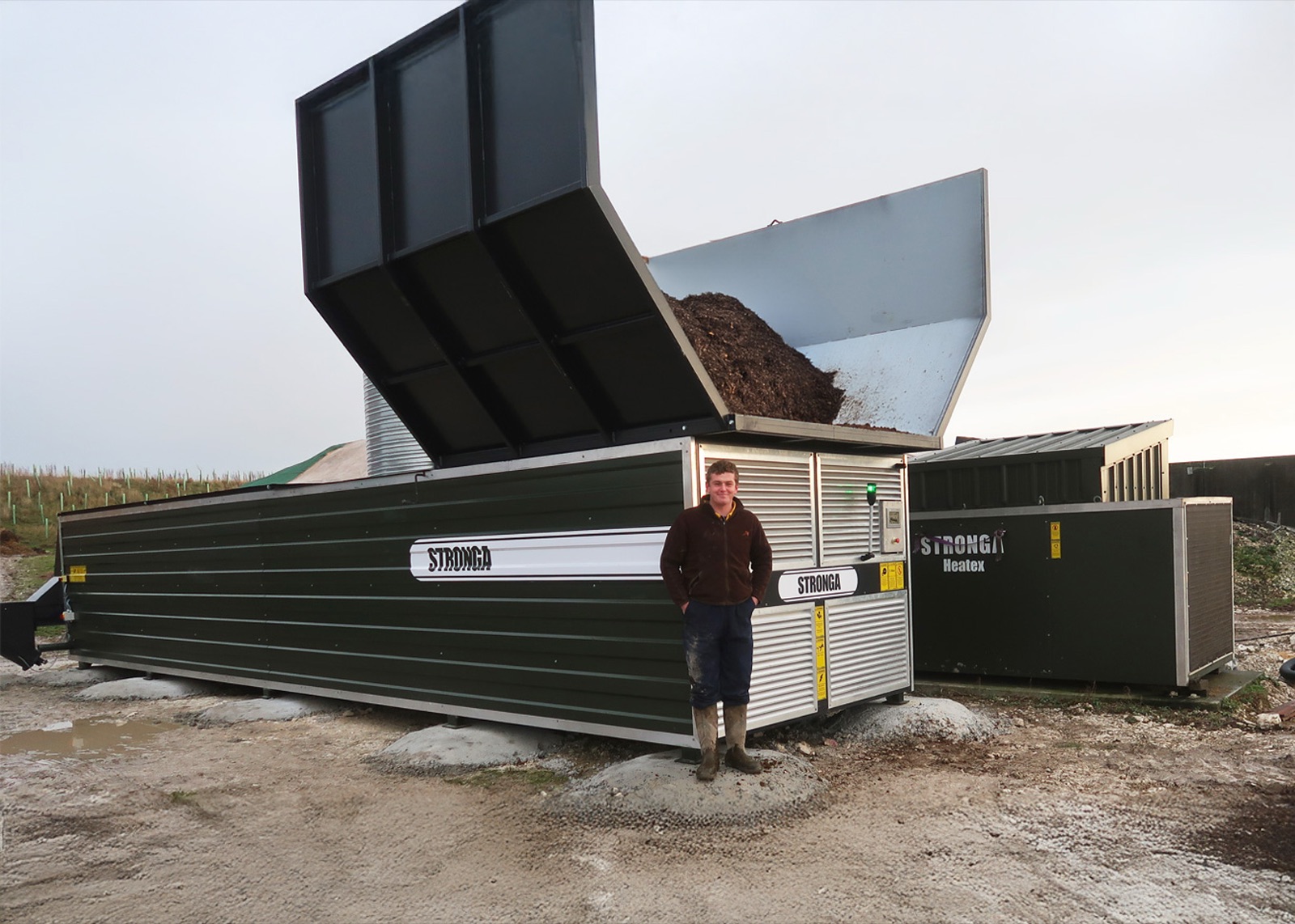
Drying Poultry Manure
By transforming nutrient-rich poultry manure into valuable output, poultry farmers have the opportunity to avoid disposal costs and remove the uncertainty that comes with managing wet manure waste. Drying is the solution. FlowDrya equipment offers a simple process which increases market value of manure, improves stability, and converts liability into marketable output.
FlowDrya is a reliable, stainless-steel dryer designed to transform odorous poultry manure, often seen as costly and difficult to dispose of, into a commercial bio-fertiliser that offers genuine added value. The FlowDrya team like adding value and only take on projects where we can genuinely do that – not just economically but operationally. We know the components of a successful partnership include clear communication, shared goals, and mutual trust, which help improve coordination and overall efficiency. Let us help reduce your raw manure disposal costs and increase your market resilience.
Overcoming the Issues of Wet Poultry Manure
The global poultry market is large and growing. As a by-product of the sector, wet poultry manure brings significant challenges for farmers, including high disposal costs, strong ammonia and odour emissions, pathogens (salmonella) and manure leaching (water pollution in water courses). The table below details the key reasons why poultry farmers are increasingly investing in poultry manure drying equipment.
| Risk | If Manure Isn’t Dried… | Impact |
|---|---|---|
| Nitrate leaching to groundwater | Significantly increased leaching as soluble nitrates move more easily through soil | Long-term water contamination; breaches regulations → heavy fines, mandatory remediation, possible loss of land use |
| Surface water pollution (runoff) | Much higher runoff risk during rainfall; nutrients and pathogens easily washed into waterways | Immediate environmental damage; can trigger inspections, fines, and cleanup costs for farmer |
| Pathogen spread (e.g. Salmonella in wet manure) | Pathogens survive longer and multiply in moist conditions, increasing infection risk and risk of mould | Biosecurity breach; flock infection → production losses, culling, and potential market restrictions |
| Non-compliance with manure storage regulations | Higher likelihood of breaching storage standards due to excess liquid and poor containment | Direct penalties: fines, loss of subsidies (e.g. farm basic payments), legal action, loss of permits and reputational damage |
| Excess nitrogen / nitrate waste mismanagement | Greater nitrogen losses through leaching and volatilisation variability | Violates nutrient management/NVZ rules → fines, restrictions on spreading, increased oversight and imbalance |
| Ammonia emissions | Higher ammonia release from moist decomposition and microbial activity | May breach air quality standards → regulatory pressure, requirement for costly mitigation measures, nuisance complaints |
| Disease spread via pests (flies, vermin) | Wet manure attracts more flies and vermin, increasing disease transmission risk | Poor management may fail assurance schemes → loss of contracts with buyers/processors |
| Odour pollution | Stronger and more persistent odours from anaerobic decomposition | Complaints can lead to investigations and enforcement notices; potential legal disputes |
| Nutrient loss (economic loss) | Faster nutrient degradation and loss, reducing manure value + evaporation of key nutrients | Reduced fertiliser value → higher input costs for farmer and loss of economic return |
| Storage & compliance infrastructure costs | Increased need for containment systems due to liquid management issues | High upfront investment to meet legal standards (covers, concrete pads, drainage systems) |
| Poor siting of heaps | Wet material spreads and drains more easily, increasing off-site contamination risk | If near watercourses → direct breach of regulations → fines, forced relocation, possible prosecution, legal penalties and environmental damage |
| Transport costs | Heavier material due to water content → higher transport cost per tonne of nutrients (layer manure @ 65% MC = 875kg/m³) | Increased operational expenses |
Utilising Warm Poultry-House Air
FlowDrya represents an effective and simple drying solution to the above problems, eliminating disposal costs and instead allowing farmers to profit from dry manure. The FlowDrya team work hard alongside each customer to make the manure drying process as efficient as possible. This includes utilising, where possible, warm poultry-house air in the dryer as a circular, energy-efficient residual heat source.
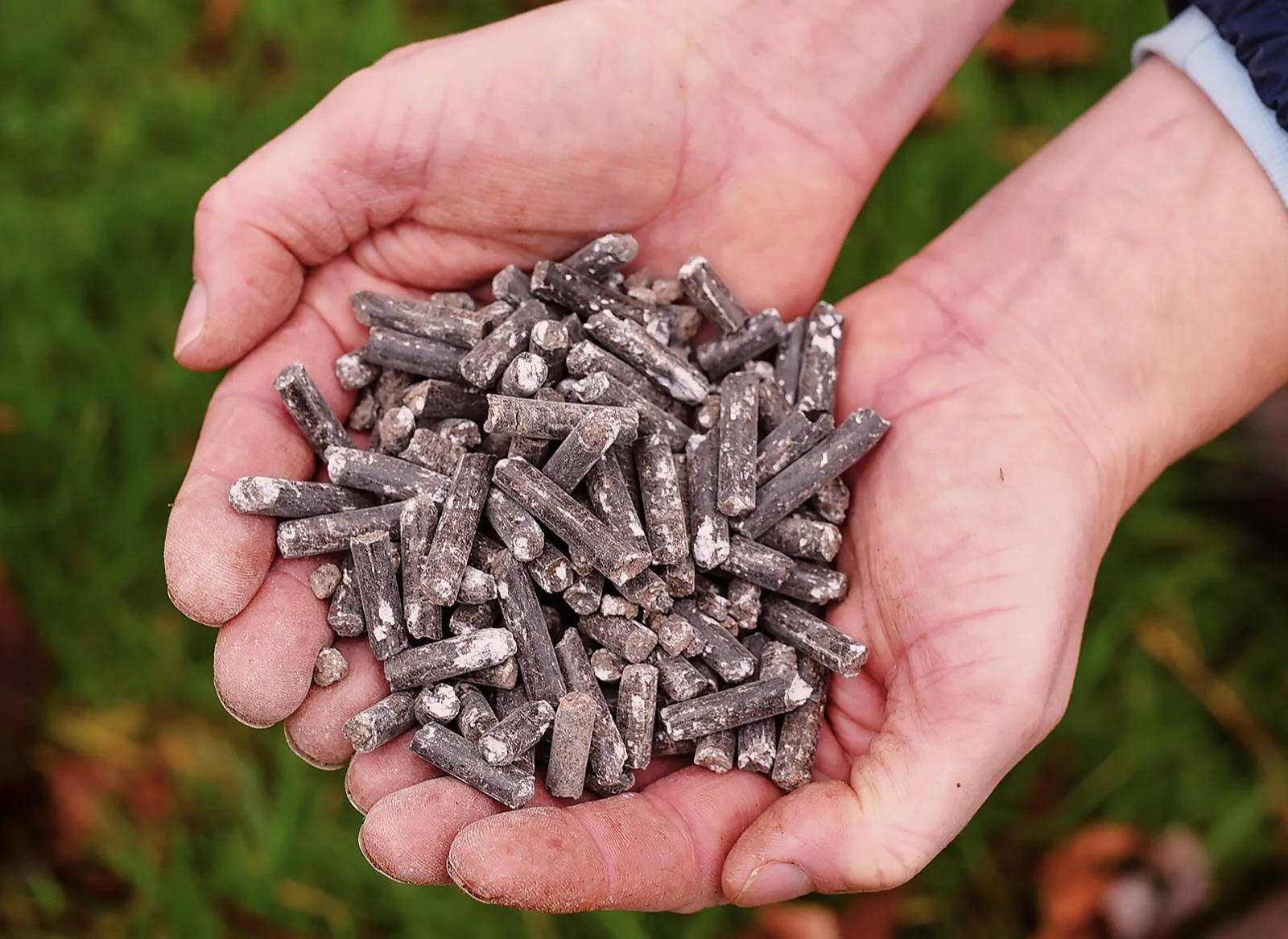
Organic Bio-Fertiliser Pellets
Poultry manure drying represents an excellent opportunity for farms with no arable land onsite, giving them a chance to profit from manure rather than pay high penalties for disposal.
FlowDrya also enables regenerative farmers, who are spreading the organic nutrient-rich bio-fertiliser on their land, to reduce expensive and volatile chemical fertiliser costs, including liquid nitrogen, urea etc. Drying to below 12% moisture content also enables the production of high-quality and durable pellets in line with heat treatment requirements (70°C for 1 hour), enabling the sale of organic bio-fertiliser pellets at high prices.
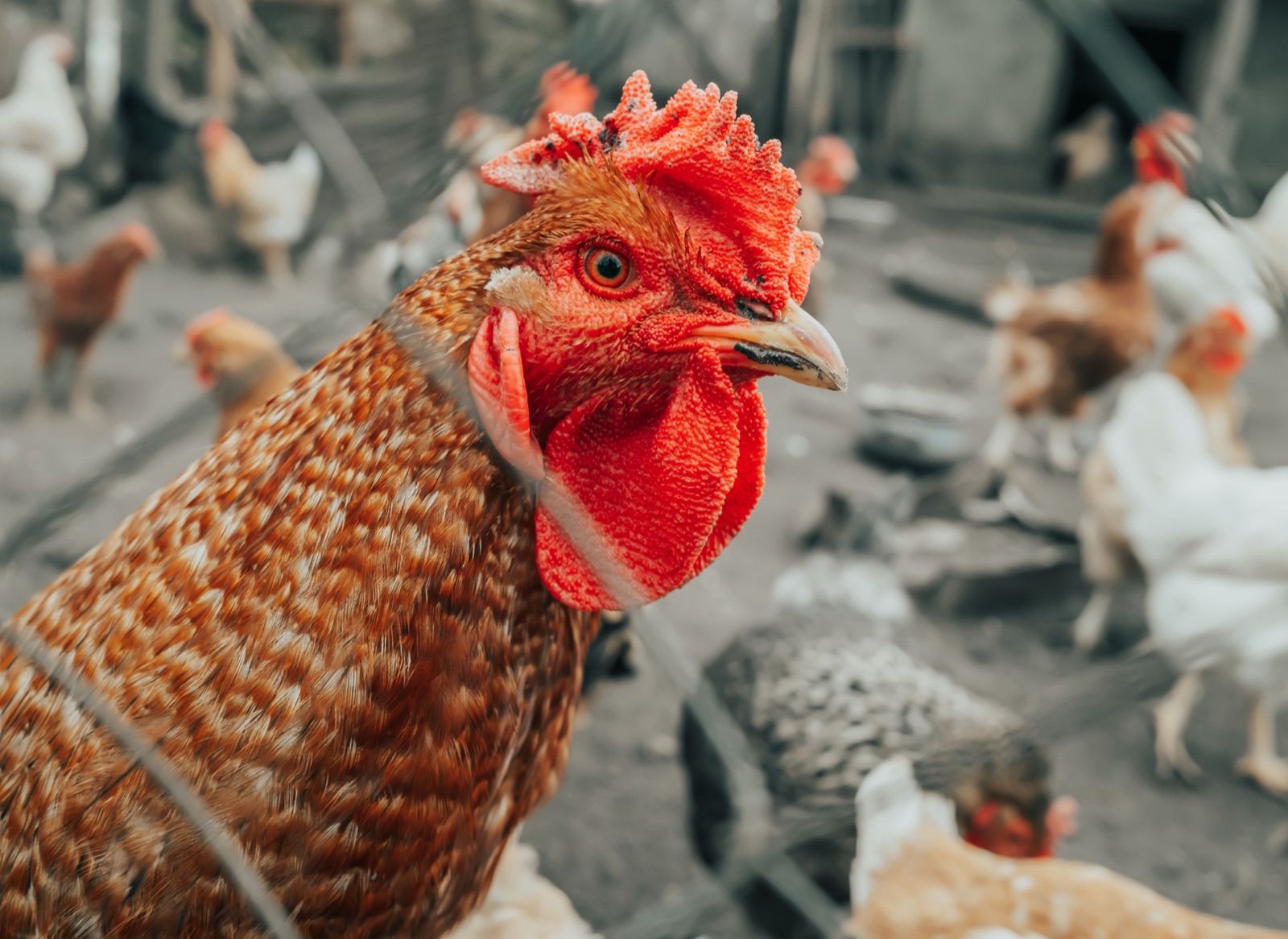
The Main Applications for Dry Poultry Manure
Although there is potential for dried poultry manure (<15% MC) to be converted into renewable energy via combustion, the highest-value application is as a slow-release, nutrient-rich, highly concentrated bio-fertiliser, improving soil structure, water retention and aeration in soil.
Flow drying concentrates the nutrients in manure by reducing water and dilution, increasing the solid nutrient available to soil and crops. The chart below indicates the value of drying on nutrient availability. The nutrient content (kg per tonne) of poultry manure changes at different moisture levels (dry matter %).
Poultry Manure Nutrient Content (kg per tonne)
| Nutrient (kg/t) | Dried Poultry Manure (70% DM) | Fresh Poultry Manure (25% DM) |
|---|---|---|
| Nitrogen (N) | 32.0 | 17.0 |
| Phosphate (P2O5) | 27.7 | 11.4 |
| Potassium (K2O) | 22.8 | 10.0 |
| Calcium (CaO) | 63.0 | 30.0 |
| Magnesium (MgO) | 20.6 | 5.7 |
Chamber of Agriculture of North Rhine-Westphalia, Germany.
As well as increasing the concentration of beneficial nutrients in poultry manure, FlowDrya also transforms the wet material into a drier, spreadable, commercial product. Reducing the moisture content of manure down to <12% converts problematic waste into stable commodity. Farmers can package, store and sell the fertiliser all year round, or pellet the dry manure, increasing density while reducing volume.

“So simple. So reliable. All the benefits and more of a rotary dryer, but without any of the negatives.”
FlowDrya is leading manure drying technology, helping to deliver stunning long-term financial value to poultry farms. The triple-deck design is well-equipped to deal with poultry manure, while the deep-cycle compact design and unique PulseWave™ agitation ensure each load is thoroughly dried via the perforated drying floor. Optimised for manure with anti-corrosion stainless steel and a robust design, FlowDrya is designed to handle large volumes of poultry manure over many years of operation. The optional bio-carbon filter reduces ammonia emissions, all in all making FlowDrya the complete poultry manure dryer.
To discuss the features of the FlowDrya suited to characteristics of manure, speak to our team ›
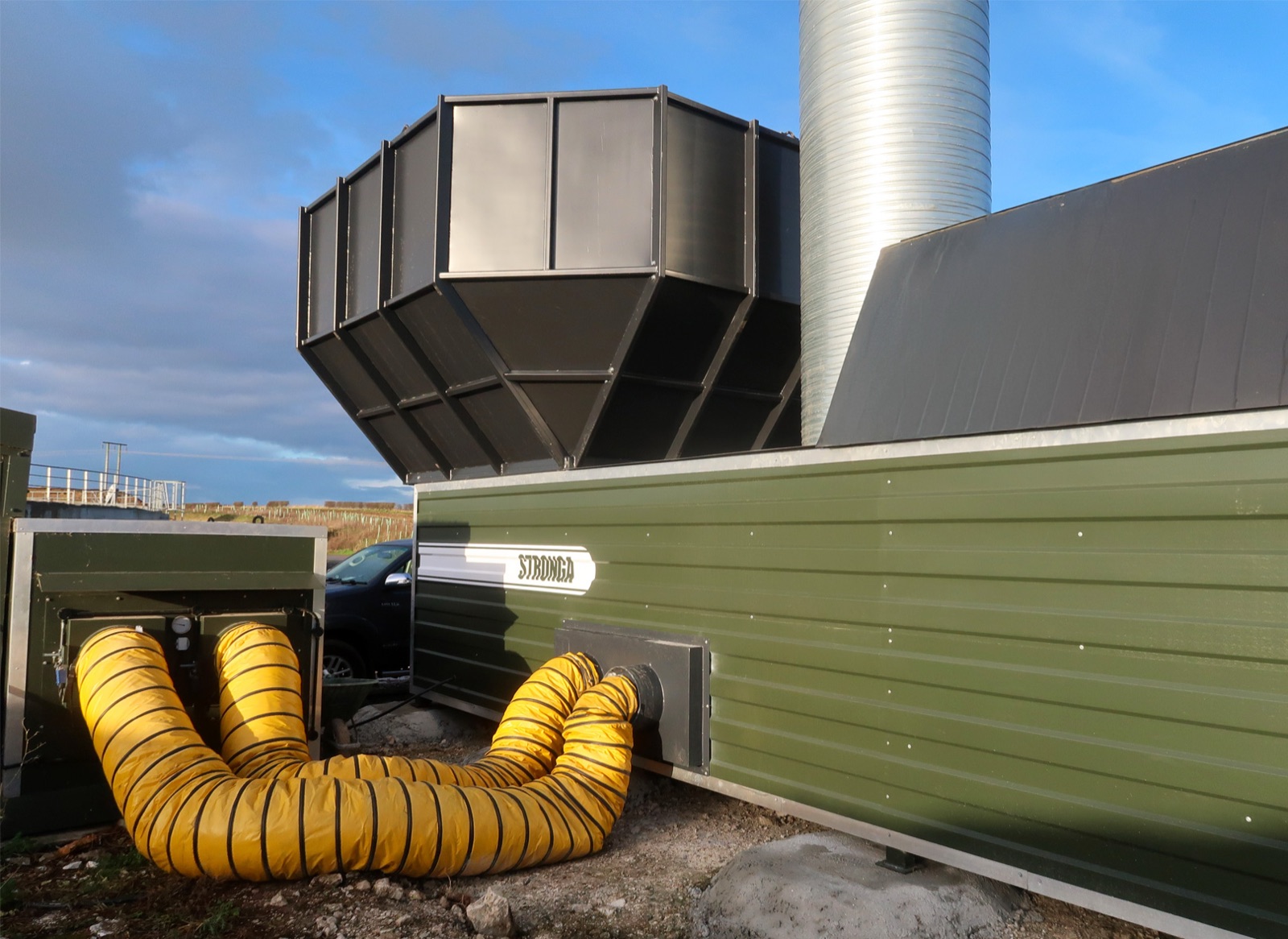
The world’s leading poultry manure dryer, FlowDrya offers a whole host of benefits for forward-thinking farmers through its extremely well-proven design.
- FlowDrya is able to accept residual heat from poultry houses, reducing ongoing energy expenses
- FlowDrya has super low-energy consumption
- Maintenance requirements are minimal
- FlowDrya offers automatic operation with remote access potential
- No pre-drying or dewatering is required
- Fines dust & debris auger
- Direct, large feed hopper, reducing expensive labour hours
DryStation™ HMI controls – optimising dryer performance

3–4X less electric power required compared to belt dryers

Extremely low service & maintenance requirements
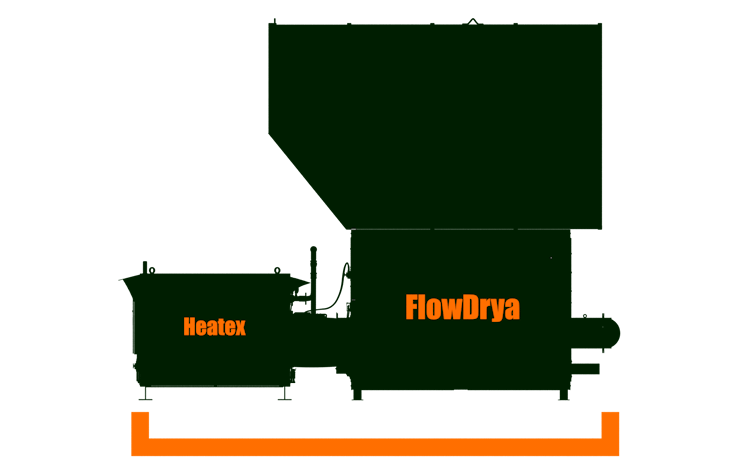
Compact footprint compared to large belt dryers
High throughput drying with deep-bed

PulseWave™ agitation – uniformly dry poultry manure
The FlowDrya team delivers long-life dryers that offer excellent reliability and retain high residual value, which ultimately leads to low ownership costs for our customers.
Through early mistakes; where our dryers failed under real conditions, we gradually learned what actually works in practice. Those setbacks were not wasted; they became the foundation for the drying standards we rely on today, and it is precisely because of that accumulated learning that our current projects achieve consistent and reliable drying success. Fill in the form at the bottom of this page to begin your manure drying project.
Manure Drying FAQs
Drying poultry manure reduces moisture to below 12%, transforming a difficult and costly waste product into a stable, nutrient-rich organic bio-fertiliser. This lowers disposal costs, reduces odour and ammonia emissions, minimises pathogen risks, and significantly increases the commercial value of the manure.
Yes. FlowDrya is designed to utilise warm residual air from poultry houses wherever possible. This circular approach captures otherwise wasted heat, reducing energy consumption and lowering the operating costs of manure drying.
The highest-value use for dried poultry manure is as a concentrated slow-release organic fertiliser. It can be spread directly onto land, bagged for sale, or pelletised into premium organic fertiliser pellets suitable for commercial markets and regenerative farming systems.
Removing water concentrates key nutrients such as nitrogen, phosphate and potassium, increasing the fertiliser value per tonne. Dry manure is lighter, easier to store and transport, and can be sold throughout the year as a marketable commodity rather than treated as a waste disposal problem.
FlowDrya combines a robust stainless-steel construction, low energy consumption, automatic operation and minimal maintenance requirements. Its unique PulseWave™ agitation and triple-deck design provide reliable, uniform drying without the complexity and drawbacks often associated with rotary dryers.
Ready to start your poultry manure drying project?
Our team can help you specify the right FlowDrya system for your poultry operation, throughput requirements and target bio-fertiliser specification.