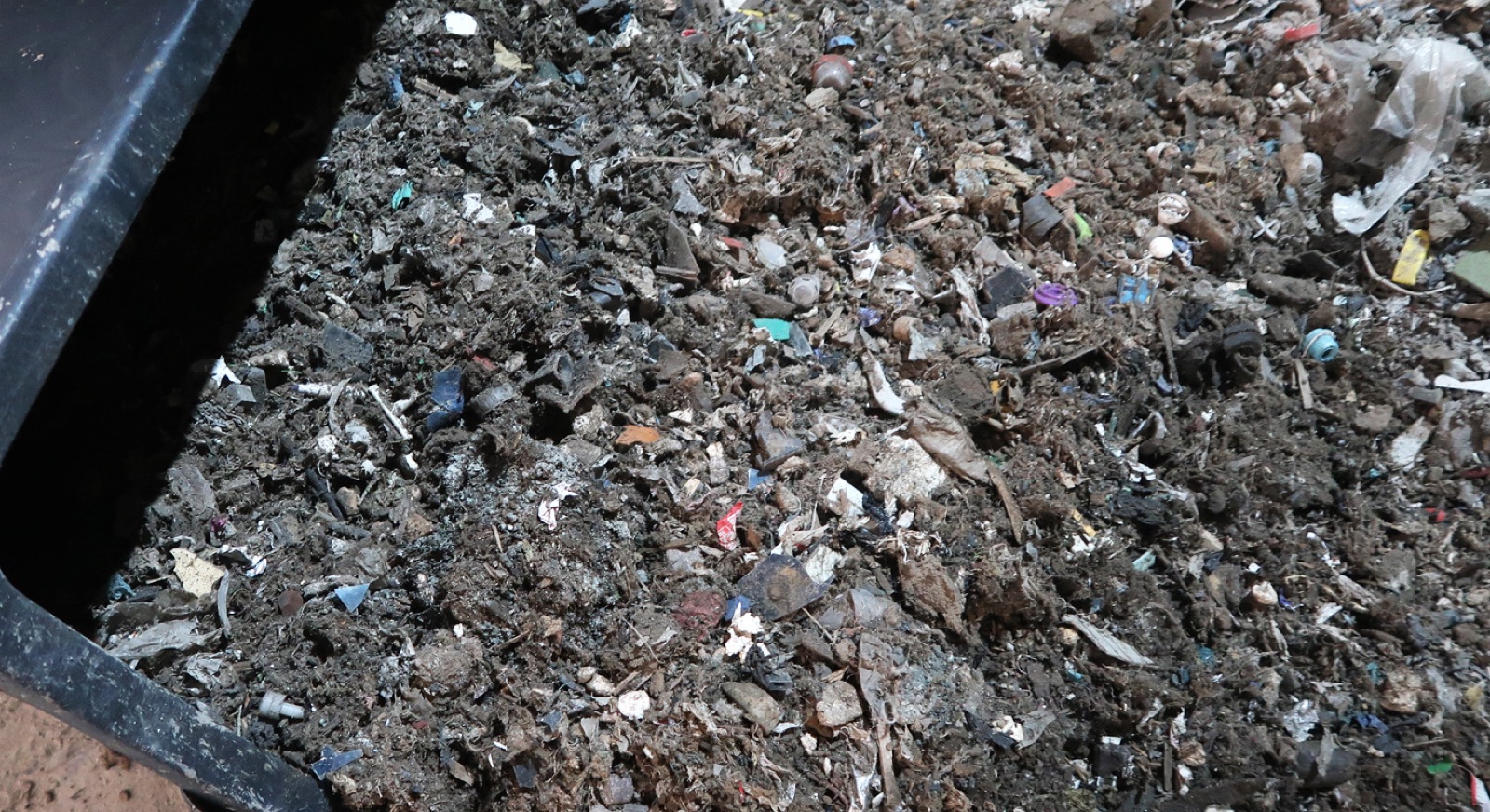
Drying Shredded MSW
Reducing the amount of inert heavy fines and water heading to landfill is high priority for waste recycling companies battling continuously rising landfill disposal costs, high transport fees and volatile fuel costs. If you are paying high prices sending water and heavy inert waste fines to landfill, FlowDrya could offer the solution.
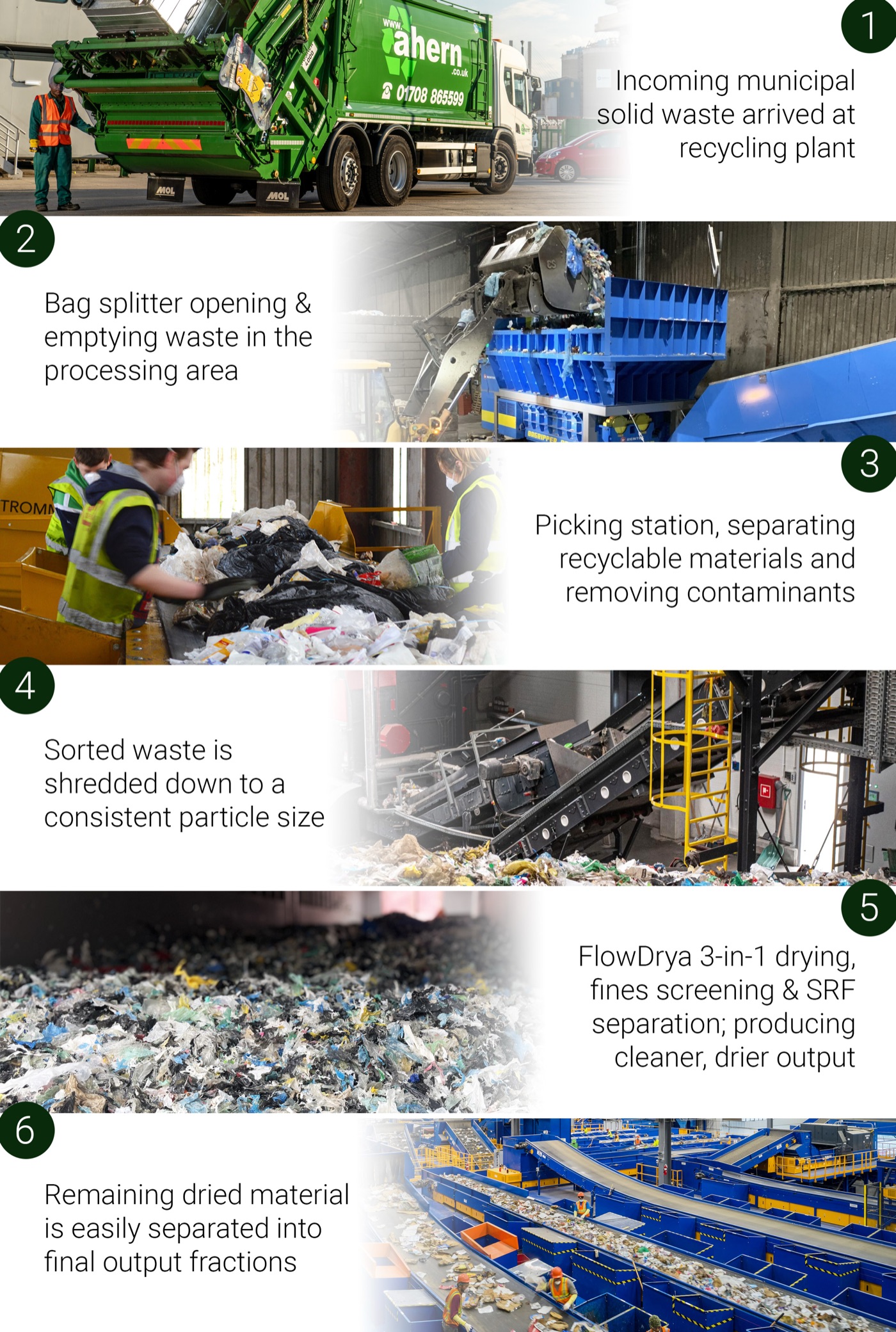
FlowDrya offers a well-proven, 3-in-1 waste sector dryer which is designed to screen heavy inert fines, separate the valuable SRF fraction, and remove moisture from the input shredded MSW material. Each process enhances waste fraction processing efficiency, upgrading the entire separation and recycling process. The image below details the overall waste handling process with the integral drying phase integrated at step 5. Read on to learn more.
Cutting Landfill Costs & Maximising Recovery
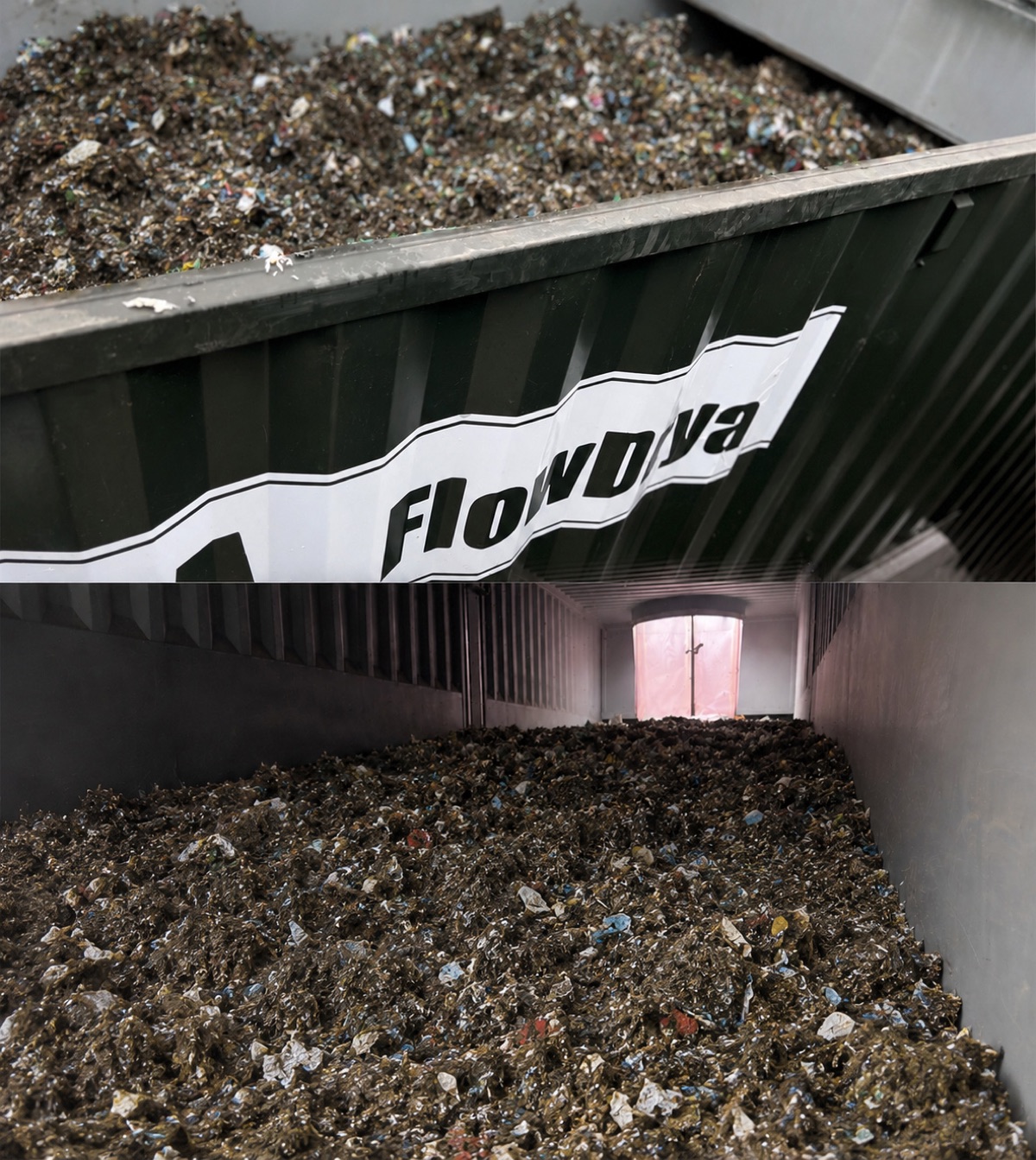
The 3-in-1 Waste-Series FlowDrya reduces the bulk density of shredded waste fractions by evaporating moisture from 35%+ to 15%, while also separating and removing tonnes of 1–5mm heavy soils, stones and grit, further reducing the weight of any remaining dry waste before landfill or trommel separation.
Shredded waste (0–50mm) is dried along the moving floor to the optimal moisture for onward trommel fraction separation, delivering maximum recovery separation of heavy fines and recycled aggregates, with minimal fines travelling over the trommel. FlowDrya therefore directly reduces overall landfill disposal costs because heavy fines often weigh more than water at circa 1,300 kg/m³. Overall, businesses benefit from…
- Avoiding paying landfill taxes and transport costs on water (landfill water tax)
- Maximum valuable fraction separation & minimising residual waste (heavy fines, aggregates, stones etc.)
The Problem with Wet Shredded MSW
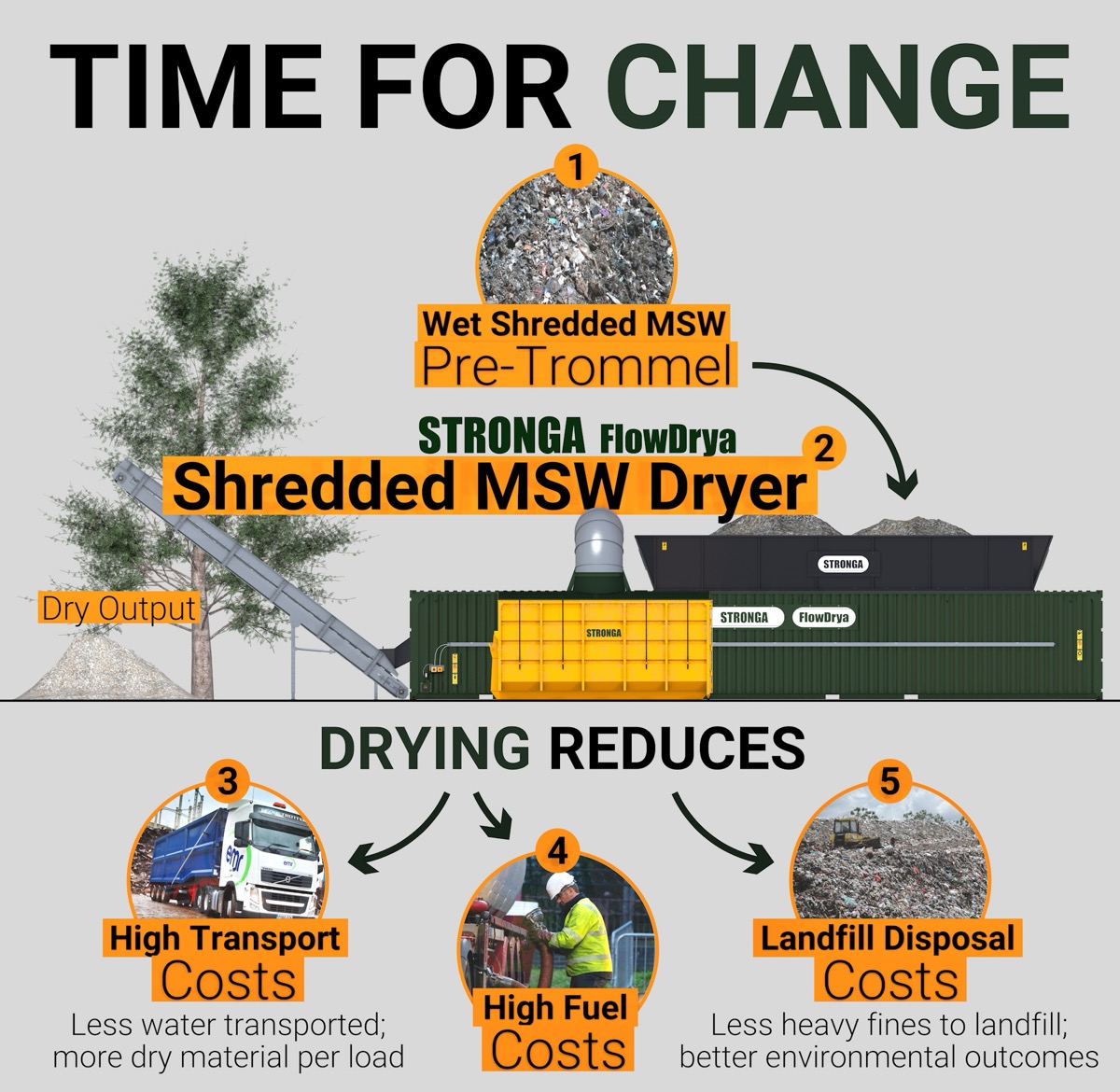
During wet weather periods where waste materials can be 35%+ or even 45%+ moisture content, a significant portion of the heavy fraction will bind together and therefore cannot be effectively separated in screens and trommels. Moisture removal in the FlowDrya is a critical first step because it directly reduces weight while at the same time turbocharges heavy fractions separation efficiency.
The time for change is now. How long will you keep paying to transport tonnes of wet waste fines and mixed, sticky waste to landfill at increasingly high disposal rates?
Data-Driven Savings for Waste Recycling Plants
The table below details the moisture evaporation savings for a particular skip company in the UK, evidencing the considerable benefits delivered by the FlowDrya. The following figures are based on 2026 UK landfill costs of a 90-litre representative sample of shredded skip waste which has undergone oven drying. In the below table:
- Every 10 m³ contains approximately 2.53 tonnes of removable water
- Every 100 m³ contains approximately 25.3 tonnes of removable water
Remember, evaporation savings in the FlowDrya are in addition to improved heavy fractions recovery from SRF and inert heavy fines screening. When combined with the valuable recovery of heavy inert fines fractions the annual savings are closer to £1.5 million. The resulting material fractions are cleaner, reducing contamination and improving material classification for landfill tax reduction.
| Wet Bulk Density | 676 kg/m³ |
| Oven Dry Density | 423 kg/m³ |
| Water Removed During Drying | 253 kg/m³ |
| Estimated Moisture Content (wet basis) | 37.5% |
| Wet Waste Processed | 200 tonnes/day |
| Water Removed | 75 tonnes/day |
| Disposal Savings – Moisture Removal Only (UK landfill rate + transport + fuel) | £50 per tonne removed |
| Daily Savings | £3,745/day (approx.) |
| Annual Savings (5-Day Week) | £973,700/yr (approx.) |
Improving Fraction Recovery & Process Efficiency
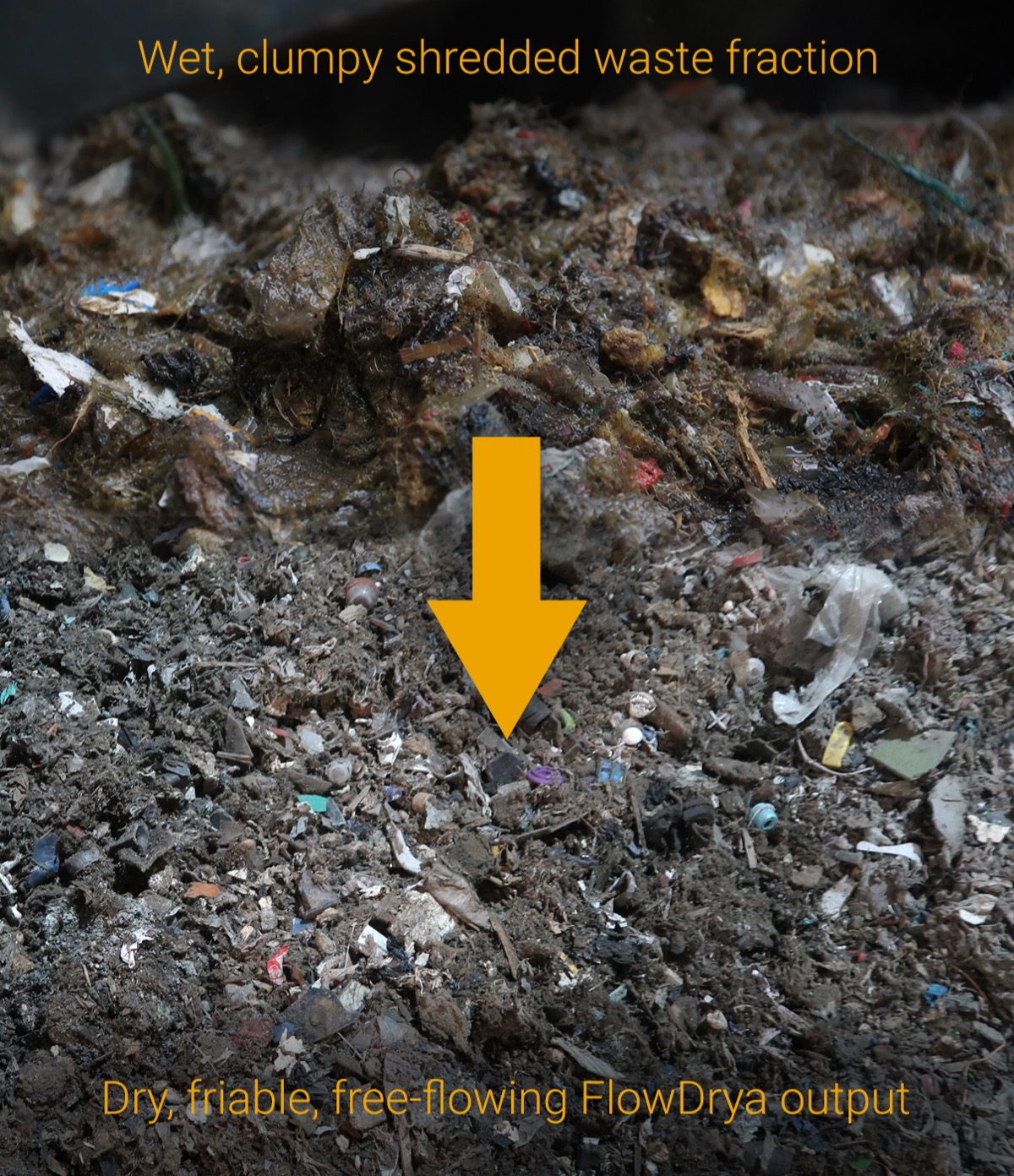
Wet waste material clogs screens, reduces trommel efficiency and leads to poor separation where valuable fractions are lost into the fines stream and heavy fines remain blended into the bulk waste mix.
The 3-in-1 FlowDrya directly improves fraction separation efficiency when drying is introduced before trommelling/screening/separation. Drying to 15–20% conditions the shredded material so it flows, separates, and screens efficiently. Better screening enables cleaner, higher throughput, and more accurate fraction separation with less energy wasted on reprocessing material. Instead of stockpiling mixed wet fines or running material through the trommel system several times, FlowDrya enables the operation to become a one-pass, optimised flow. The result is lower operational cost, reduced fuel and handling requirements, and a far more effective use of separation equipment, maximising the performance of the trommel.
Recovering Valuable Resources
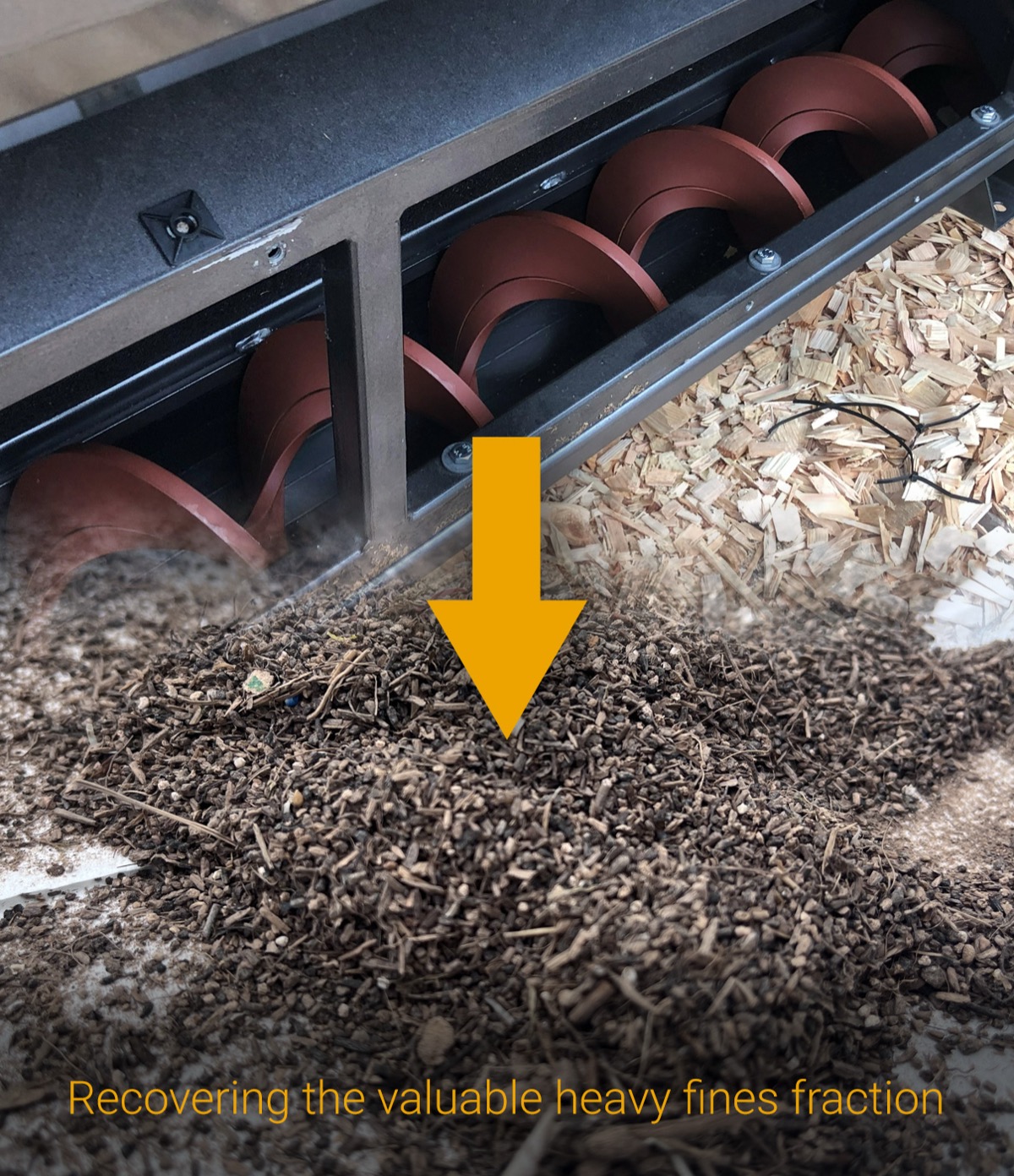
When waste material is dry and properly screened, heavy fractions like stones, rubble, and aggregates can be recovered, separated and reused or sold, rather than being bound in contaminated mixed trommel fines with high disposal cost. Plastics, metals and organics are more effectively recovered, reducing mixed waste contamination penalties and opening up additional revenue streams.
Every tonne diverted from landfill is a double win: avoided cost and recovered value. The FlowDrya system enables this by creating the conditions for high-throughput separation; dry, free-flowing material that can be split into high-value fractions.
3-in-1 FlowDrya Functionality
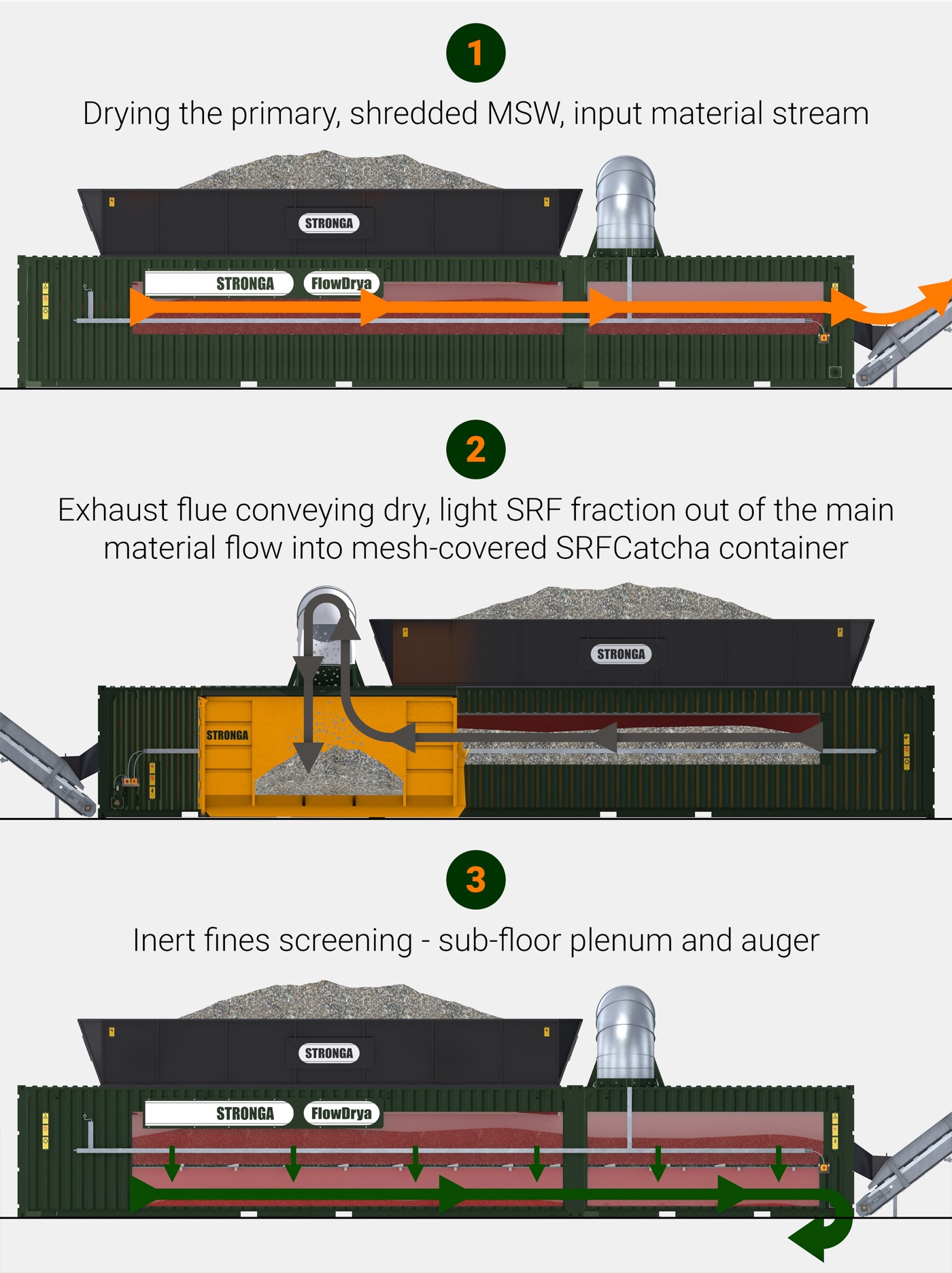
The 3D visualisations below show the integrated 3-in-1 functionality of the FlowDrya.
- The flow drying and discharge of the main input shredded material stream.
- The exhaust air flue, conveying clean, dry light plastic, SRF fractions out of the main material flow into the SRFCatcha mesh-covered container. Drying increases the calorific value, enabling onward sale as recovered, alternative fuel.
- The inert fines screening sub-floor plenum and discharge auger.
The FlowDrya team use our database industry calculators to design proposals specific to your waste volume and type. We can prove the added-value by delivering measurable, real-world savings that align with your commercial goals. For further information about the FlowDrya 3-in-1 Waste-Series, speak to our knowledgeable team today ›
FlowDrya: The Market’s Leading Shredded MSW Dryer
FlowDrya stands out as the market’s-leading shredded waste dryer by combining hydraulic PulseWave™ agitation, high-throughput drying with in-process inert fines separation. The integrated stainless-steel perforated drying floor continuously dries, screens and removes heavy fines from the primary product stream (<5mm), directly into a sub-floor plenum. These fines are then automatically discharged via an auger, providing additional value, enabling recycling companies to produce cleaner, more consistent output, significantly reducing landfill disposal.
With the optional, high-capacity SuperHoppa (up to 50m³ infeed capacity), FlowDrya is built for continuous, heavy-duty overnight operation, keeping labour costs extremely low. The system also maximises energy efficiency by optimising available thermal energy from onsite generation, ensuring maximum moisture removal with minimal fuel input.
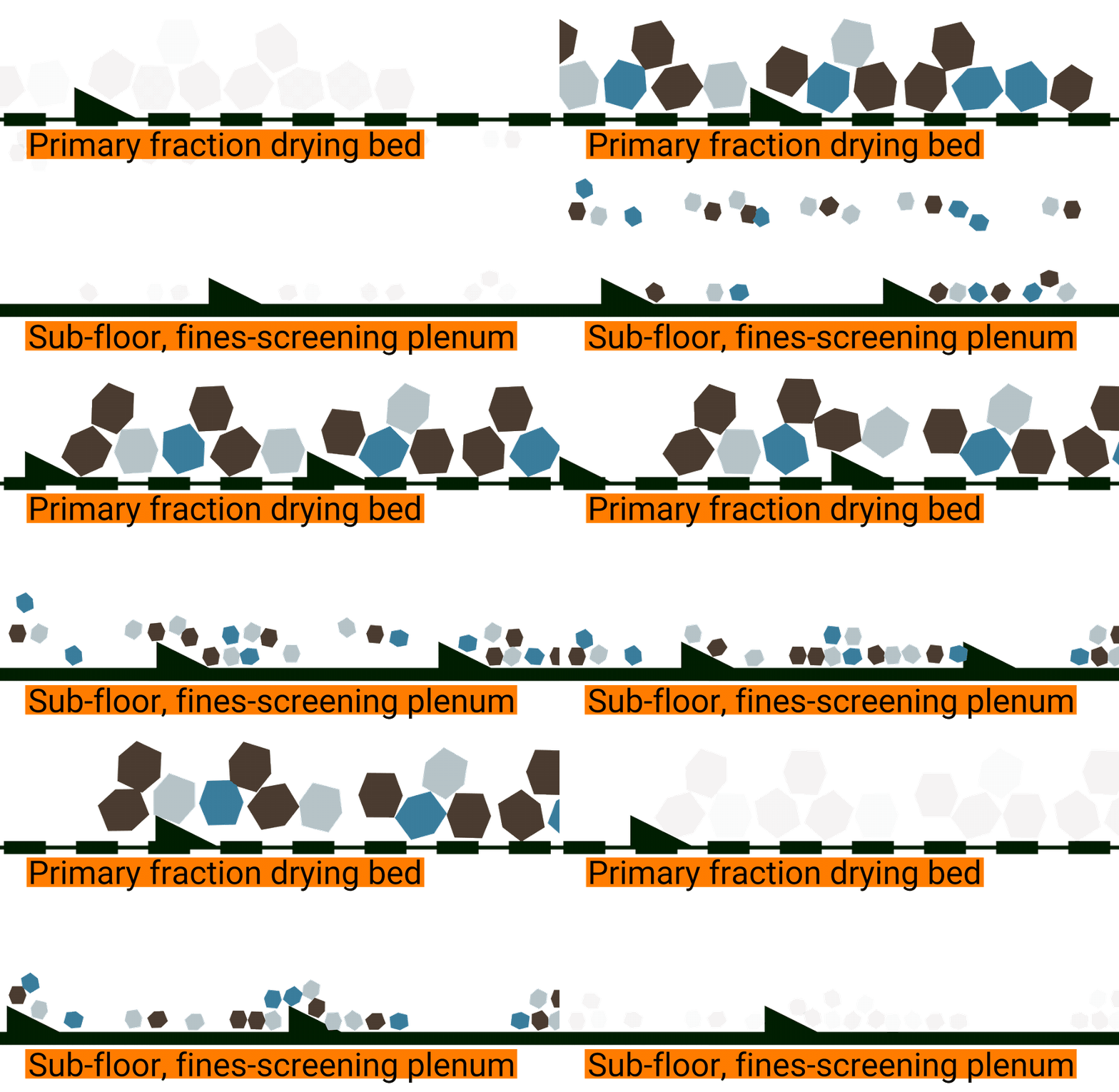
Animation showing the FlowDrya sub-floor, heavy fines screening process.
Doing More with Less
At FlowDrya, we aspire to do the ‘most’ shredded MSW drying using the ‘least’ amount of thermal energy; keeping our customer’s fuel costs low whilst maximising their financial returns. The video below shows the FlowDrya drying a waste material using GenSet residual heat, making full use of available energy while delivering the considerable benefits associated with drying shredded skip waste.
Shredded MSW Drying FAQs
The FlowDrya is a 3-in-1 waste drying and separation system designed specifically for shredded MSW and skip waste. It simultaneously removes moisture, screens out heavy inert fines such as stones and grit, and separates valuable SRF fractions. This integrated process improves the efficiency of downstream recycling and waste separation equipment while reducing overall waste disposal volumes.
FlowDrya lowers landfill costs by significantly reducing the weight of waste before disposal. Moisture and heavy inert fines contribute substantial unnecessary weight, increasing transport fuel usage and landfill tax charges. By drying the material and removing dense fines before landfill or further processing, businesses can dramatically cut disposal, transport, and handling expenses.
The system is designed to reduce moisture content in shredded waste from over 35% down to around 15–20%, depending on the material type and available heat source. Lower moisture levels improve material flow and separation performance, allowing trommels and screens to operate more efficiently while increasing recovery rates of valuable recyclable fractions.
Yes. Wet waste tends to stick together, reducing screening performance and causing valuable materials to be lost within mixed fines streams. By conditioning the waste into a dry, free-flowing state, FlowDrya improves separation accuracy and enables cleaner recovery of aggregates, plastics, metals, SRF, and other recyclable materials. This creates additional revenue opportunities while reducing contamination.
Absolutely. FlowDrya is engineered for high-throughput, industrial-scale operation and can run continuously for extended periods, including overnight processing. When paired with the optional high-capacity SuperHoppa infeed system, the machine supports automated, low-labour operation while maximising the use of available onsite thermal energy for efficient drying performance.
Ready to cut your landfill costs?
Our team can help you specify the right 3-in-1 FlowDrya Waste-Series system for your waste volume, material type and recovery targets.