A Family Farm’s Journey to Self-Reliance Through Anaerobic Digestion
A forward-thinking family farm sought a fully circular anaerobic digestion (AD) system using a mixture of chicken manure, farmyard manure, and maize. Their goal: generate renewable energy via biogas cogeneration and convert the remaining solid digestate into profitable dry products.
Stronga supplied the digestate dryer that enabled the customer to convert the solid fibre into valuable dry outputs, including: organic fertiliser, bio-fuel, and high-quality cattle bedding. By integrating in FlowDrya, the customer can now close the loop in their circular system, maximise the value of their manure feedstock while taking meaningful strides toward long-term self-reliance.
The Customer’s Anaerobic Digestion Process
The customer’s new system centres on mixing livestock manure and poultry manure to create a balanced feedstock for their on-site anaerobic digester. Once this mixture enters the digester, it produces two valuable outputs:
- Biogas – used in a CHP unit to generate electricity for on-site operations and to supply low-grade heat for the dryer.
- Dry digestate fibre – a nutrient-rich material they now use as animal bedding.
Digestate is naturally high in moisture and, without treatment, is often sent to landfill — resulting in unnecessary tax, transport and gate fees. By drying the fibre, the customer significantly increases its value, utility and sustainability.
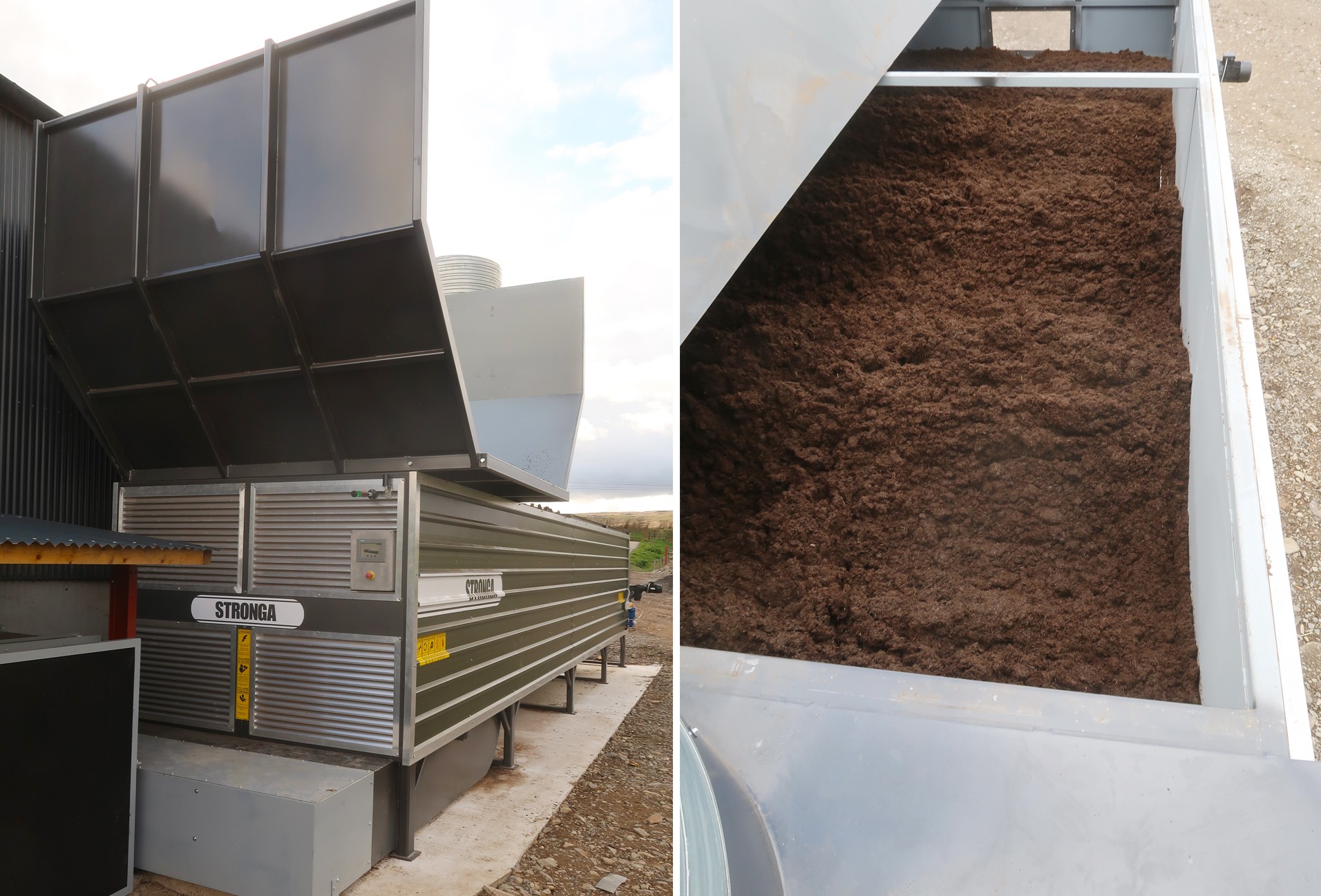
Wet digestate fibre pre-drying
How Does the Anaerobic Digestion Drying Process Work?
Separation
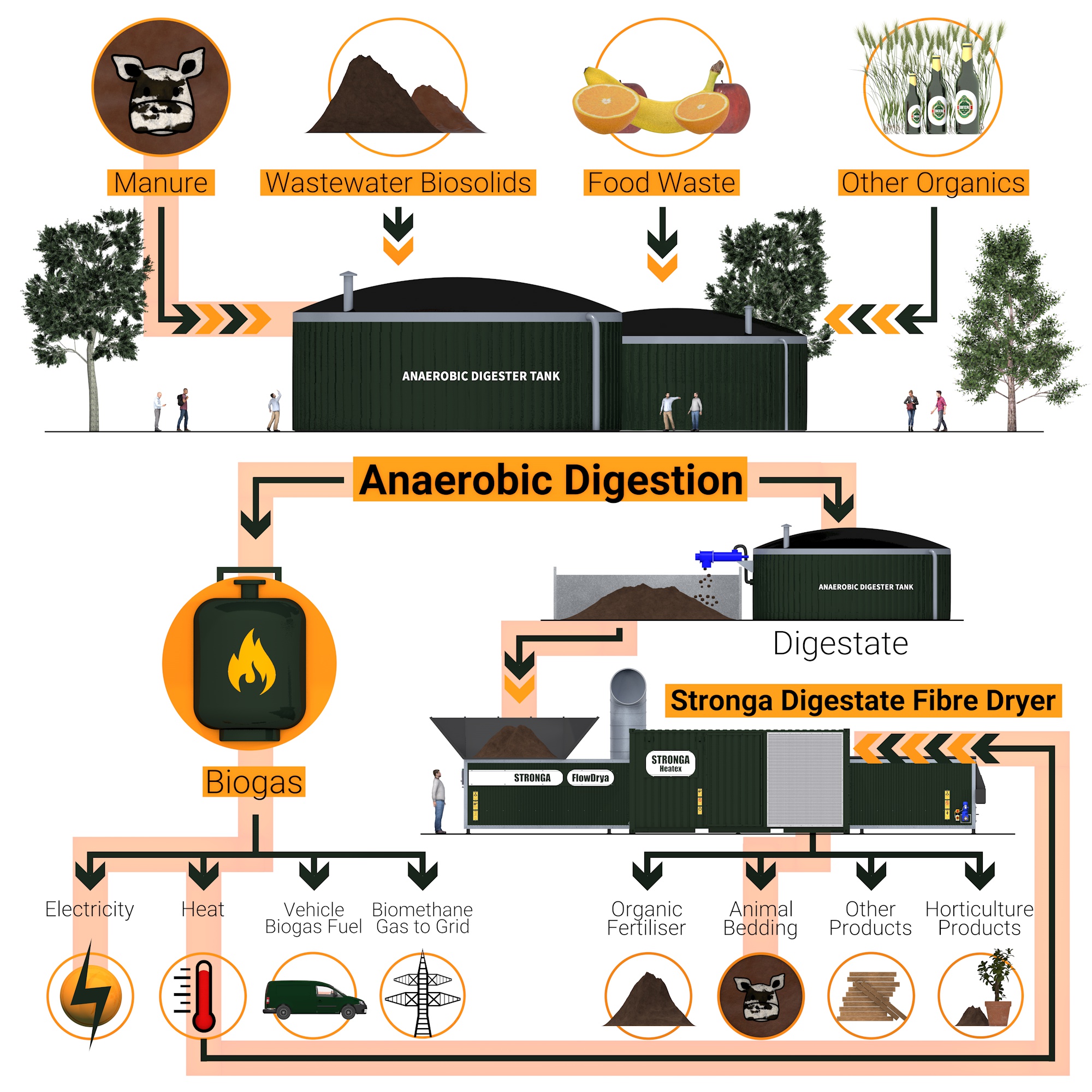
The digestate leaving the digester is first separated. The liquid fraction is returned to the digester tanks for further processing. The solid digestate fibre drops into a bunker ready for drying.
Loading & Drying
The solid fibre is then loaded into the FlowDrya hopper. Using heat recovered from the biogas CHP system, Stronga’s digestate dryer reduces the moisture content down to the target level.
End Use & Storage
Once dried, the fibre becomes stable, lightweight, and easy to handle. In this case, it is stored on-site and used as animal bedding. However, dried digestate can also serve multiple purposes: landscaping material, organic fertiliser, bio-fuel, and various energy applications.
Anaerobic Digestion process - highlighting use of manure for biogas, bedding and fertiliser opportunities
AD Fibre Animal Bedding - Turning Digestate into a Valuable Bedding Material
Dried AD fibre animal bedding represents a forward-looking, sustainable solution for farms aiming to close the loop on their circular operations. Because bedding is produced directly from on-site waste, it supports a circular economy, reducing waste while cutting reliance on imported virgin materials and repurposing resources that already exist on the farm.
In this case, the customer was producing around 14 tonnes per day of wet fibre from their separator. Material testing by the Stronga team showed it had a moisture content of approximately 66%.
FlowDrya Delivers High-Quality Dried Fibre
To meet the customer’s performance requirements, Stronga specified and scaled a FlowDrya digestate fibre dryer, engineered to:
- Consistently reduce moisture content to below 20%.
- Deliver reliable, uniform drying with every single batch.
- Produce a clean, high-quality digestate fibre suitable for: Animal bedding; Agricultural applications; Renewable energy uses; Broader market opportunities.
Through this digestate fibre drying process, the customer gains a dependable supply of dried digestate fibre that supports on-farm sustainability and creates new circular-economy value.
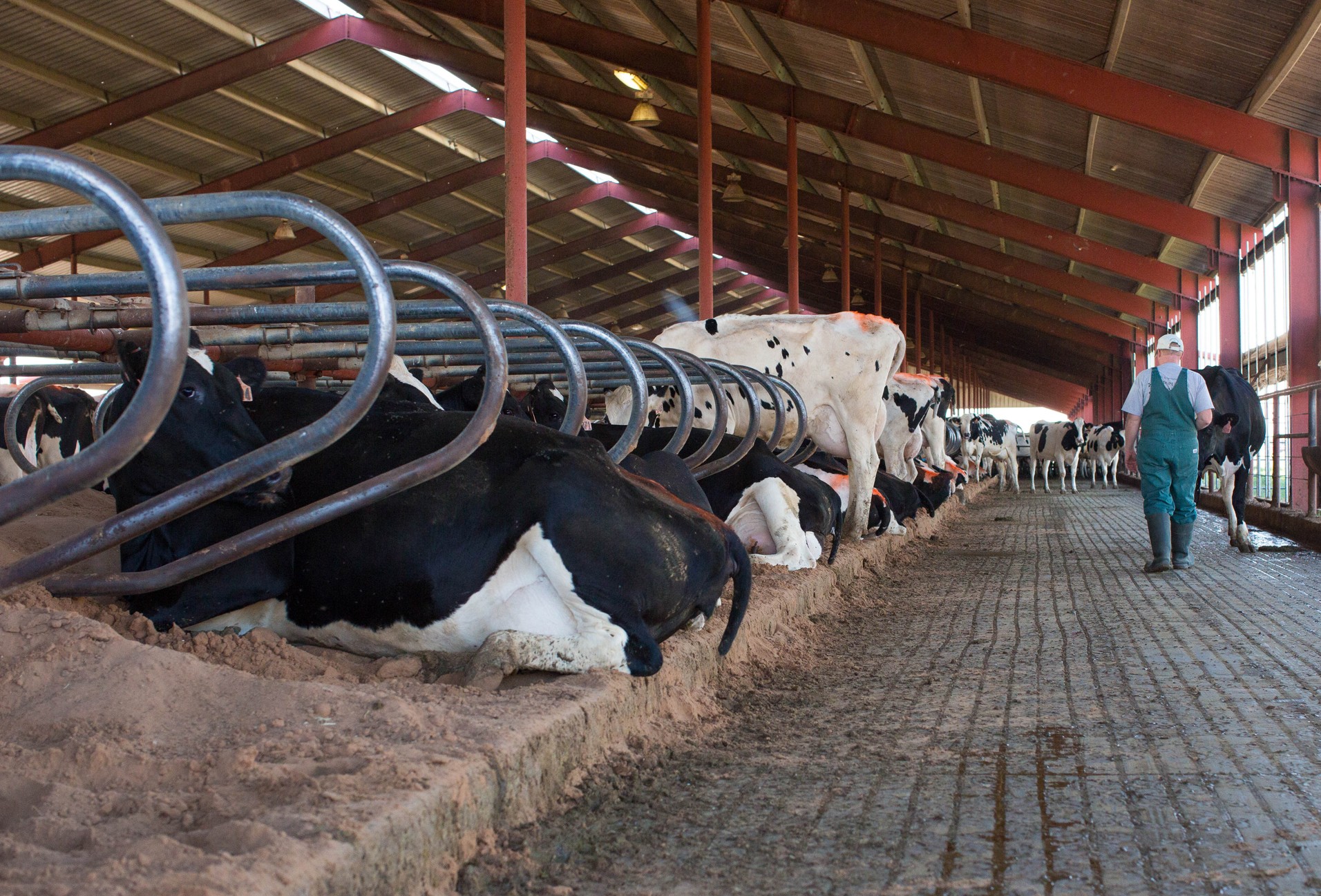
High-quality dried digestate fibre ready for use as animal bedding
Why Farmers Are Repurposing Digestate Fibre
Rising inflation and operational costs are pushing farmers to find cost-saving solutions. Repurposing digestate fibre, which would normally be disposed of, turns a waste product into a useful, valuable output. Creating animal bedding from digestate farm offers the following benefits:
- Reduced material wastage
- Lower disposal and landfill fees
- Lower dependency on purchased bedding
- Increased sustainability
- Improved long-term financial security
Benefits of Dry Digestate Fibre Bedding
| Benefit Category | Key Advantages of Dry Digestate Fibre Bedding |
|---|---|
| Storage & Stability | Low mould risk; suitable for long-term storage; potential income stream where by-product sales are permitted |
| Post-Use Flexibility | Can be used as organic fertiliser or recycled back through the AD + drying process for repeated bedding use |
| Animal Welfare | Provides clean, comfortable, hygienic bedding conditions |
| Environmental Impact | Reduces reliance on imported virgin materials; supports circular farming |
| Performance vs Traditional Bedding | Non-abrasive, absorbent, low caking, and doesn't cling to fleece/fur like sawdust |
| Reliable On-Farm Supply | Continuous bedding availability enables better cubicle coverage and comfort |
| Farmer & Livestock Preference | Encourages longer lying times; lower respiratory issues when compared to straw/sawdust; widely favoured by farmers |
Proven Success in Digestate Fibre Drying Technology
By investing in digestate fibre drying technology, this family farm has maximised the efficiency of their anaerobic digestion plant, transforming it into a self-sustaining system.
With residual energy recovered from CHP heat and a controlled drying process, the farm has achieved a waste-free operation—eliminating the need to import virgin bedding materials and significantly reducing the odour issues often associated with wet manure bedding. FlowDrya enables cleaner, safer, and more hygienic bedding production directly on-site.
Regulations relating to animal by-products—such as moisture content requirements, transport rules, and permitted uses—must be reviewed carefully before producing or selling digestate fibre bedding.
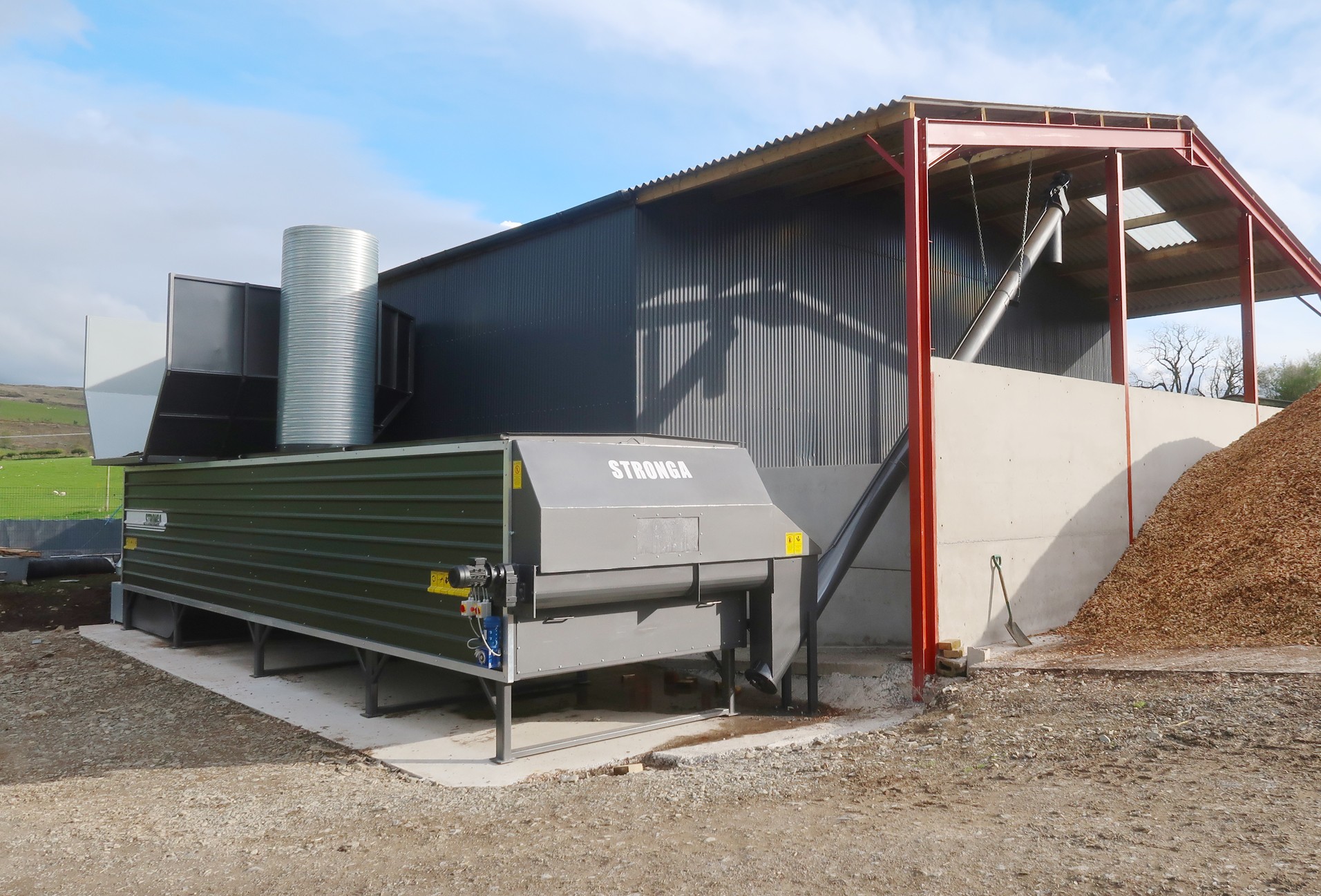
FlowDrya fitted with an end hopper and dry digestate conveyor
Digestate Fibre Drying Experts: The 1st Choice
Working closely with the customer, the Stronga team identified 200 kWh of spare heat from the cogeneration plant that could be redirected for digestate fibre drying. Using this waste heat, FlowDrya was precisely scaled for optimal performance based on key factors including: Digestate properties; Initial moisture content; Target moisture level; Material handling behaviour.
During commissioning, the Stronga team discovered that the digestate was entering the dryer at a naturally high temperature, further reducing the energy required for drying. This helped the system operate even more efficiently, reinforcing the farm’s commitment to energy optimisation.
Stronga are pleased to report that the system is now evaporating an average of 200 litres of moisture per hour. In real output terms, this equates to approximately 1,600 tonnes of dry digestate fibre per year, all of which is reused on-site as high-quality animal bedding.
Key Benefits of FlowDrya for Digestate Drying
Custom-engineered for each customer
Stronga designs each FlowDrya with the customer’s requirements in mind. In this case, the digestate dryer was specially-adapted to suit the customer’s friable material which contained small lumps.
Energy-efficient ‘stop–start’ operation
FlowDrya has a ‘stop-start’ system. The machine ‘sleeps’ between strokes so despite the long operating hour capability; the digestate dryer is actually only ‘live’ for a short period of time so service and maintenance costs are greatly reduced.
PulseWave™ hydraulic agitation
The hydraulic PulseWave™ agitation system ensures digestate fibre is naturally mixed and tumbled along the length of the FlowDrya drying bed.
Fully insulated system
FlowDrya is fully insulated all-around, ensuring energy efficiency is optimised in line with the customer’s waste-averting approach to operations.
DryStation™ HMI touchscreen control
The integrated DryStation™ HMI touchscreen allows for excellent operator control over the digestate drying process, delivering a consistently dry digestate fibre / bedding output.
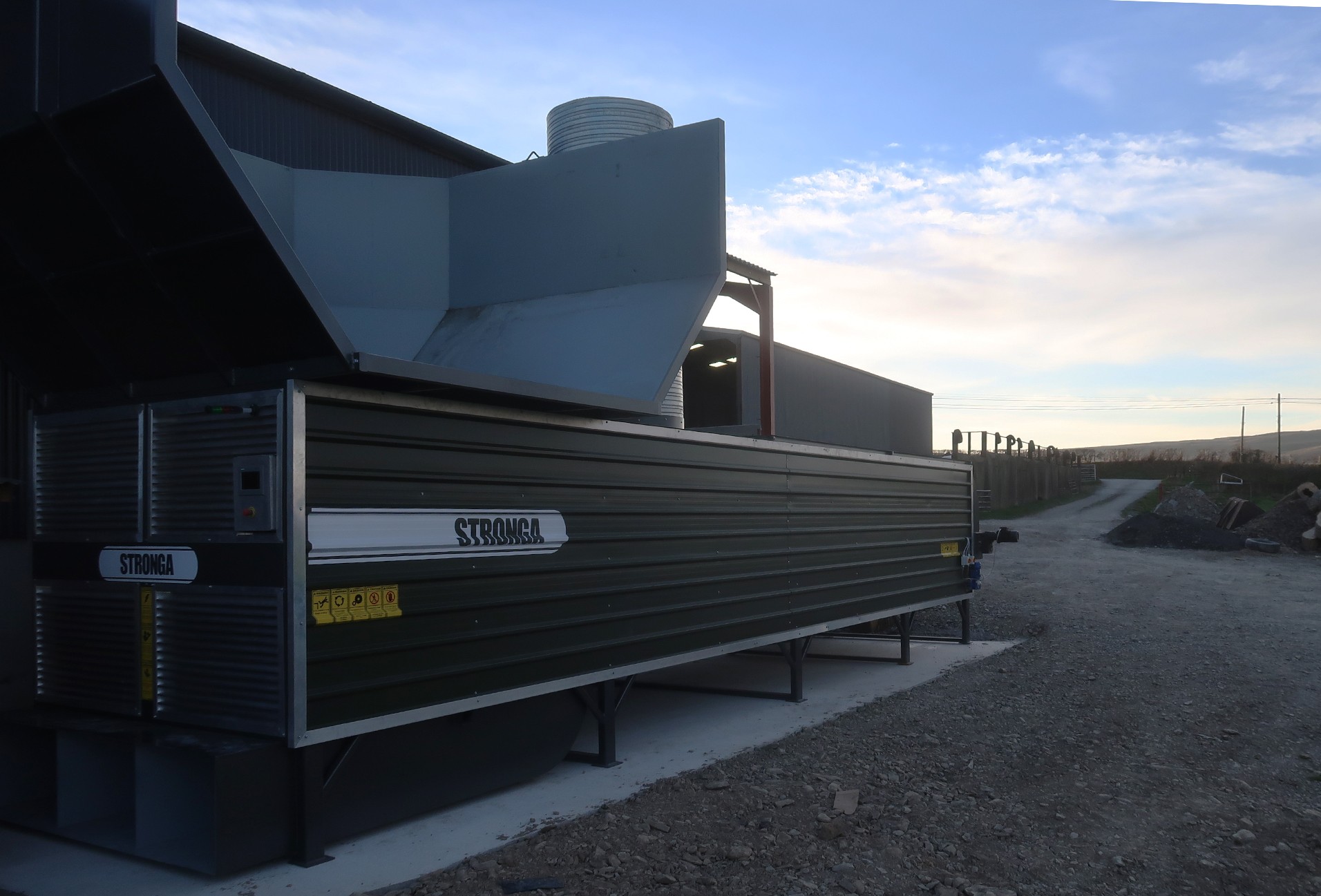
FlowDrya equipment has enabled this client to produce high quality digestate fibre animal bedding from dried, anaerobically-digested manure feedstock