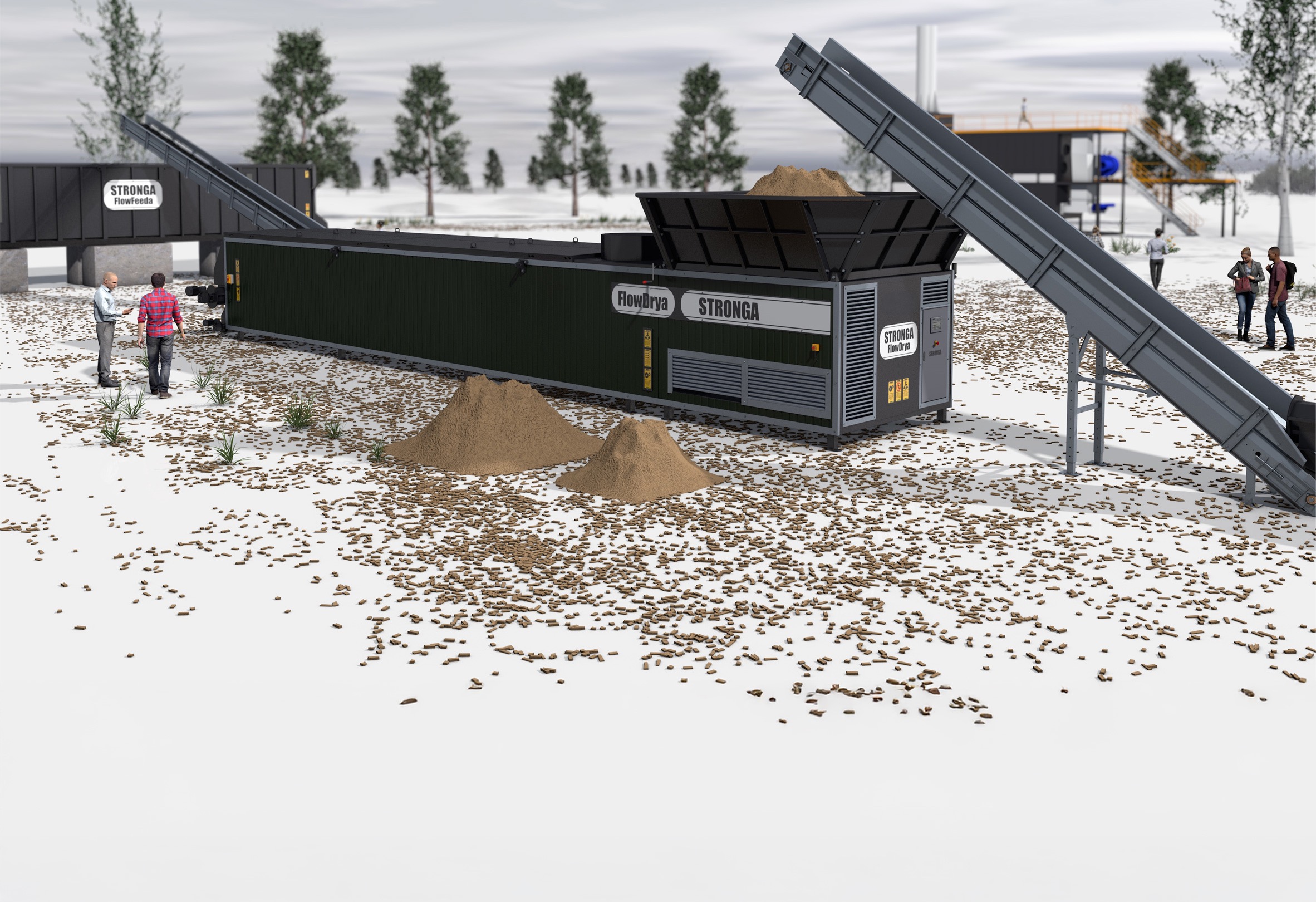
Continuous Drying Solutions
For Biomass & Beyond
Stronga FlowDrya delivers industry-leading, energy-efficient flow drying performance across an exceptionally wide range of wet materials. Engineered for continuous, high-throughput operation, every FlowDrya is custom-configured to maximise drying efficiency, minimise operating costs and provide decades of reliable service.
✔ High-throughput flow drying for wood chip, digestate fibre, alternative fuels & more; ✔ Exceptional thermal efficiency with class-leading low electrical energy use; ✔ Unique PulseWave™ agitation for uniform drying; ✔ Deep-cycle-drying, enabling a far smaller footprint vs. belt & on-floor dryers; ✔ Super-low labour: large hoppers, automated control, long unattended operation; ✔ Robust moving-floor design with minimal maintenance; ✔ Long operational lifespan (30+ years) & high resale value; ✔ Flexible heat-source compatibility; ✔ User-friendly DryStation™ HMI with full monitoring & simple operation
Stronga FlowDrya is a modern, energy-efficient continuous dryer designed for reliable, high-throughput drying of a wide range of materials and by-products.
Well-proven with woodchips, biomass, digestate fibre and more, FlowDrya delivers outstanding thermal and electrical efficiency, long service life, low operating costs and excellent reliability. Intelligent controls, PulseWave™ agitation, various dry material discharge options and infeed hopper arrangements ensure smooth, low-labour operation.
Engineered for flexibility, FlowDrya can be adapted by Stronga's experienced team to the unique properties of diverse materials — wood chip, forage, paper pulp and more.
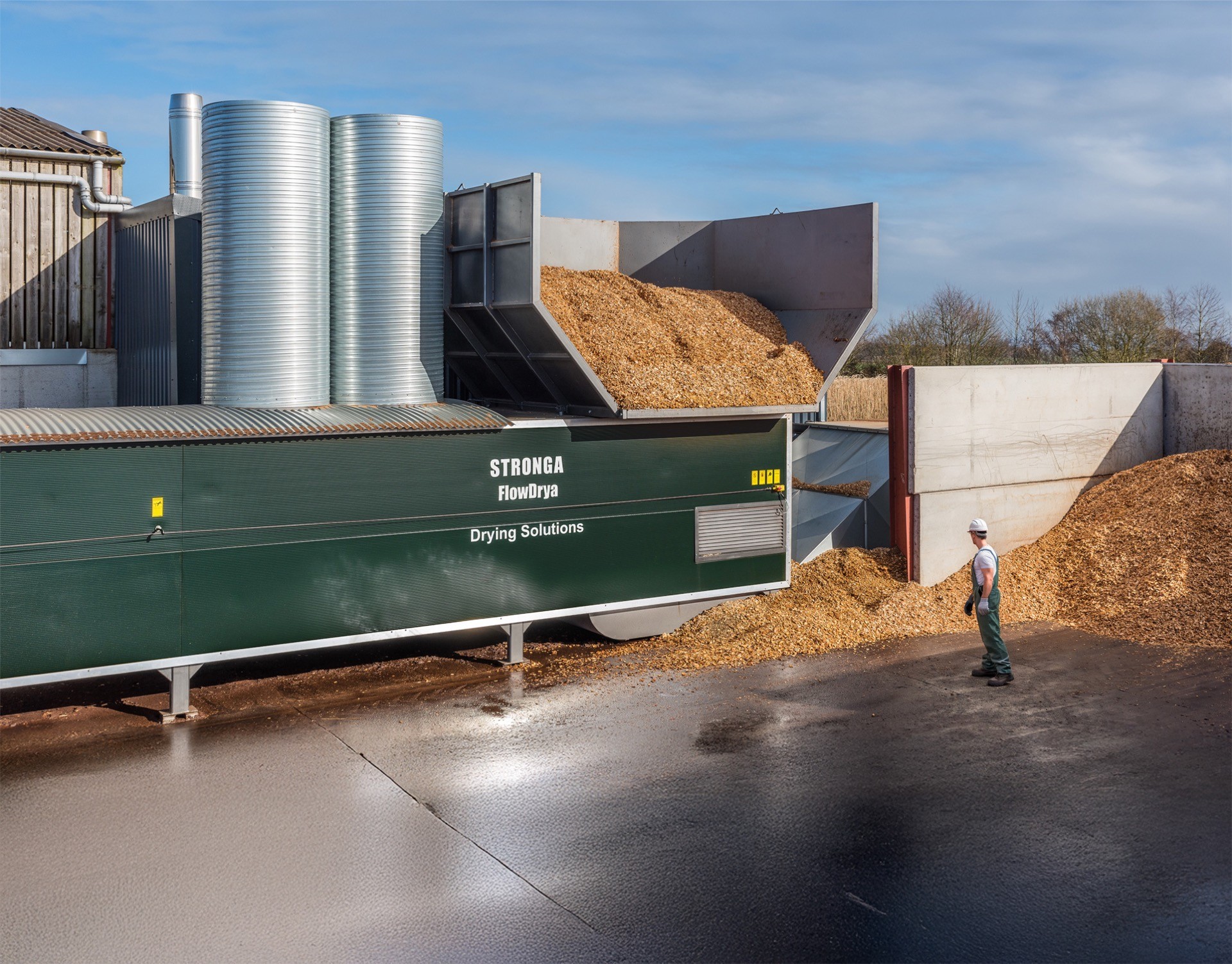
The Drying Process, Explained
The flow drying process is simple: wet materials are fed from a large infeed hopper onto a hydraulic moving floor, where it passes over temperature-controlled drying air supplied by an external heat source. The overall working process of the FlowDrya is detailed below.
How Does the FlowDrya Work?
- Wet material in-feed: Wet materials (wood chip, digestate, SRF or other) are loaded into the high-capacity in-feed hopper which is sized and designed according to requirements.
- PulseWave™ drying bed: Materials are passed from the in-feed hopper to the perforated PulseWave™ drying bed via hydraulic, stop-start moving floor equipment.
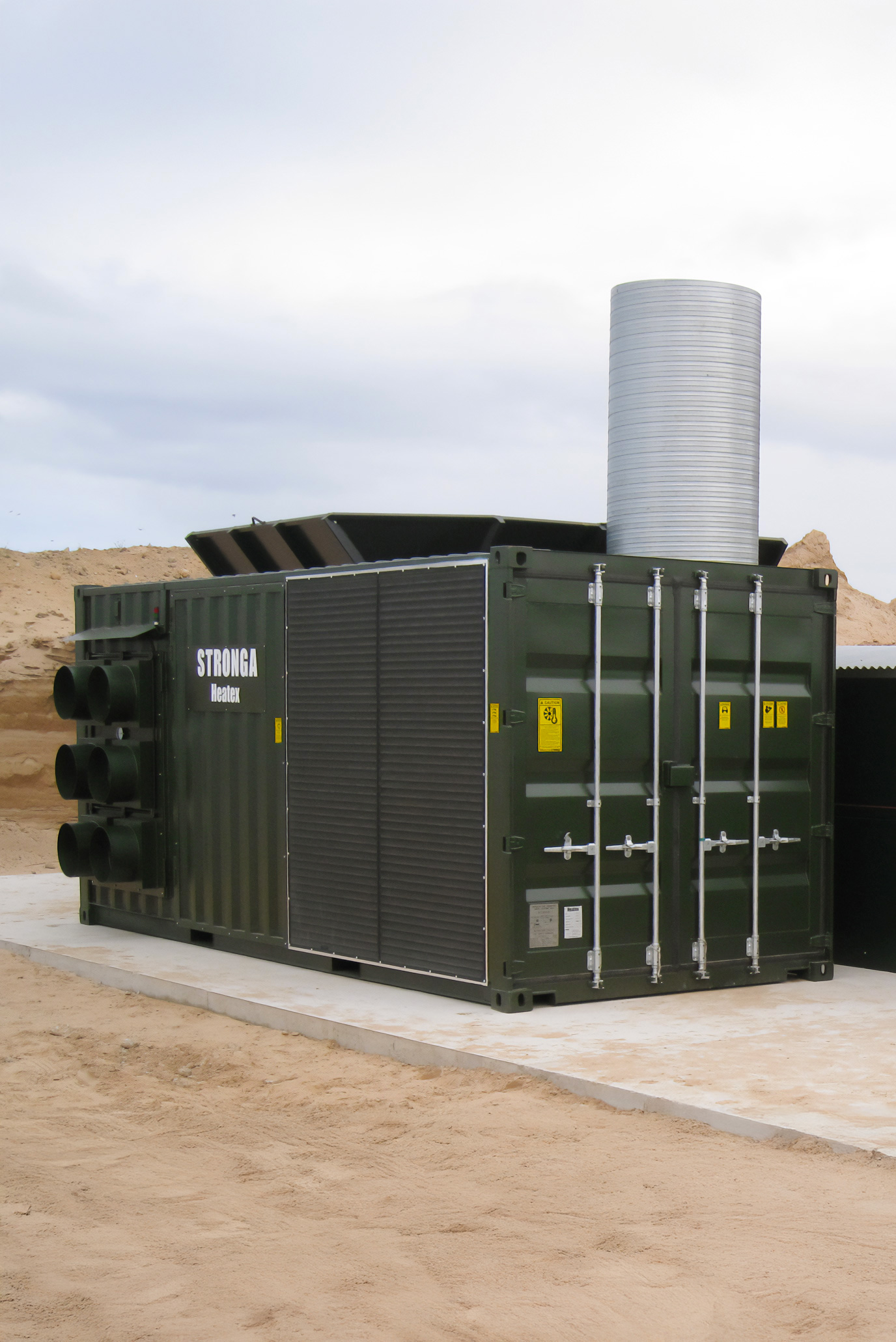
- Drying air supply: The Heatex unit delivers drying-quality air to the FlowDrya using heat from the client's heat source, which can include residual process heat or direct fuel options such as LPG or gas-fired burners.
- Thermal conduction: Warm drying airflow heats the insulated sub-floor plenum of the FlowDrya, transferring heat directly into the material on the drying bed to enhance the air-drying process.
- Airflow through material: Warm air rises through the ventilated moving floor, with zoned-diffusion ensuring optimum drying as material is transformed from wet to dry.
- Exhaust air management: Saturated air is released via exhaust flue ducting or recirculated via Stronga's optional energy-recovery systems. Roofs can be supplied to site the dryer externally.
- Fine material extraction: The sub-floor plenum and auger system automatically collect and remove heavy, small fines that fall through the drying deck, separating them from the primary material.
- Dry material discharge: Uniformly dry materials are discharged from the end of the drying bed into bunkers or onto onward conveying equipment.
Collaborating With Stronga
At Stronga, every drying consultation begins with collaboration with the customer. Because each project varies, our team analyse the unique properties of your material (moisture content, bulk density etc.), heat source, dryer site location, throughput requirements and more to ensure each flow dryer delivers optimal outcomes.
Site visits, wet-material assessments and trial days help our team fully understand your process, enabling us to design a tailored drying system for different material streams - woody biomass, paper pulp, digestate fibre and more. During the sales process, model numbers such as FD17, FD30, FD65 or other are assigned to the flow dryer; these are based on the square metres of drying bed required to deliver optimal performance for your specific material and moisture-reduction goals.

Drying Solutions for Multiple Materials
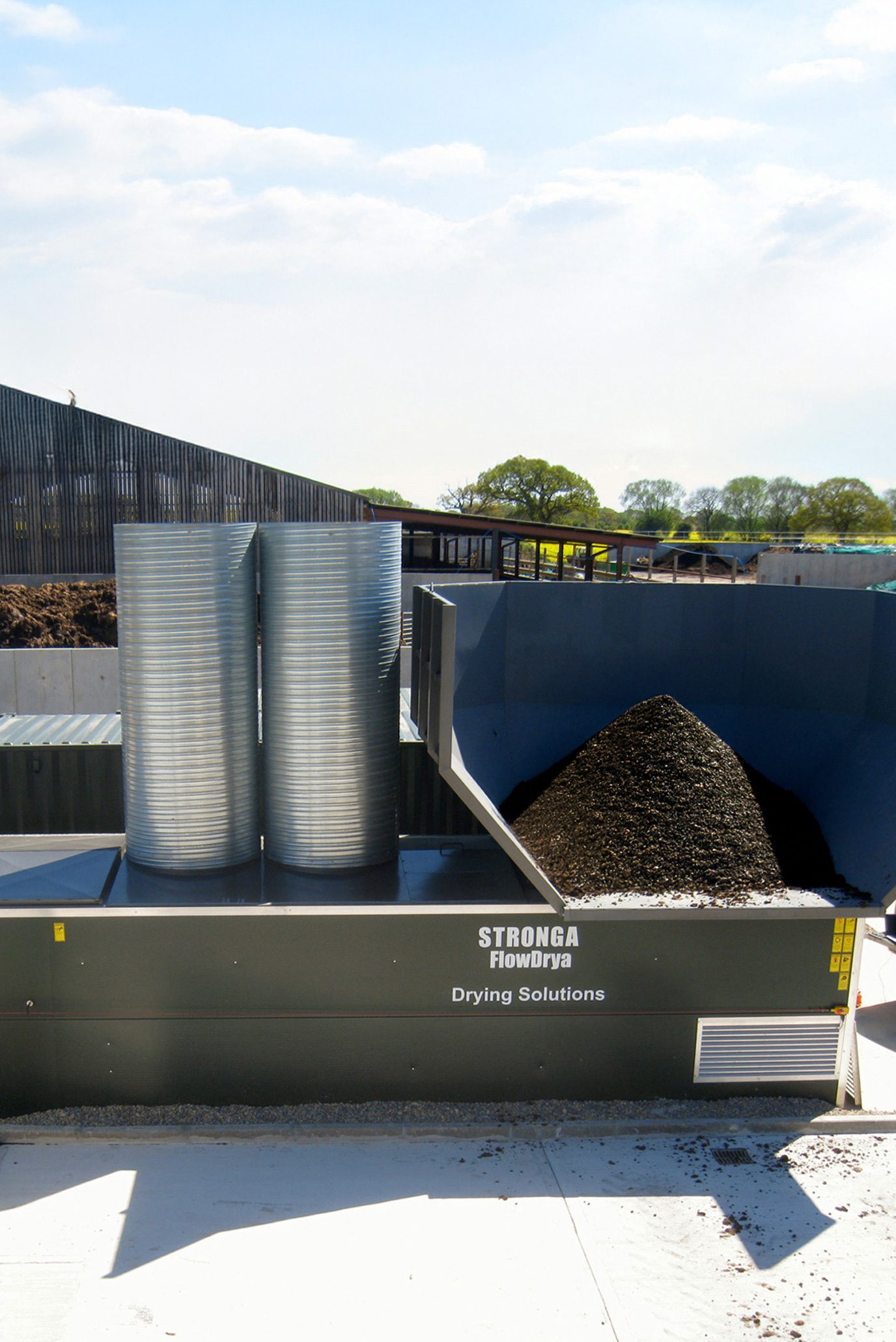
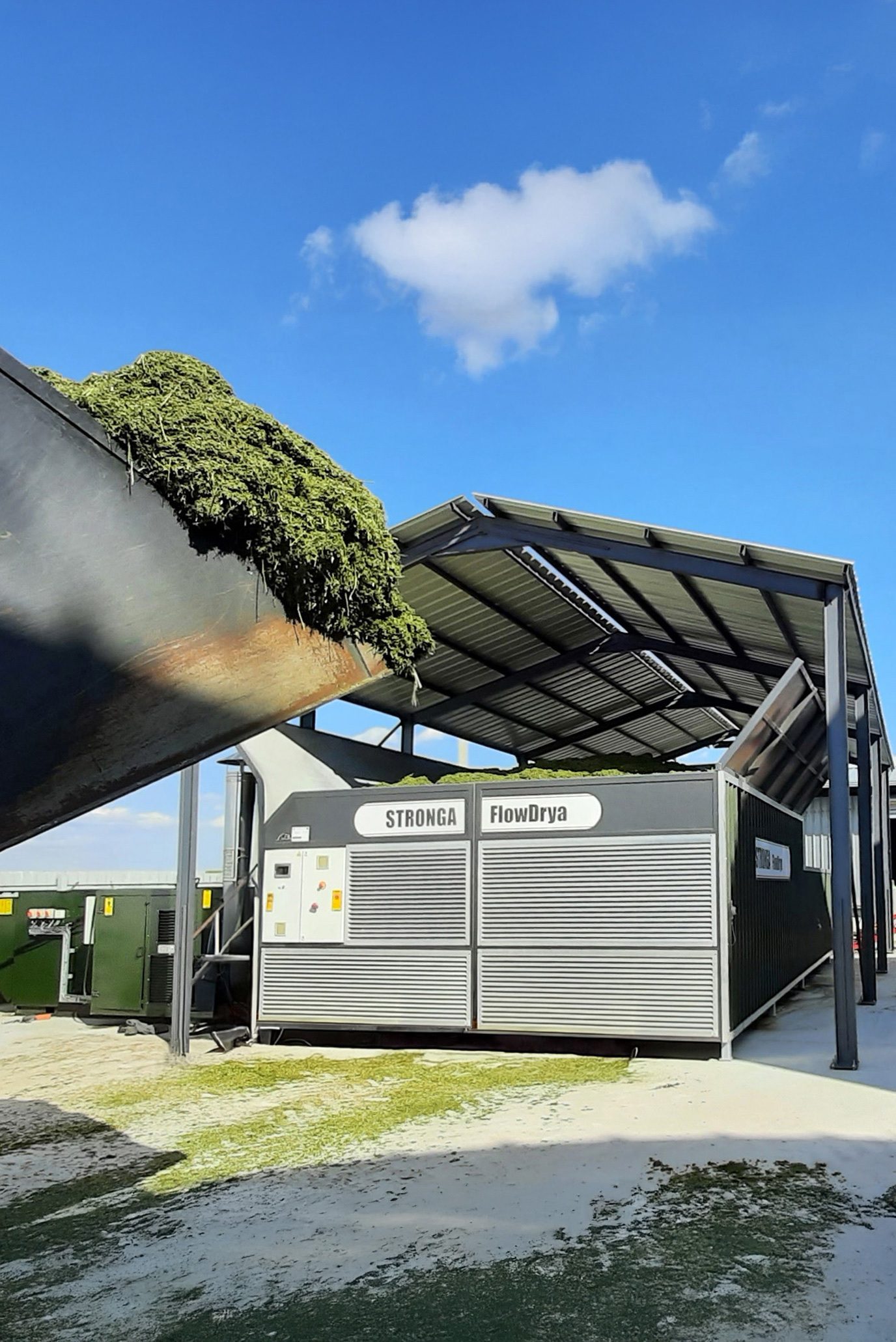
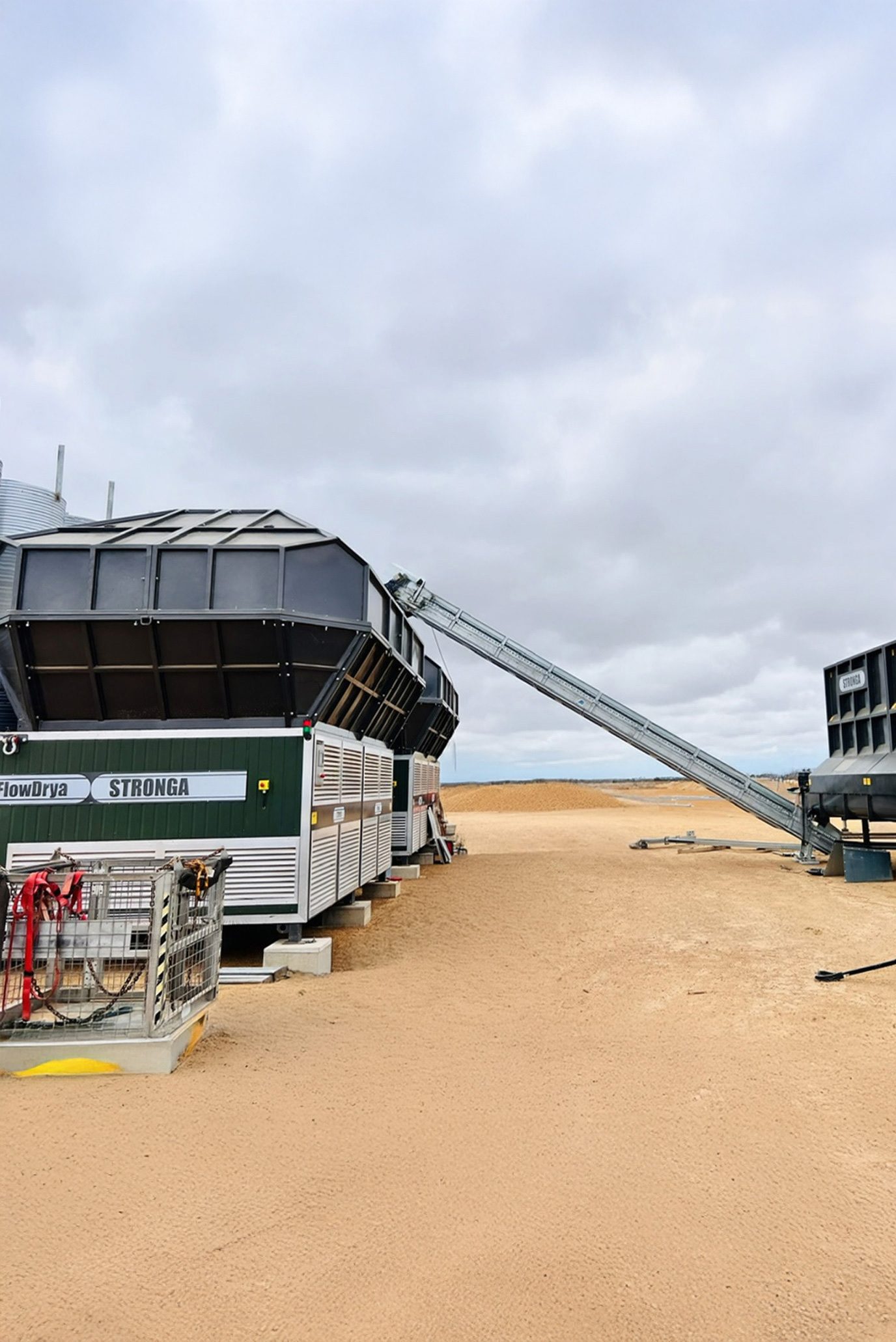
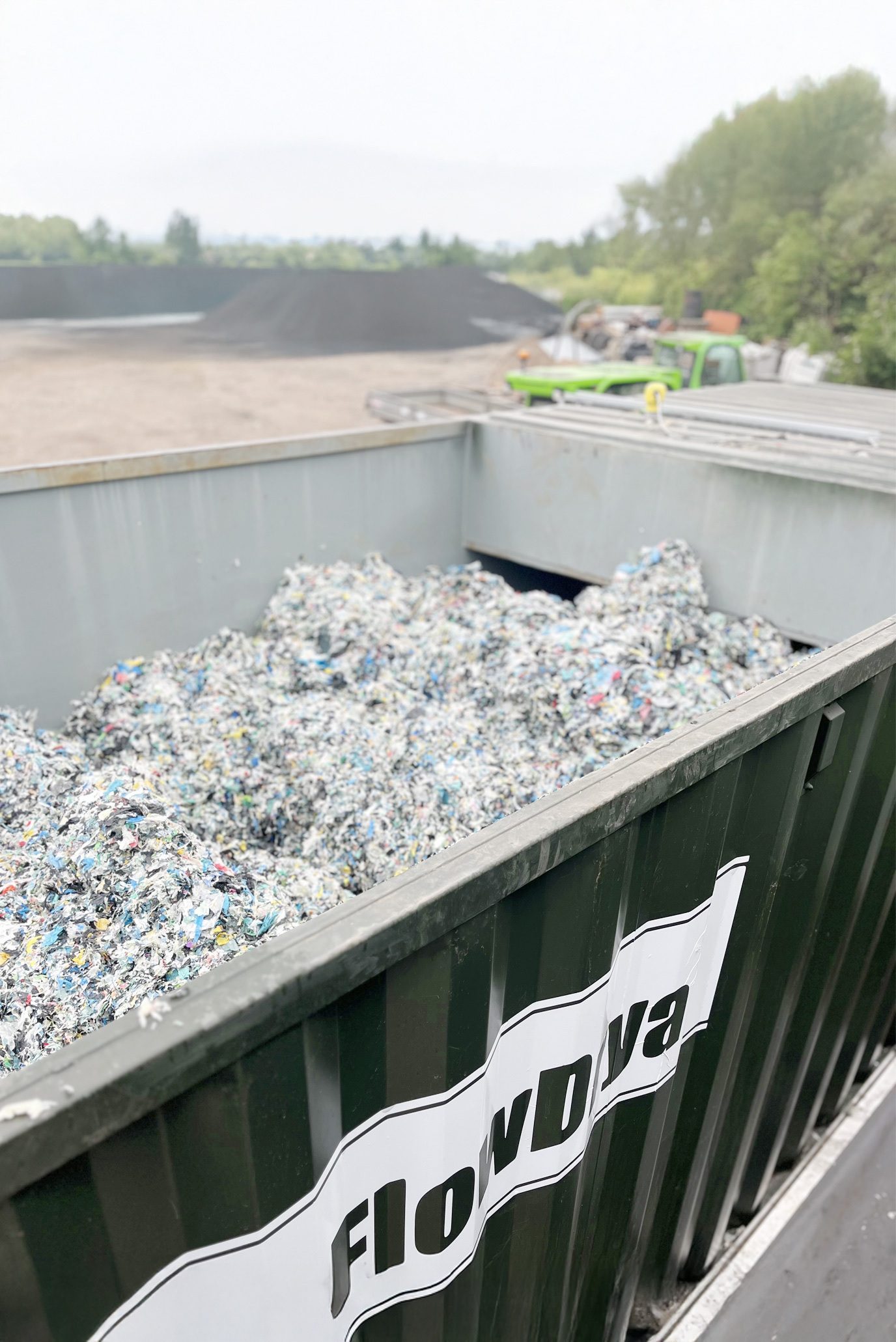
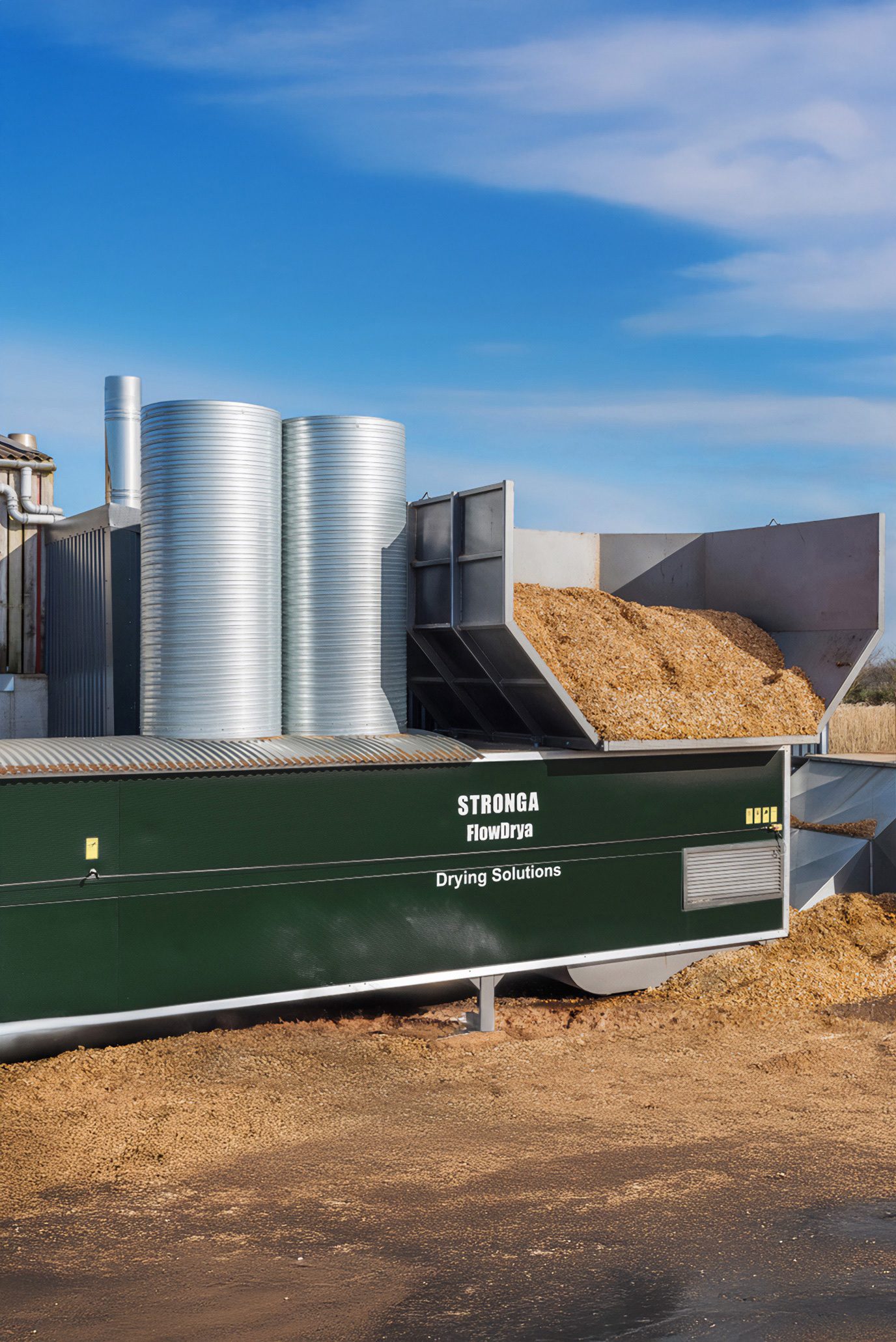
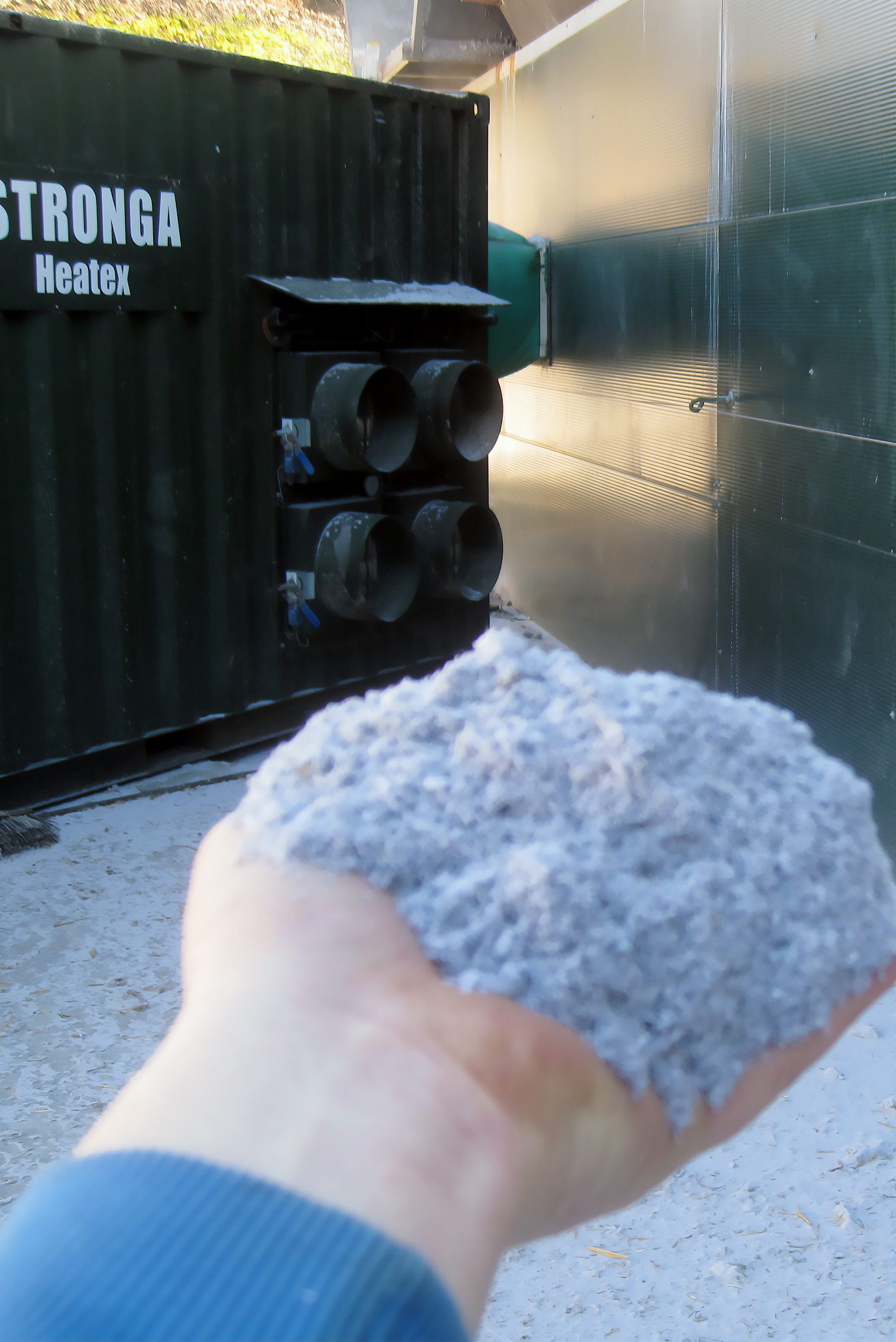
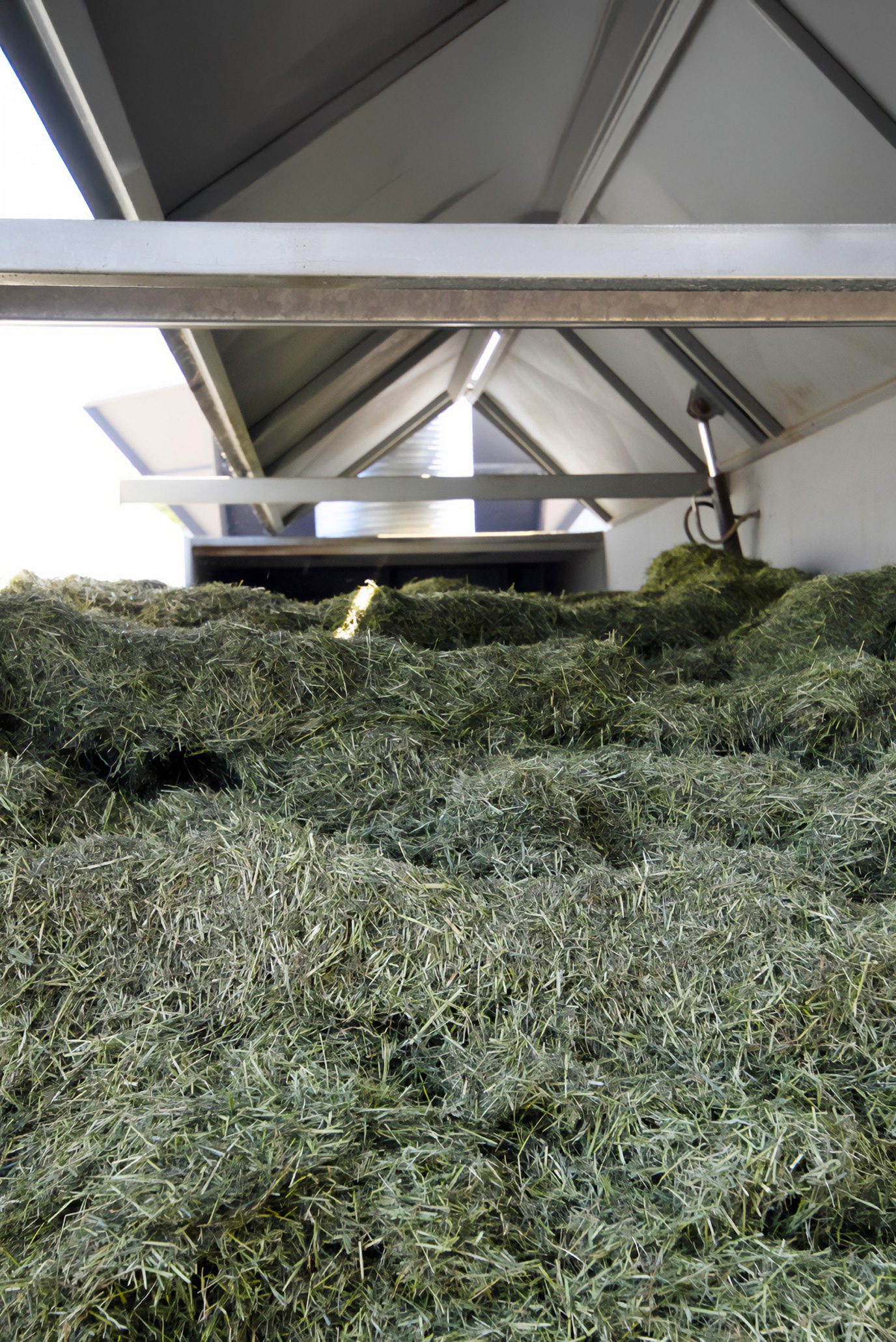
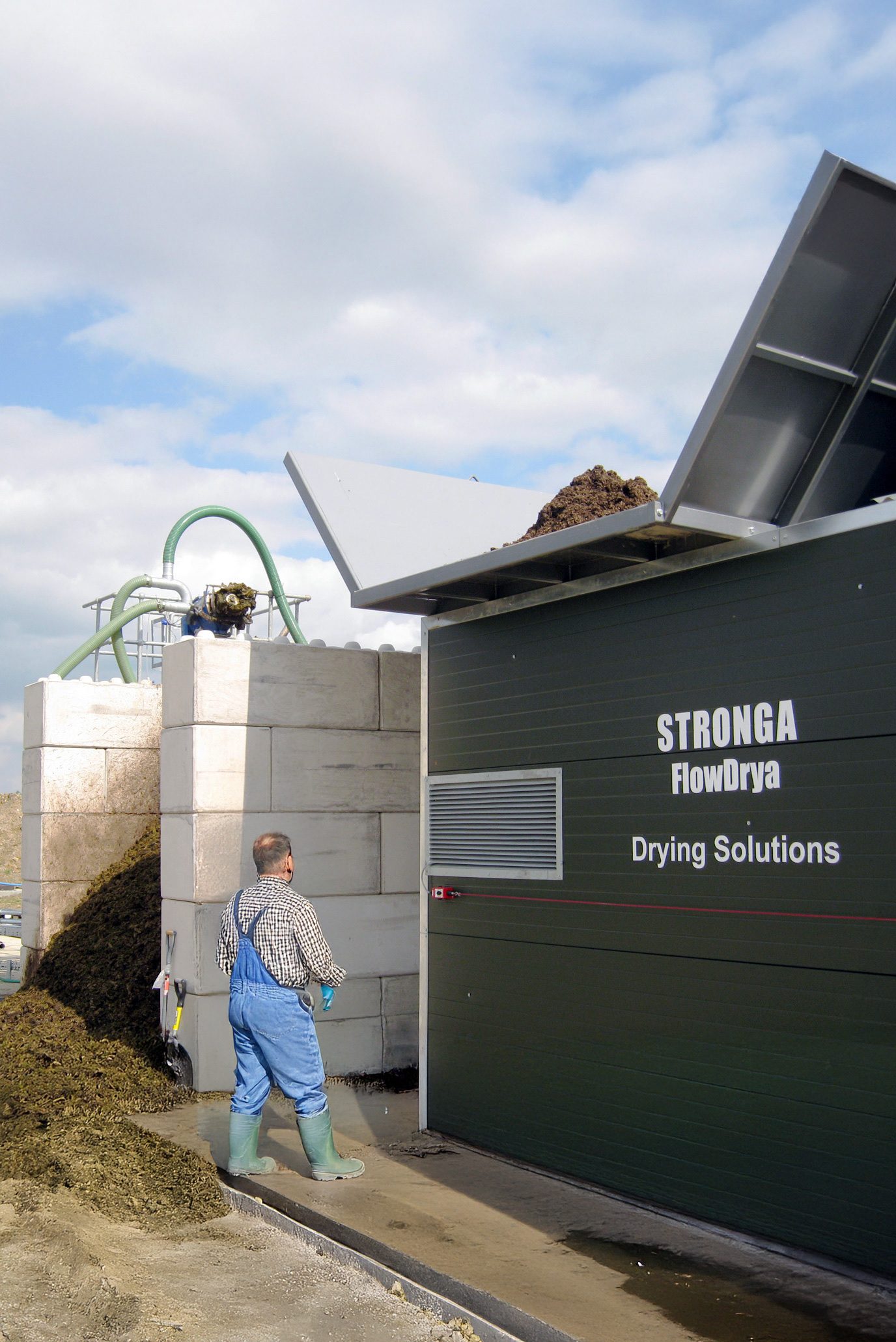
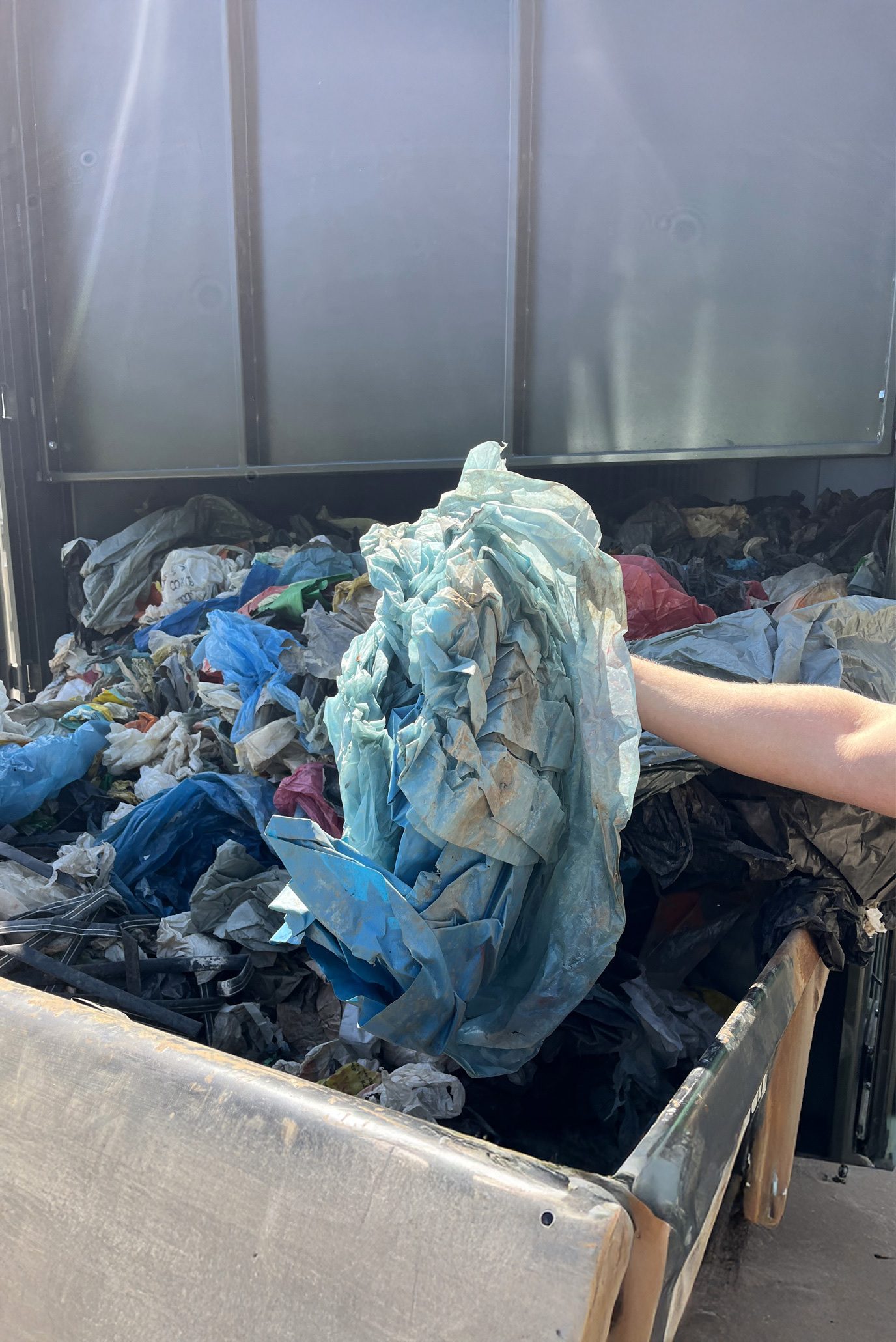
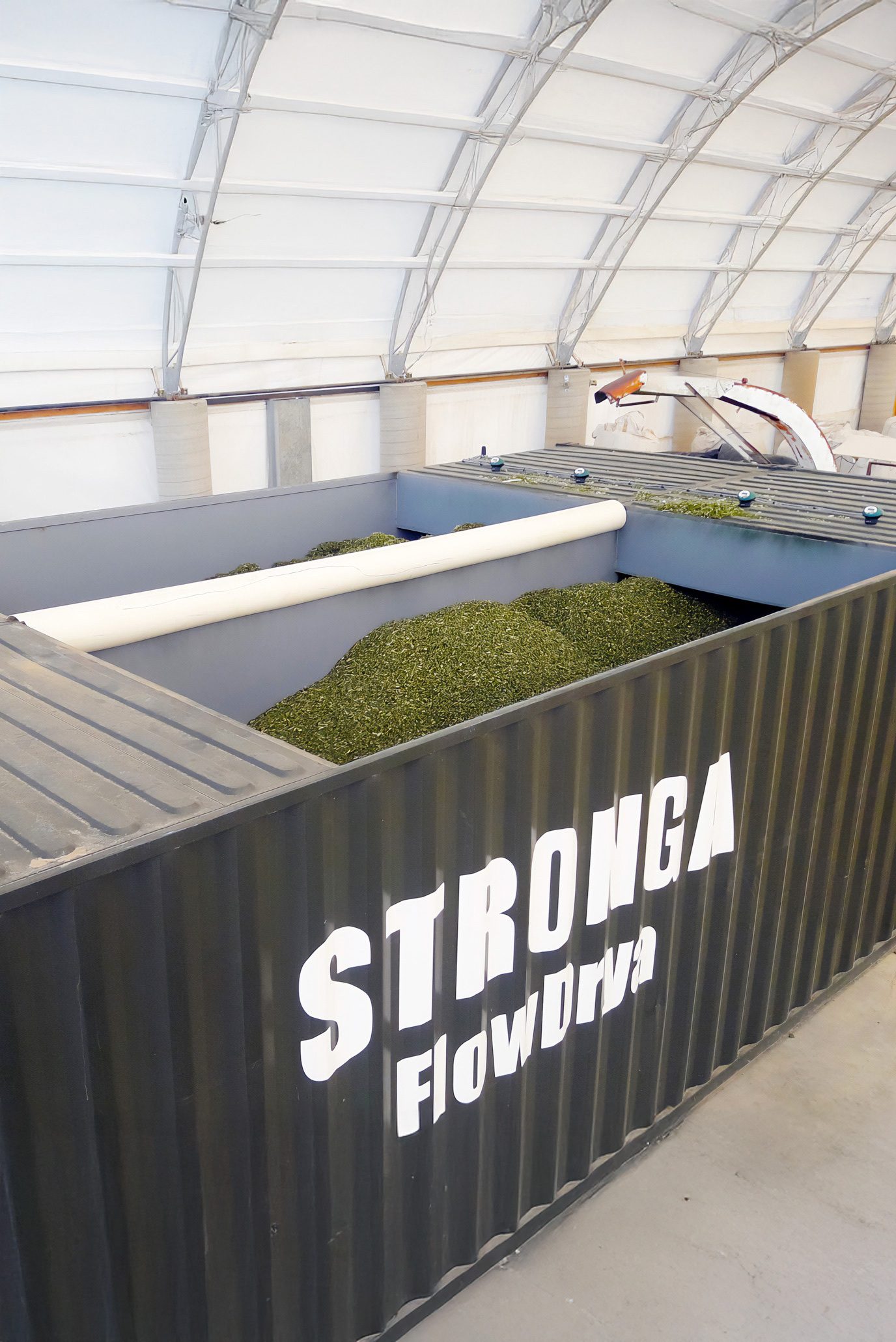
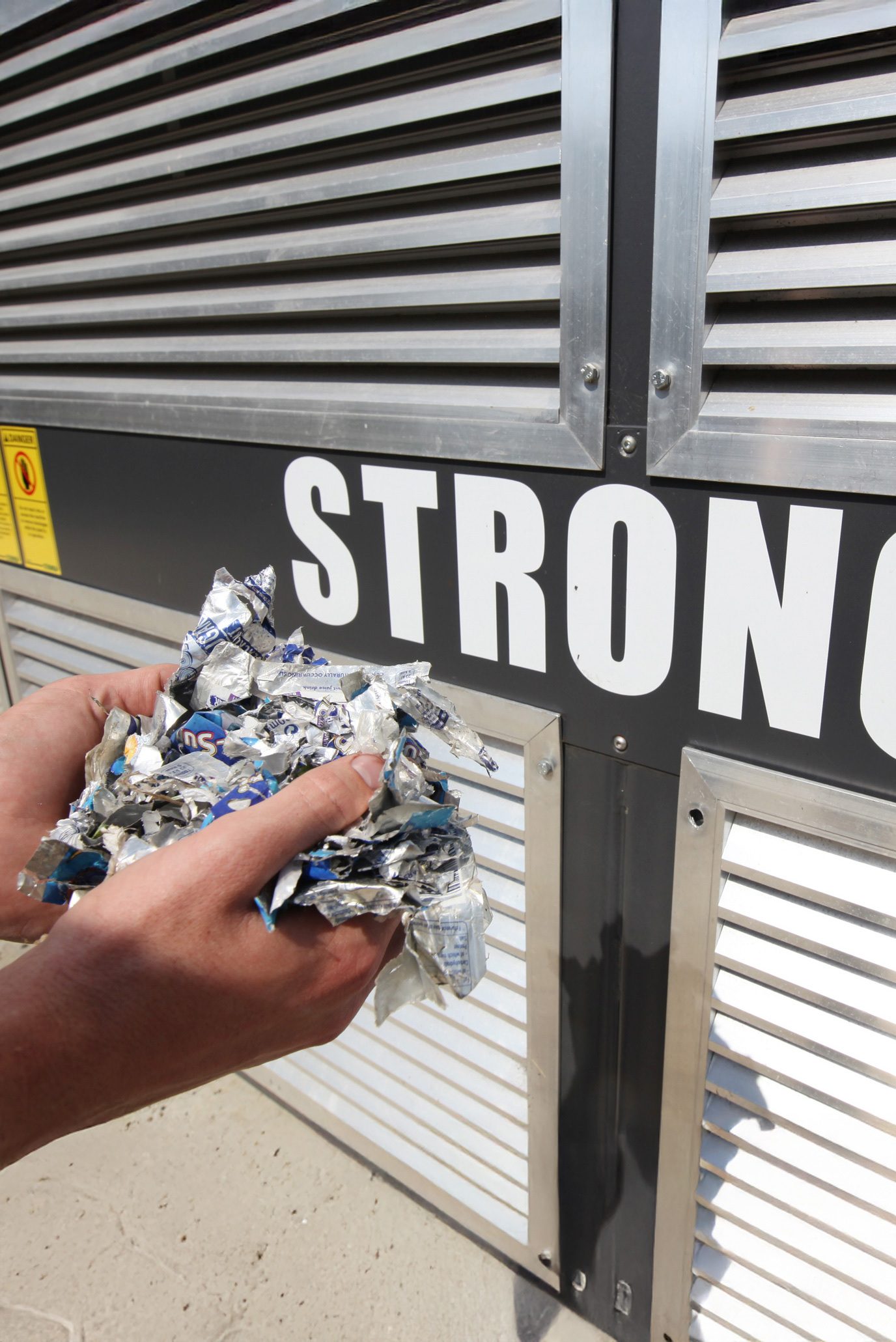
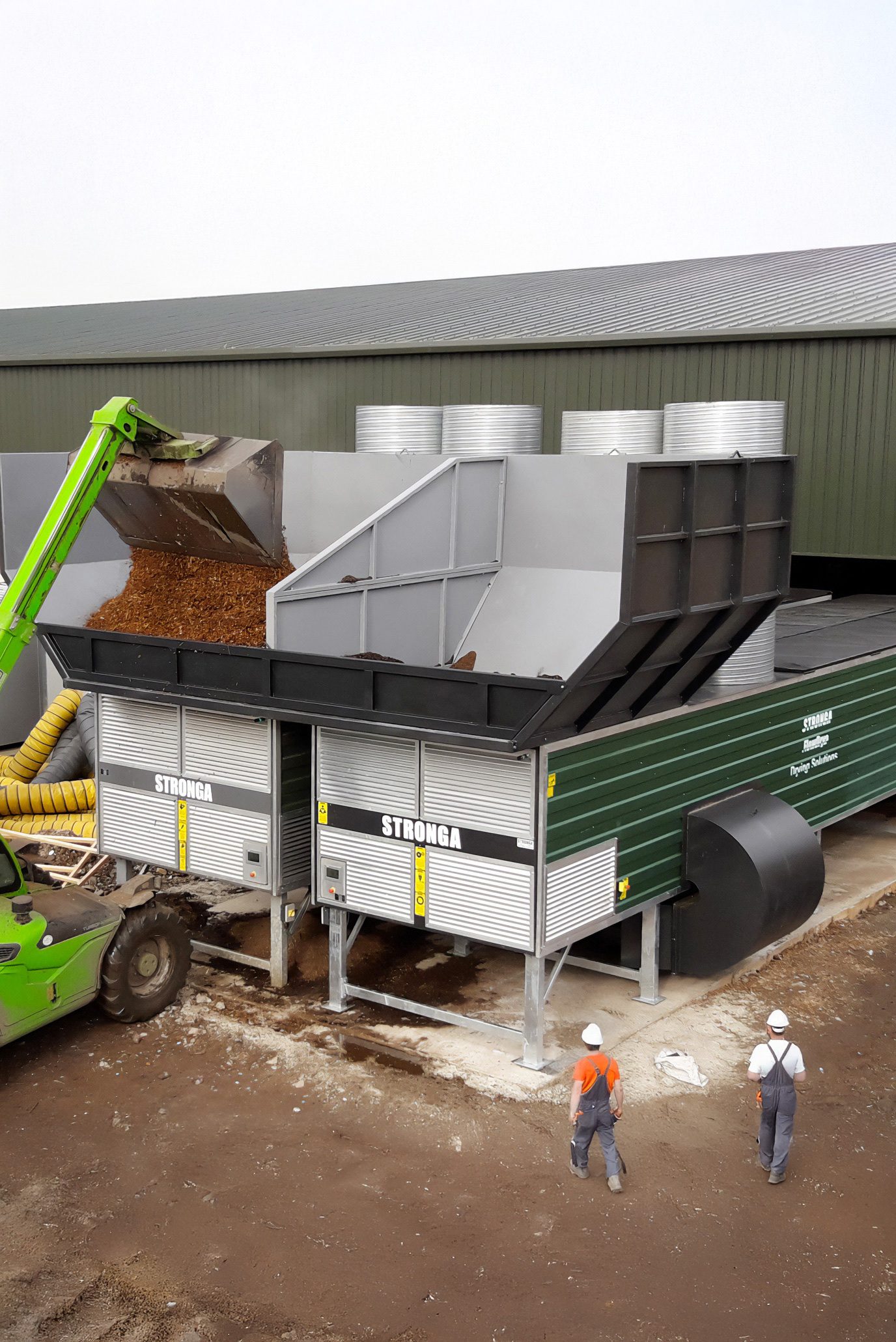
FlowDrya is well-proven across a variety of wet materials — woody biomass (wood chips, shavings, sawdust, pellets), forage and biomass (grass, lucerne, alfalfa, hemp), waste-to-energy fractions (SRF, RDF), paper pulp and digestate fibre from different feedstocks.
By utilising direct fuel or residual heat, such as CHP heat, waste process heat or energy from biogas systems, FlowDrya reduces moisture content, stabilises materials, increases calorific value, prevents decomposition and lowers storage and transport costs. Dried forage can be reused as animal feed, soil improver or biofuel, while dried woody biomass becomes a high-value fuel or feedstock for gasification and biochar production. For SRF and RDF, achieving consistent, specification-compliant moisture levels helps avoid penalties at cement kilns, pyrolysis plants and EfW facilities while improving processing productivity.
With real-world experience in biochar production, pyrolysis, gasification, cement production and AD operations, Stronga custom-engineer FlowDrya equipment for high duty-cycle reliability and thermal efficiency, delivering industry-leading performance across multiple material streams.
Discover FlowDrya's full material portfolio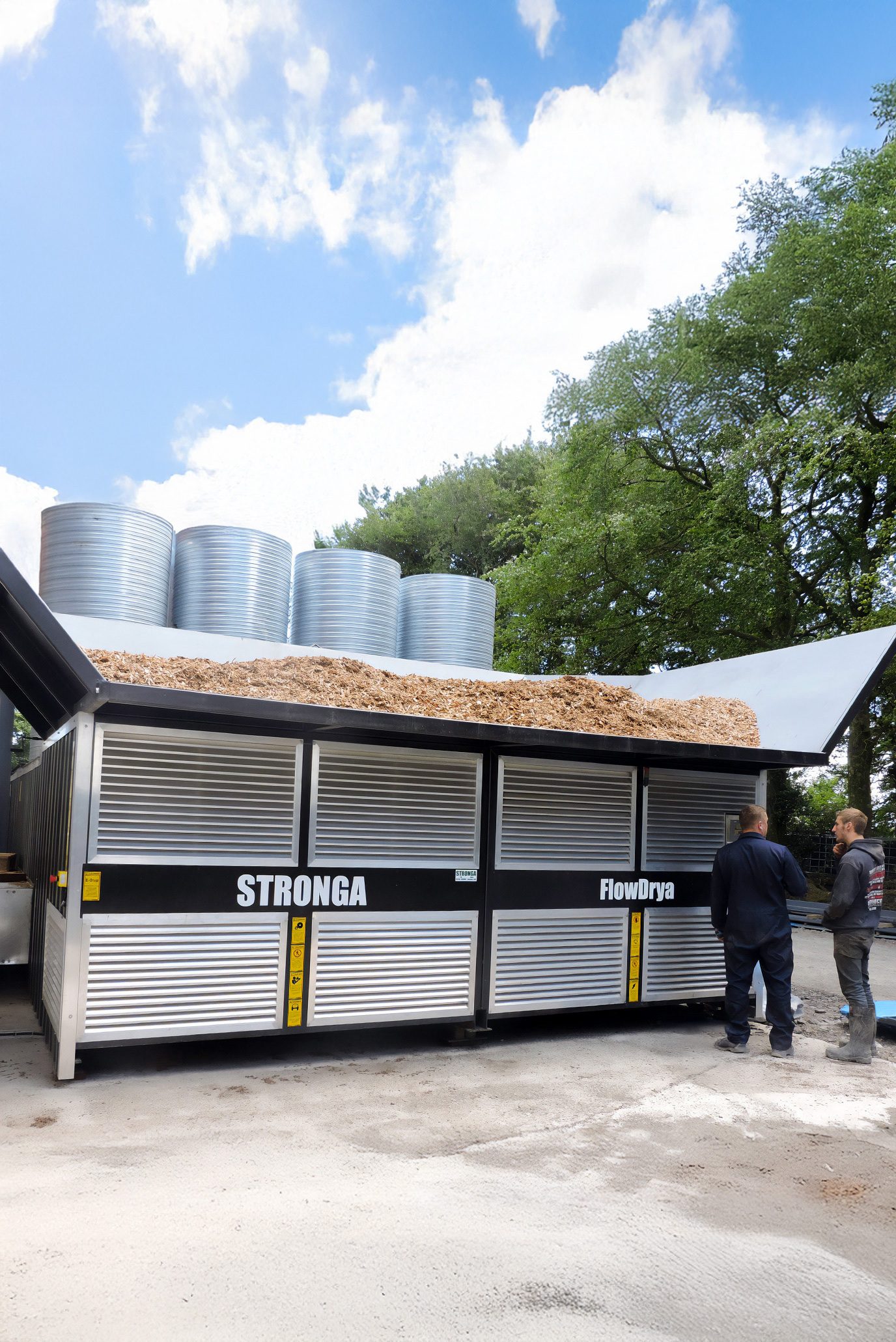
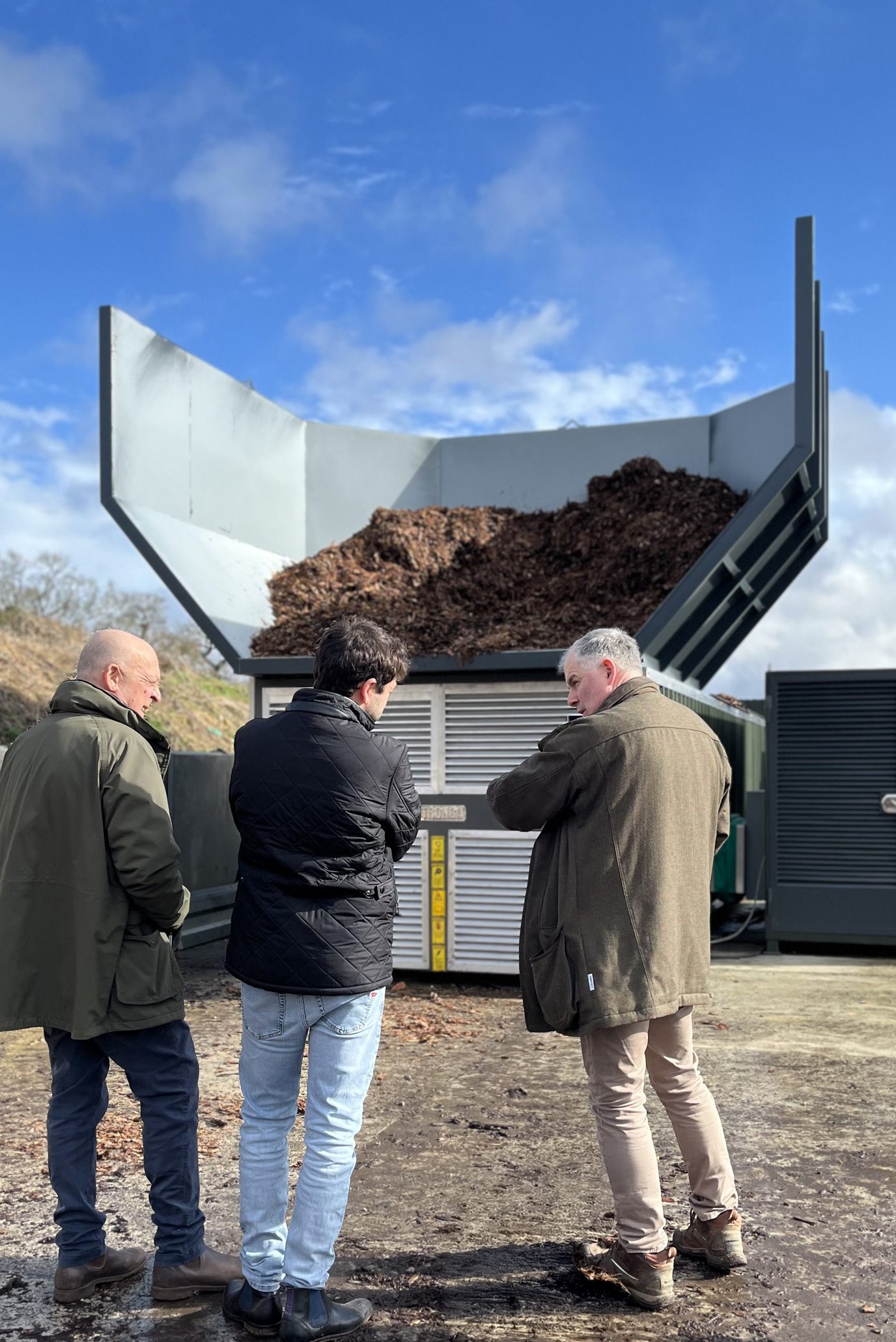
Get to Know FlowDrya
Precision-engineered FlowDrya systems combine powerful features together — delivering the unmatched performance of a one-of-a-kind dryer – truly unique and in a class of its own. From PulseWave™ agitation and deep-cycle drying to airflow zoning, massive hopper capacity and intelligent control systems, each element compounds together to create a reliable, efficient, and remarkably consistent drying process.
The result is an elegant, super-low-power, low-maintenance and long-life drying system, highly capable across a range of materials – woody biomass, alternative fuels, agricultural materials and more. Dive into the details and discover how the following features combine to create the market's leading continuous-flow dryer.
Intuitive DryStation™ Controls
Intelligent control systems are the beating heart of every FlowDrya.
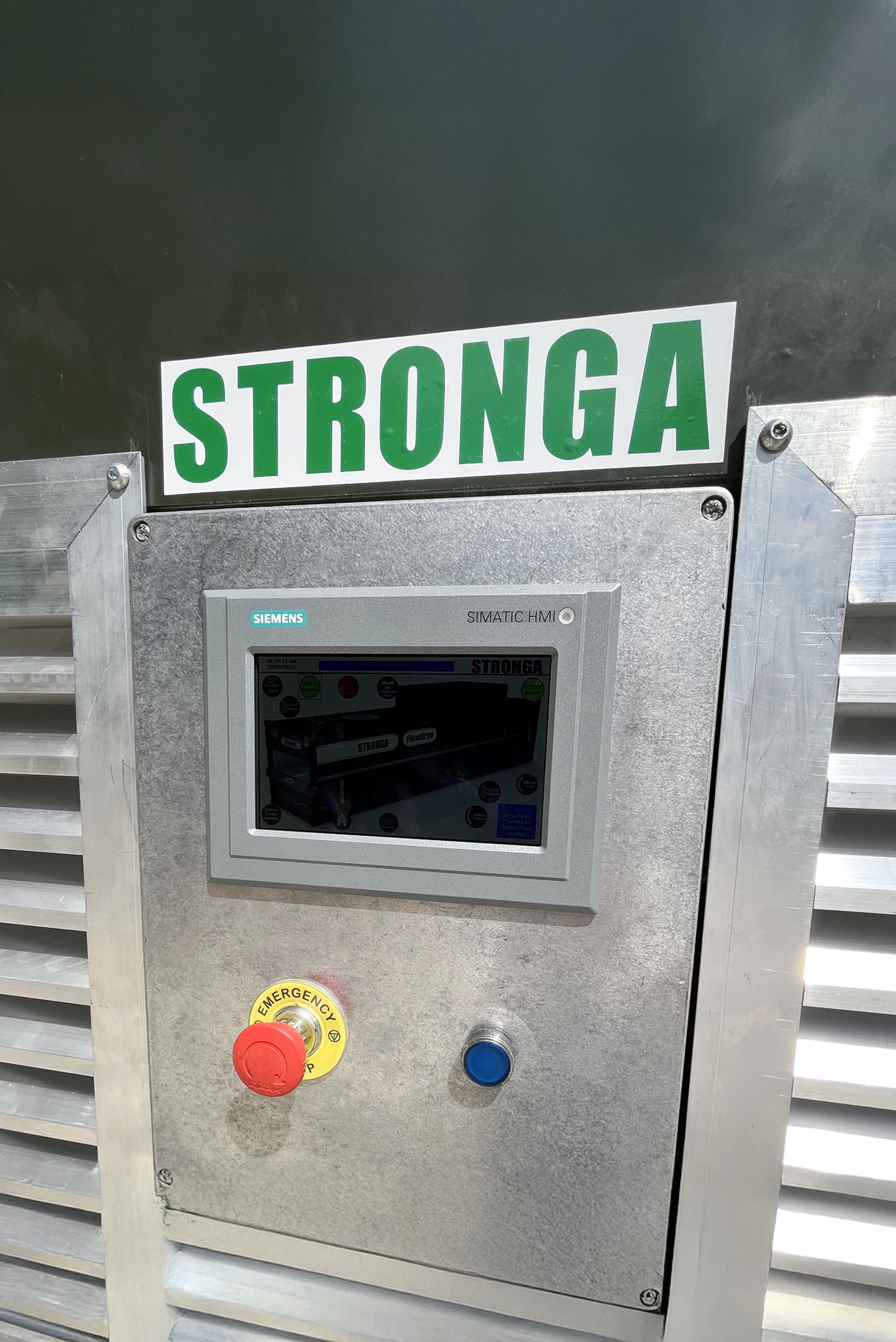
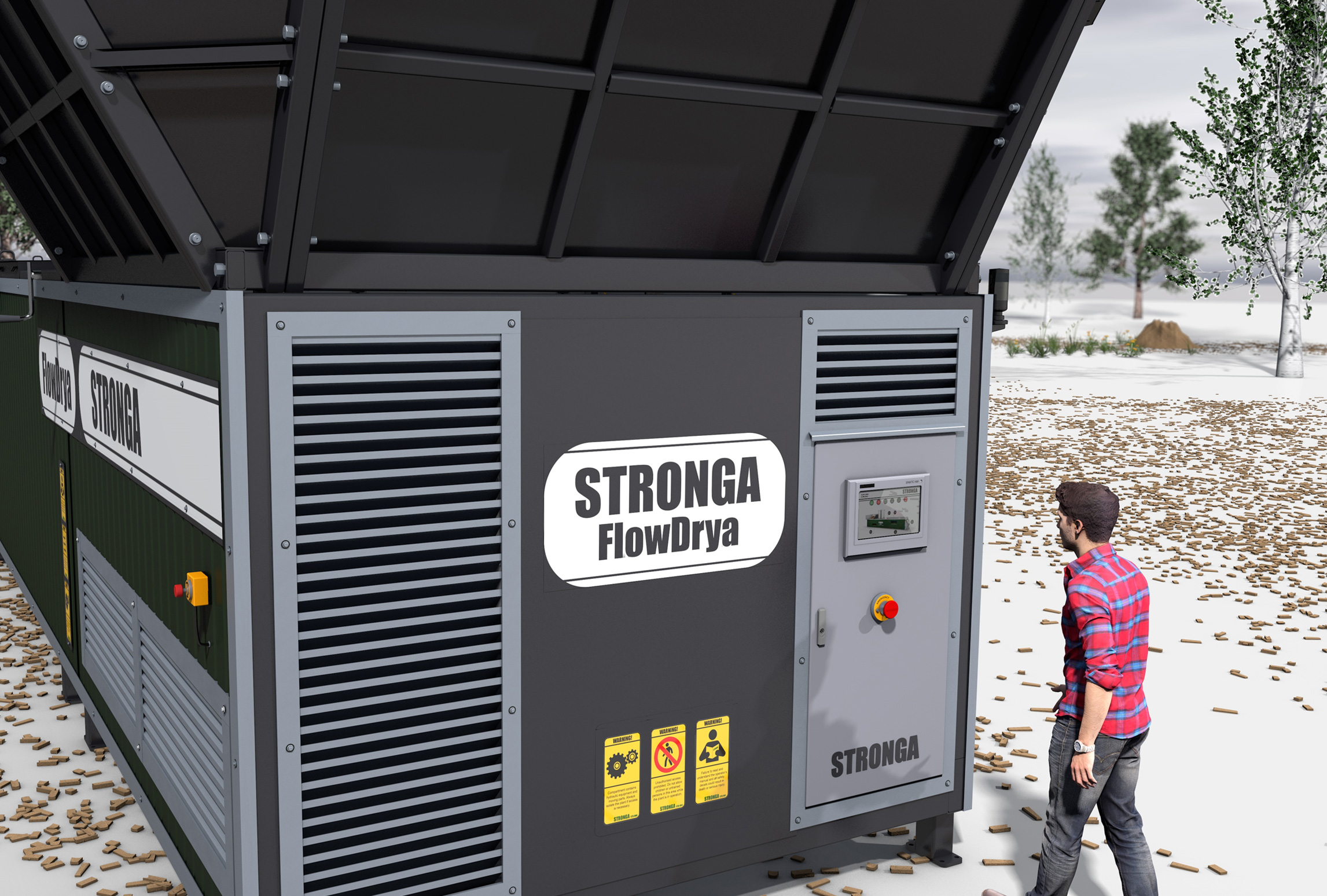
FlowDrya optimises drying performance through intelligent control systems, supported by an intuitive HMI touchscreen and comprehensive operator training. The illuminated HMI provides operators with easy access to control, safety and performance parameters, while built-in data logging, energy monitoring, soft-start technology and fault notifications streamline dryer management and maintenance.
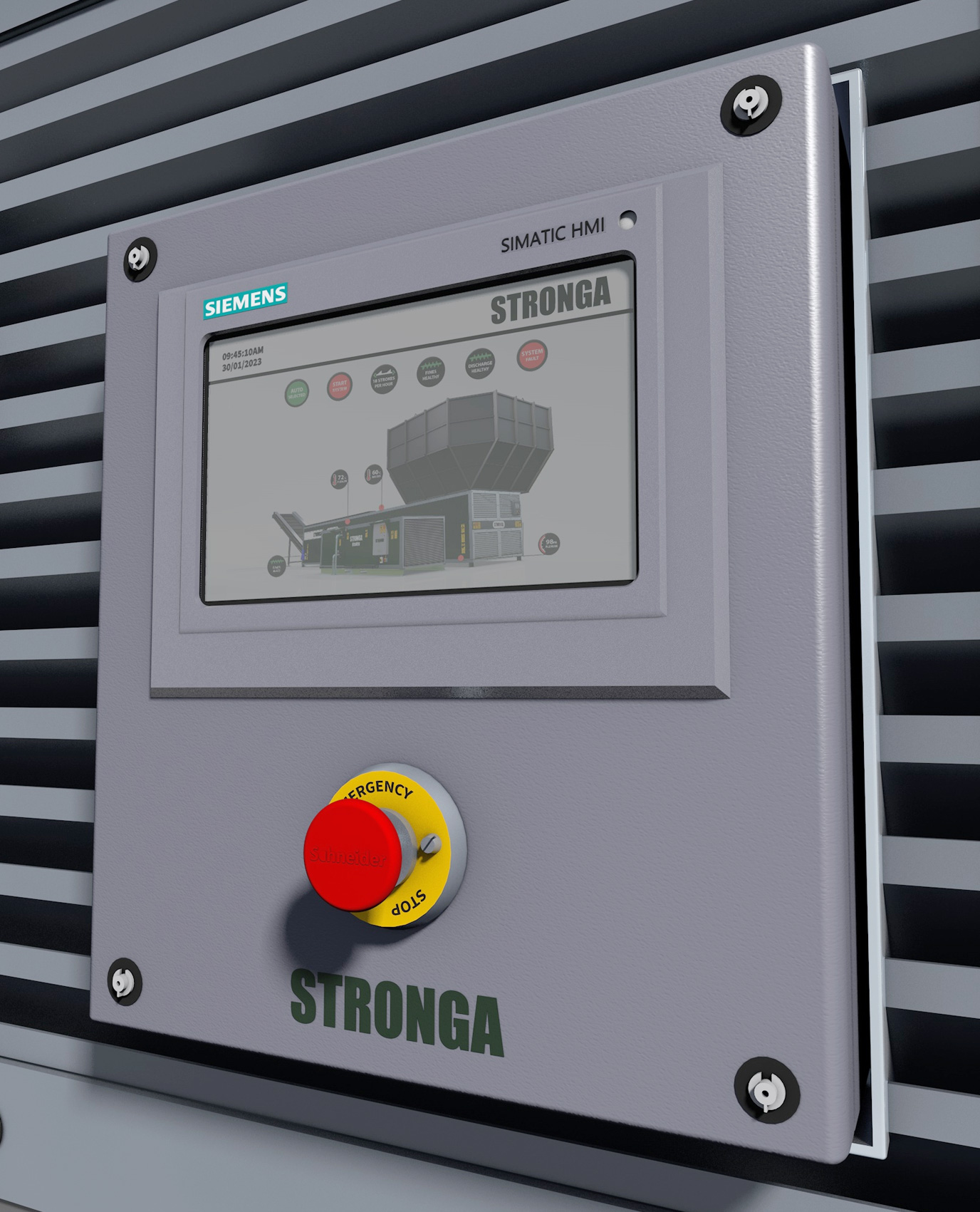
FlowDrya delivers consistent drying performance through an intelligent controls system which features an intuitive Siemens HMI touchscreen, providing designated operators with easy access to control, safety and performance parameters.
Behind the scenes, FlowDrya's control architecture is engineered for seamless integration with modern plant networks. Each flow dryer uses fixed-IP Siemens S7-1200 PLC hardware, with optional SCADA connectivity, remote operation capability and secure VPN-enabled support. Remote/Local selector modes, capacity control and safe alarm-reset protocols ensure both convenience and operational security. Stronga supplies the full FlowDrya control panel and networking hardware, while allowing clients to manage IP addressing and broader plant-wide SCADA requirements. The result is a robust, flexible control package that can be arranged to fit smoothly into your existing automation environment without unnecessary complexity.
HMI Touchscreen Interface
The DryStation™ HMI touchscreen provides a clear, intuitive interface between the FlowDrya and its PLC system, giving operators easy access to operating, safety and performance parameters. Designed for simplicity and ease-of-use, the DryStation™ HMI includes:
✔ High resolution wide-screen colour display
✔ Extremely easy touchscreen usability
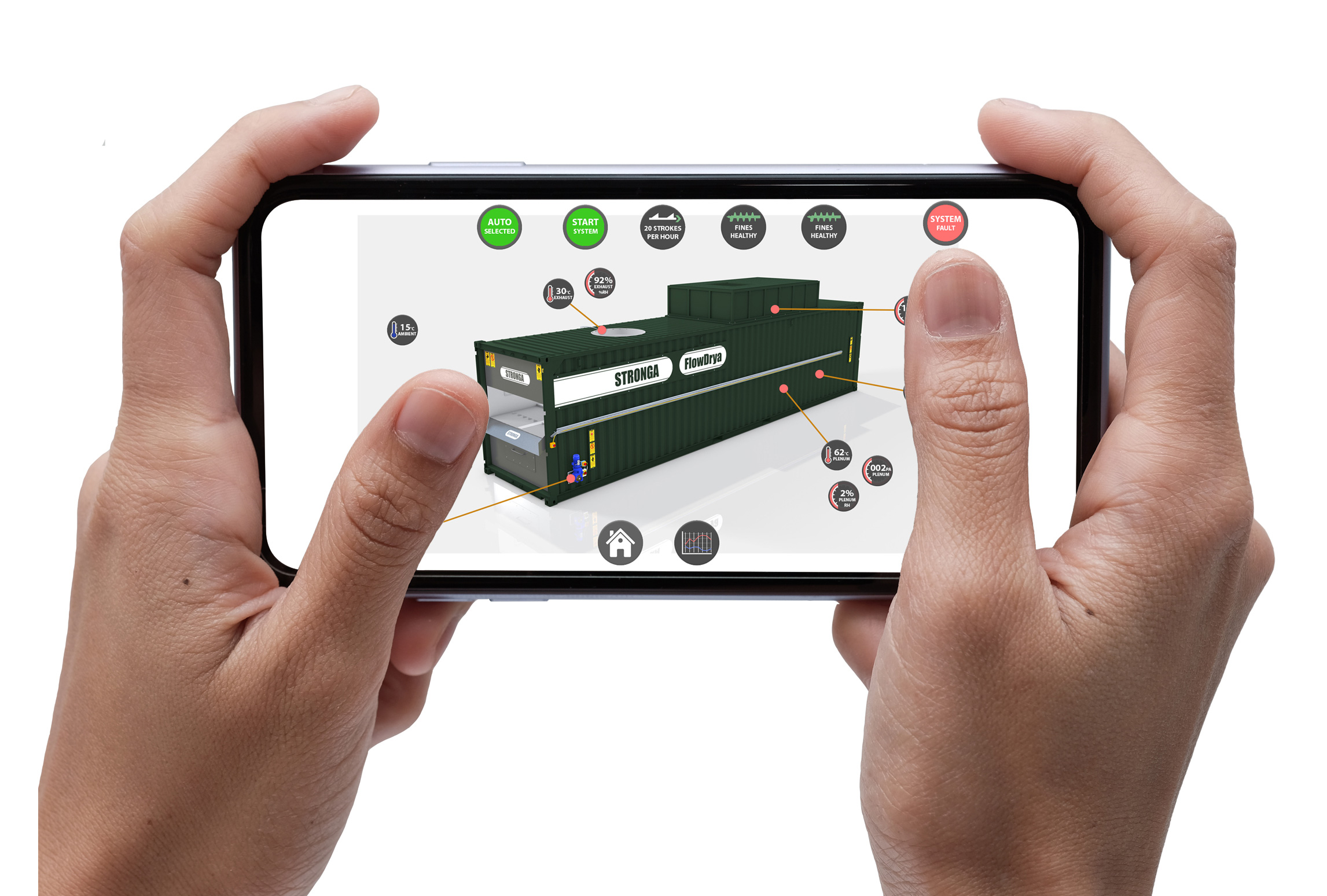
✔ 3D imaging of your flow dryer with key parameter icons
✔ Remote access potential
✔ Energy-usage monitoring and display
✔ Explanative fault-finding notifications
✔ Resetting safety-related alarms
✔ Time-stamped data recording for operational analysis & more.
* Please note – HMI specifications may vary from project to project depending on the client's requirements and material to be dried.
| Parameter on HMI | What You Control / Monitor | Benefit |
|---|---|---|
| Strokes Per Hour (drying-bed stroke rate) | Adjust the number of "strokes" (drying bed movements) per hour — typically between 1–60 strokes/hr. | Control residency time and throughput: more strokes/hour → more throughput; fewer strokes/hour → longer residency time on the drying bed for more moisture removal. Adjust stroke count to reach the desired output moisture content. |
| Operation Mode: Manual & Automatic | Choose between manual or automatic control modes of the drying bed, fines material floor, hydraulic power pack and discharge augers / conveyors (where installed). | In automatic mode, the drying floor strokes automatically at the hourly count defined by the operator — working independently while helping maintain desirable drying conditions. Manual mode allows operators to manually operate the hydraulic power pack, dryer/feed floors and any augers. |
| Material Depth on Drying Bed | Adjust material depth on the drying bed via the weir gate or depth-control sensor. In top-deck hopper setups, an ultrasonic sensor maintains the set level by automatically delivering material to the dryer floor, on-demand. | Ensures even airflow and heat penetration through the material. Critical for uniform drying and avoiding hotspots or under-dried pockets. PulseWave™ agitation assists in delivering uniformly dry output. |
| Plenum Temperature & Optional Relative Humidity | Monitor plenum temperature and humidity where the optional relative-humidity sensor is installed. | Allows monitoring of drying air conditions — key to consistent drying results regardless of ambient conditions or feedstock variation; helps prevent over-drying or overly slow drying. |
| System Status & Operational Monitoring | View system status, fault notifications, energy usage and other diagnostics. | Enables proactive maintenance and smooth solutions of alarms — reducing downtime while ensuring optimised drying outcomes. |
| Optional Moisture-Meter Sensor (MMS) | Control output material moisture with the MMS which automatically adjusts drying bed strokes per hour to achieve the desired output moisture content. | Provides reliable, repeatable final moisture content for a variety of materials — critical for fuel quality (wood chips, SRF) and sale-spec compliance. |
| Energy Usage & Metering (electric / thermal) | Monitor energy consumption of the flow dryer via HMI dashboard charts and graphs. | Enables tracking of operational costs, energy efficiency metrics, and helps operators minimise energy use per tonne of material dried. |
Low-Energy, Low-Wear: The Power of Stop-Start Drying
FlowDrya offers exceptional operating flexibility, functioning as either a continuous or batch dryer depending on how it is configured on the DryStation™ HMI. In continuous mode, the flow drying bed runs in a unique, energy-efficient stop–start sequence, allowing the dryer to "sleep" or rest between strokes, saving energy and significantly reducing component wear. In many applications, FlowDrya may operate for 15 minutes per hour and rest for the remaining 45, resulting in significantly lower annual running hours and longer service life of the dryer.
The 15:45 operating ratio is the optimal setting for many FlowDrya applications, but the ratio does vary depending on throughput and moisture removal requirements. Operators can adjust strokes-per-hour on the DryStation™ HMI to fine-tune residency time on the drying bed, optimising the dryer for individual materials and production demands.
| Feature | Benefit | Explanation |
|---|---|---|
| Stop–Start Moving Floor Process | Massively reduced component wear and longer dryer service life. | With the dryer operating for only ~2,000 hours per year and resting for ~6,000, components experience far less mechanical stress compared to continuously running systems. |
| Lower Electrical Energy Usage | Major electrical energy cost savings. | Because motors and hydraulics run for only ~15 minutes each hour, electrical consumption is dramatically lower than other dryer types, delivering substantial annual "opex" savings. |
| Adjustable Strokes-Per-Hour | Precision dry output moisture content control. | Fine-tune residency time on the drying bed using the DryStation™ HMI to ensure the required target output moisture content is achieved. |
| Reduced Operating Hours | Lower service and maintenance costs. | Fewer running hours mean fewer service interventions, lower maintenance costs and overall reduced downtime. |
| Energy-Efficient Process Control | Eco-friendly with an overall lower carbon footprint. | By resting 75% of the time, FlowDrya consumes far less electricity than other dryers which are energy-hungry, improving environmental performance and lowering operational emissions. |
Automatic Self-Protection Functionality
FlowDrya is engineered with comprehensive self-protection, fault-monitoring and intelligent shutdown systems that safeguard both the dryer and your operation.
The PLC system continuously monitors oil temperature, oil level, hydraulic pressure and other critical parameters, automatically triggering fault notifications or safe shutdowns if rare abnormalities occur. Fault notifications appear instantly on the HMI, supported by an Andon beacon for at-a-glance status visibility, while automatic recovery sequences handle issues such as blockages on the drying bed. With integrated protections, detailed troubleshooting guidance and smart staged cool-down procedures, FlowDrya delivers exceptional safety, reliability and uptime — built into the automation, not left to chance.
Remote Access & Smart Diagnostics
FlowDrya can be equipped with optional, secure remote-access technology, giving authorised users real-time visibility of dryer performance, trends, alarms and data logs — anywhere and anytime.
This powerful connectivity reduces service visits, speeds-up diagnostics and enables ongoing optimisation with remote, on-demand support from Stronga engineers. Built on security-certified cloud infrastructure, the system supports all major PLC protocols for data logging and alarm notifications, offers local web dashboards and factory-system integration via OPC UA, and provides flexible data transfer options using MQTT or HTTPS. Remote access can be provided via the client's LAN connection or a suitable Data SIM, ensuring seamless, IT-approved connectivity that keeps your drying operation productive — even when support teams aren't immediately available on-site.
Client remote access levels are intentionally-controlled by Stronga. Authorised operators can view Stronga's secure remote-access server from a desktop, access machine setup screens and HMI log data in view-only mode, and — upon request — enable phone-based parameter viewing.
Expert Commissioning for Confident Dryer Control
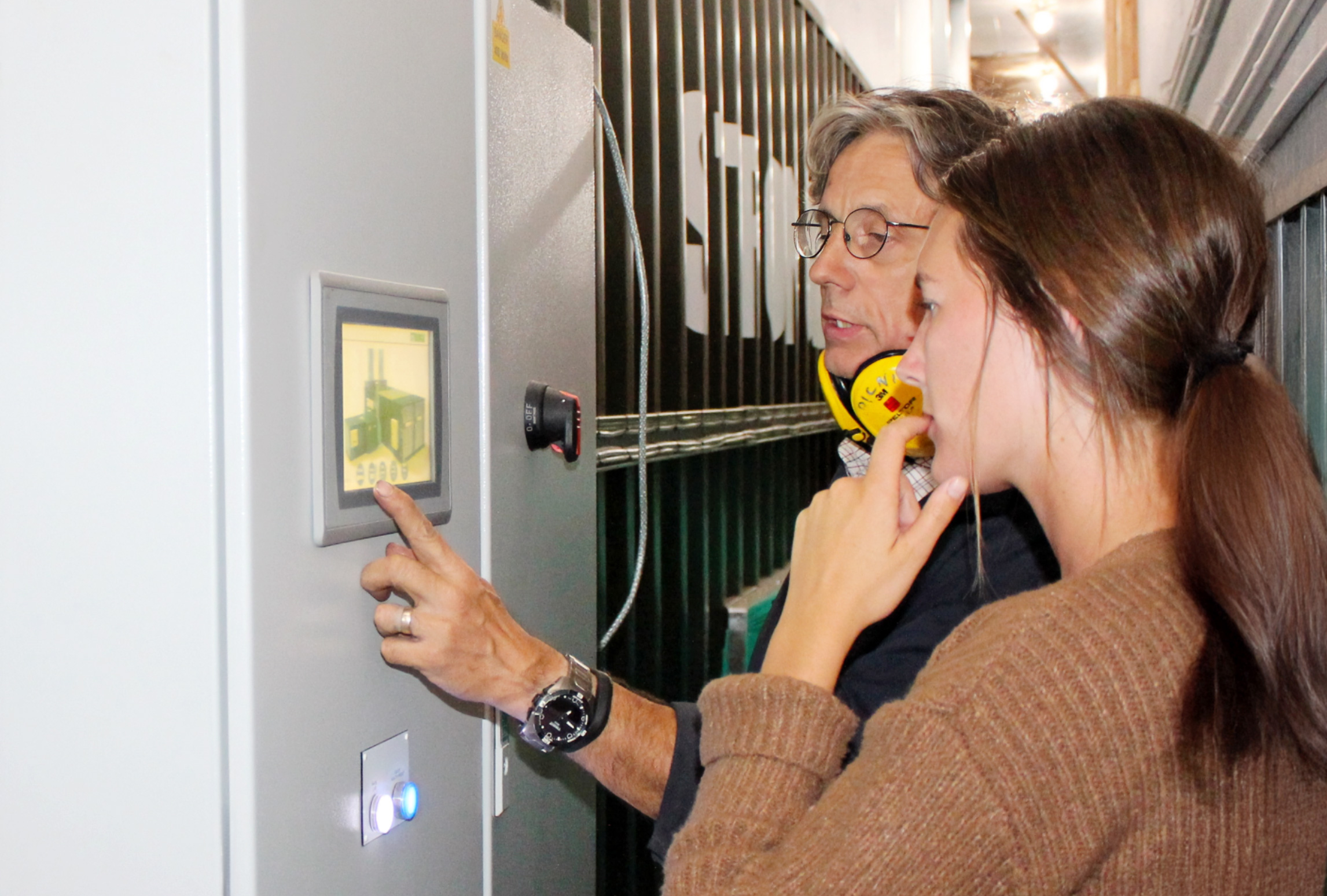
Stronga's commissioning service ensures your designated operators gain full confidence in DryStation™ control systems from day one.
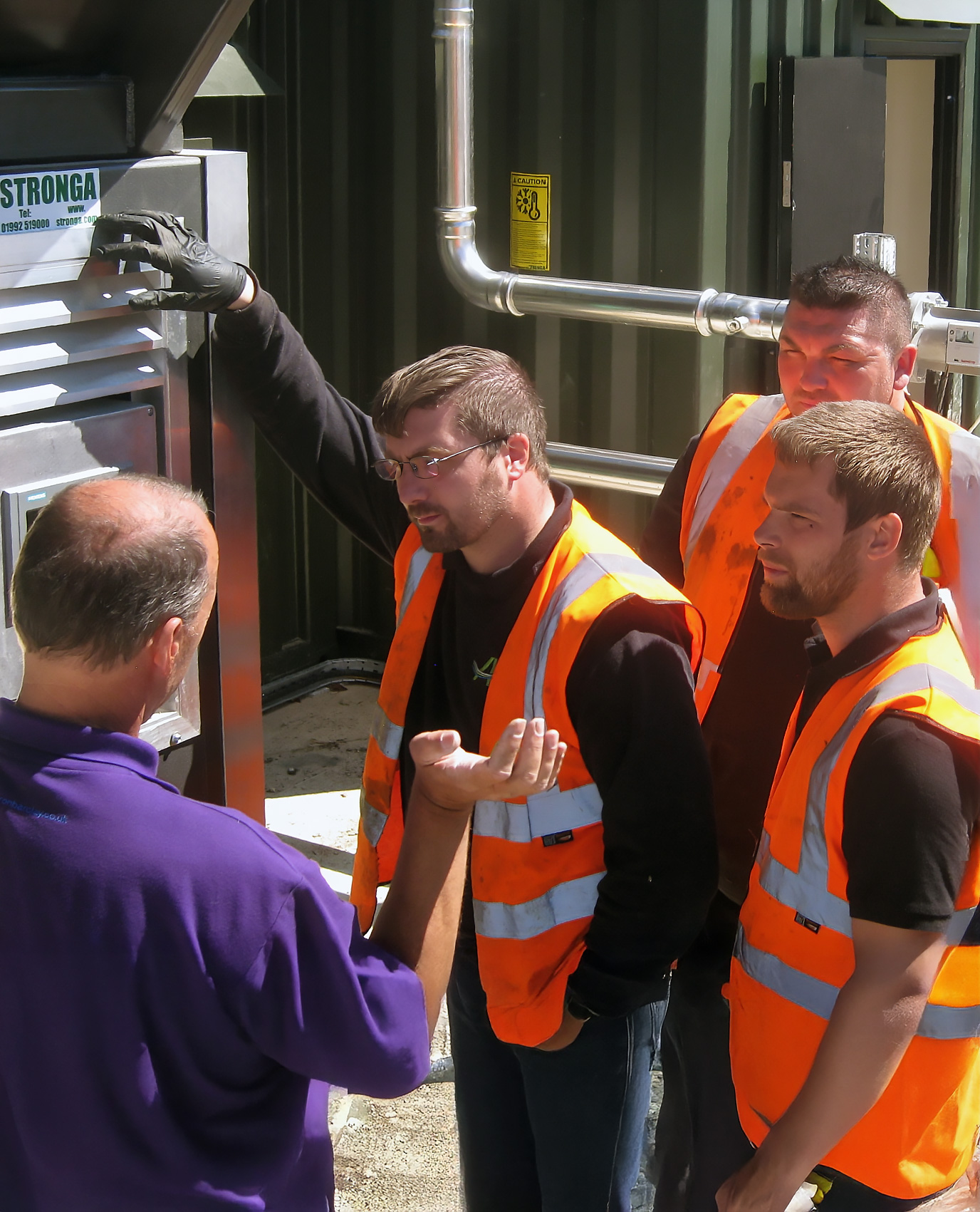
Our on-site FlowDrya experts oversee installation and integration, then deliver in-depth control training covering system operation, safe start-up and shutdown procedures, alarm handling, optimisation of dryer performance and routine maintenance checks. We calibrate all sensors and set points and run a full "hot test" to fine-tune real-world performance. After completing the Site Acceptance Test, we provide full handover documentation and ongoing remote support to keep your control system, and your flow dryer, running at peak performance for many years to follow.
For deeper insight into FlowDrya's control ecosystem — from HMI operation and parameter optimisation to energy management, safety features and smart diagnostics — we invite you to contact the Stronga team. Our experienced technical experts can answer application-specific questions, review your requirements and help you configure a drying solution that delivers exceptional reliability, real efficiency and total control.
Contact Stronga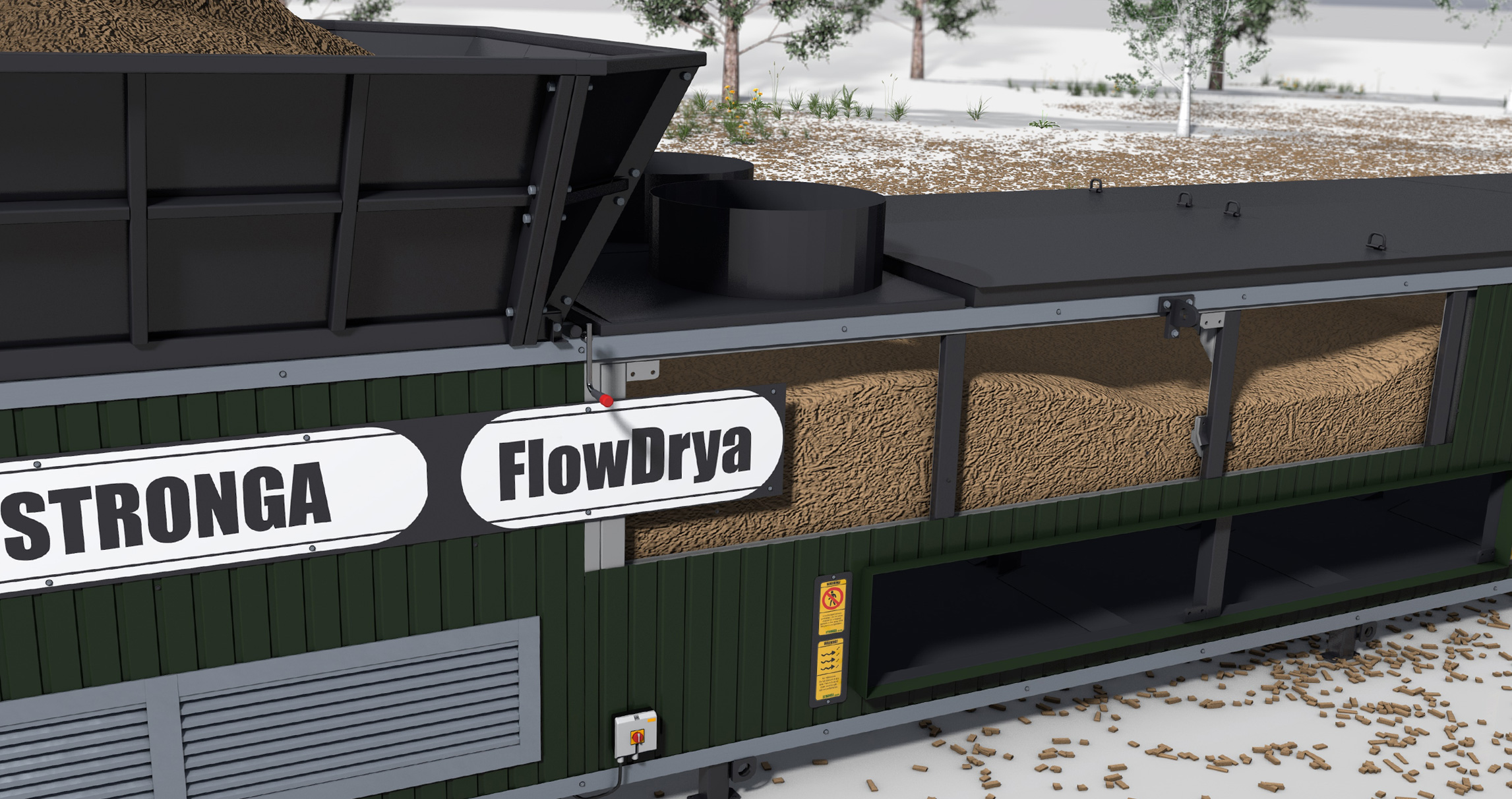
Truly Unique Agitation Technology
At the heart of FlowDrya is PulseWave™ agitation — a unique deep-cycle mixing effect that continuously tumbles material as it moves along the hydraulically powered drying floor.
This rolling-wave motion ensures every particle repeatedly contacts both the heated drying deck and the forced drying airflow, eliminating stagnant zones common in belt dryers. The result is faster, more energy-efficient drying and a consistently uniform moisture content, even with difficult, non-homogenous materials such as wood chip, bark, SRF, and digestate. By displacing and re-mixing the entire bed with every stroke, PulseWave™ delivers reliable, high-quality drying where uniform dry output truly matters.

What is PulseWave™ Agitation?
At the heart of the flow drying process is PulseWave™ — a deep-agitation effect created as materials advance progressively along the hydraulically-powered, FlowDrya drying floor. The unique continuous tumbling effect allows the entire load to make thermal contact with the heated drying bed, as well as receive equal access to heated forced airflow drying, producing a far more uniform dry output moisture content than non-agitating belt dryers.
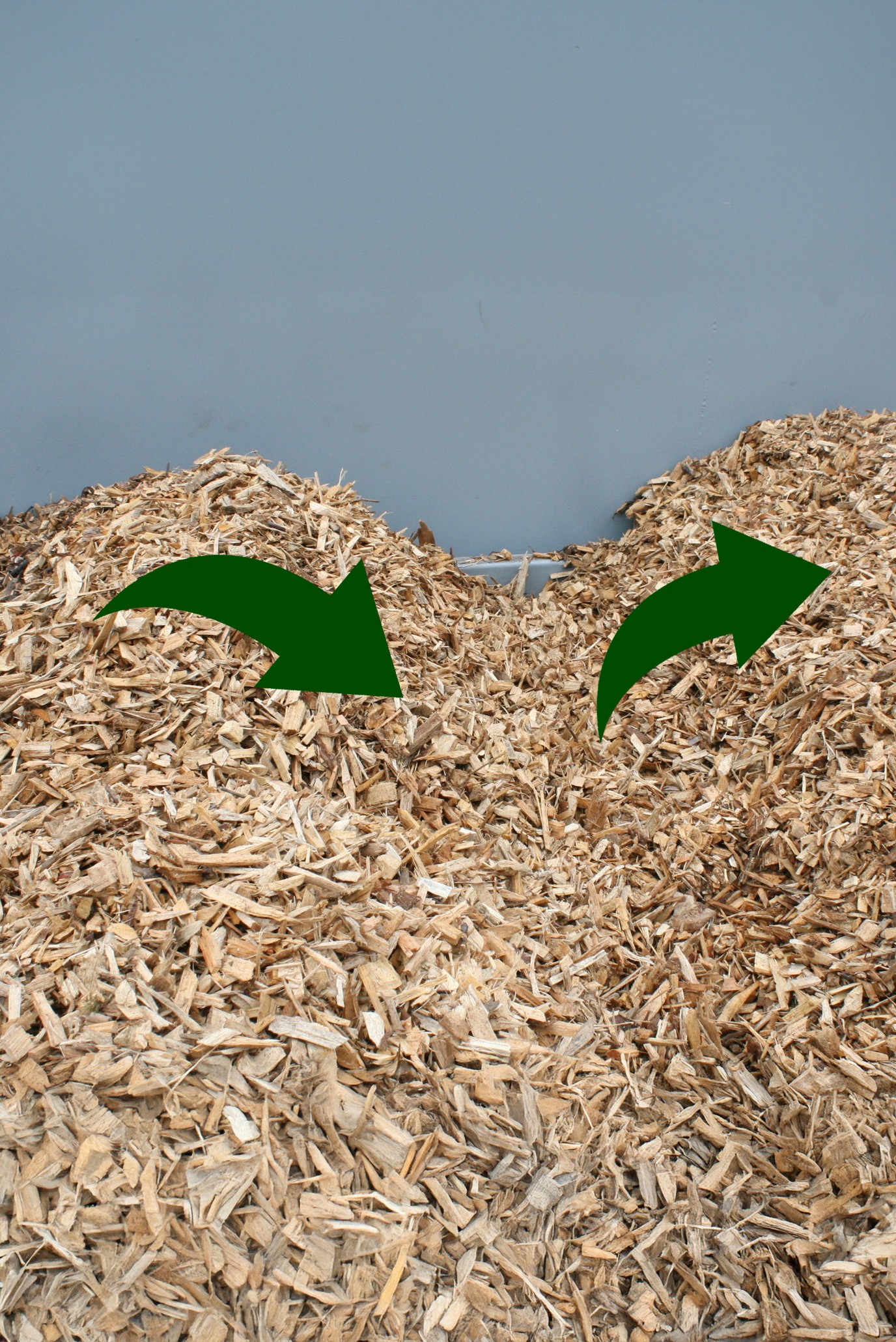
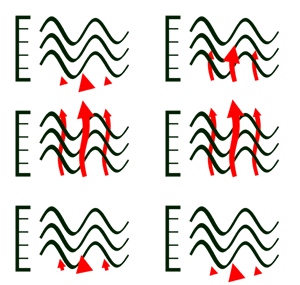
The PulseWave™ agitation process uses a smooth, reciprocating floor stroke to create a rolling wave of material. On the forward stroke, greater force near the floor drives material ahead while upper layers lag and tumble backward, forming a wave that moves along the bed. A thin cushion of drying air flowing through the floor marginally lifts the load, reducing friction so the material rides on air rather than dragging on the floor — much like an air-hockey puck.
This allows even high-density materials to move with low hydraulic power, as the floor only nudges the wave instead of pushing the full mass. On the return stroke, the air cushion remains as the wave collapses, lifting and tumbling the material over the blade, re-forming the bed structure and creating intensive agitation. With every stroke, the wave forms and collapses again, ensuring continuous particle turnover and uniform drying throughout the process.
Because every stroke displaces particles from their previous position — something belt and on-floor dryers don't do — each particle receives equal exposure to warm airflow and conductive heat. The result is efficient, highly uniform drying, which is particularly important when materials like wood chip or SRF are being prepared for high-calorific fuel applications.
1) Uniformly Dry Output, Even with Non-Homogenous Materials: FlowDrya's PulseWave™ agitation system ensures no particle ever sits trapped in an airflow-restricted pocket - the entire load is exposed to consistent thermal conduction and drying airflow. FlowDrya agitation is especially valuable with challenging, non-homogenous materials like wood chip, bark and digestate, where particles can tangle, bind together, and vary considerably in size and shape. Overall, PulseWave™ agitation helps deliver more uniform moisture content across the load, when compared to non-agitating dryers.
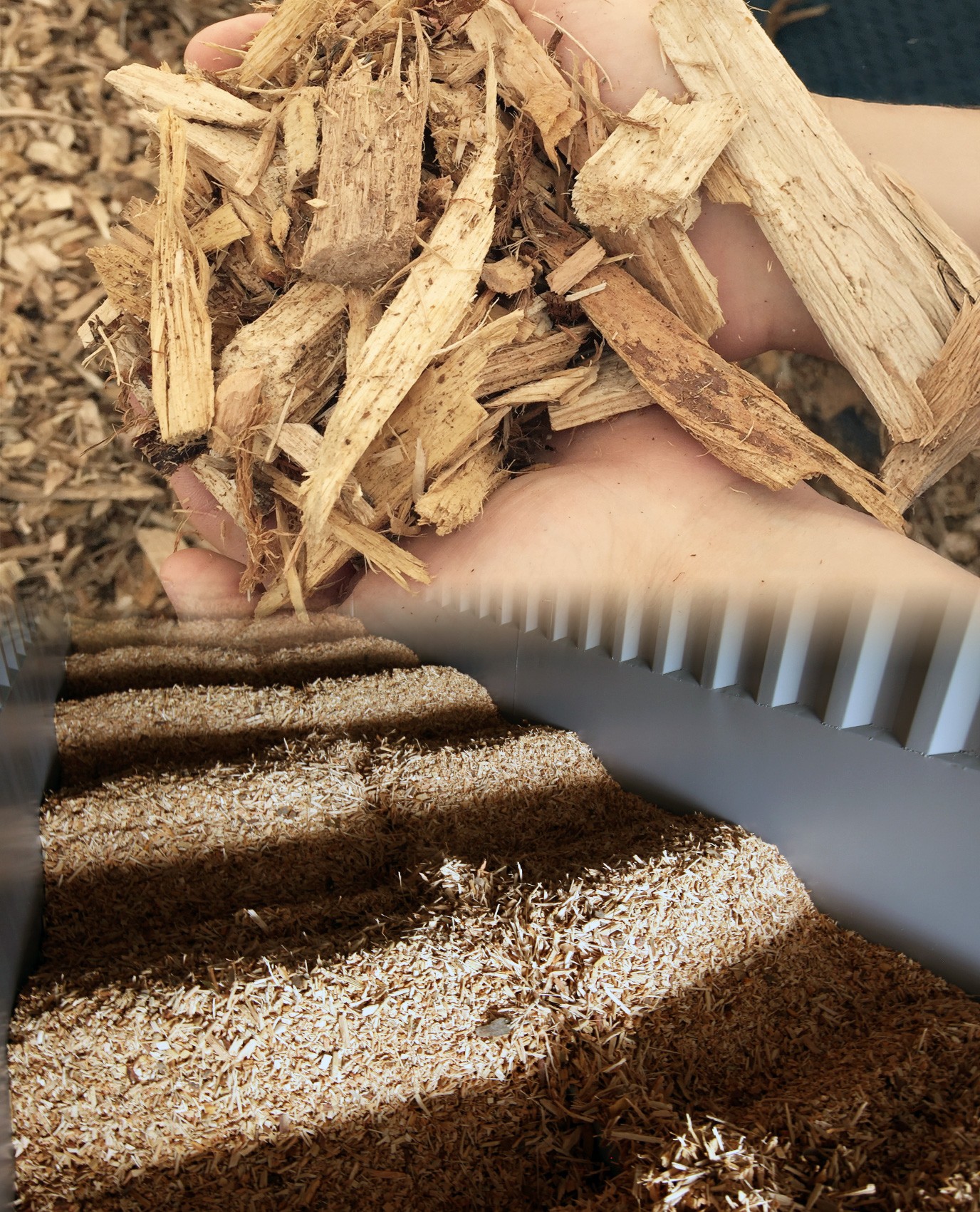
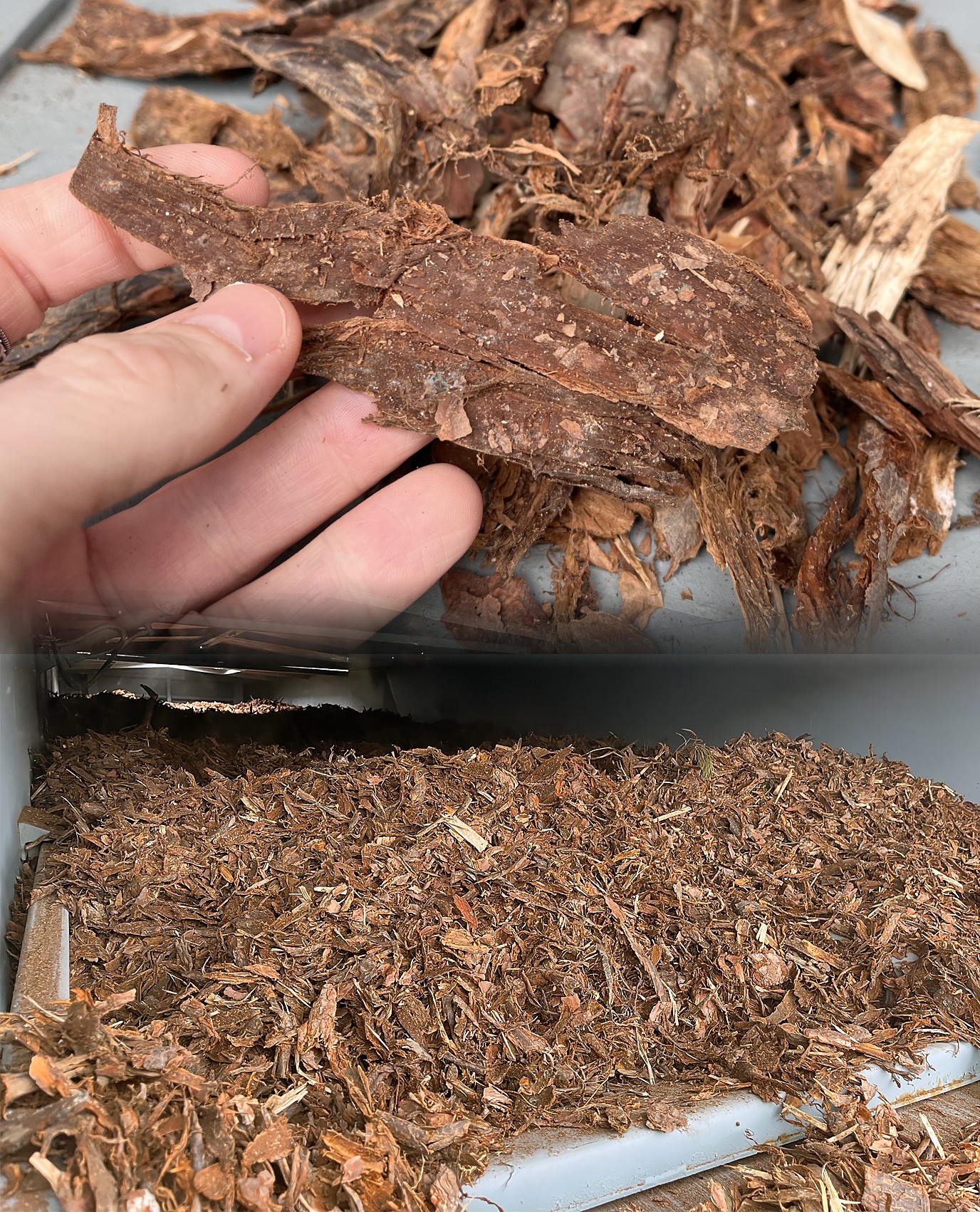
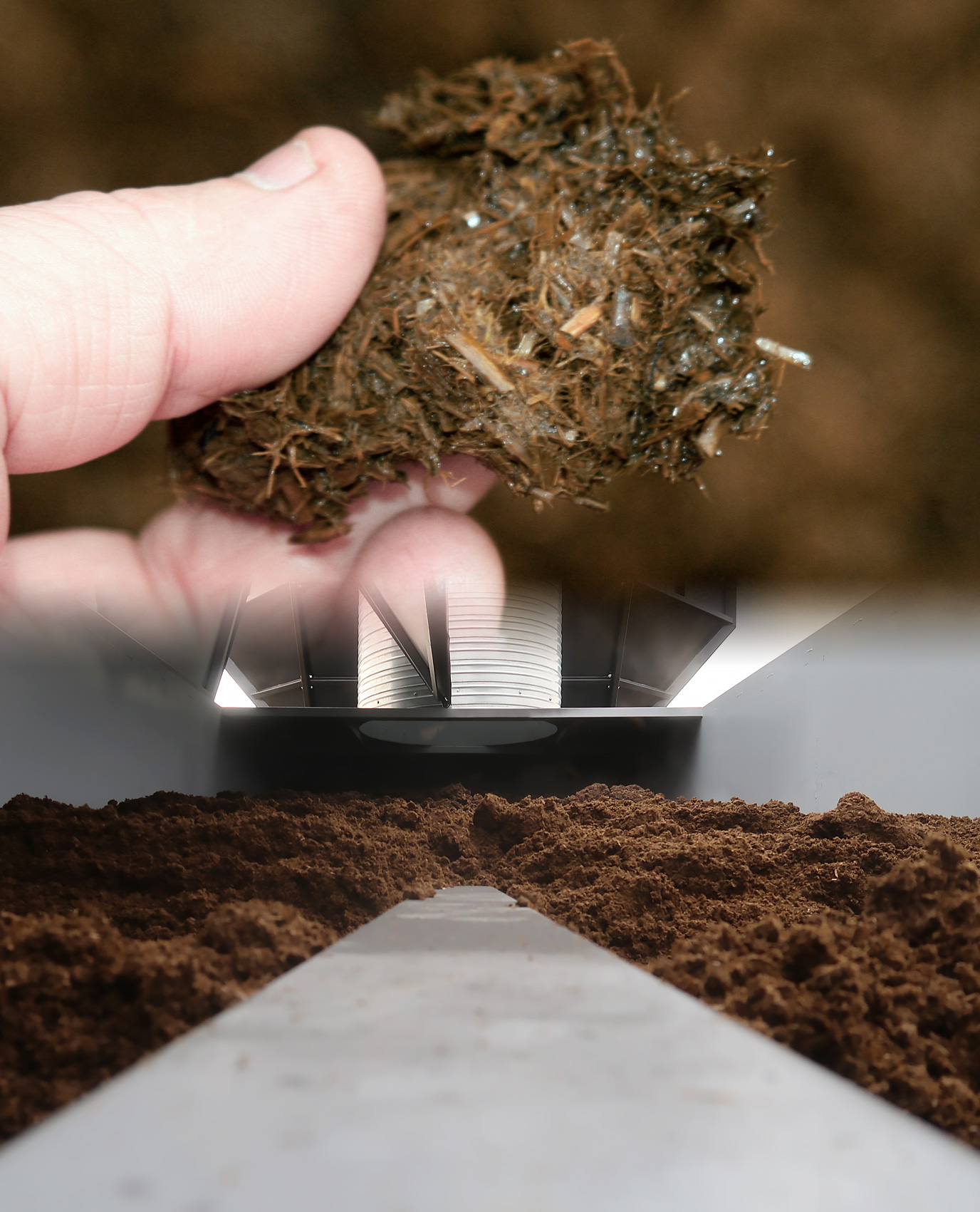
2) Faster Drying; Increased Throughput: PulseWave™ agitation breaks up clumps while stretching and heaping waves of material along the drying bed, exposing the full surface area of the material to heated drying airflow. The benefit of exposing the whole surface area of the whole load to drying airflow is quicker evaporation, using less energy per litre of moisture evaporated. The results include higher throughput per hour and lowest electrical energy consumption in class.
3) Better Airflow Penetration: Other dryers, such as belt dryers with minimal or ineffective flicker type agitators, tend to develop compacted, blocked zones which cannot be penetrated by drying airflow. PulseWave™ agitation keeps the FlowDrya bed open and permeable, allowing forced air to move through the entire load instead of building back-pressure against the dense, stagnant bottom layer typically found in belt dryer beds.
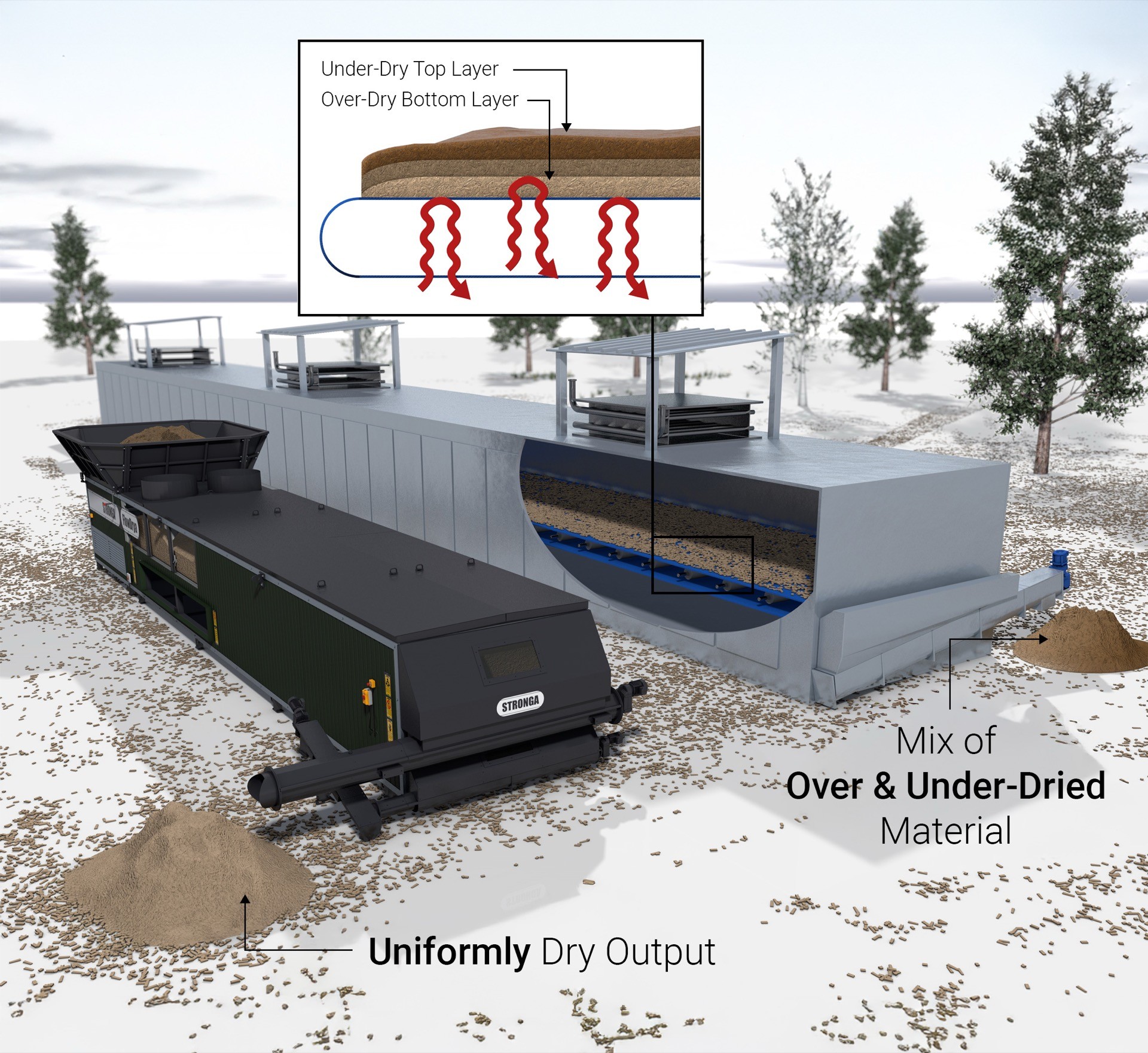
4) Reduced Risk of Over or Under-Drying: Without agitation, the bottom layer in belt and chain-slat dryers often becomes over-dry while overlying layers remain wet because of blocked airflow and recondensation. With FlowDrya's deep-cycle agitation, each particle rotates through the thermal-airflow environment, making the final discharged product much more consistently dry — critical when the goal is an evenly-dried, high calorific value fuel – SRF, wood chip or other.
5) Lower Risk of Blockages: Woodchip and bark, in particular, tend to form arches, bridges, and pockets that block airflow in non-agitating belt and container dryers. FlowDrya's PulseWave™ bed breaks up these structures as the moving floor drives each wave forward, keeping the load open to the forced drying airflow. The PulseWave™ motion during the stroke cycle allows the flow dryer to handle a wide range of challenging, non-homogenous materials with greater reliability.
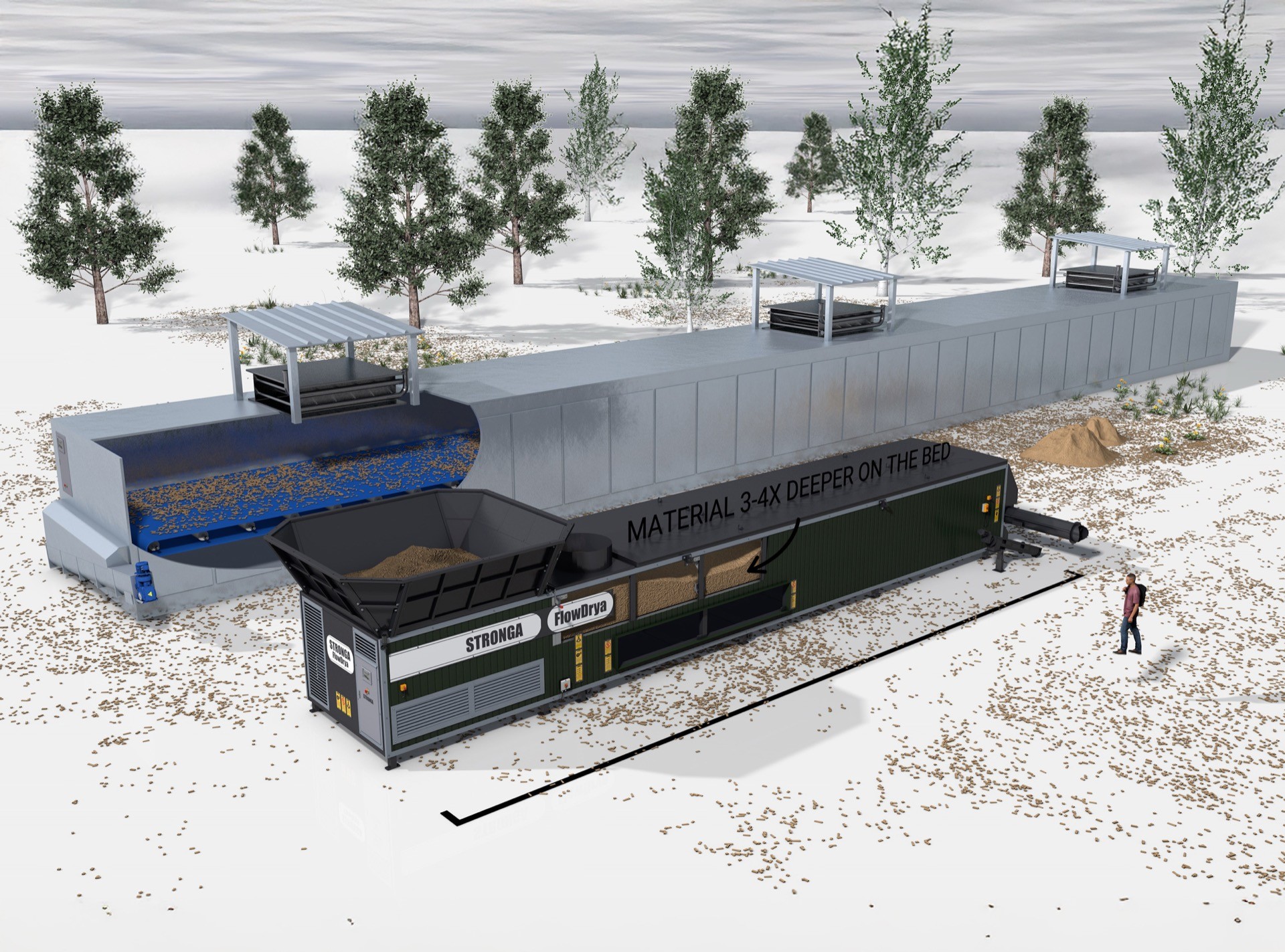
6) Compact Footprint - Deep-Cycle-Drying: Because PulseWave™ full-depth agitation keeps the drying deck load open and permeable, material can be dried at a much deeper level, 3-4X deeper than belt dryers, without choking the airflow. The result is considerably higher throughput per hour from a more compact footprint, lower capital cost dryer, while still achieving consistent, uniform drying. In comparison, belt dryers delivering the same throughput are typically 3-4X longer, and thus considerably more expensive, than FlowDrya units delivering the same throughput and moisture removal.
7) Higher Calorific Value Consistency: For alternative fuels like woodchip, RDF and SRF, moisture content directly affects calorific value. PulseWave™ agitation helps ensure that the combustion characteristics of the final product are stable and reliable, batch after batch.
8) Improved Energy Efficiency: The beauty of FlowDrya's PulseWave™ bed is that airflow and heat transfer are evenly distributed across the drying deck with a dual-zone drying floor system offering high flow in the first part of the drying process, increasing the speed at which materials reach evaporative temperatures. Because there are no cold pockets or wet zones to compensate for, energy isn't wasted chasing uneven drying, which is always the case in belt and container drying situations.
PulseWave™ agitation is what sets FlowDrya apart from other dryers available in the market — delivering deep, continuous mixing that ensures uniform drying, high throughput, and reliable performance across even the most challenging materials.
By combining air-supported wave motion with proven reciprocating floor technology, FlowDrya achieves consistent moisture control, improved energy efficiency, and a compact, cost-effective dryer design. If you're looking to improve drying performance, fuel quality, or operational reliability, contact Stronga to learn how PulseWave™ and FlowDrya can be tailored to your material, throughput and process goals.
Contact Stronga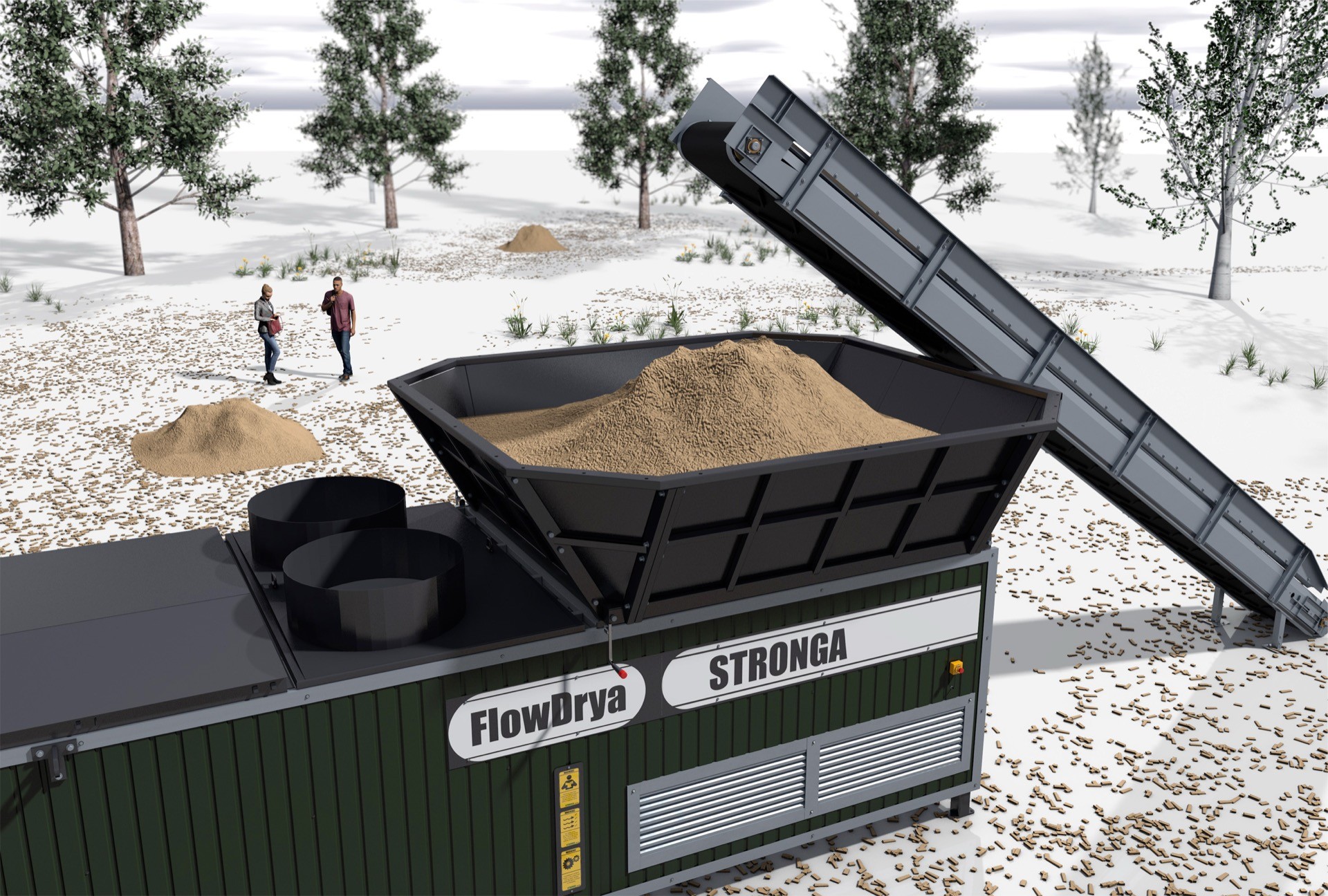
High-Capacity Dryer Hopper
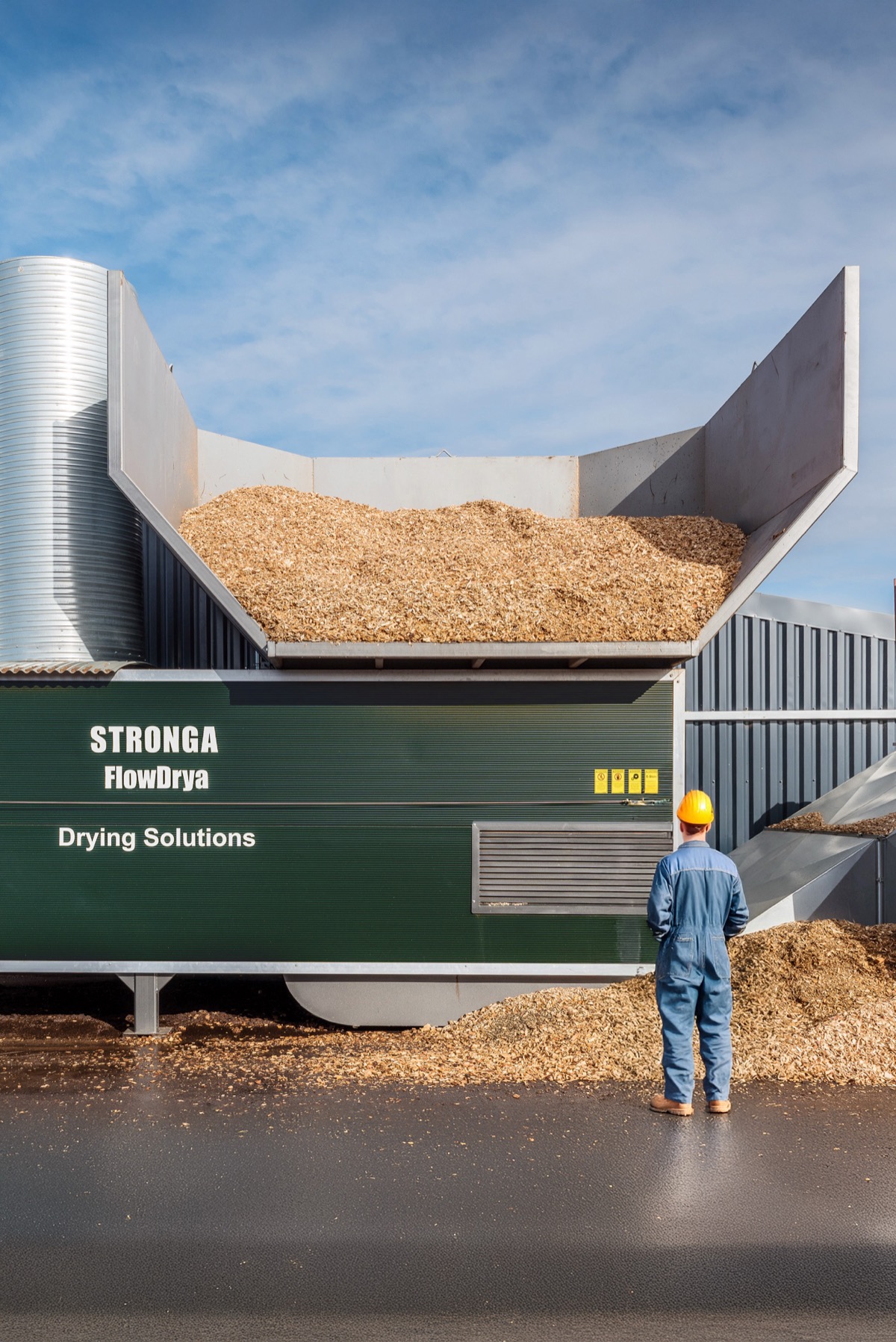
FlowDrya equipment features high-capacity in-feed hoppers which provide pre-drying, wet material buffer storage, offering the benefits of significantly reduced reloading frequency and labour costs when compared to other drying systems, all while enabling continuous, efficient drying operation.
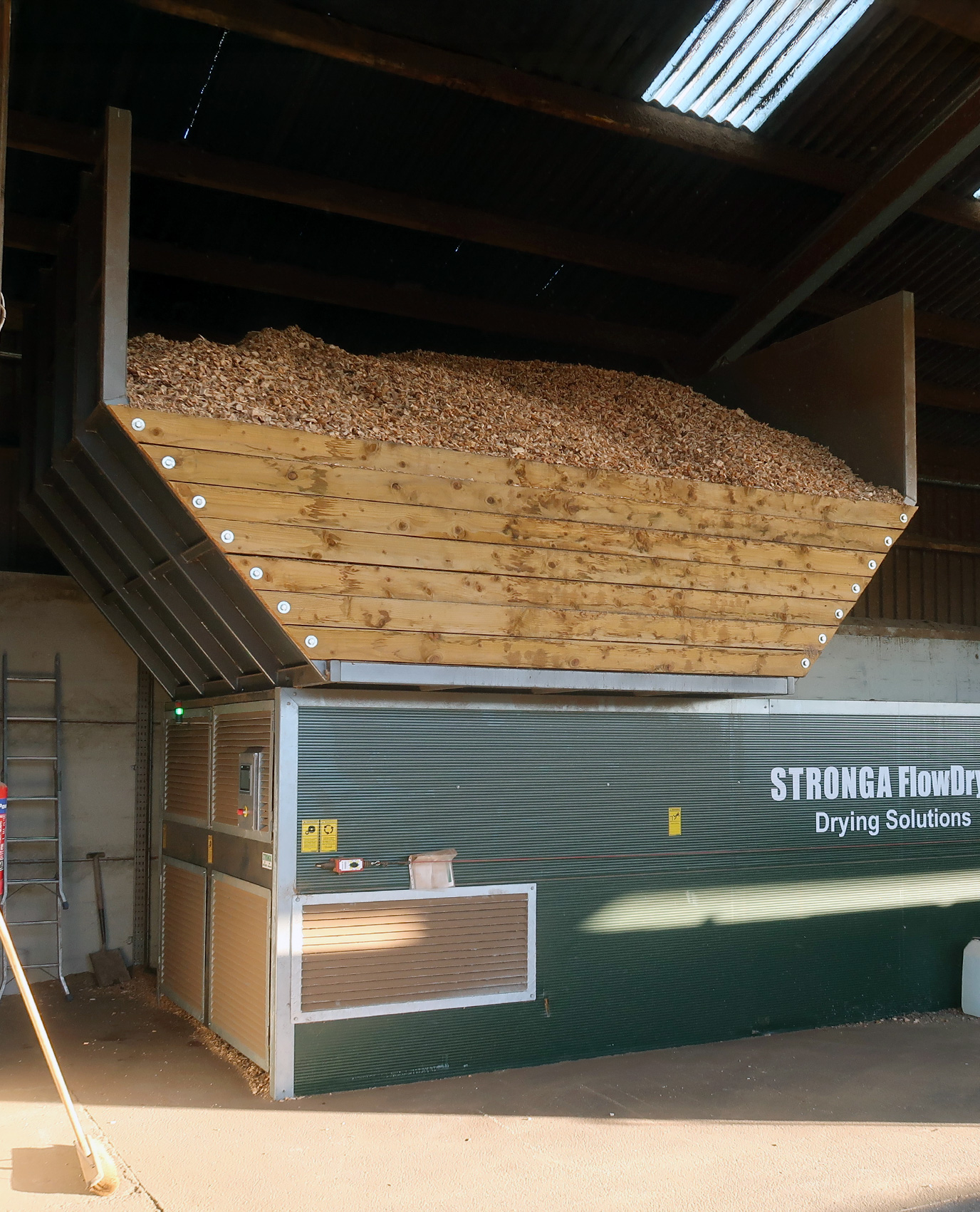
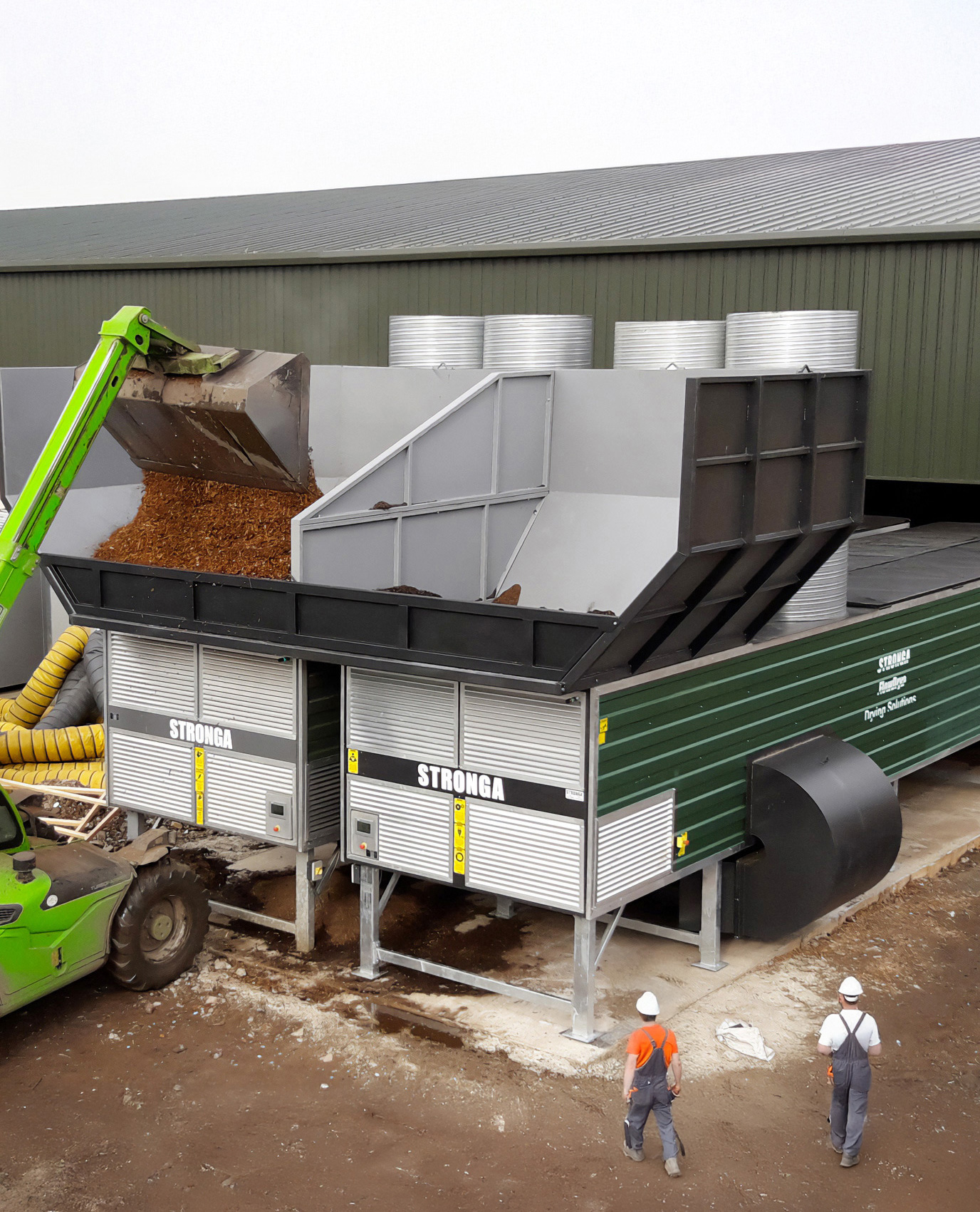
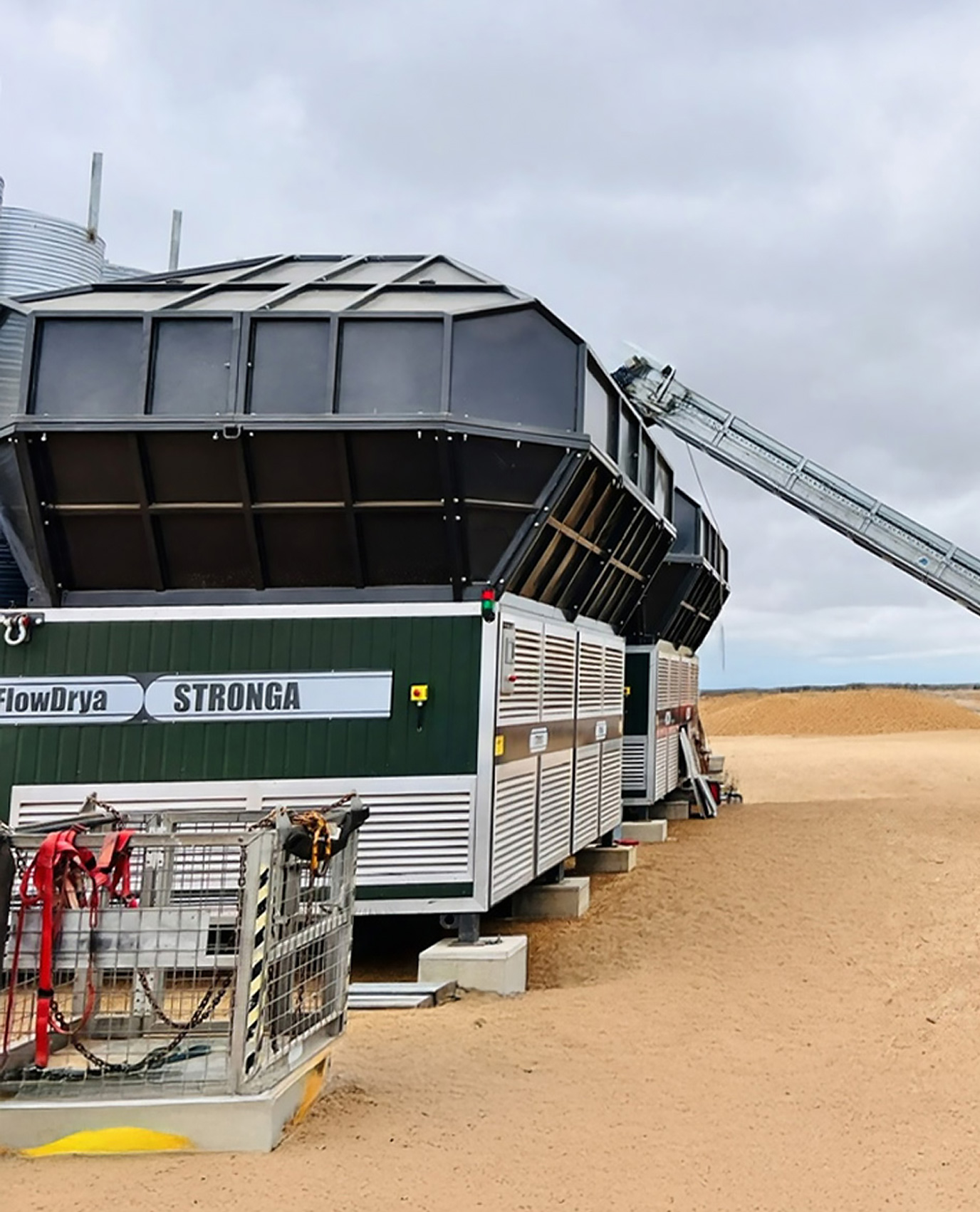
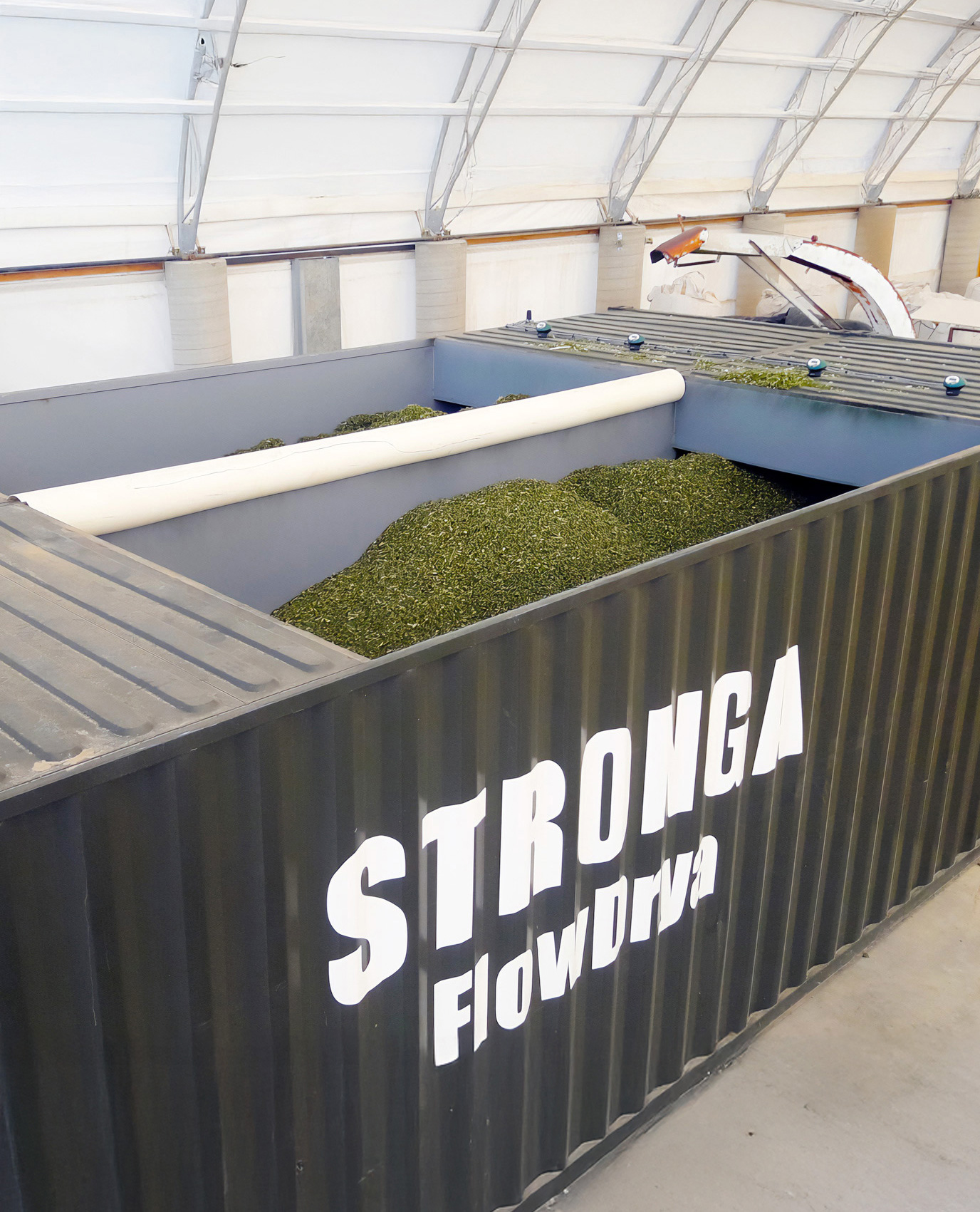
FlowDrya offers multiple in-feed hopper configurations, each sized, orientated and optimised by the Stronga design team to enhance operational efficiency. Each solution tailored to the bulk density, moisture content and characteristics of the wet feedstock, as well as the dryer hourly throughput required.
Through thermal conduction, the FlowDrya hopper pre-heats material toward evaporative temperature before it reaches the drying bed, enhancing overall cost efficiency. The key benefit of super-size hopper capacities is the significantly longer re-loading intervals which reduces labour costs and on-site handling. Large, extended, flared hoppers enable long, uninterrupted runs — often for entire shifts or overnight, "lights-out" production. By contrast, other drying systems rely on complex conveyor-fed in-feed systems that are labour-intensive, maintenance-heavy and far more costly to operate. Explore the 3 key advantages of FlowDrya's in-feed systems below.
1) Optimised for Your Material
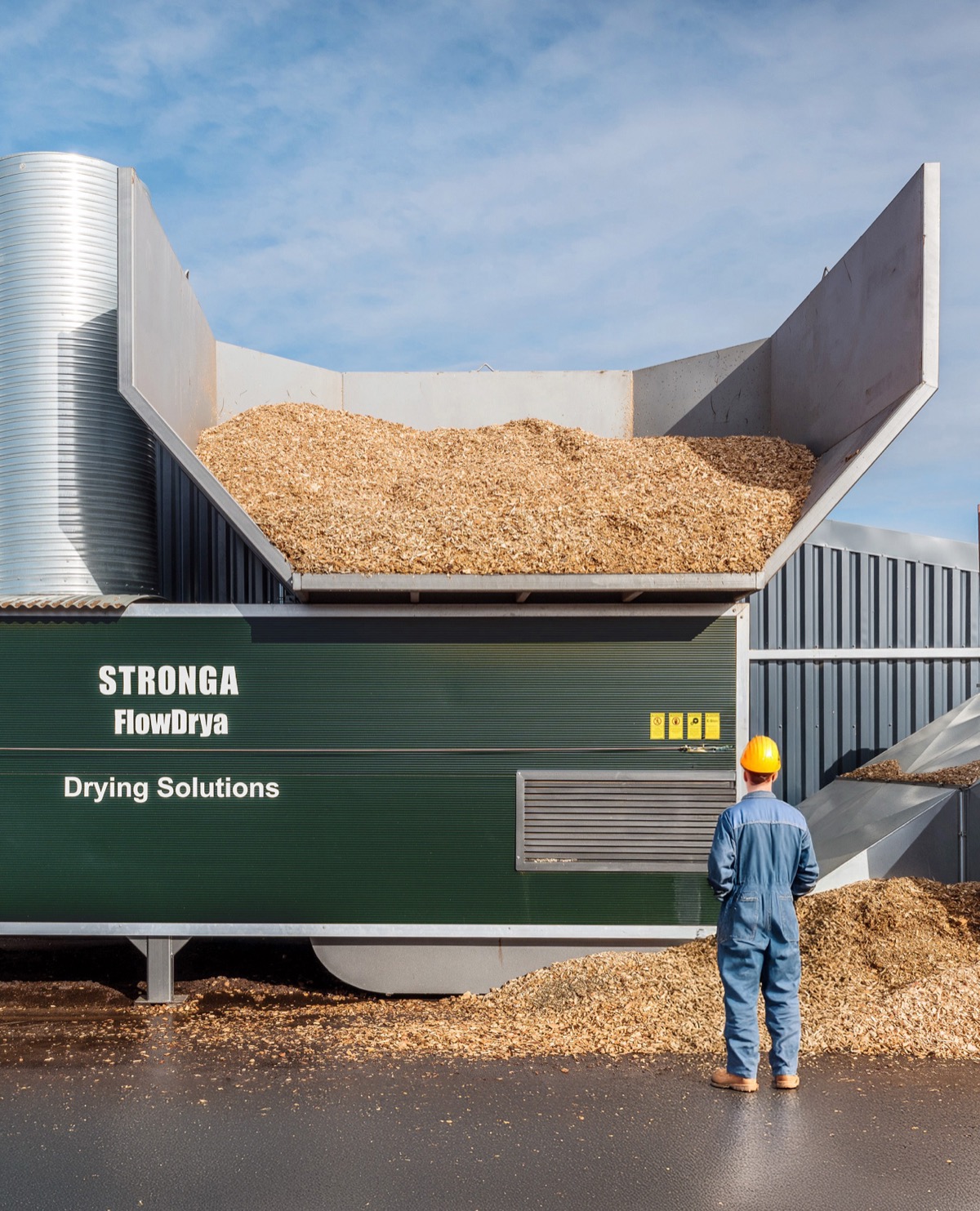
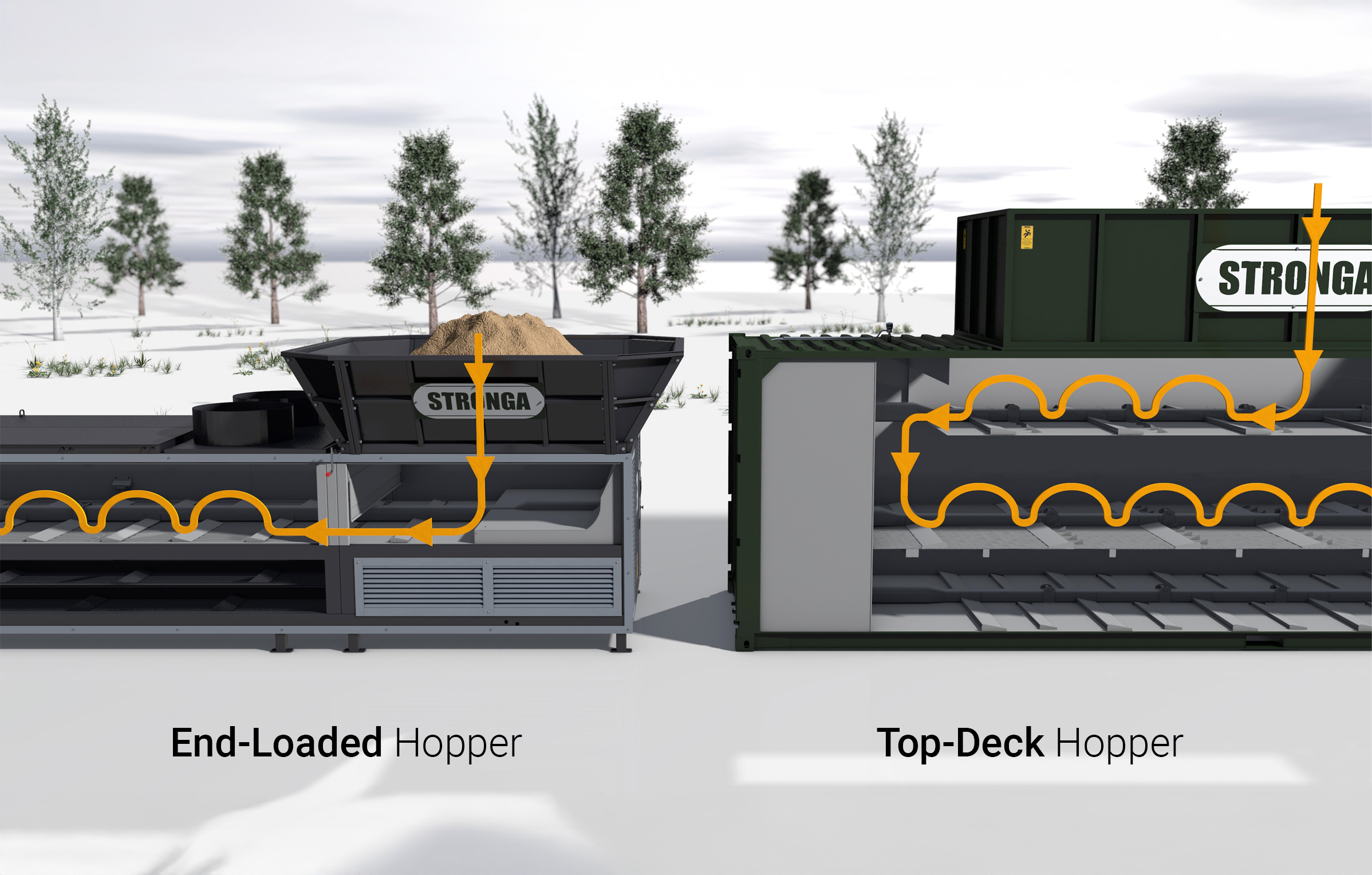
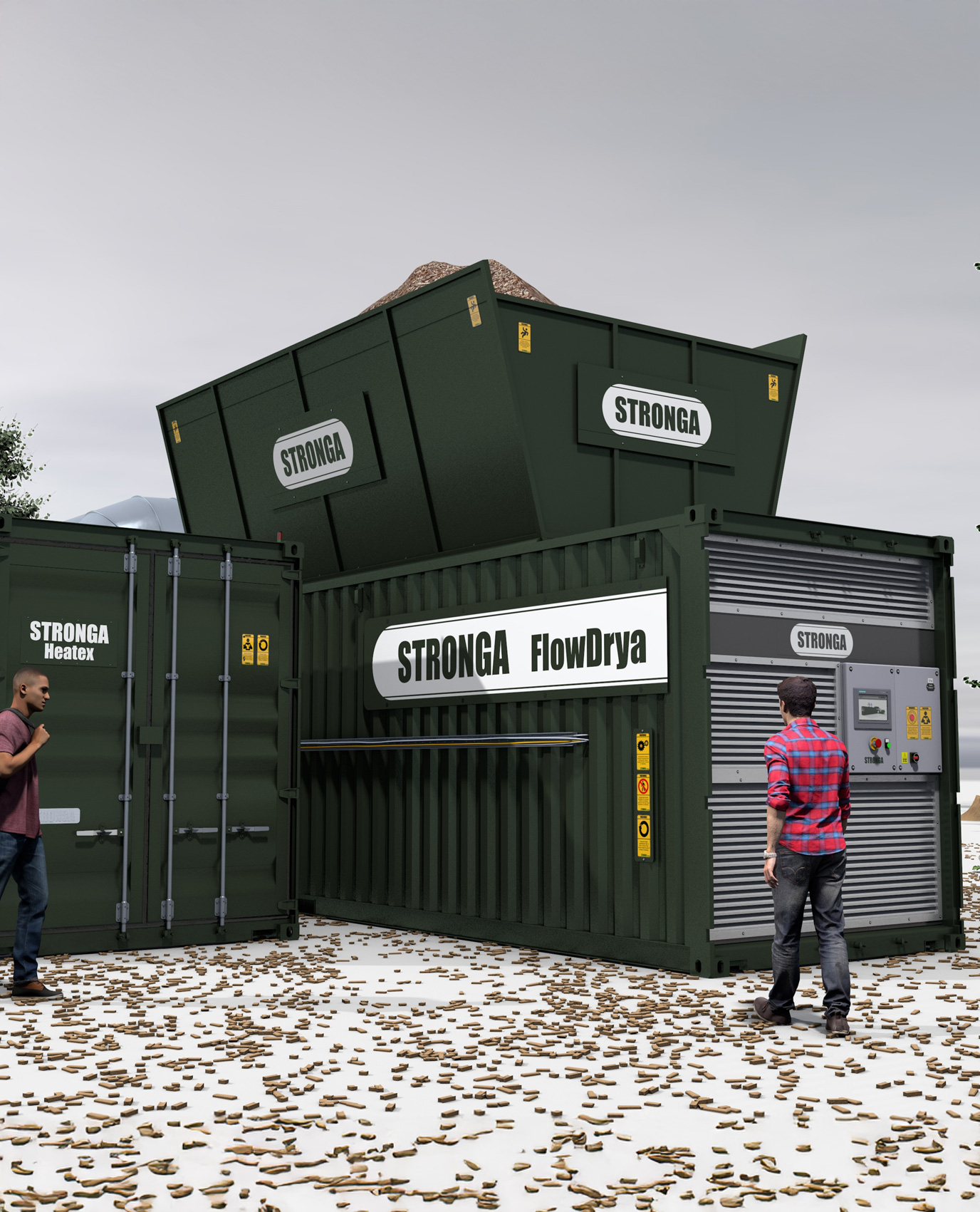
Each in-feed hopper is tailored in capacity and geometry to suit the customer's material to be dried. Free-flowing bulk materials such as wood chip benefit from "end-loading" hoppers while lighter, less-dense materials like SRF are often better served by the "top-deck" in-feed system for controlled, consistent flow onto the drying bed.
Leveraging 100,000s of operating hour experience with diverse material streams, Stronga's engineering team configures each hopper to deliver the lowest possible labour requirement through super-long reloading intervals and smooth, continuous operation. The result is an in-feed solution that is not only material-optimised, but also capacity-optimised and process-optimised — ensuring FlowDrya runs with utmost efficiency to minimise operator intervention.
2) Optimised for Site Requirements
Each in-feed hopper is engineered to match the unique layout, workflow and constraints of the customer's site. Hoppers can be orientated for loading from either side or from the end, ensuring seamless integration with your existing operations. Whether fed by conveyor, loader bucket, telehandler or other handling equipment, the hopper is designed for smooth, efficient intake, minimal spillage, easy loading visibility and continuous, controlled flow onto the PulseWave™ drying bed. This tailored approach to hopper design maximises flexibility, simplifies logistics and delivers a perfectly-matched solution for each site.
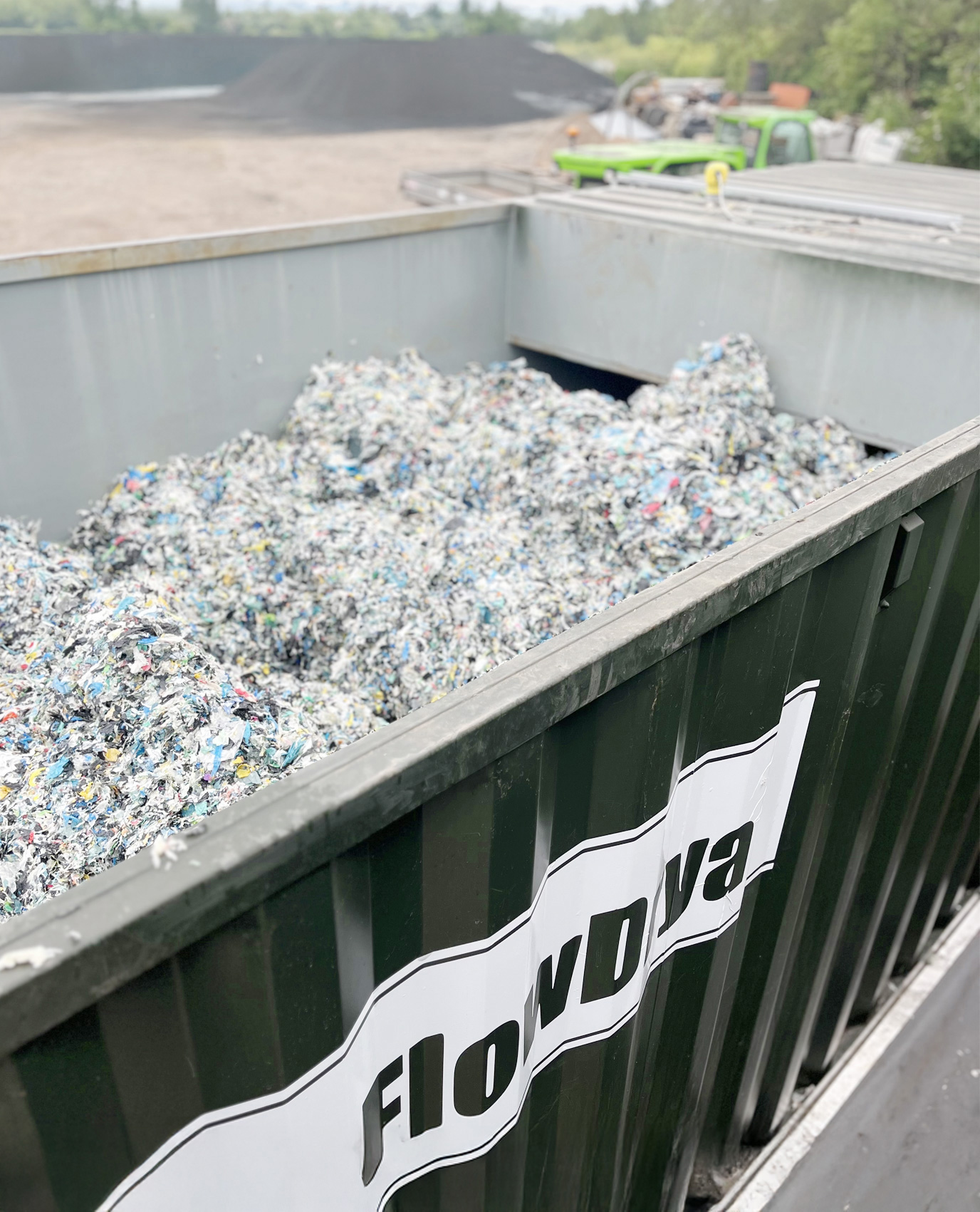
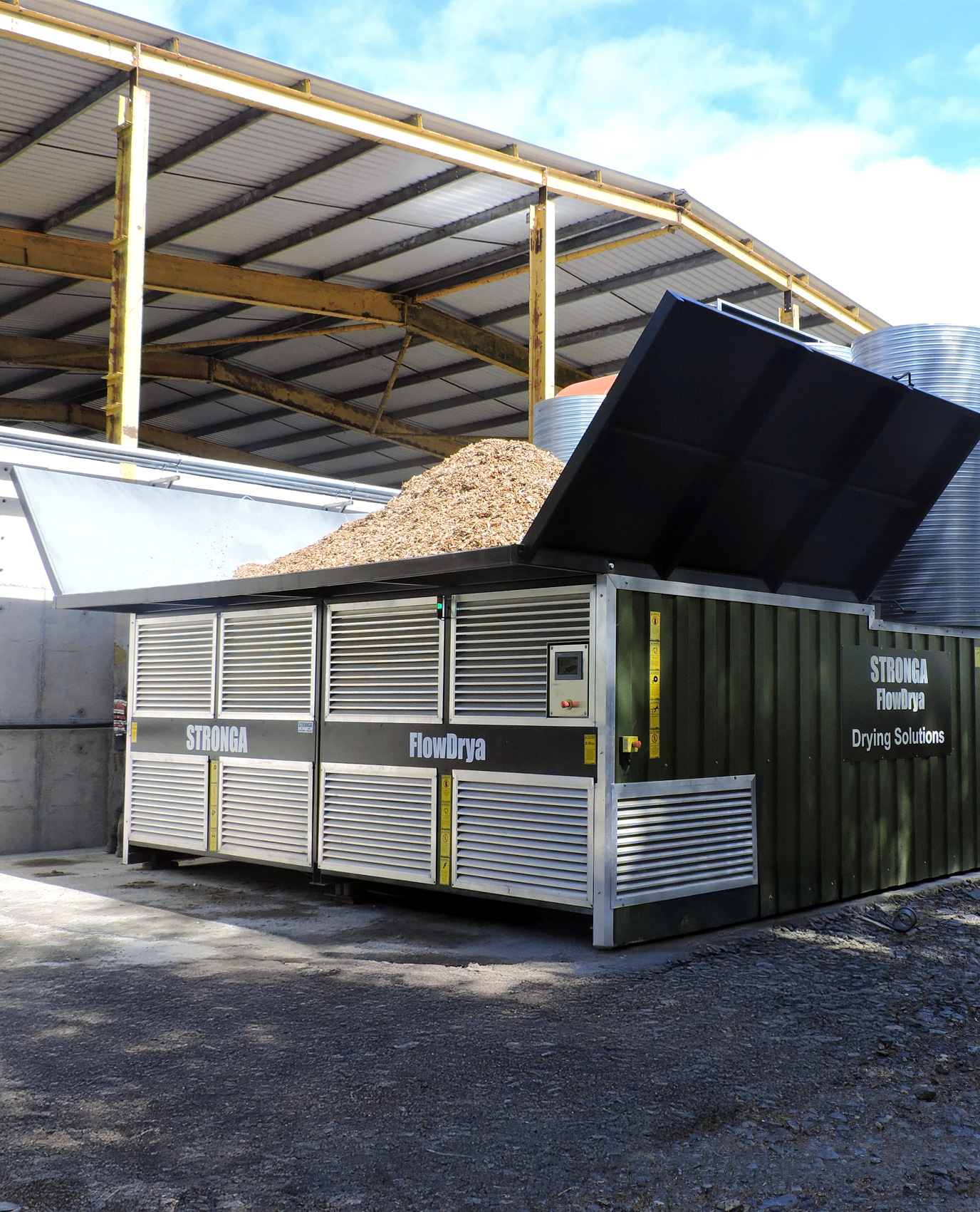
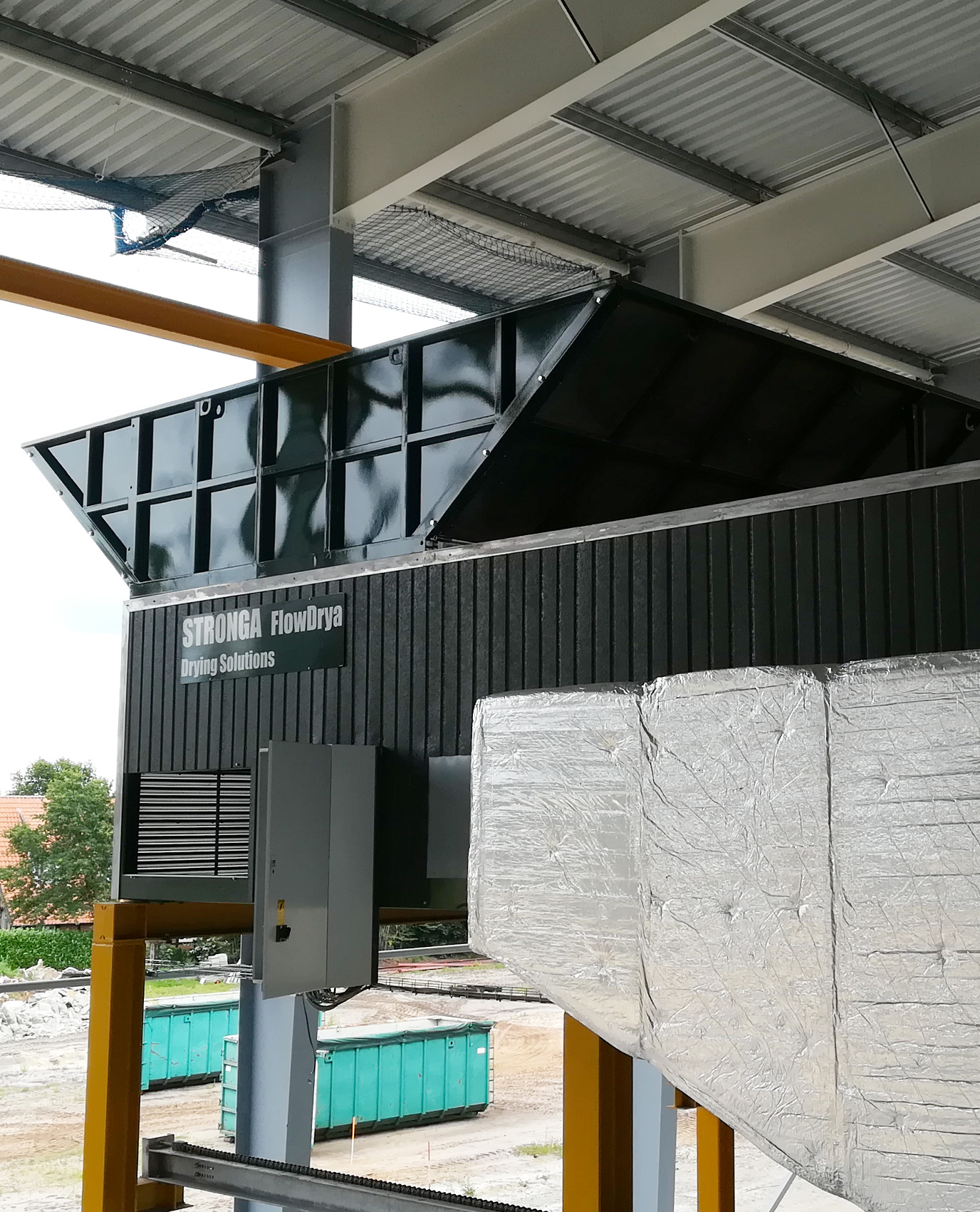
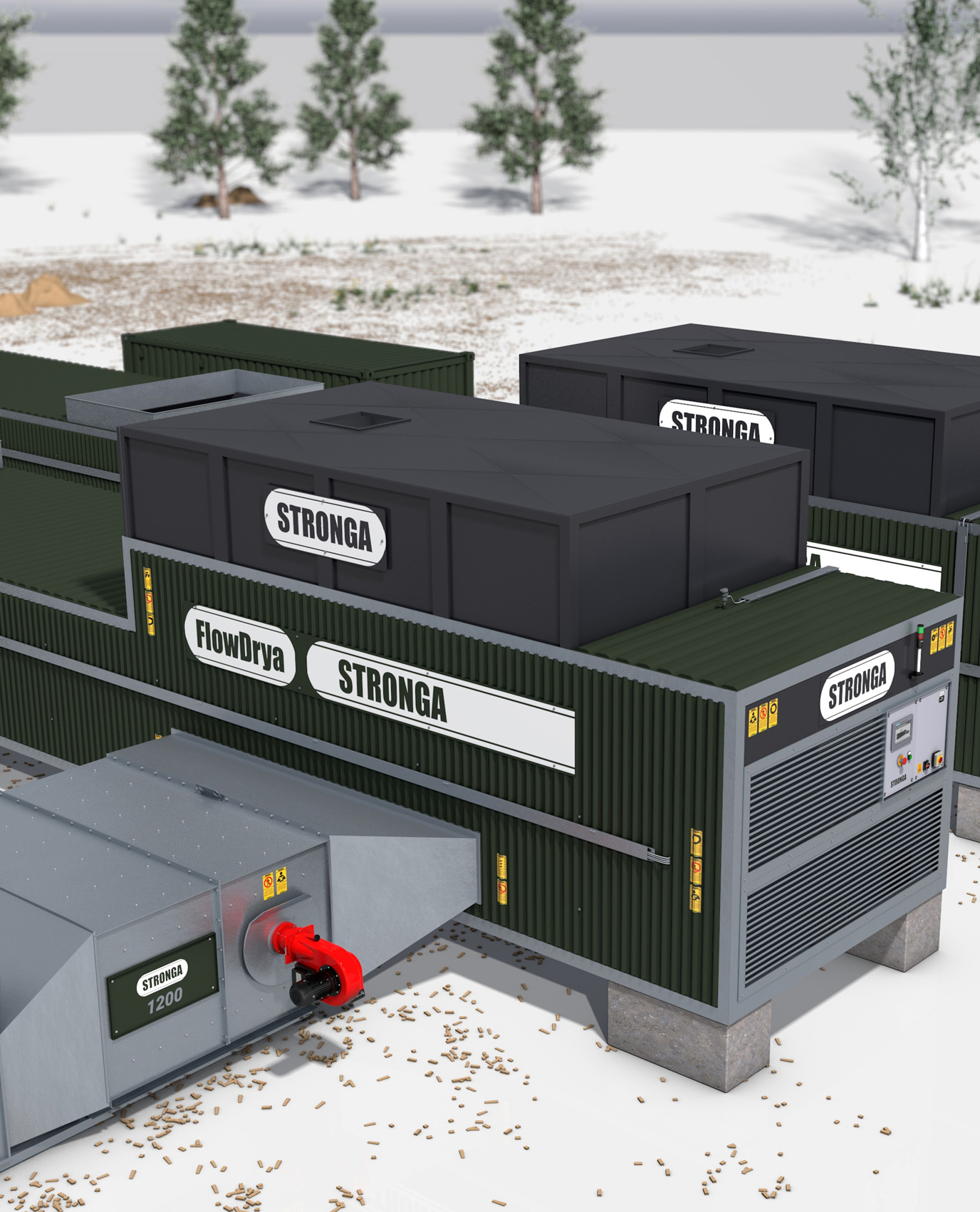
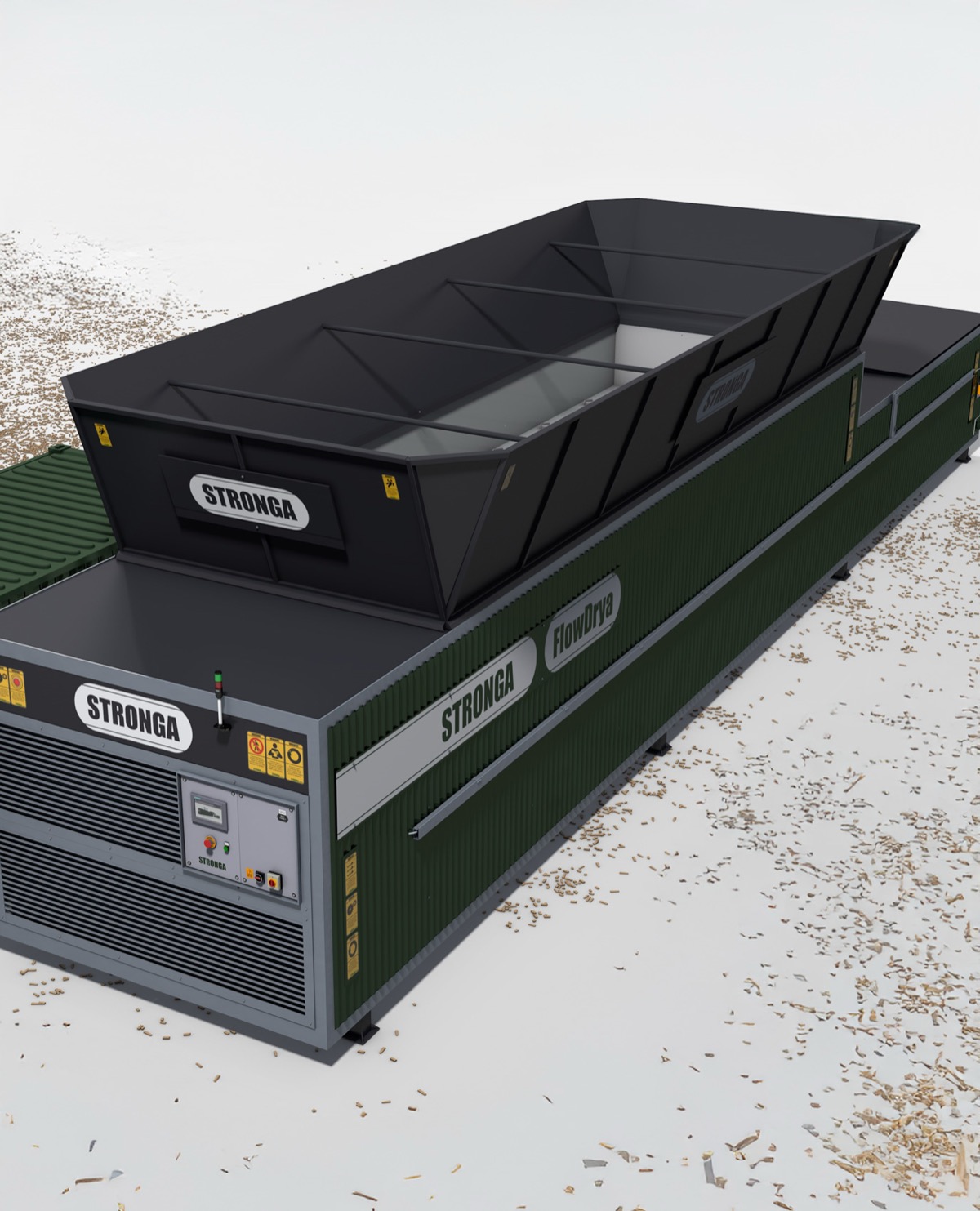
The images below demonstrate how Stronga engineers each wet material in-feed hopper to deliver optimal performance on different sites and across different material streams.
3) Ultra-Low Labour Requirement
High-capacity in-feed hoppers offer the significantly benefits of super-long reloading intervals, reducing material handling and cutting costly labour requirements. Unlike other dryers which have minimal or no hopper capacity, FlowDrya does not require regular topping-up or operator attendance. Fewer loading cycles mean fewer operator hours, lower fuel consumption and machinery wear, and considerable long-term savings on operational expenditure.
For 24/7 or overnight operation, large in-feed hoppers provide a reliable material buffer, allowing the dryer to run independently without on-site staffing. This enables true low-labour drying — a major operational advantage over alternative drying systems. In terms of hopper capacity and low labour expenditure, FlowDrya is unique. It is in a class of its own.
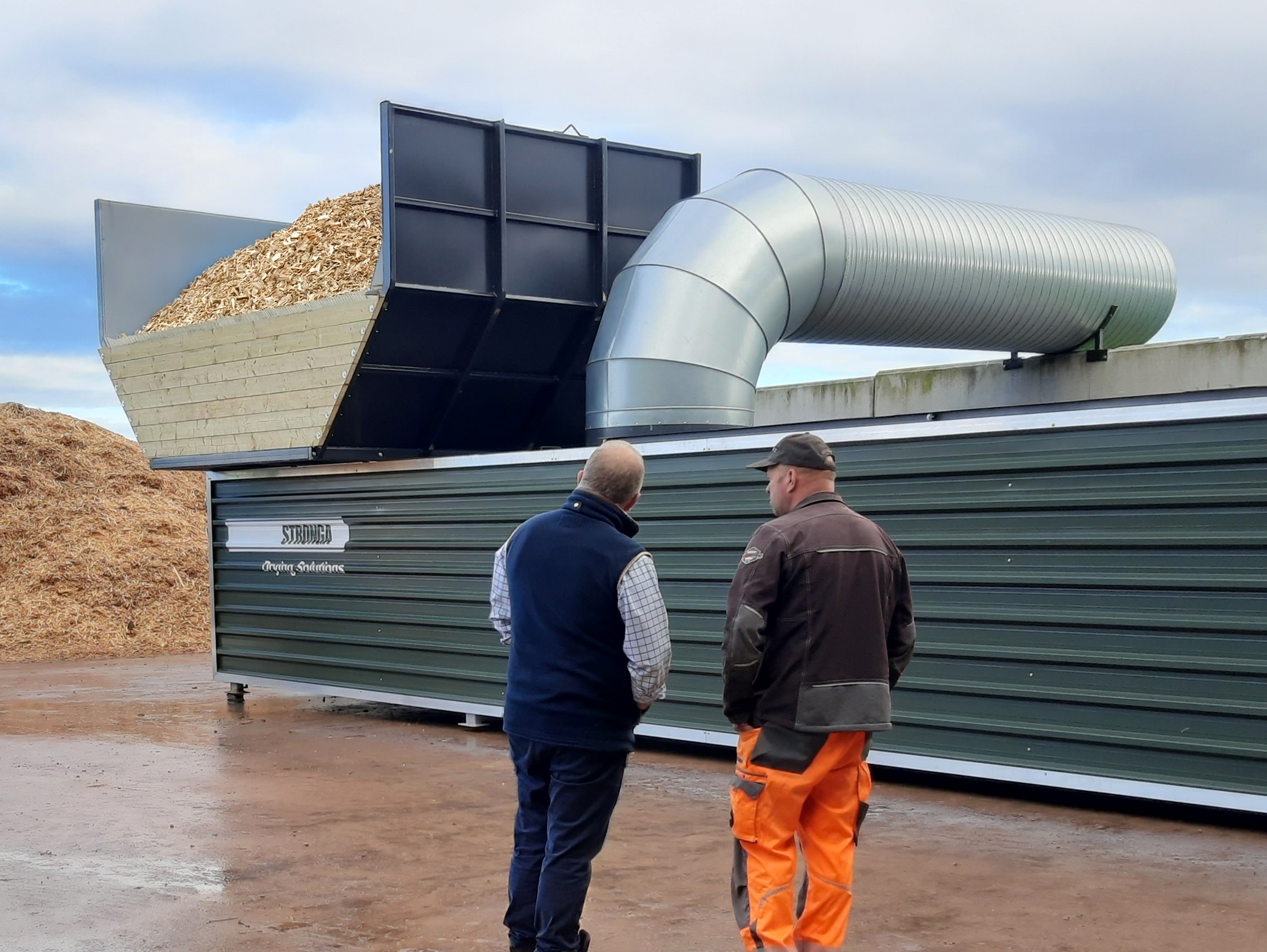
The FlowDrya in-feed hopper stands out with its fully configurable design — available longer, wider, higher, flared, extended and more — ensuring the Stronga design team can deliver the perfect hopper for your material, your layout and your drying performance goals. Discover the at-a-glance benefits of the FlowDrya in-feed hopper.
| Hopper Feature | Benefit to Client | Why It Matters |
|---|---|---|
| Wide Hopper Profile | Easy, stress-free loading from any loader or conveyor. | No need for precise alignment or high lifting of loader buckets. |
| Hopper Width Designed to Match Loader | Each hopper is optimised in width and length for fast, easy loading via loader bucket or conveyor. | Prevents spillage, reduces wasted material, speeds up every refill. |
| Low Fill Height | Safe, ergonomic loading, good visibility for loading operator. | Fewer clean-ups and faster refilling. |
| Larger High-Capacity Hopper Volume | Accommodates low-density materials that require more space per kg. | Fluffy, aerated, or light materials can be stored in sufficient volume for long drying intervals. |
| Perfectly Flared Sides | Allows easy filling and prevents material spillage. | Ideal for materials that don't flow well or expand after agitation. |
| Step-Sided Geometry | Reduces risk of sticking and wall friction. | Prevents material from clinging to vertical walls — maintains smooth, continuous flow. |
| Anti-Bridging Design | Prevents the formation of arches or voids with flaky or irregular materials. | Maintains reliable feeding onto the PulseWave™ drying bed without blockages. |
| Hopper Moving Floor | Actively agitates material in the hopper, eliminating bridging even in stingy clumpy material. | Ensures constant movement and prevents feed interruptions or dryer starvation. |
| Extended Refill Intervals | Allows long, uninterrupted runs — often entire shifts or overnight. Supports "lights-out" production. | Minimises labour, forklift hours, and operator supervision. |
FlowDrya's in-feed systems are purpose-designed to suit your site layout and the specific characteristics of your wet feedstock, offering efficient pre-warming, large buffer capacities and far lower labour requirements than other dryers available on the market. Contact Stronga to discuss your project — collaborate and allow our technical to design the optimal hopper solution for your operation.
Contact Stronga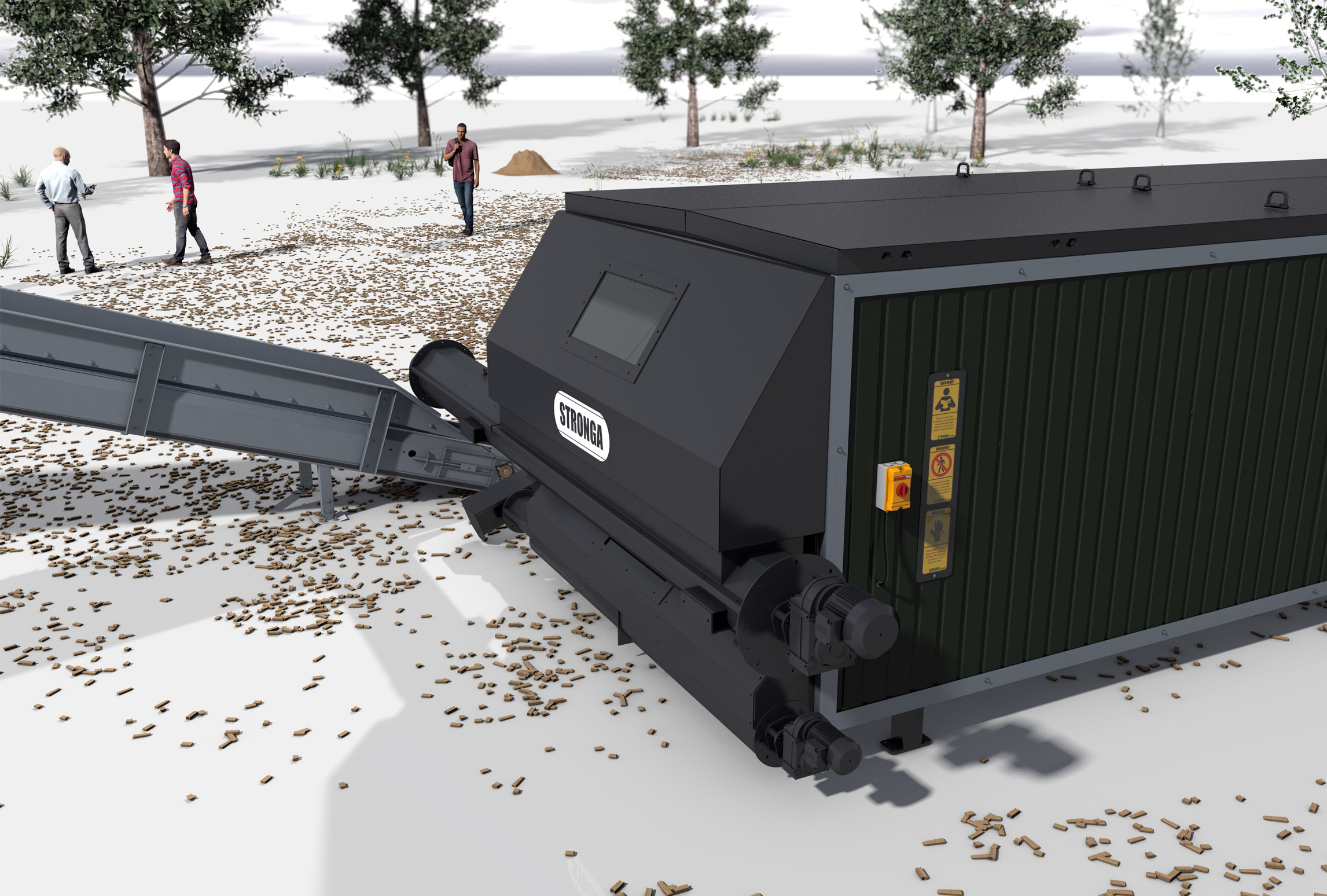
Engineered for What Comes Next
FlowDrya delivers more than just consistent dry output — it is designed to integrate seamlessly into your existing processing line through a range of dry material discharge and onward handling solutions, catering for woody biomass, waste plastics, agricultural materials and more.
By discharging dried material at height, the Stronga flow dryer can be directly connected to Stronga-supplied conveyors, augers and storage bunkers, delivering a level of onward handling flexibility not typically possible with other drying systems.

Designed for Seamless Process Integration
FlowDrya is engineered for seamless onward processing with an elevated discharge point a minimum of 1 metre above ground level - with the potential to go even higher using bespoke support legs. Added clearance beneath the discharge level opens up a wide range of dry material discharge solutions, from augers and belt conveyors to direct bunkering and more, making it easy to connect the FlowDrya to the next stage of your process line. The ability to discharge from almost any height offers a significant advantage over traditional belt dryers which typically discharge low to the ground and therefore limit integration options.
FlowDrya's DryStation™ PLC system controls the entire drying process, integrating optional discharge augers and/or conveyors to coordinate, automate and optimise the drying process. Discover the various dry discharge solutions below.
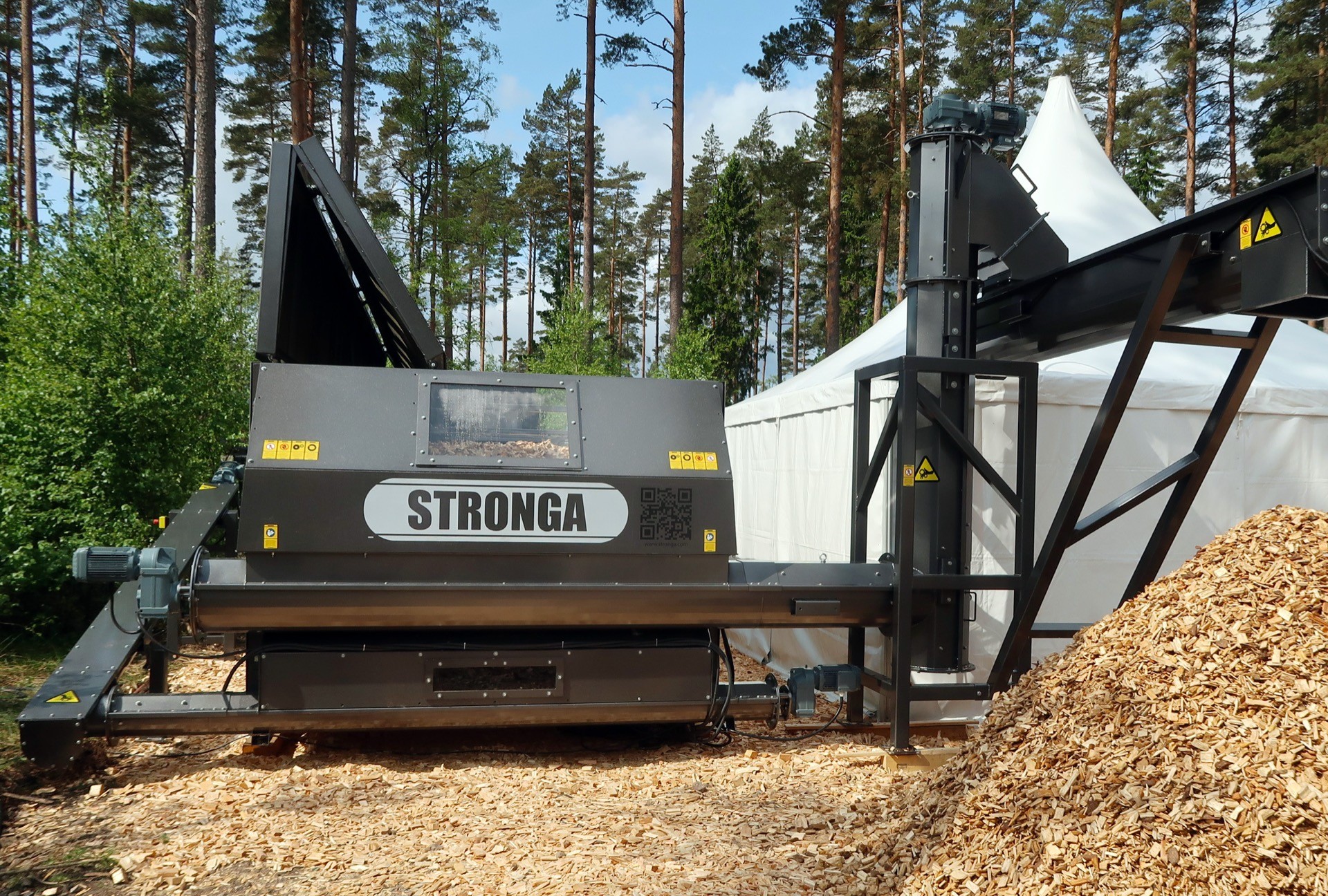
1) Enclosed Cross Augers: The enclosed cross auger provides a simple, robust solution for moving dried material laterally away from the FlowDrya discharge and into storage, screening or further processing equipment. Mounted directly to the dryer outlet, enclosed augers deliver consistent, controlled material flow across a range of dry products. Carefully designed auger geometry and variable rotation speeds help prevent bridging, segregation and surging, while the enclosed design helps manage exhaust air, offering an overall cleaner, safer operation.
The photo below shows a "jigsaw" type arrangement with multiple centerless augers work in harmony to deliver dry wood chip to the desired discharge zone.
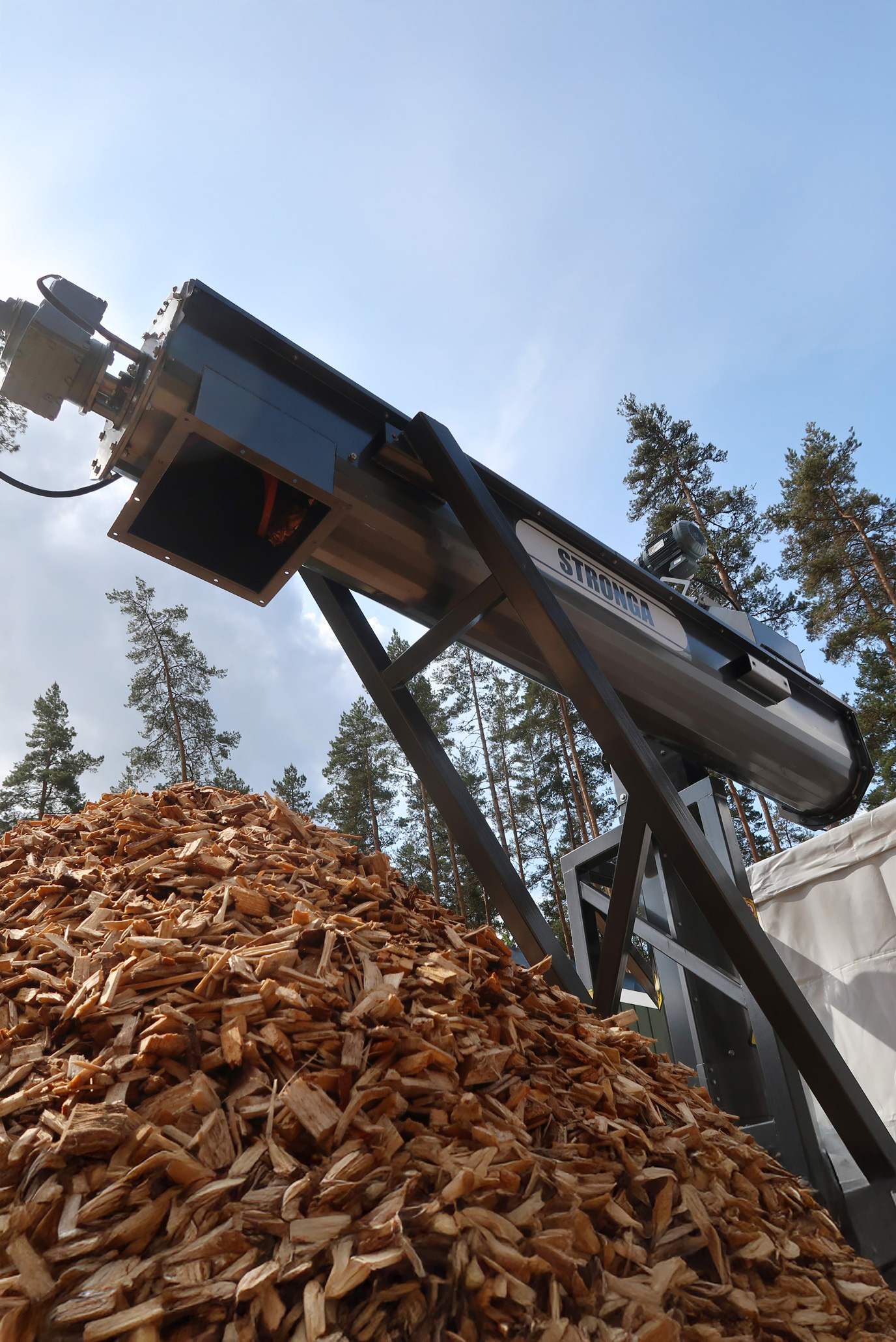
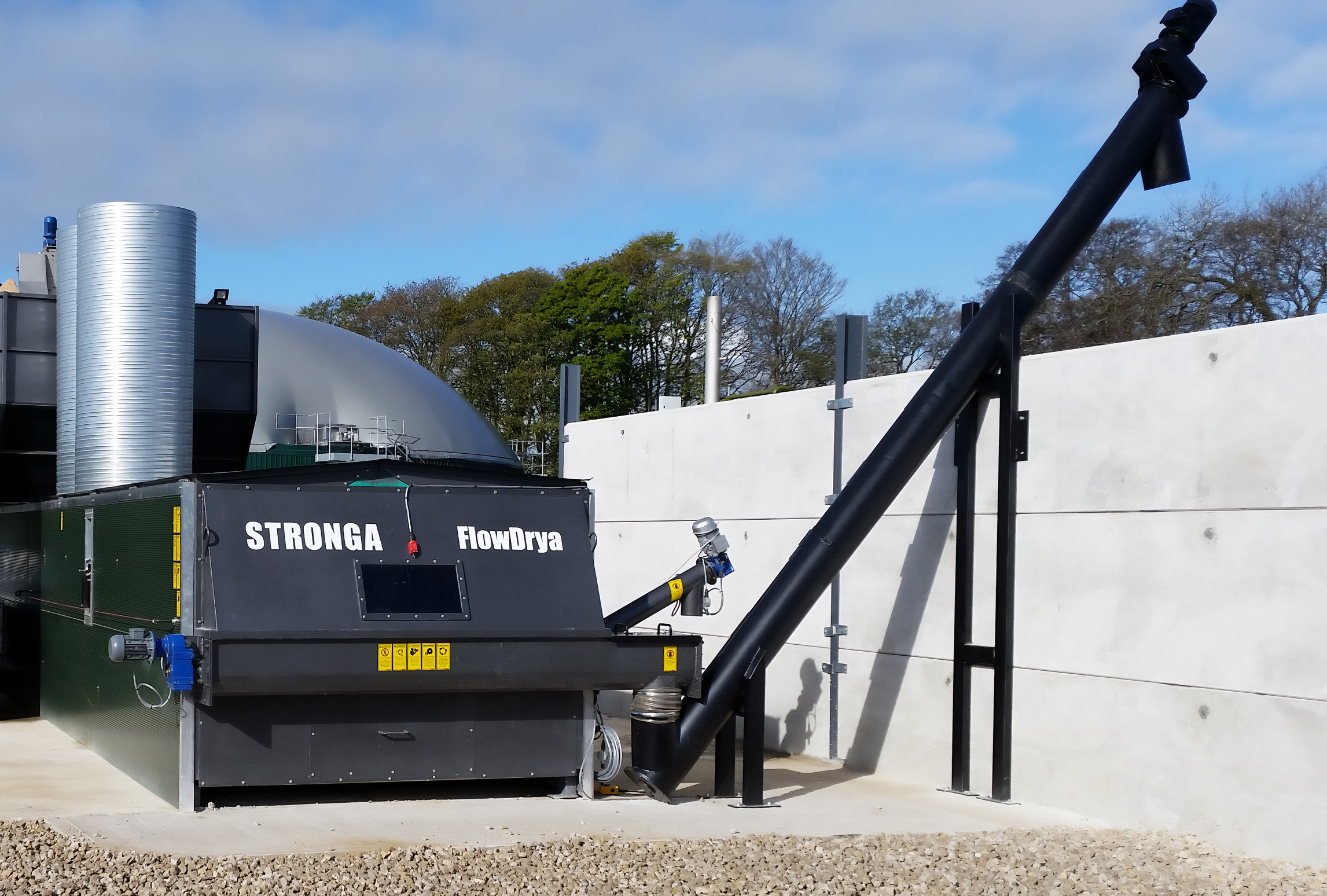
2) Inclined Rising Augers: Where material needs to be raised to a higher level, inclined augers offer a compact, efficient and well-proven solution for discharge directly into bunkers, mezzanine stores, hoppers or feed points on downstream equipment. Each auger is sized and optimised for the specific characteristics of the dry material. Auger diameter, pitch and incline angle are carefully arranged by the Stronga team to ensure smooth, reliable elevation without blockages.
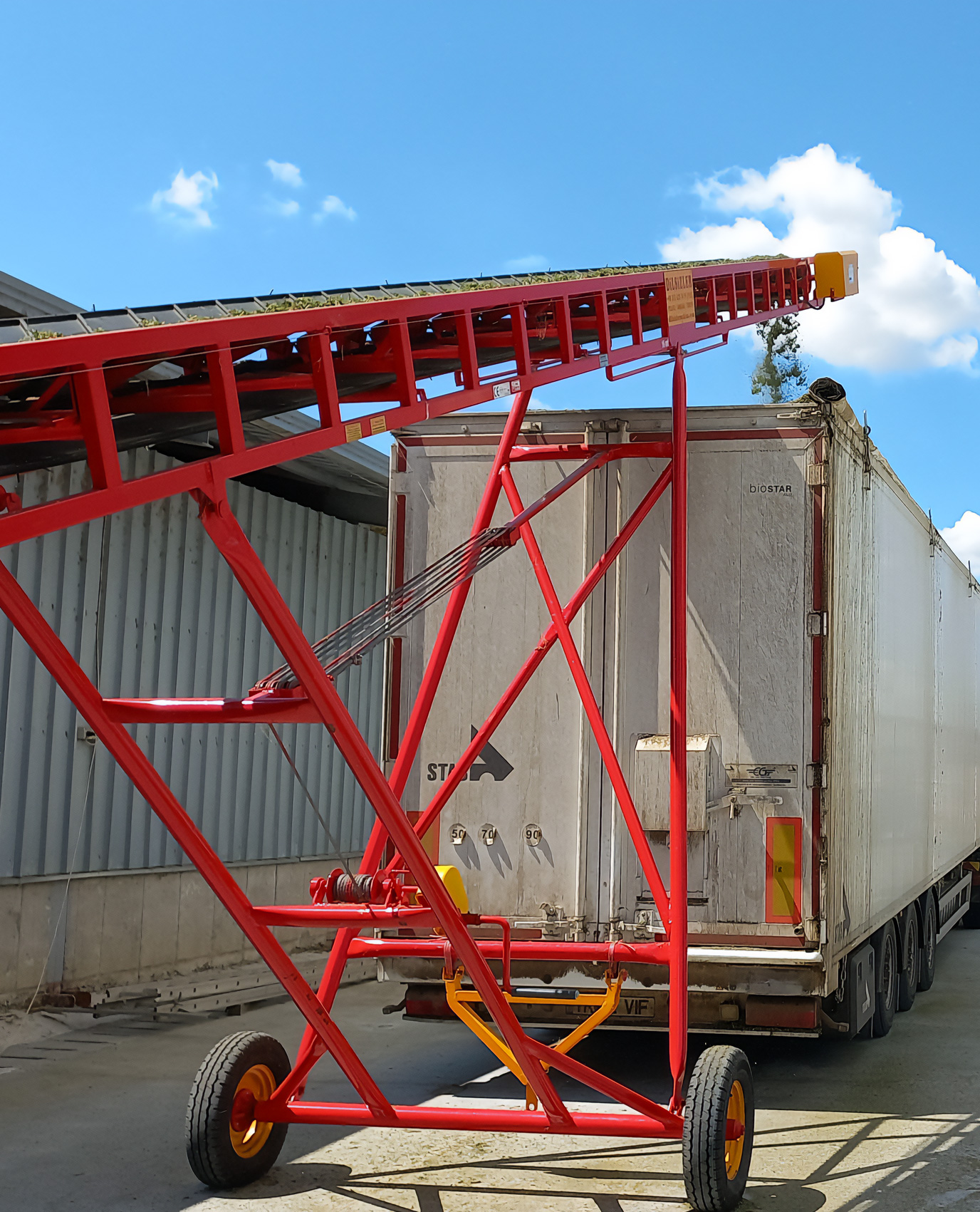
3) Trough Belt Conveying Solutions: Stockpiling belt conveyors provide a flexible discharge solution where dried material needs to be transported over longer distances, gently handled or distributed across multiple discharge points. Fed directly from FlowDrya's elevated discharge, belt, roller, swan-neck and mobile conveyors offer smooth, low-impact handling that helps maintain material integrity while supporting higher throughputs and continuous flow.
Compared to augers, stockpiling conveyors are often preferred for sensitive materials, extended conveying runs or applications requiring multi-point distribution, making them ideal for feeding into storage, screening, pelletising or packaging systems.
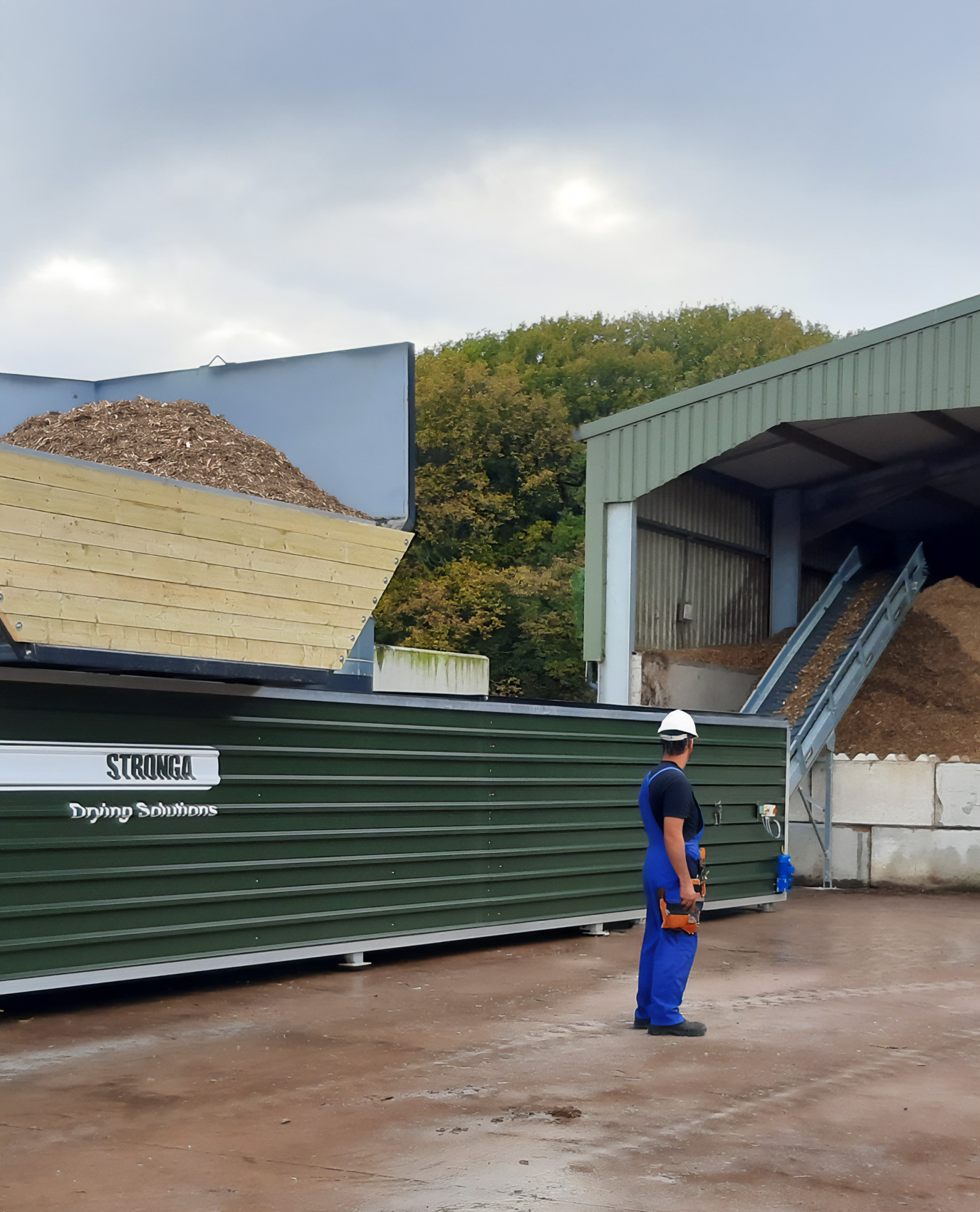
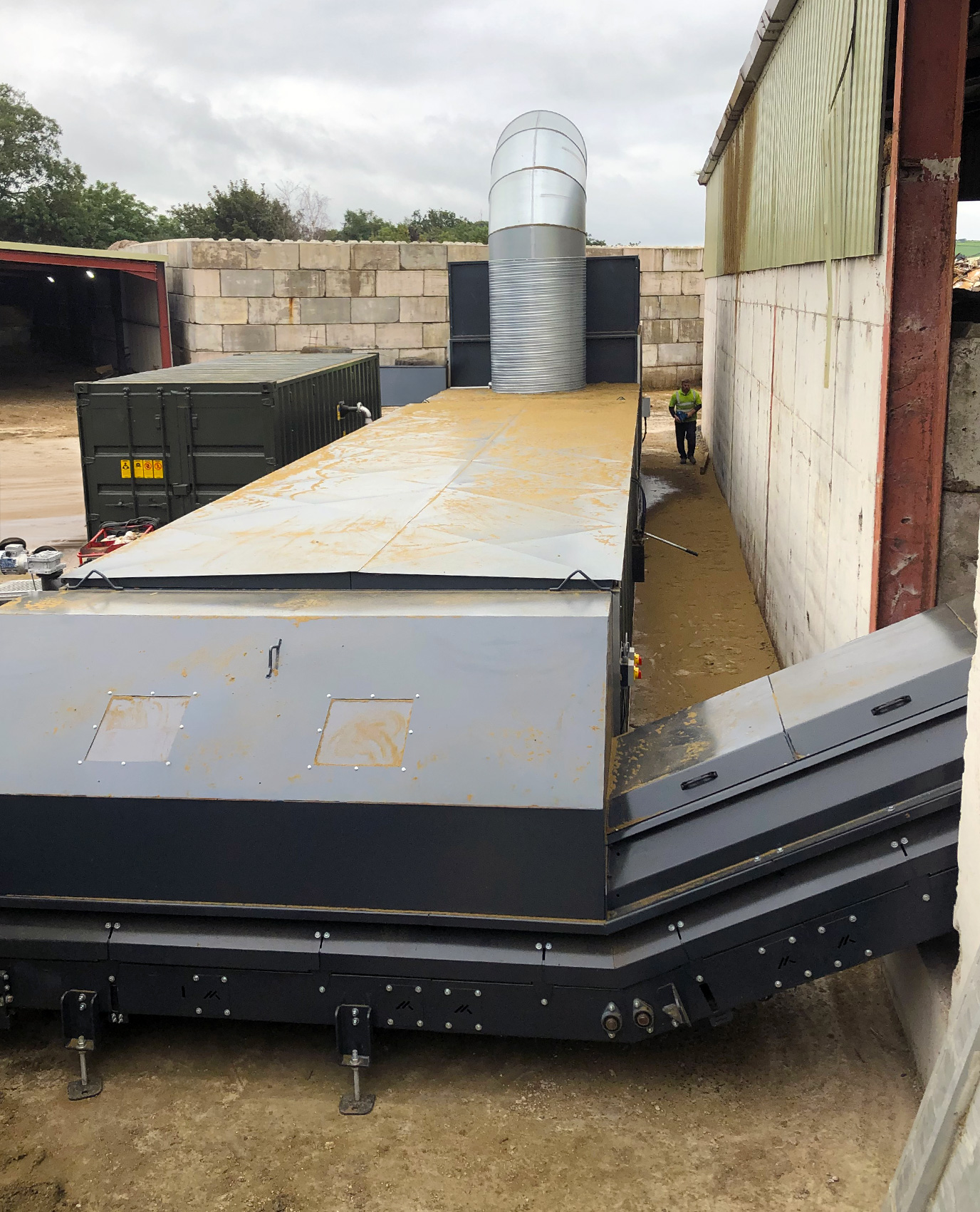
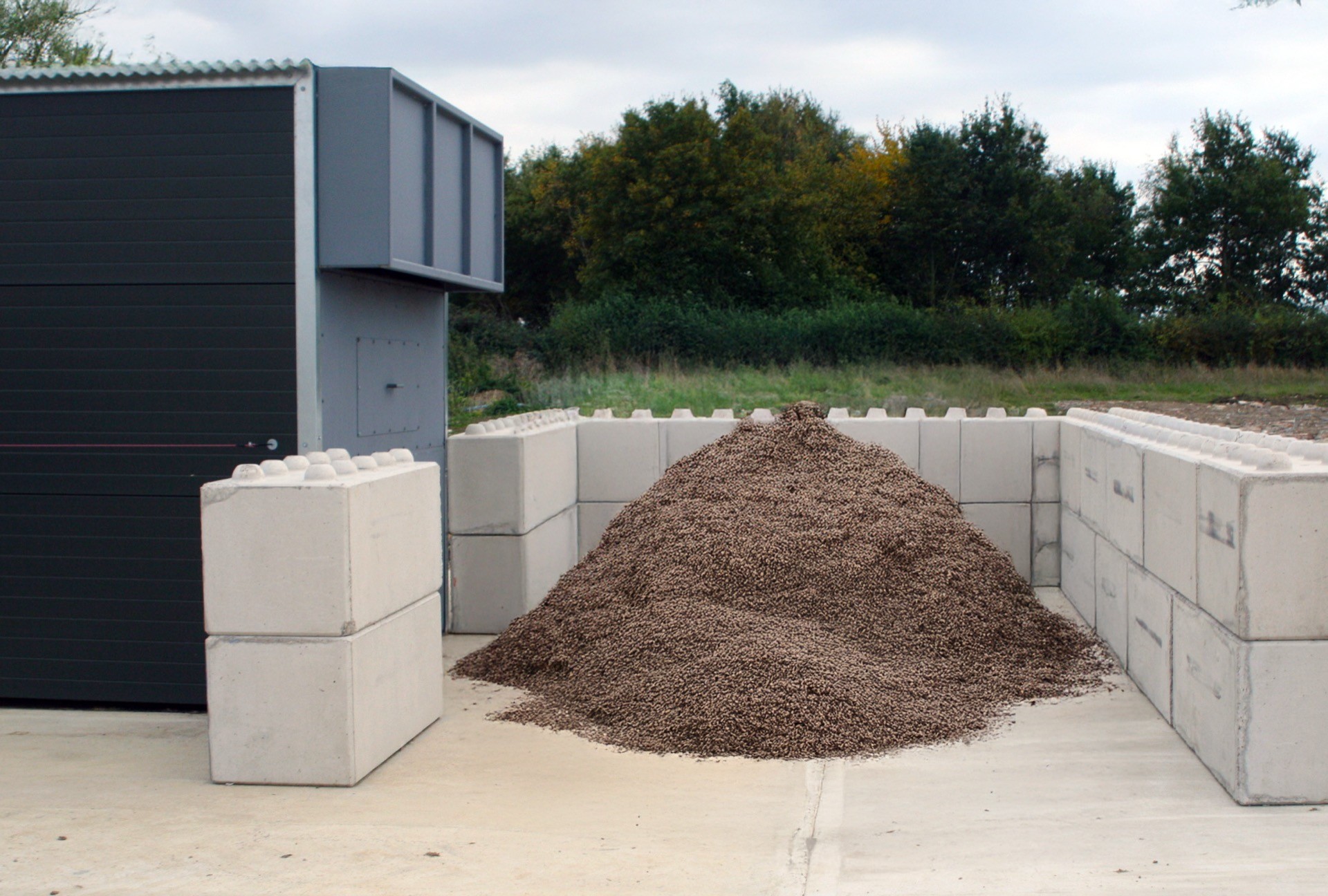
4) Direct Flow-to-Bunka™ Discharge: In its most simple configuration, FlowDrya feeds directly off the end of the drying bed into high-capacity bunkers, silos or storage bays, offering a smooth, low-cost transition from flow dryer to storage. As the bunker store fills up, powerful hydraulic equipment remains capable of driving material off the end of the dryer, extending the time in which the bunker is manually cleared, thus minimising expensive labour costs.
When bunkers are coupled together with augers or conveyors, FlowDrya can be designed to distribute material evenly along a bunker or selectively fill multiple storage areas, tailored to both the material characteristics and site layout. Direct bunkering reduces double-handling, cuts labour requirements and offers a more automated operation.
Discharge from the FlowDrya is not just about moving material — it is about maintaining process continuity and protecting product quality. Well-designed discharge systems ensure dried material is delivered to the next stage smoothly, without bottlenecks, interruptions or unnecessary handling.
FlowDrya installations are commonly integrated with screeners and sorters for post-drying refinement, pellet mills and briquetters for fuel production, and packaging lines for bagged or bulk product handling. The result is a drying system that fits naturally into your wider process, rather than dictating it.
By reducing manual handling, matching biomass dryer output to downstream capacity and tailoring discharge solutions to the behaviour of each material, FlowDrya helps maximise throughput and deliver a more efficient, future-proof operation.
High-Throughput, Low-Cost Drying Solutions
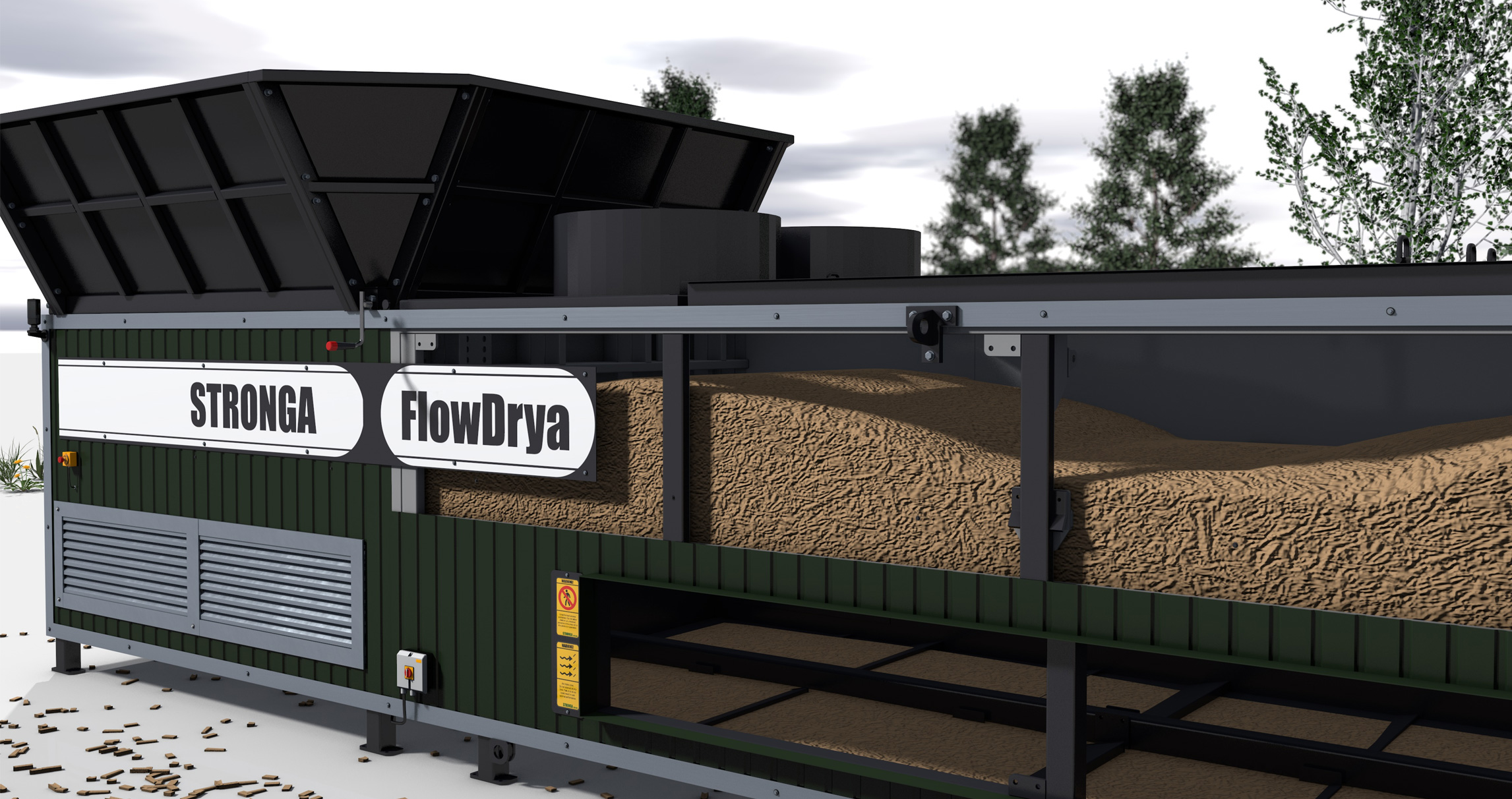
FlowDrya is engineered for "deep-cycle drying", a unique process that delivers the lowest cost per m² dried of any dryer available in the market.
Drying material at significantly greater depth than conventional belt dryers — typically 3-4X deeper — FlowDrya delivers high-throughput, uniform drying in a far smaller footprint configuration. Deep drying on the bed, adjustable within a range, increases throughput per square metre of drying floor, reduces capital cost and footprint, and improves handling of challenging materials - wood chips, SRF, paper crumb, digestate fibre and more.
Deep-Cycle Drying: The Smarter Way to Dry at Scale
FlowDrya equipment is built around a principle which is truly unique compared to other drying systems: deep-cycle drying. Instead of spreading material thinly across long belts, FlowDrya dries material at significantly greater depth – typically 3-4X deeper than belt dryers. Coupled with PulseWave™ agitation which keeps the material open and permeable, heated air flows evenly through the whole profile of the material, ensuring consistent uniformity of dry output.
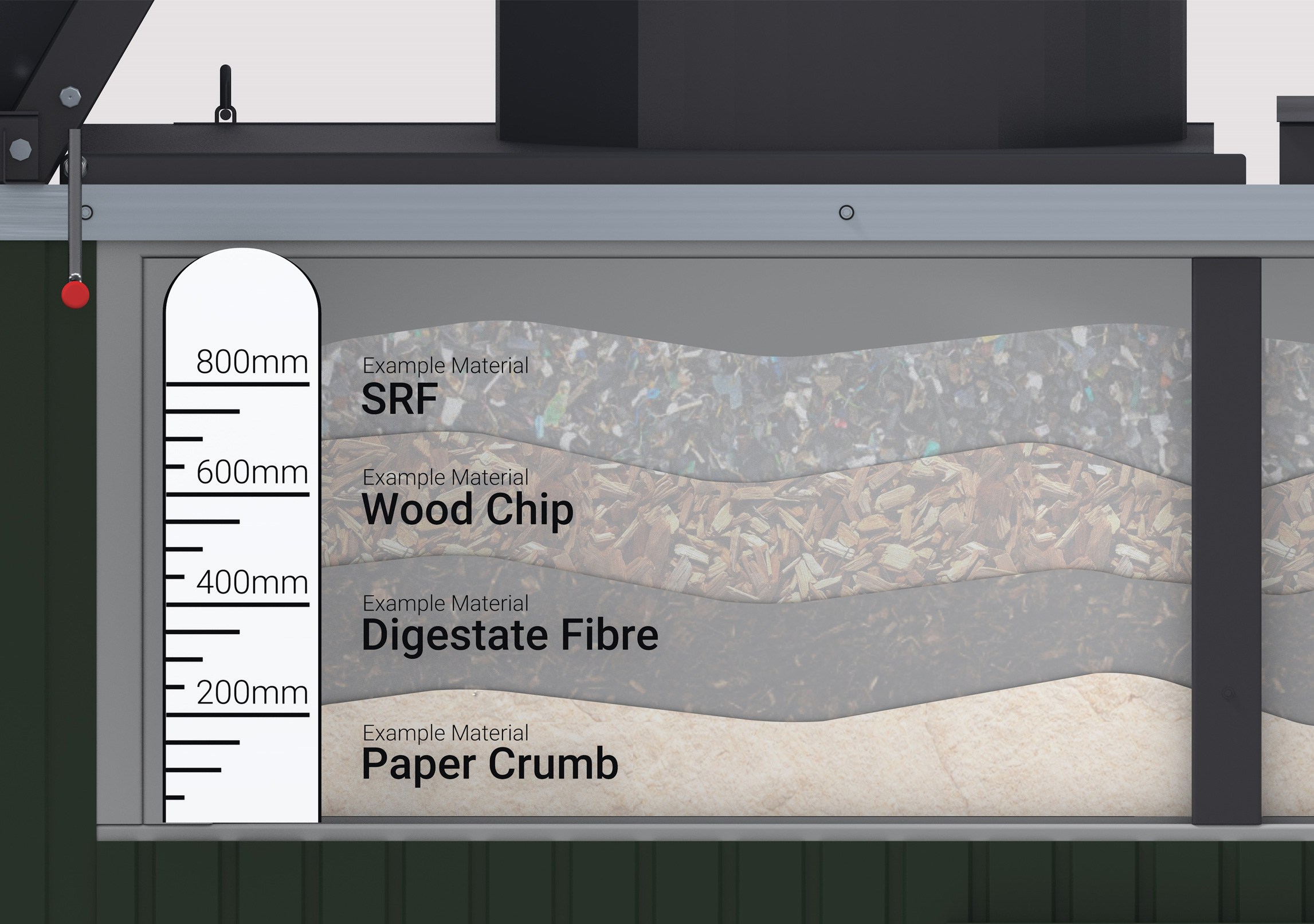
Coupled with full agitation, drying at an adjustable depth (typically between 200-800mm to suit the material) unlocks major advantages; both performance-related and commercial. One key benefit is that FlowDrya achieves dramatically higher throughput per square metre of drying floor. This results in a more compact dryer with a smaller footprint and significantly lower capital cost per tonne of throughput, while still maintaining consistently dry output. Deep-cycle drying also minimises dust generation, making FlowDrya particularly well suited to challenging materials such as wood chip, bark, arb chip, gorse biomass and more.
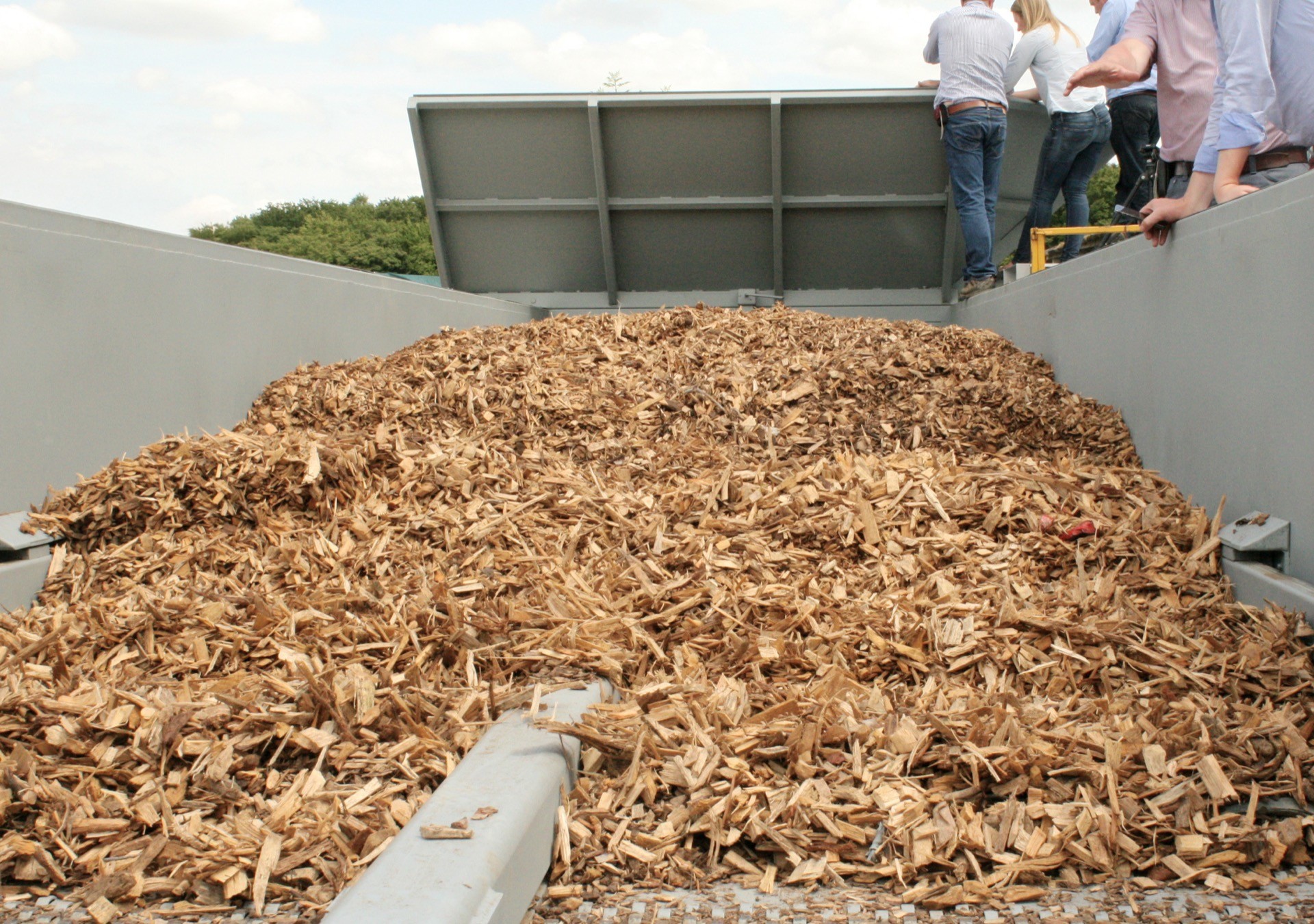
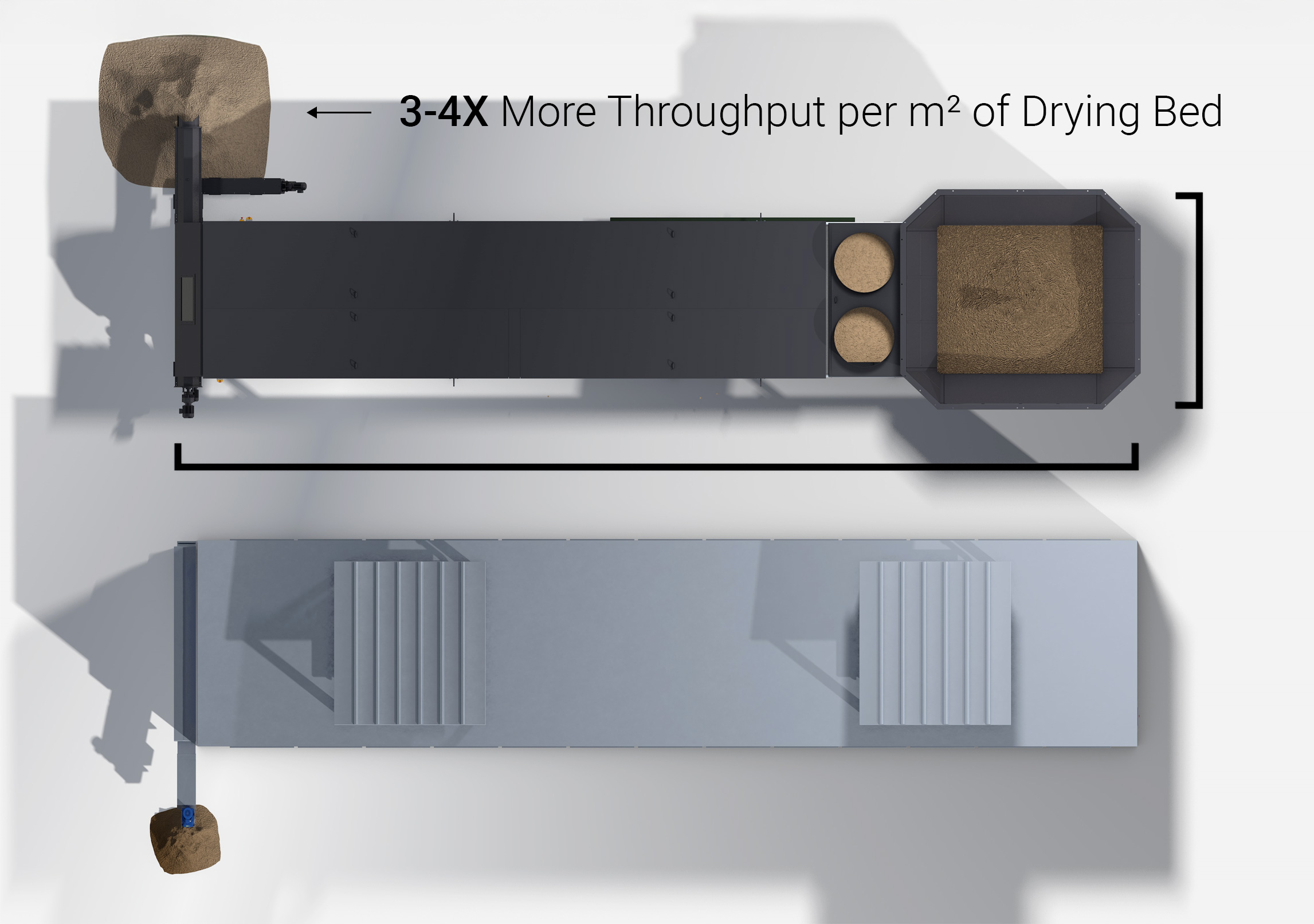
1) Maximum Output; Minimum Capital: PulseWave™ agitation keeps material on the drying deck open and permeable, allowing material to be dried at 3-4X the depth of conventional belt dryers without restricting airflow. With dramatically higher throughput per square metre of drying floor, FlowDrya is considerably more compact than belt dryers, resulting in a significantly lower capital cost dryer — while still achieving uniform drying.
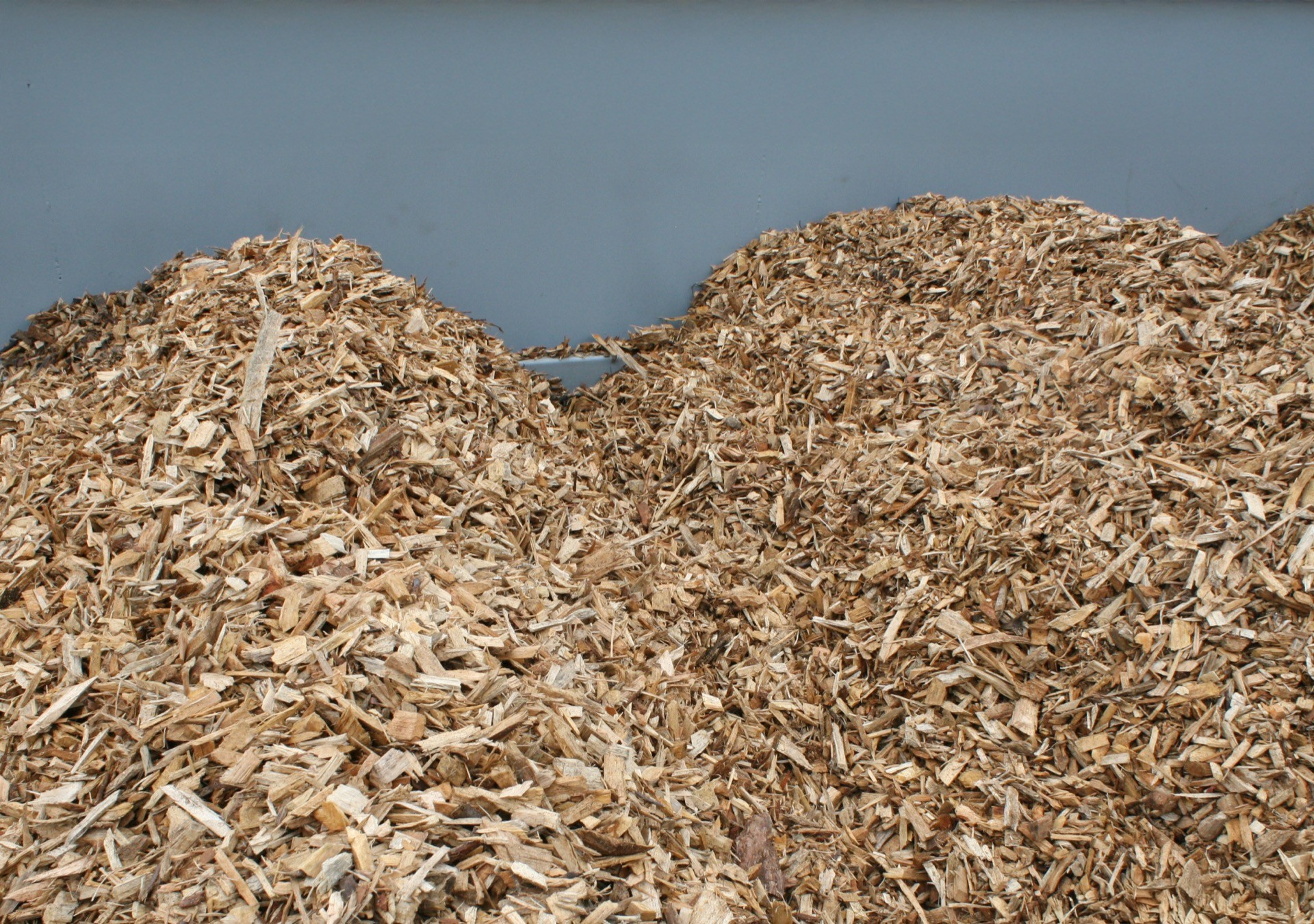
2) Improved Thermal Efficiency: When combined with full material agitation, deep-cycle drying significantly increases litres evaporated per kilowatt of thermal input when compared with conventional belt drying systems. As energy costs continue to rise, maximising energy efficiency has become a critical consideration for modern businesses seeking to keep control of ongoing operating costs.
3) Compact Footprint for Space-Limited-Sites: Delivering high throughput from a smaller footprint, FlowDrya is ideal for sites where space is limited or at a premium. By drying at depth, rather than spreading material thinly over long belts, FlowDrya achieves higher throughput per hour per square metre, resulting in a more compact dryer without compromising drying consistency or uniformity. On an equivalent footprint basis, belt dryers typically achieve 3-4X less throughput than FlowDrya*.
* There are many variable factors to consider when designing a dryer. The figures provided here are for reference only. Speak to Stronga to learn more about your specific project.
4) Material Depth Control: Material depth on the drying deck can be adjusted and optimised at point of commissioning by the Stronga team via level-sensors or weir gates to optimise drying efficiency. Higher bulk density materials, such as paper crumb, tend to suit a shallower bed depth whereas low bulk density materials, like SRF, tend to be deeper. Each project is carefully evaluated by the Stronga team to ensure the selected bed depth meets both throughput and moisture removal requirements.
5) Reduced Dust/Product Carryover: Stronga's experienced FlowDrya design team are able to optimise the various factors that affect dust generation, such as airflow volume, airflow zoning (more below), flue arrangements, depth on the drying bed and more. With each of these factors optimised, deep-cycle-drying limits dust blow-off compared with fast, thin-layer belt systems that are highly energy inefficient.
6) Dual-Airflow Drying Bed Zoning: Each FlowDrya is uniquely designed for higher-airflow at the wet-material end, increasing the rate at which materials reach evaporative temperature while directing more thermal energy to the wet material, increasing overall efficiency and throughput. At the dry-material end, airflow is deliberately reduced to minimise dust generation, improving operating conditions and reducing the need for additional, costly dust treatment systems.
Deep-cycle drying is another factor that sets FlowDrya apart from the rest — delivering higher throughput, a smaller footprint, lower capital cost and improved control of dust generation, all while maintaining uniform, consistent drying. All the unique features of the FlowDrya compound together to deliver best-in-class dryer performance.
The optimal drying depth is a set-point which varies depending on material type, particle size and bulk density, FlowDrya systems are engineered specifically for each application. Speak with Stronga's FlowDrya specialists to determine the ideal dryer configuration for your material and unlock the full performance potential of deep-cycle drying.
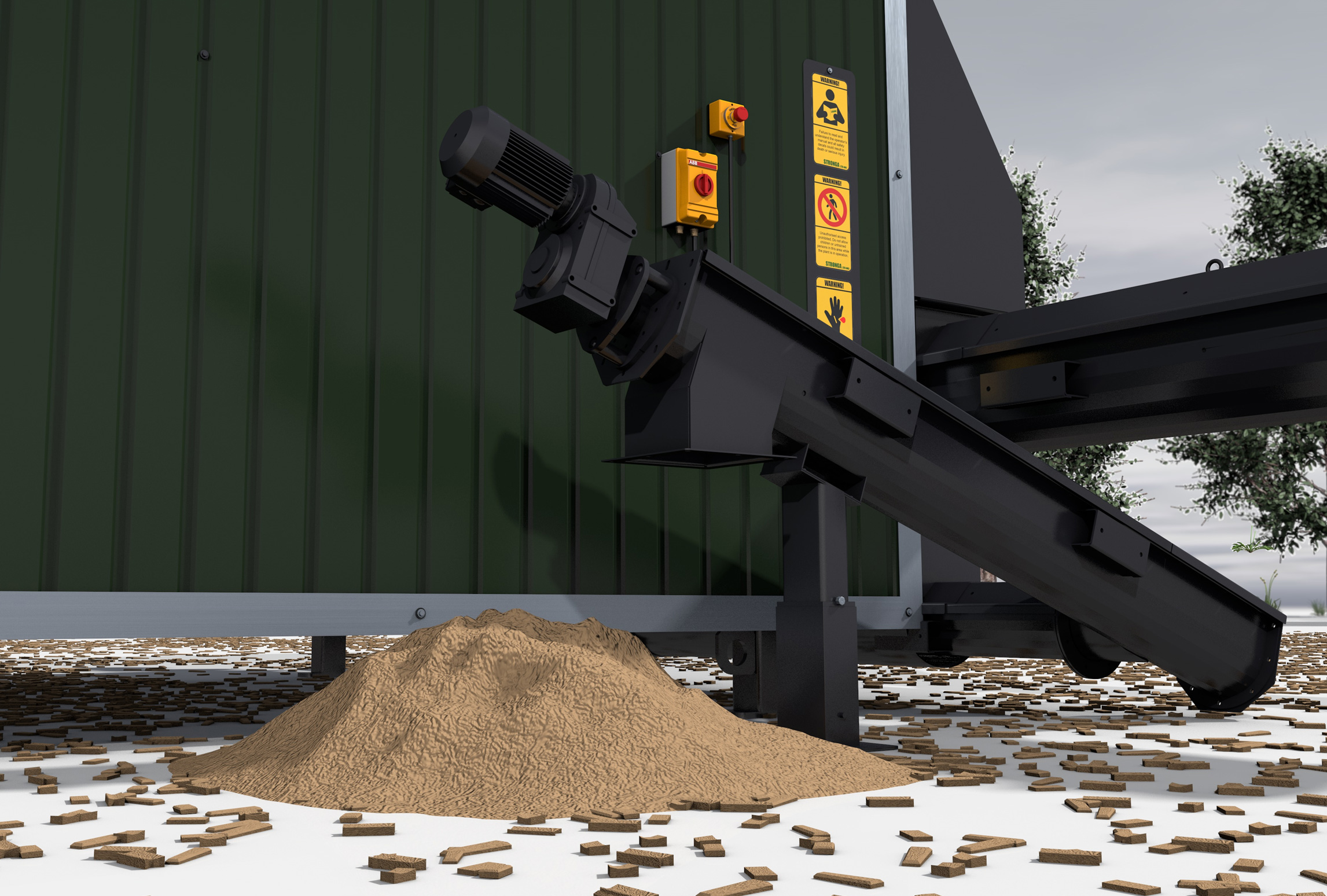
& Integrated Fines Fraction Screening
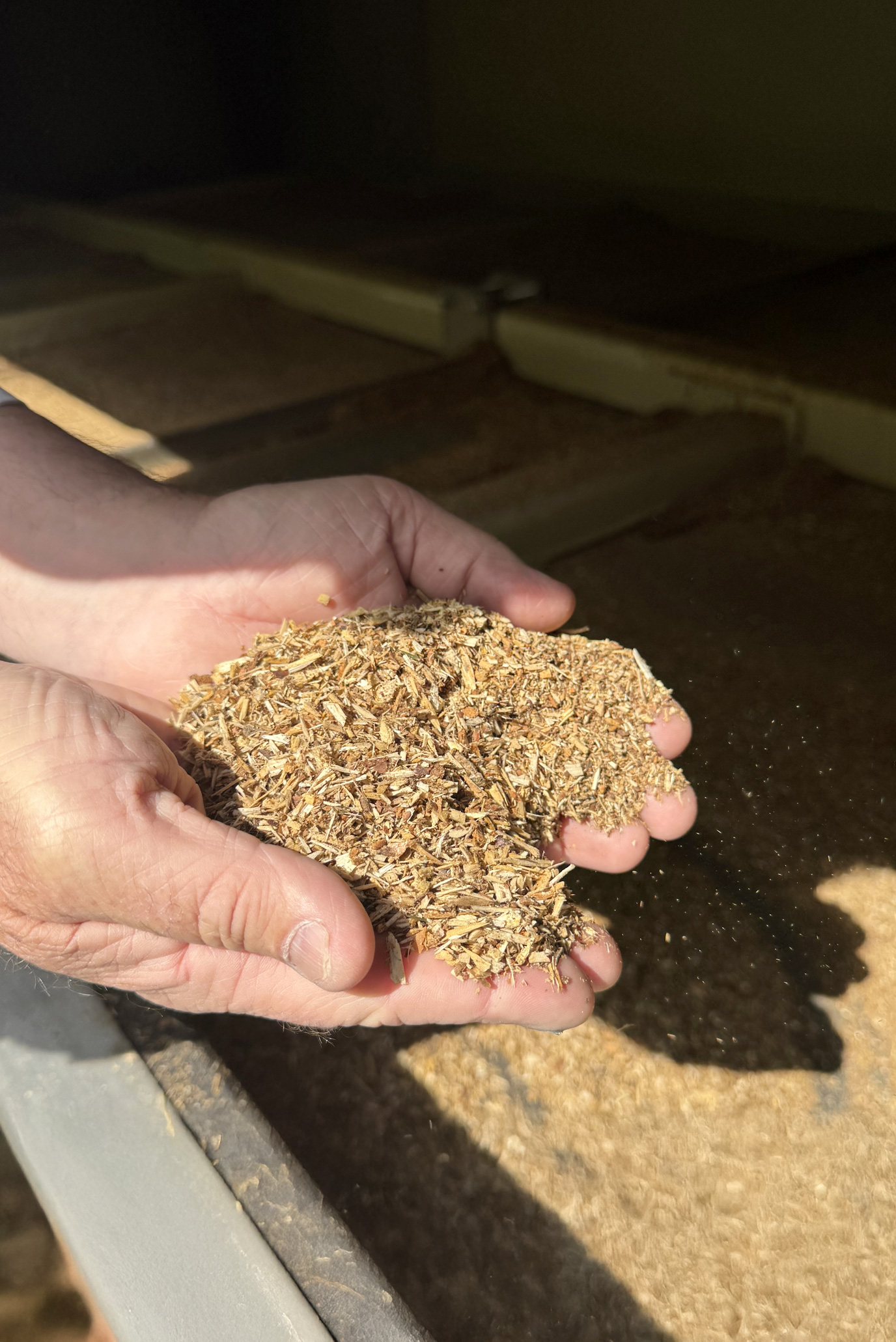
FlowDrya maintains consistent material output quality by screening the heavy "fines" fraction as part of the drying process. Through the integrated fines separation system, FlowDrya extracts glass, stones, dirt, grit and sand, mainly to clean the primary product stream but also to potentially create a separate, value-added fraction.
Unlike rotary and belt dryers, where fines remain mixed within the main load, FlowDrya automatically separates heavy fines during the drying process, delivering a cleaner output and fewer operational issues in downstream processes.
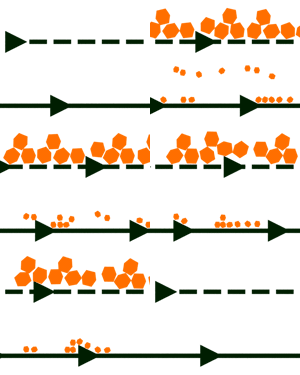
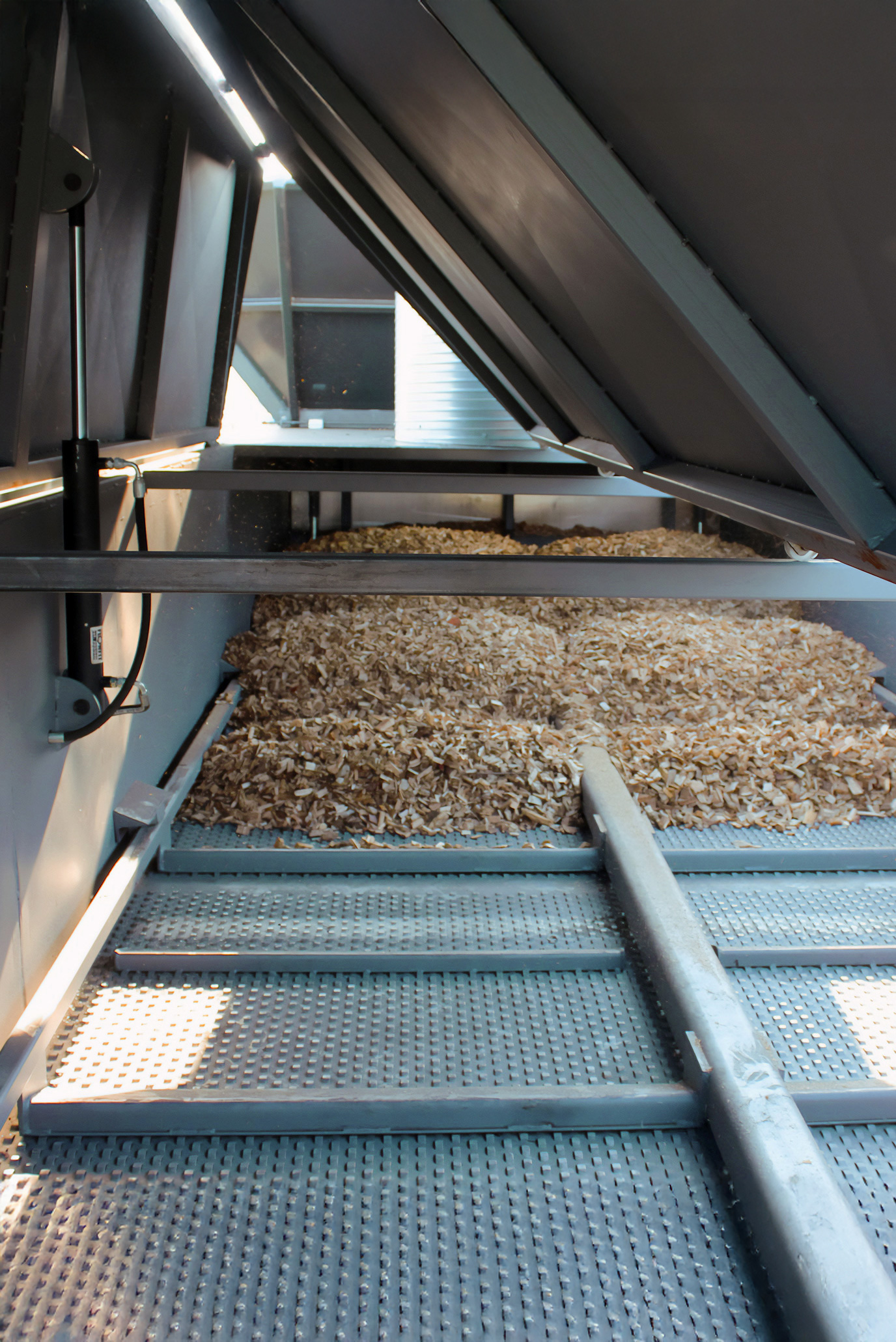
Fines Fraction Separation During Drying
FlowDrya's perforated drying floor automatically cleans and filters heavy fines into the dedicated sub-floor plenum as the primary material stream flows across the overlying drying bed. The sub-floor plenum serves three key purposes:
- To collect heavy fines without interrupting throughput of the primary material stream.
- To automatically discharge the fines fraction via the dedicated fines auger, separating it from the primary material stream without requiring additional, costly screening systems.
- To accept the heated airflow for the drying process, drying the fines fraction and primary material stream.
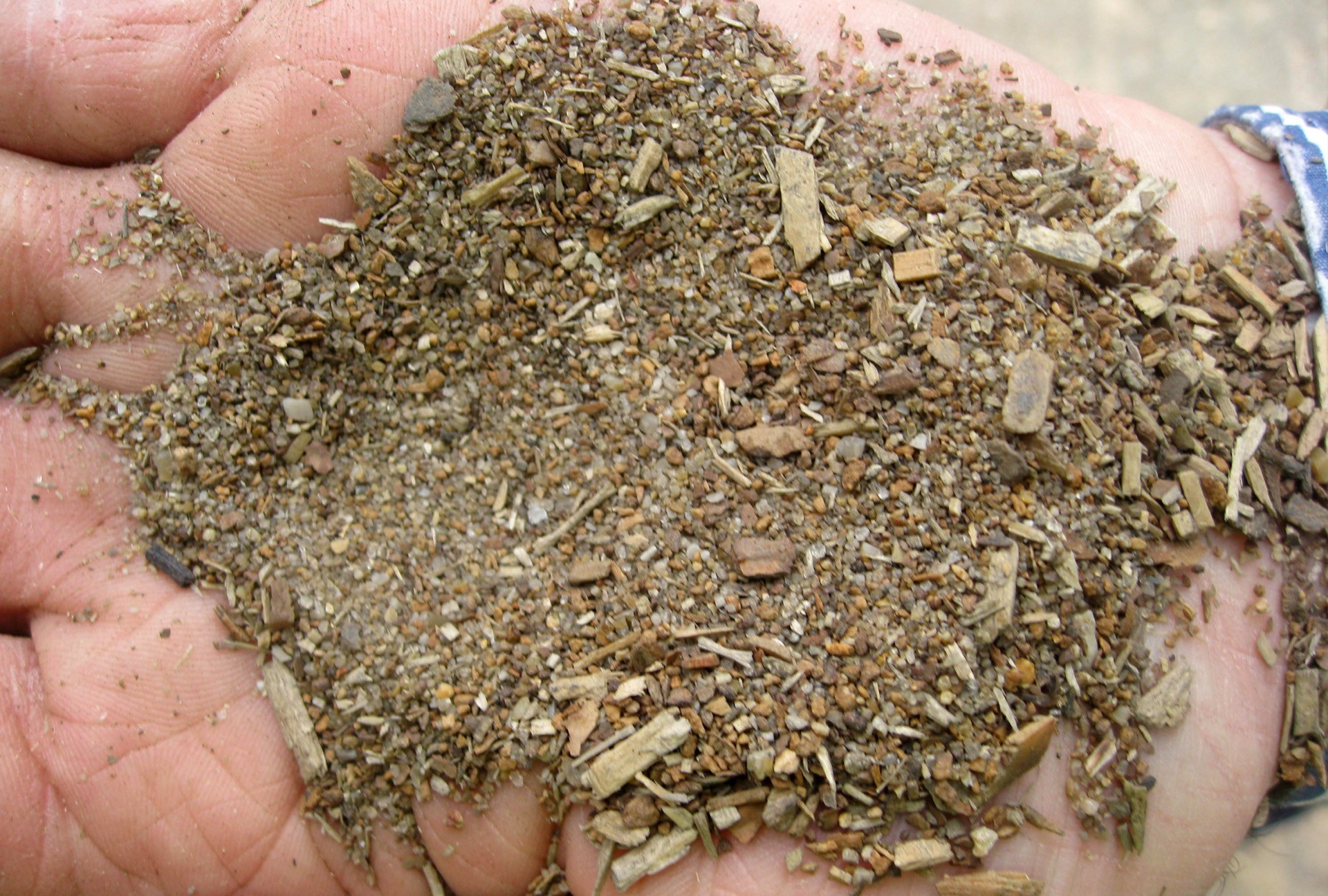
The volume of fines material collected in the sub-floor plenum depends on a number of factors, including particle size of the main material stream, drying airflow speed, volume and more. The video below shows various fines fractions in relation to the primary material stream. These are a selection of biomass materials.
The key benefit of automatically screening the heavy fines fraction is that the output dry material is cleaner, more consistent and a better-quality dry biomass. This is particularly valuable in applications where abrasive fines - glass, stones, grit and sand - can cause increased wear, blockages or process instability further downstream. Where wood chip is being used as a boiler fuel, for example, removing the abrasive fines from the fuel reduces maintenance and downtime caused by grit, glass and sand contamination.
Compared to belt dryers and on-floor systems, where fines accumulate and remain within the primary material stream, FlowDrya actively manages the fines fraction at source — protecting both product quality and downstream process reliability.
FlowDrya's fines fraction separation system is integrated into the overall drying process with no requirement for additional, expensive standalone screens or trommels. The financial benefit of a two-in-one, drying-and-screening system is significant, with customers avoiding the initial investment and ongoing maintenance associated with additional screens / trommels.
Where separation of the two material streams isn't necessary, FlowDrya can be arranged for fines fraction recirculation with augers arranged to automatically deliver the fines material back onto the drying bed.
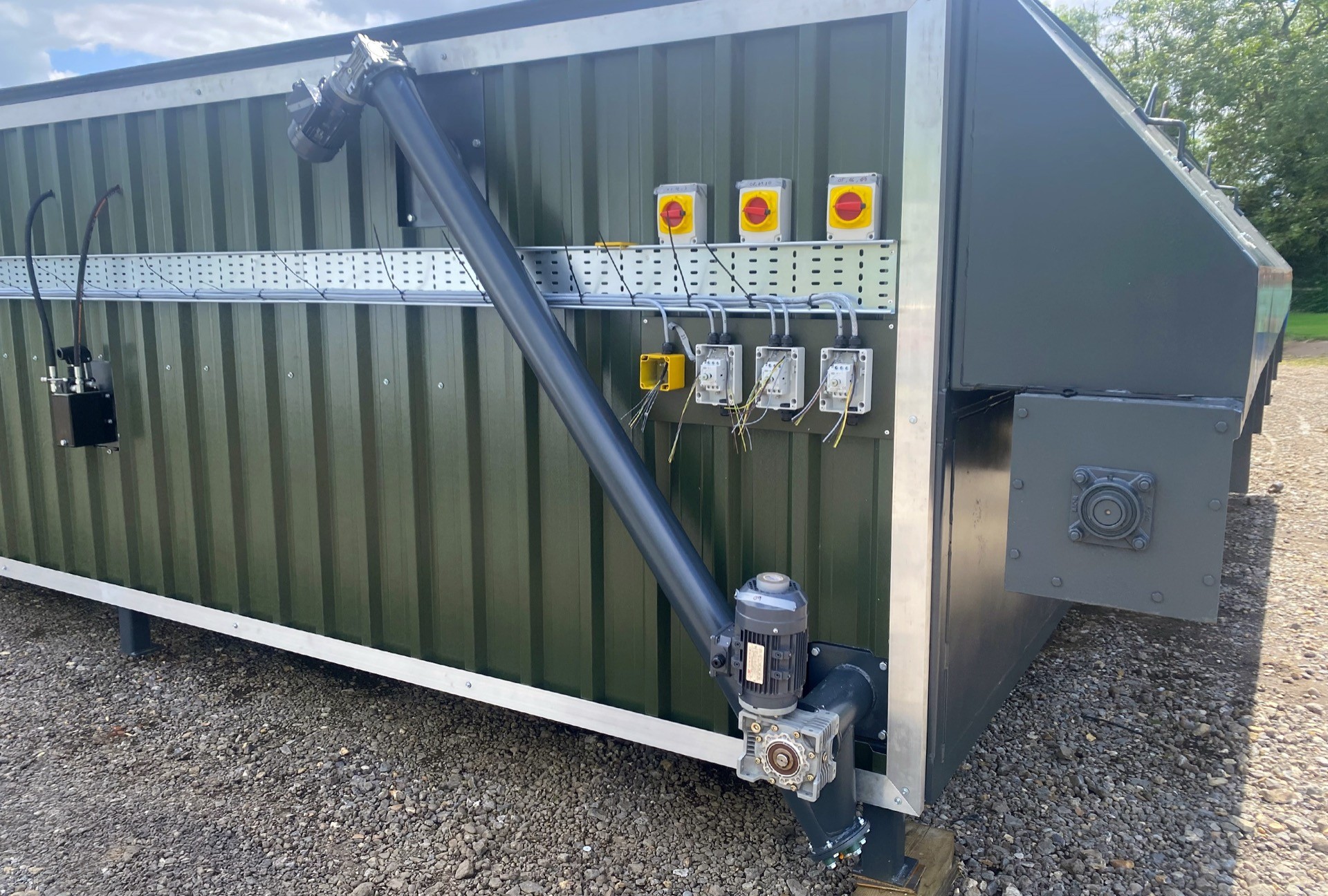
In some applications, the fines fraction does not represent a waste — it can represent a potentially profitable material stream. In its standard configuration, the fines fraction is discharged separately from the primary material stream, opening up commercial advantages.
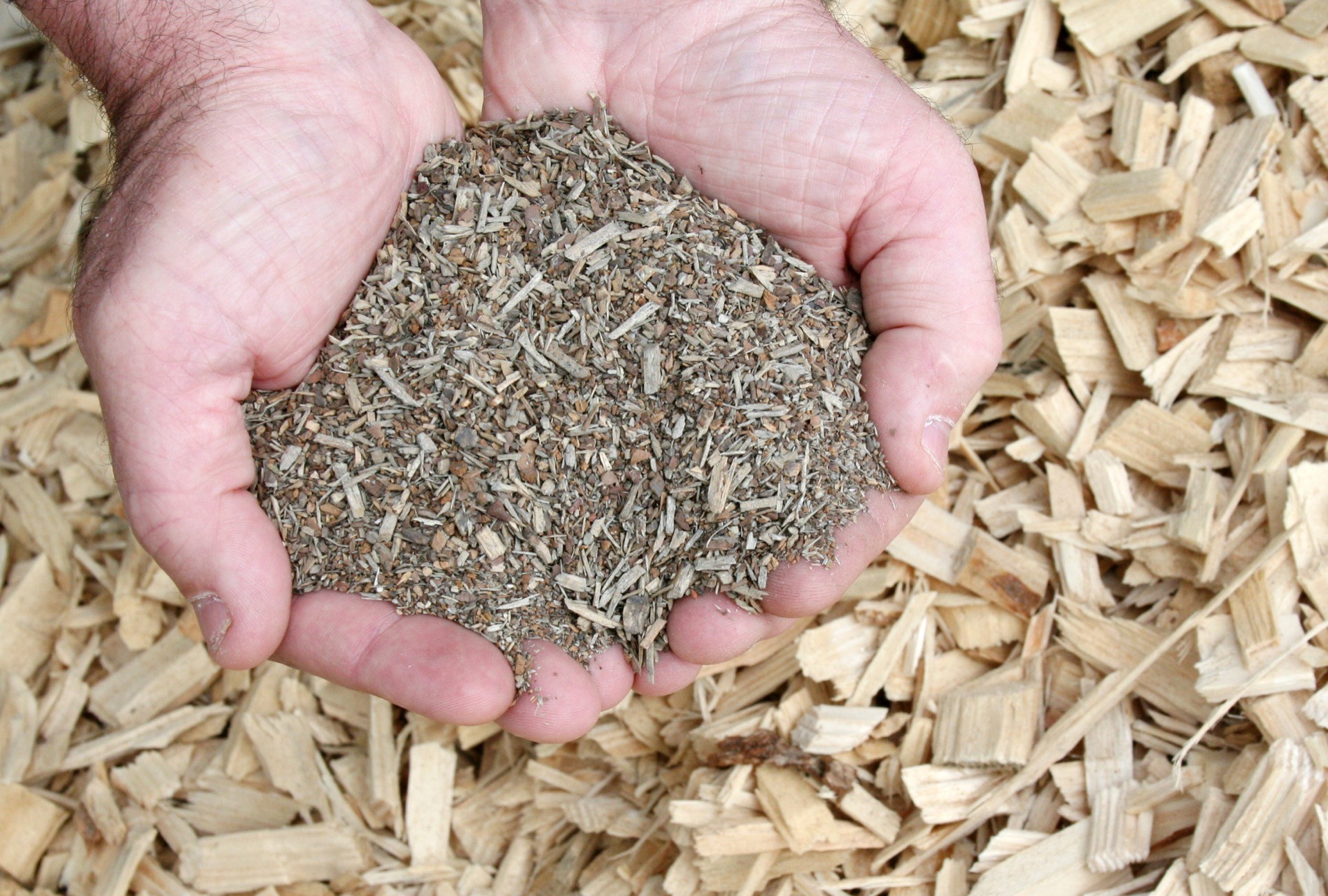
FlowDrya's integrated fines fraction screening system ensures consistently cleaner output material by automatically removing heavy fines as part of the drying process.
By separating abrasive materials such as glass, stones, grit, dirt and sand at source, FlowDrya protects downstream equipment, improves process stability and delivers a more uniform quality primary dry product stream. At the same time, the separated fines fraction can be handled independently and either recirculated or recovered as a distinct material stream — reducing waste, lowering operating costs and, in some applications, creating additional value.
Speak to our team today to learn more about the fines screening process.
Material & Site-Specific Solutions
At Stronga, we understand that a high-performance biomass drying solution is about more than just moisture removal. It's about protecting your product and safeguarding your operation.
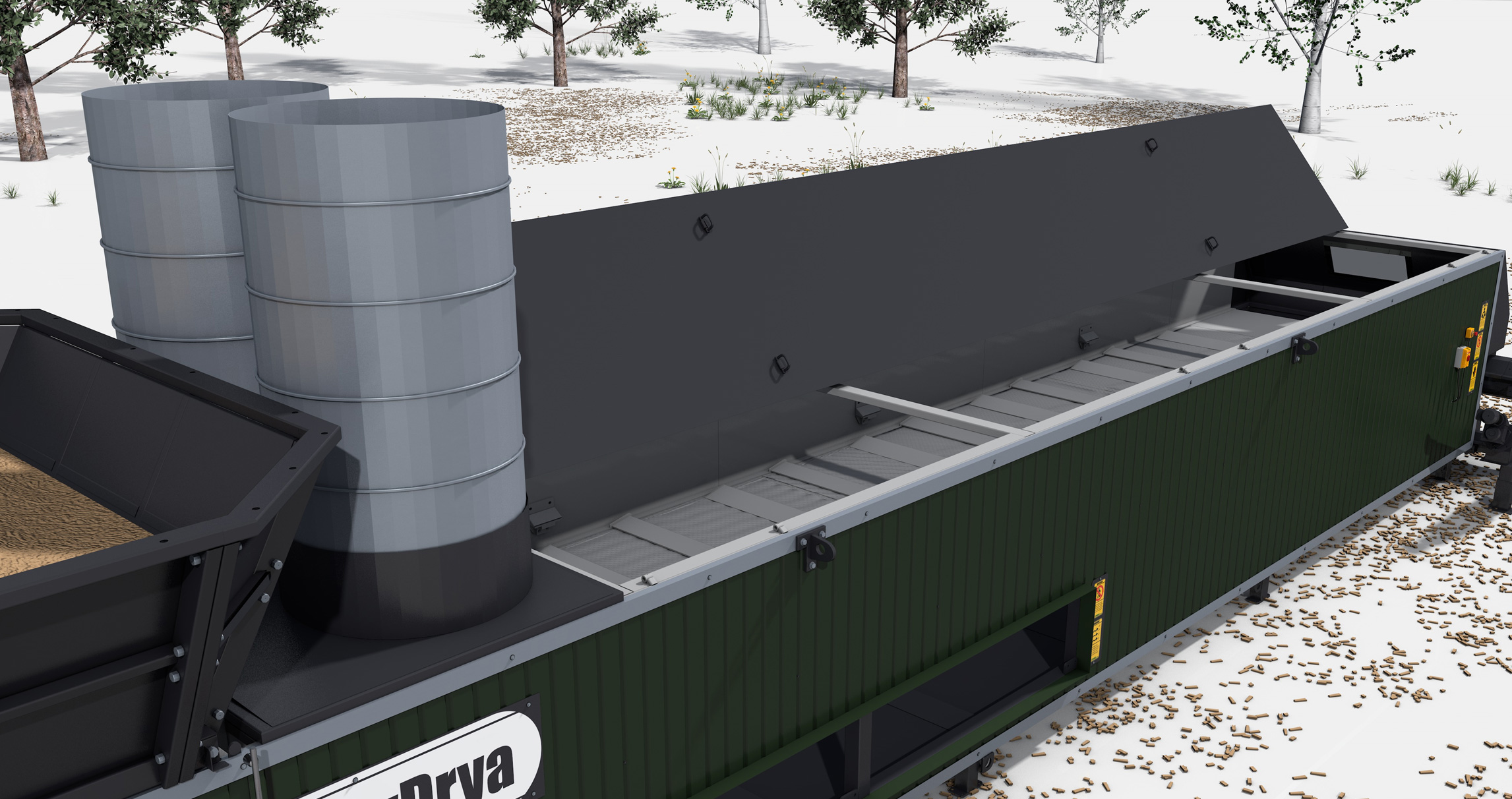
That's why we offer three distinct roof options alongside bespoke exhaust air flue system designs. Together, these solutions provide effective sheltering of the drying bed, improved dust and exhaust air management, compatibility with downstream air filtration systems or exhaust from buildings, offering a cleaner, safer working environment. As exhaust air content is highly material and particle size specific, customers should engage with our technical team to identify the optimal solution for their specific material and installation.
Protecting Product, People & Performance
During the drying process, exhaust air after passing through the material on the drying bed can be highly humid and may contain entrained dust particles – depending on particle size, density of the material, airflow level, and several other factors. In addition, depending on the material being dried and the selected drying air temperature, volatile organic compounds (VOCs) and odour may also be present in the exhaust air stream.
Stronga's experienced technical team can specify or advise on appropriate exhaust air flue systems to work in harmony with your material type, offering a suitable roof configuration/air-flue arrangement. When correctly specified, these systems convey humid exhaust air, minimise dust emissions, and ensure compatibility with downstream air filtration or treatment systems where required. The result is a cleaner, safer working environment and a drying solution designed for long-term, reliable operation.
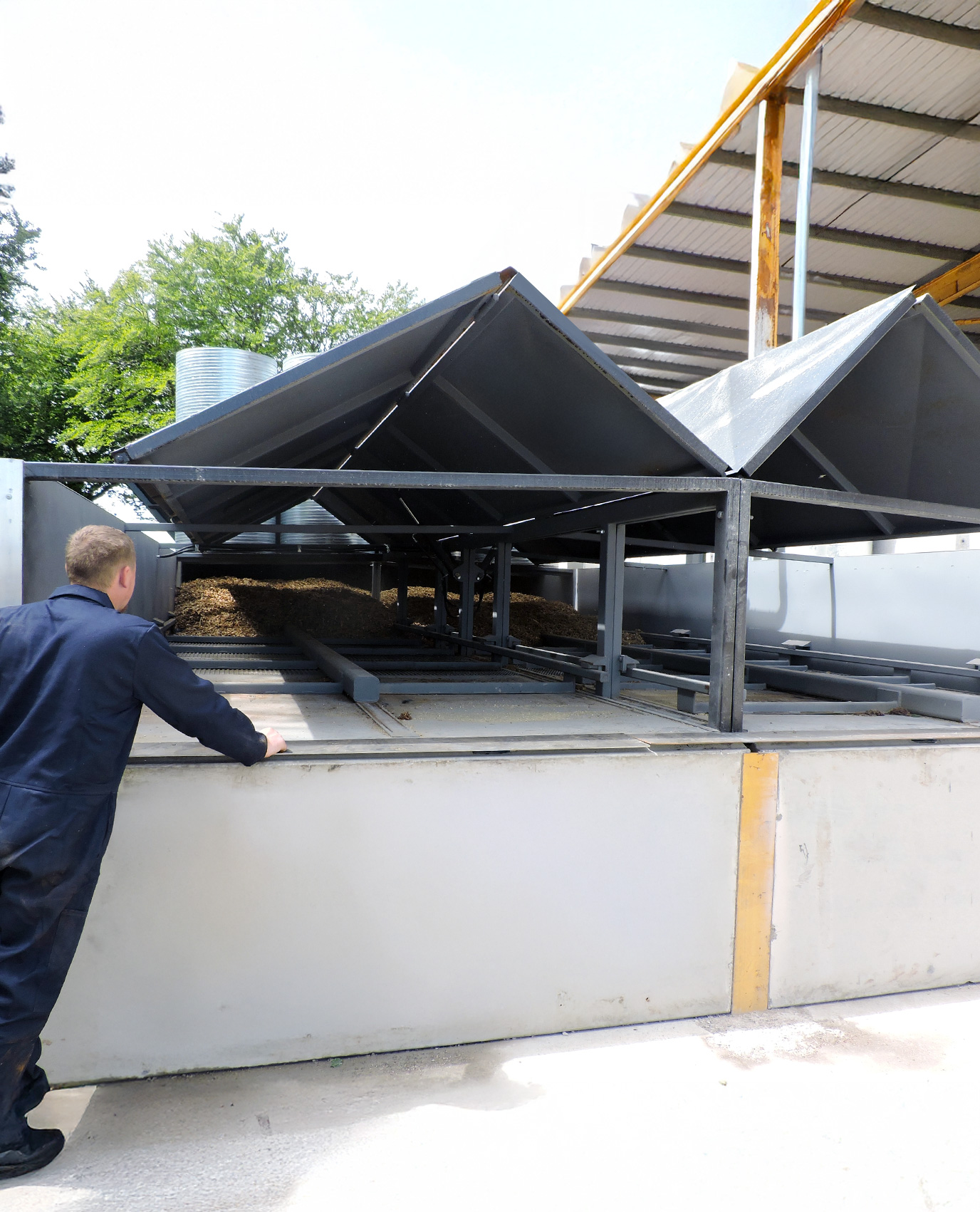
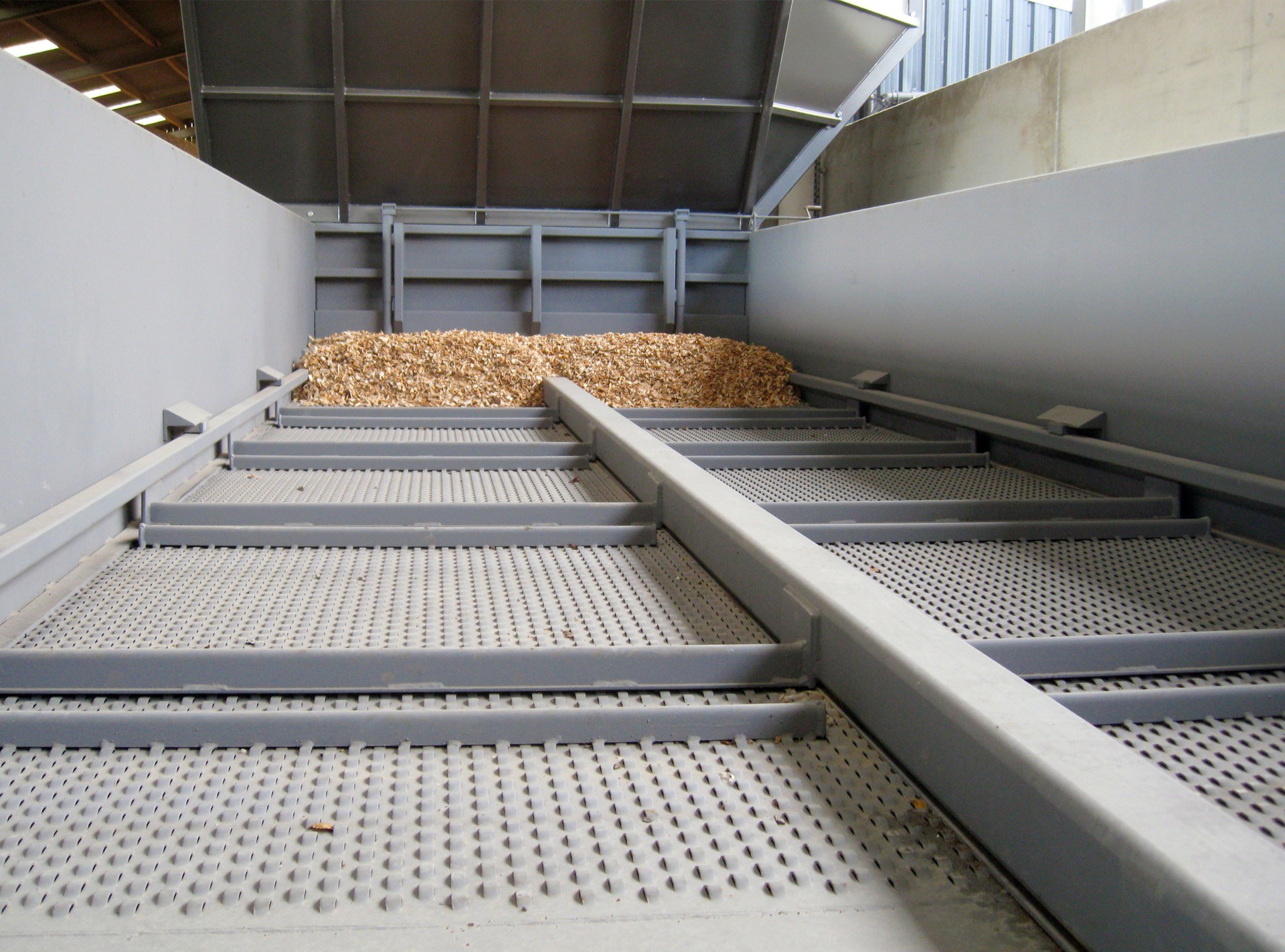
Choices of roof include open-top, fixed roof, or hydraulic opening configurations. When combined with elegantly designed exhaust air flue solutions, FlowDrya provides the flexibility and capability to suit your requirements. Contact the Stronga technical team for advice on the best roof and exhaust air flue arrangement for your material and site.
1) No Roof – Open-Top (Standard Configuration)
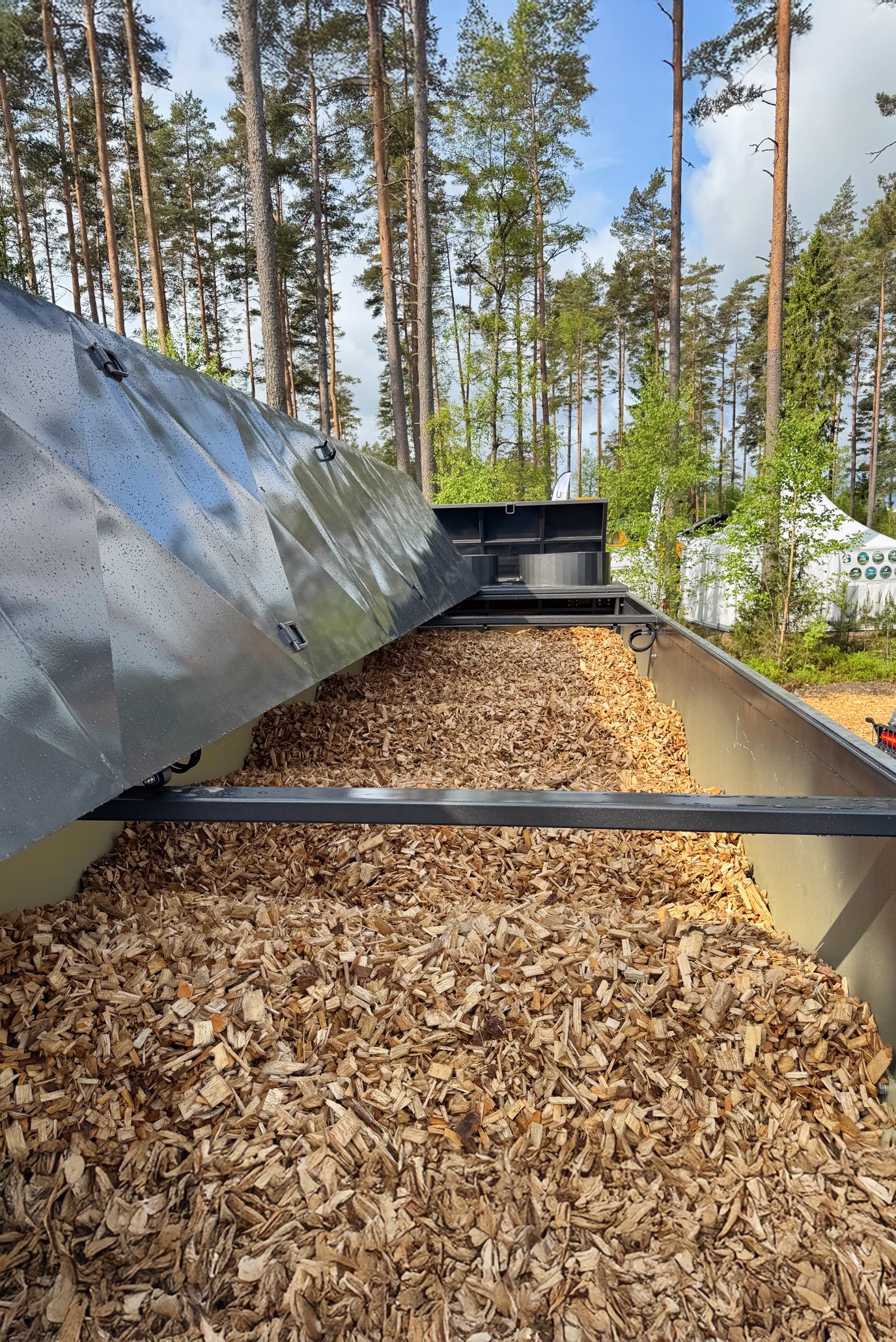
The standard open-top option is the classic configuration for dryers sited in well-ventilated open-sided barns or lean-to's, offering covered protection to the material intake hopper and PulseWave™ drying bed, as shown below.
2) Fixed Curved Roof
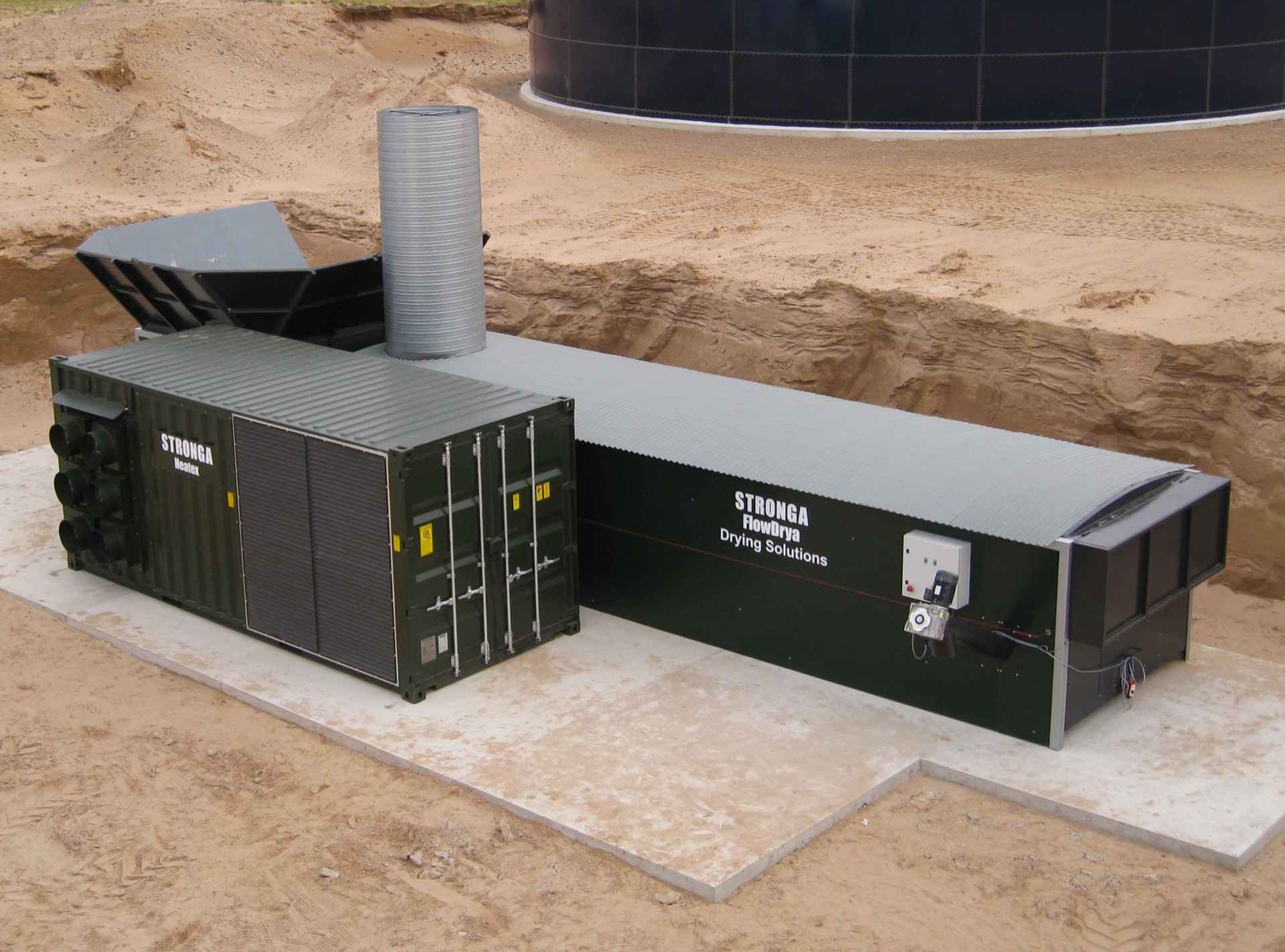
The fixed curved roof offers a simple enclosure; a robust exterior cover for external installations.
- External mounting — where inside space is at a premium and better used for stockpiling dried material; covering your drying process from the elements.
- Dust control — when coupled with well-designed exhaust air flue systems, the fixed roof offers better control of airborne dust during operation, creating a cleaner, safer, and more pleasant working environment for your workforce.
3) Hydraulic Roof with Hand Pump or Hydro-Electric Push Button
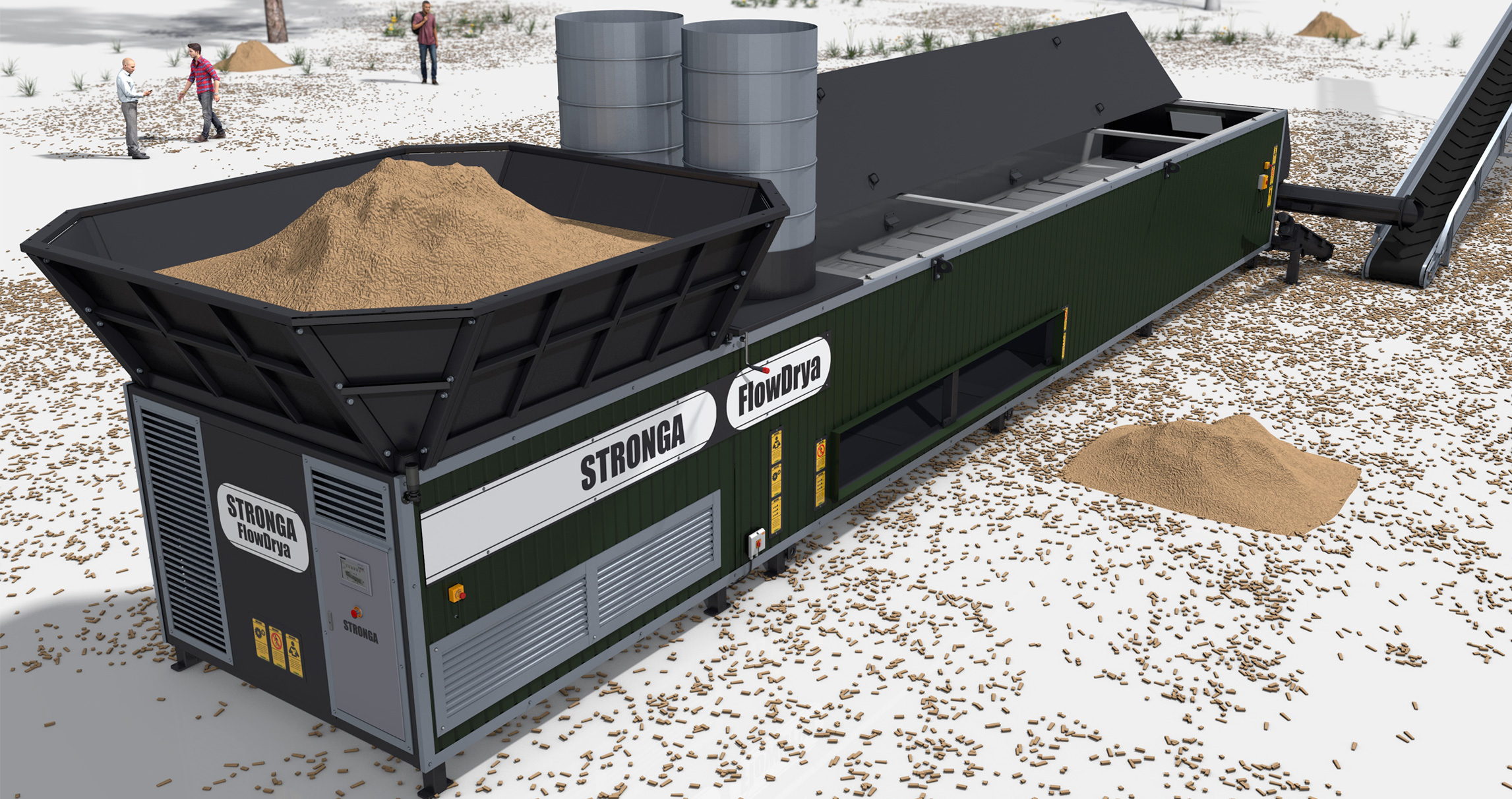
The hydraulic folding roof option combines fast easy accessibility to the drying bed in externally sited operations. Key features and benefits include:
- Easy access for service & maintenance: Compared to the fixed roof, the hydraulic folding roof offers easier access to the drying bed in service and maintenance inspections. Lift the roof via the manual hydraulic hand pump or with convenience via the press button electric-hydraulic powerpack – both options are available.
- Improved off dryer airflow management: When closed, the hydraulic folding roof directs humid exhaust airflow up through the exhaust flues, designed to slow down exhaust air speed to reduce dust emissions.
- Easy operation: Simple operation of the folding roof gives operators fast, safe access to the drying bed.
Stronga offer clients the choice to integrate well sized exhaust air flue systems that:
- Reduce air speed off the dryer, limiting dust generation in brittle materials with high fines content (SRF, bark, paper crumb, chopped forage and more).
- Channel evaporated moisture and dust particulate safely to the atmosphere or to client-arranged downstream air filtration equipment, where required.
- Enhance dust and fume management, reducing particulate release into the surrounding environment, creating a safer, more pleasant operating environment.
Stronga is happy to design and supply a complete, galvanised exhaust air flue solution as part of the FlowDrya build, however we also offer clients the option to outsource the design and manufacture of the flue path if a preferred supplier is available.
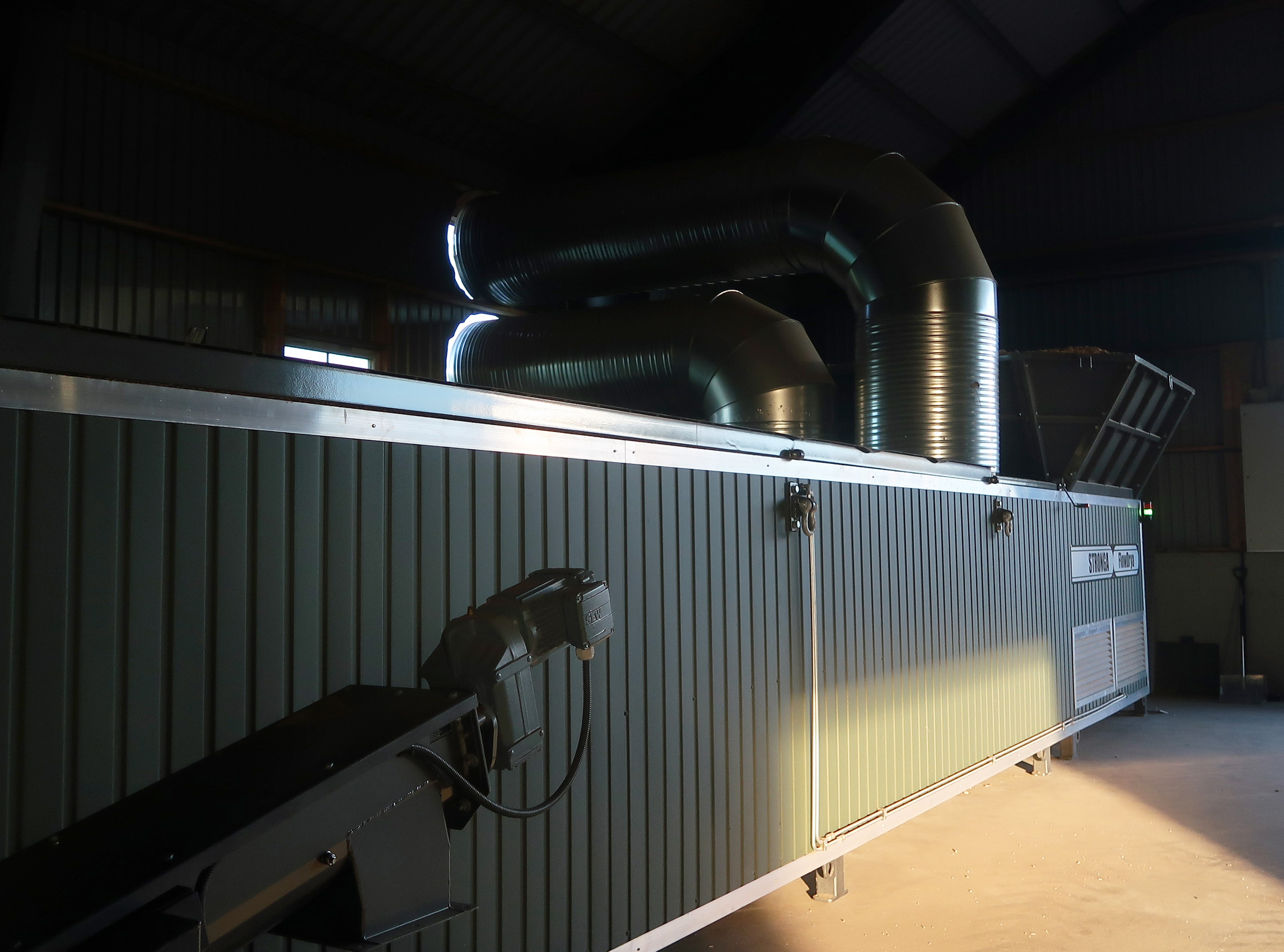
Choosing the right roof and flue system isn't just about shelter — it's about optimising the drying environment to get the best results from your FlowDrya. Whether you're drying wood chips, biomass, SRF, paper crumb, digestate fibre or other speciality materials, our roof and exhaust configurations give you the flexibility to tailor your system to your process.
Engineered Around Your Requirements
No two drying projects are the same. Variations in wet material properties, target moisture content, site layout, throughput requirements and environmental considerations all influence the optimal dryer specification and arrangement. That's why FlowDrya is engineered as a configurable, modular drying platform — allowing our technical team to adapt core elements to match each customer's requirements.
From hopper geometry and dryer dimensions to airflow zoning, control philosophy and fines fraction handling, FlowDrya is tailored for each project to deliver predictable, efficient and controllable moisture removal across a wide range of materials – wood chip, SRF, paper crumb, digestate fibre and more.
FlowDrya equipment is based on modular architecture which can be adapted in various ways to suit the requirements of your project.
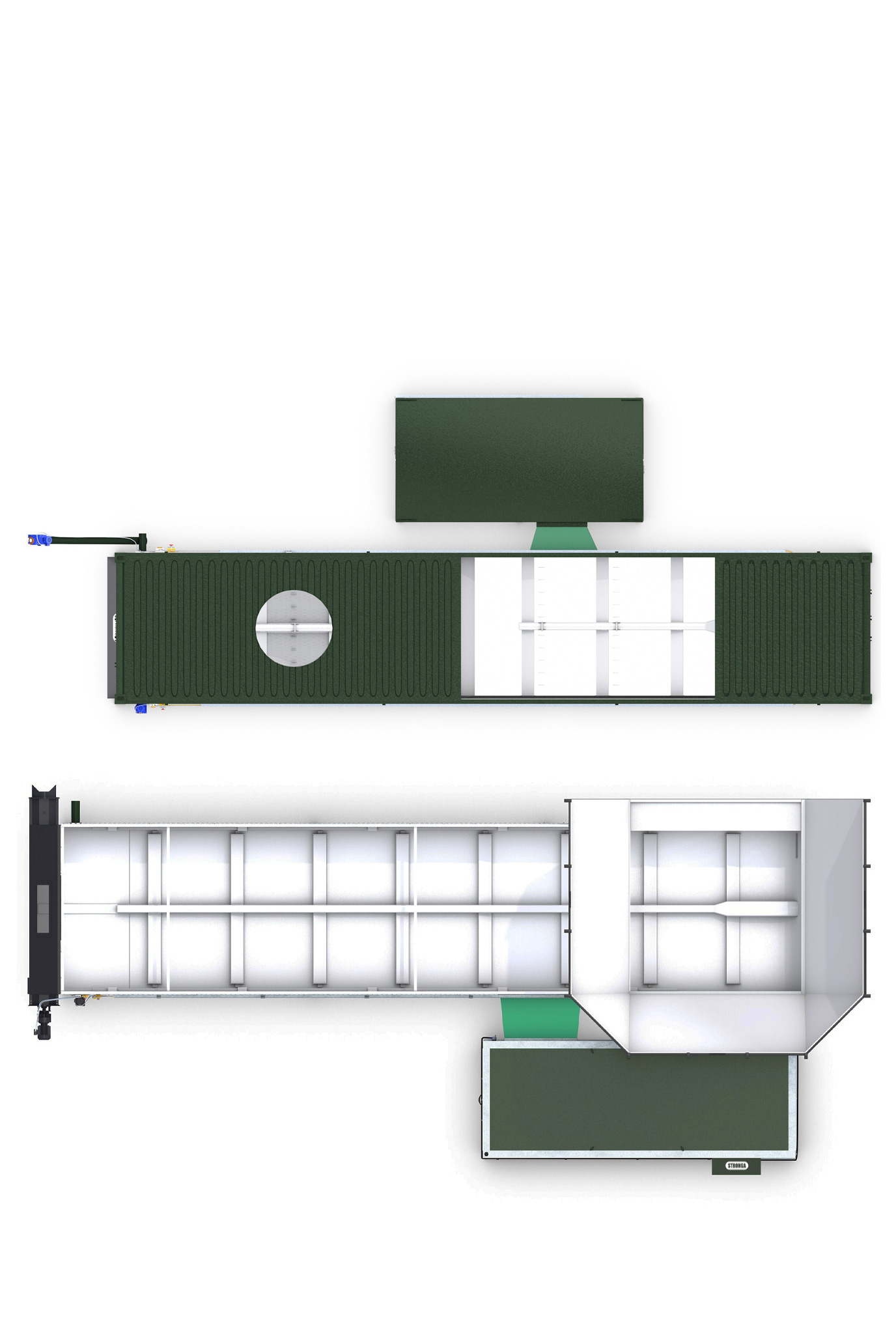
The infeed hopper can be orientated for either side or end loading, support legs can be arranged to increase discharge height, while the drying bed m² can be configured to suit your moisture removal and throughput goals. The result is a dryer that integrates seamlessly into existing or new plant infrastructure, while remaining future-ready for expansion or reconfiguration. The drawings below illustrate a selection of FlowDrya configurations delivered over the years, demonstrating how modular assemblies are adapted and oriented to deliver reliable performance across a range of projects. Other custom size dryers are also available to suit evaporation rate and energy availability.
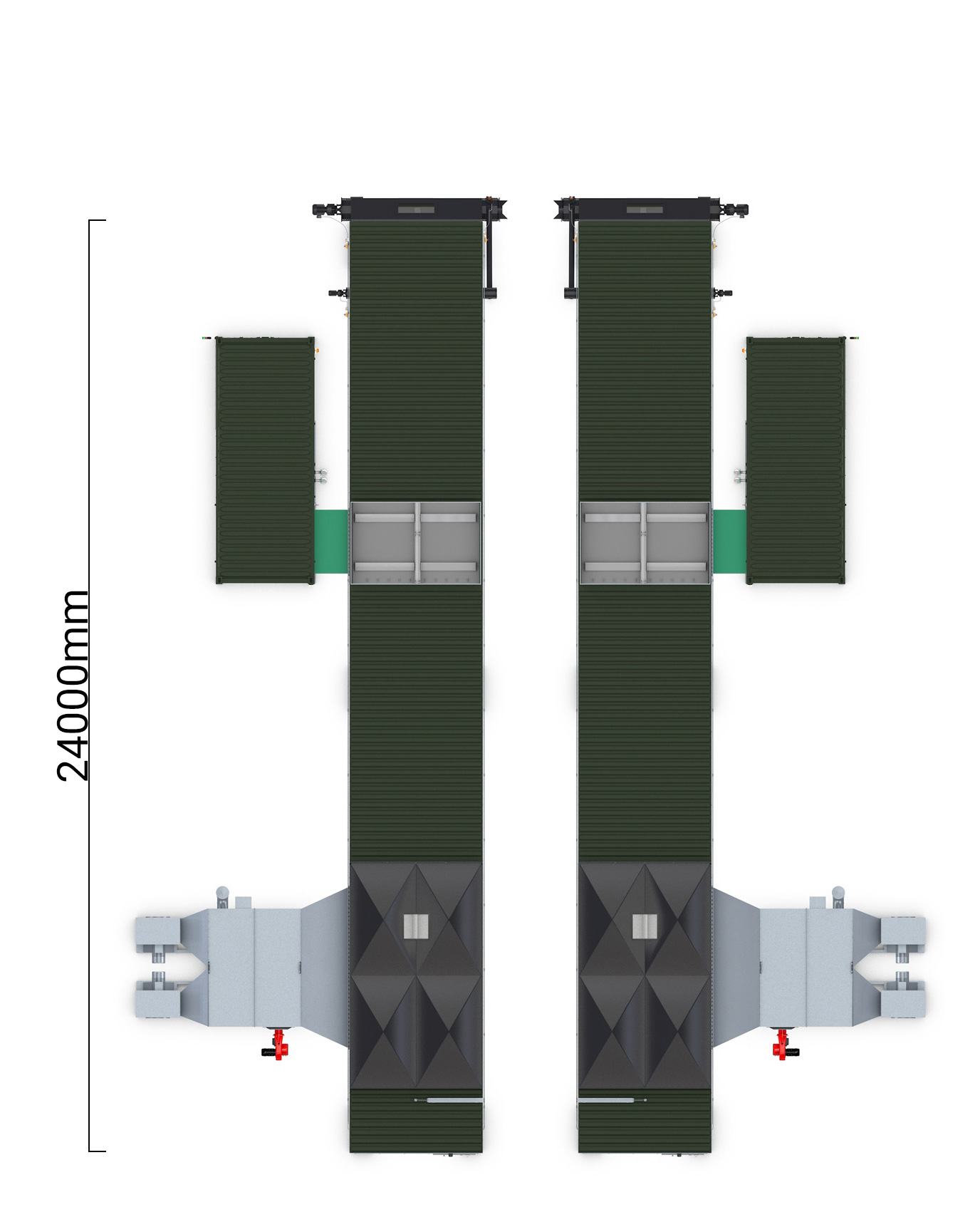
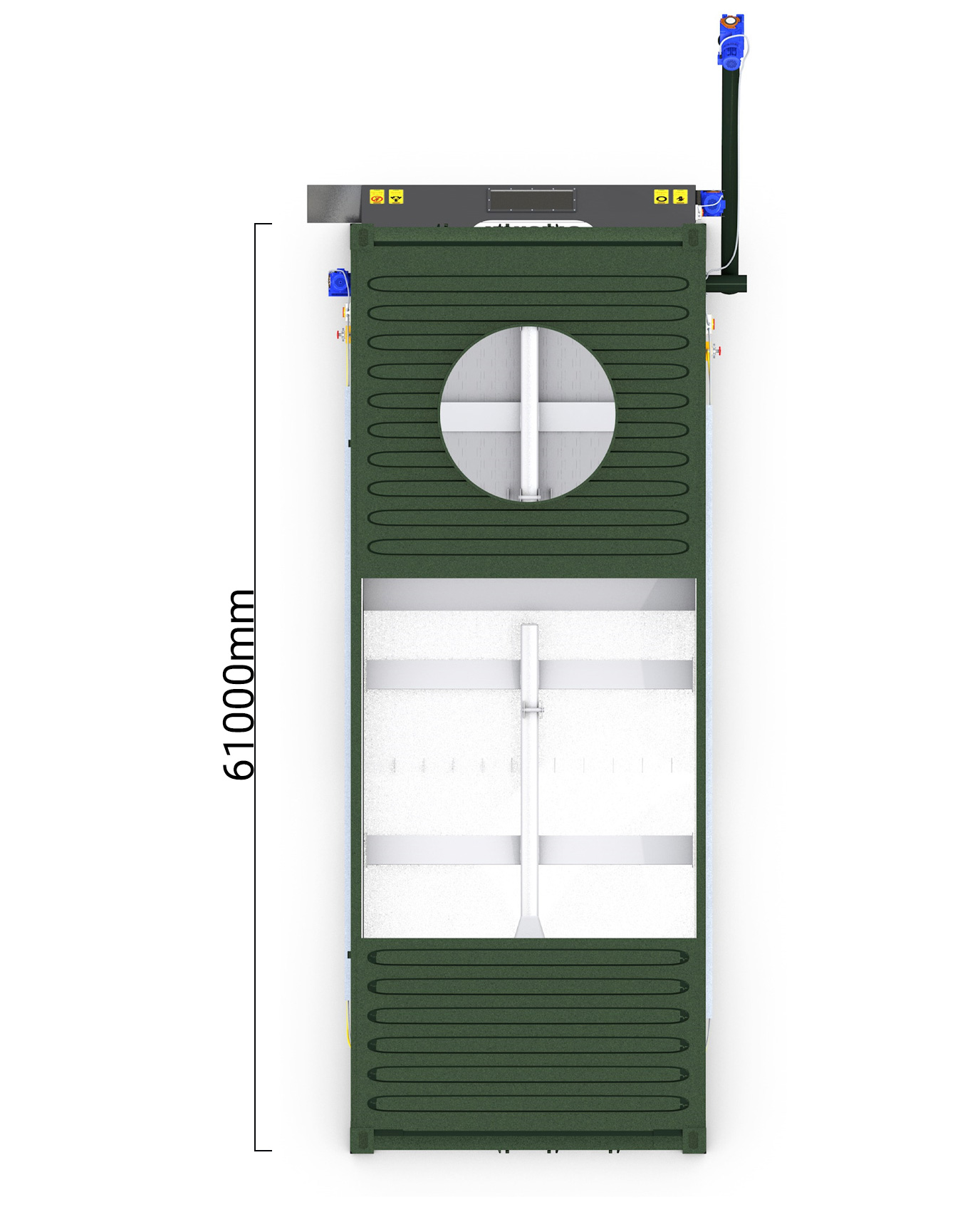
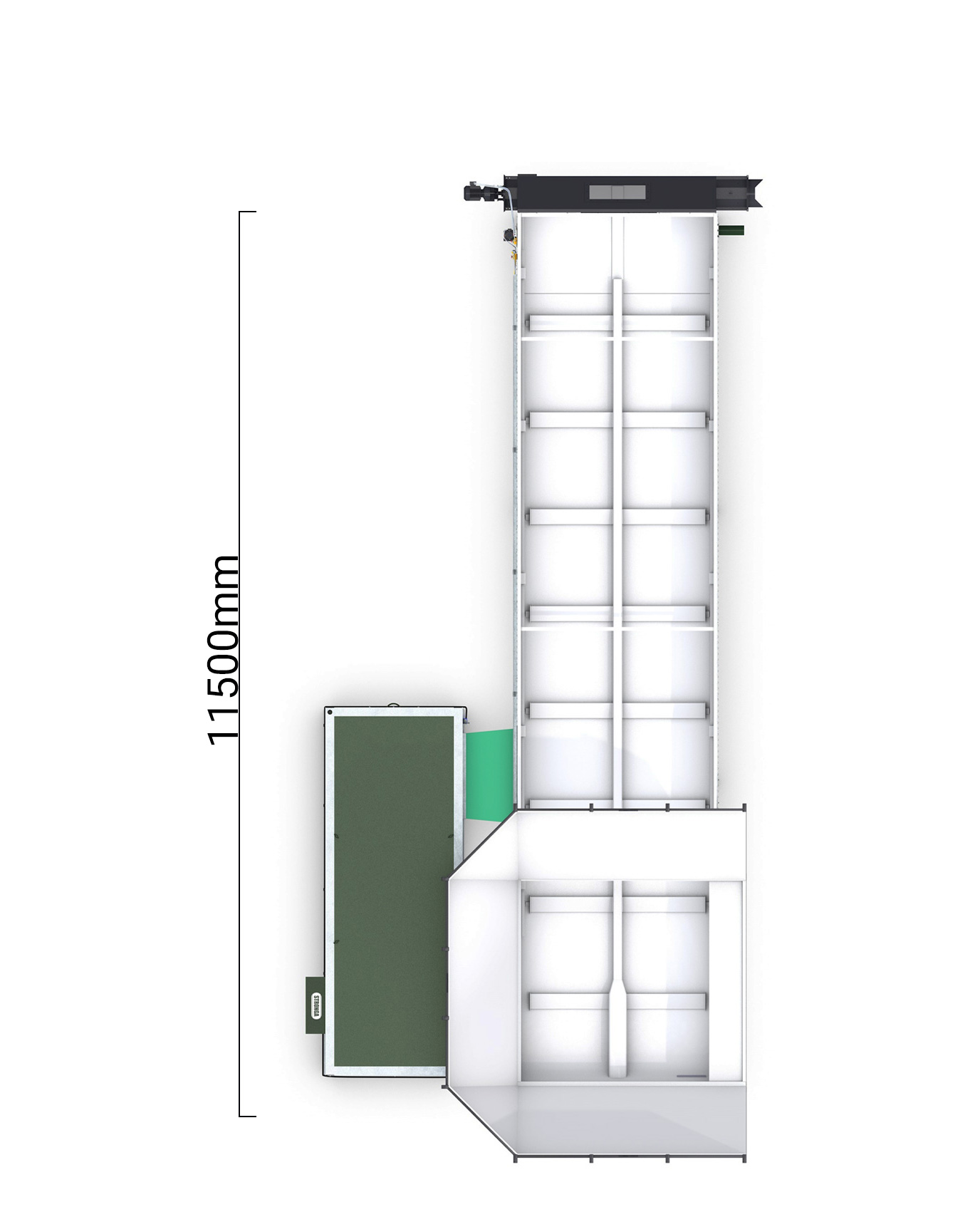
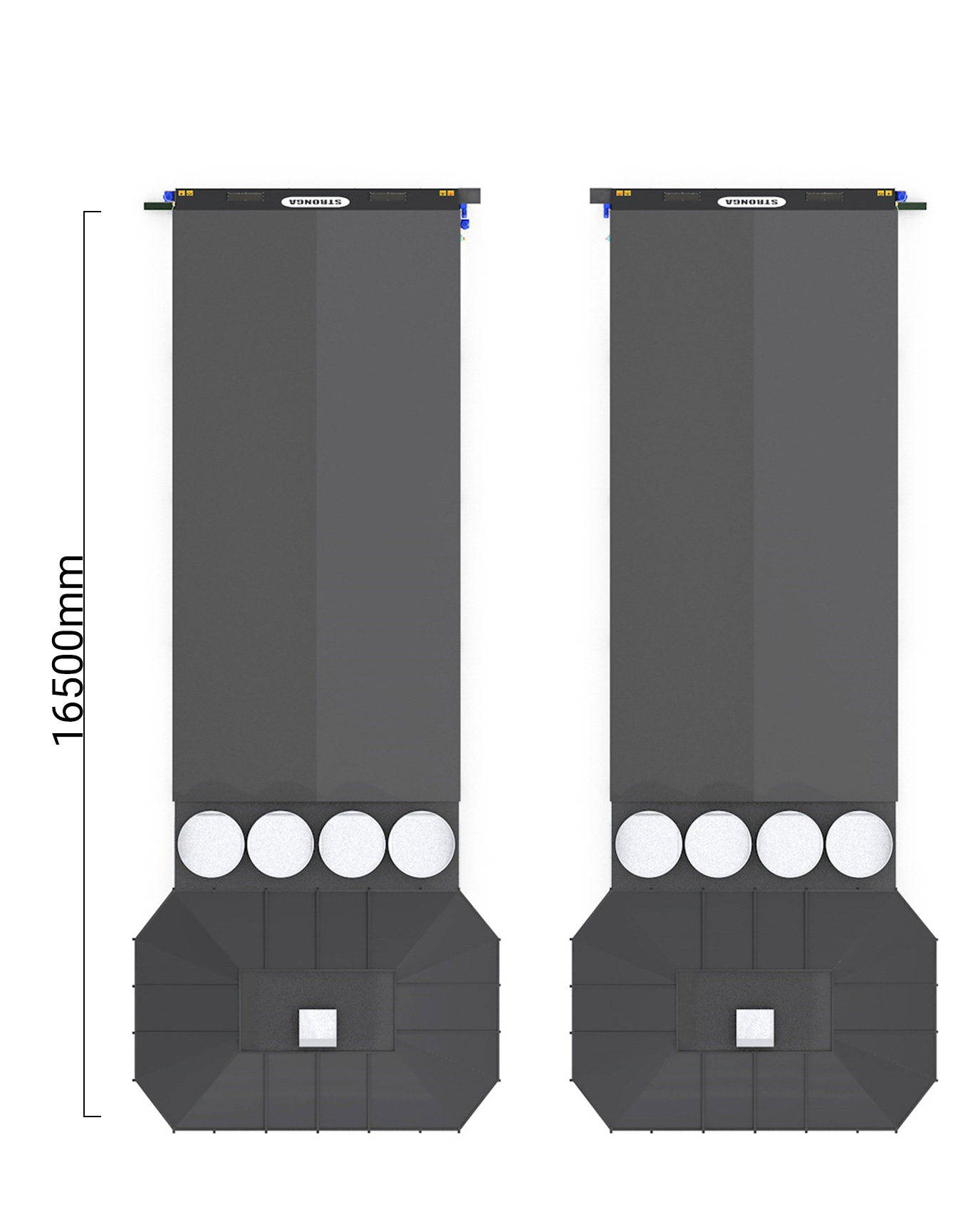
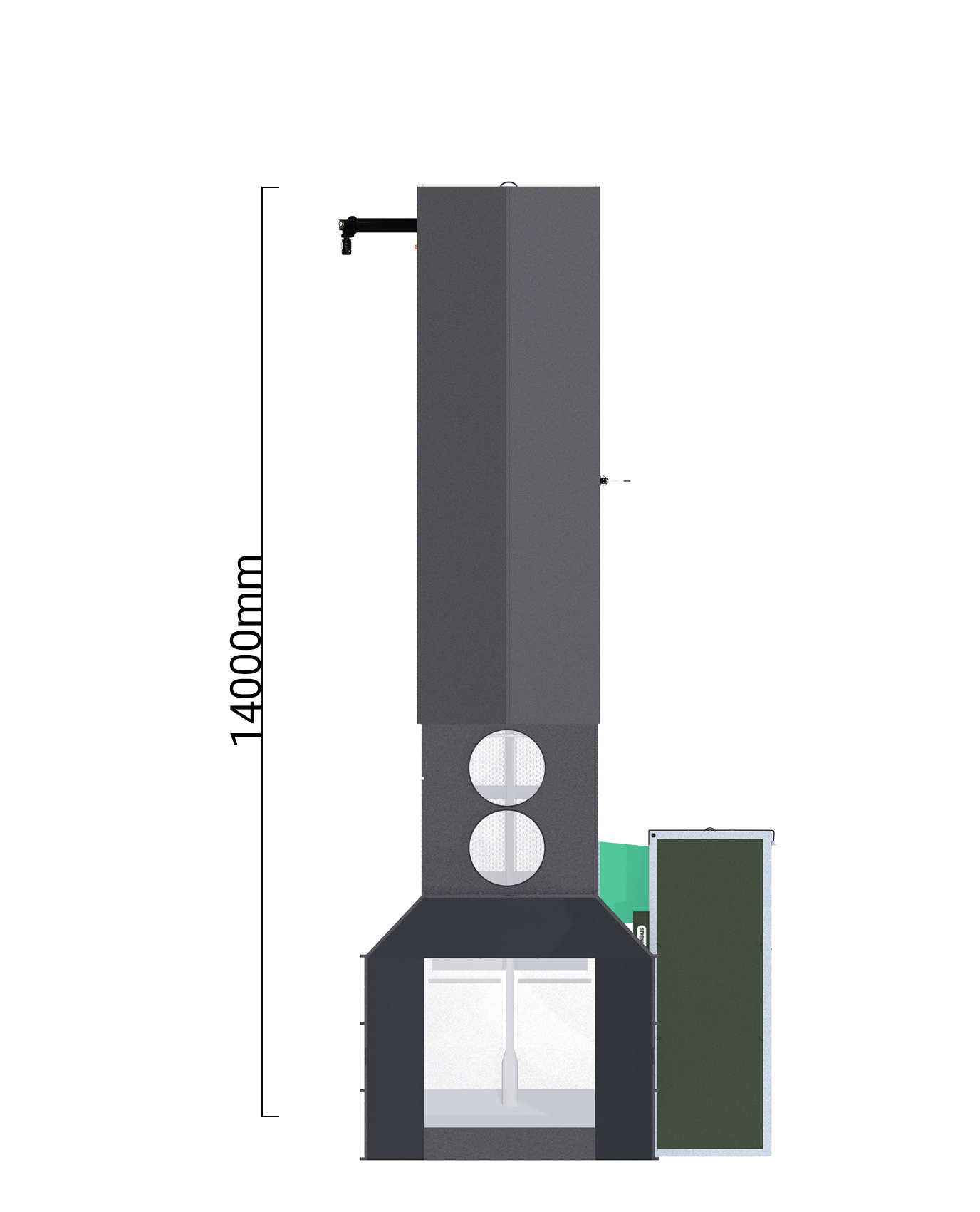
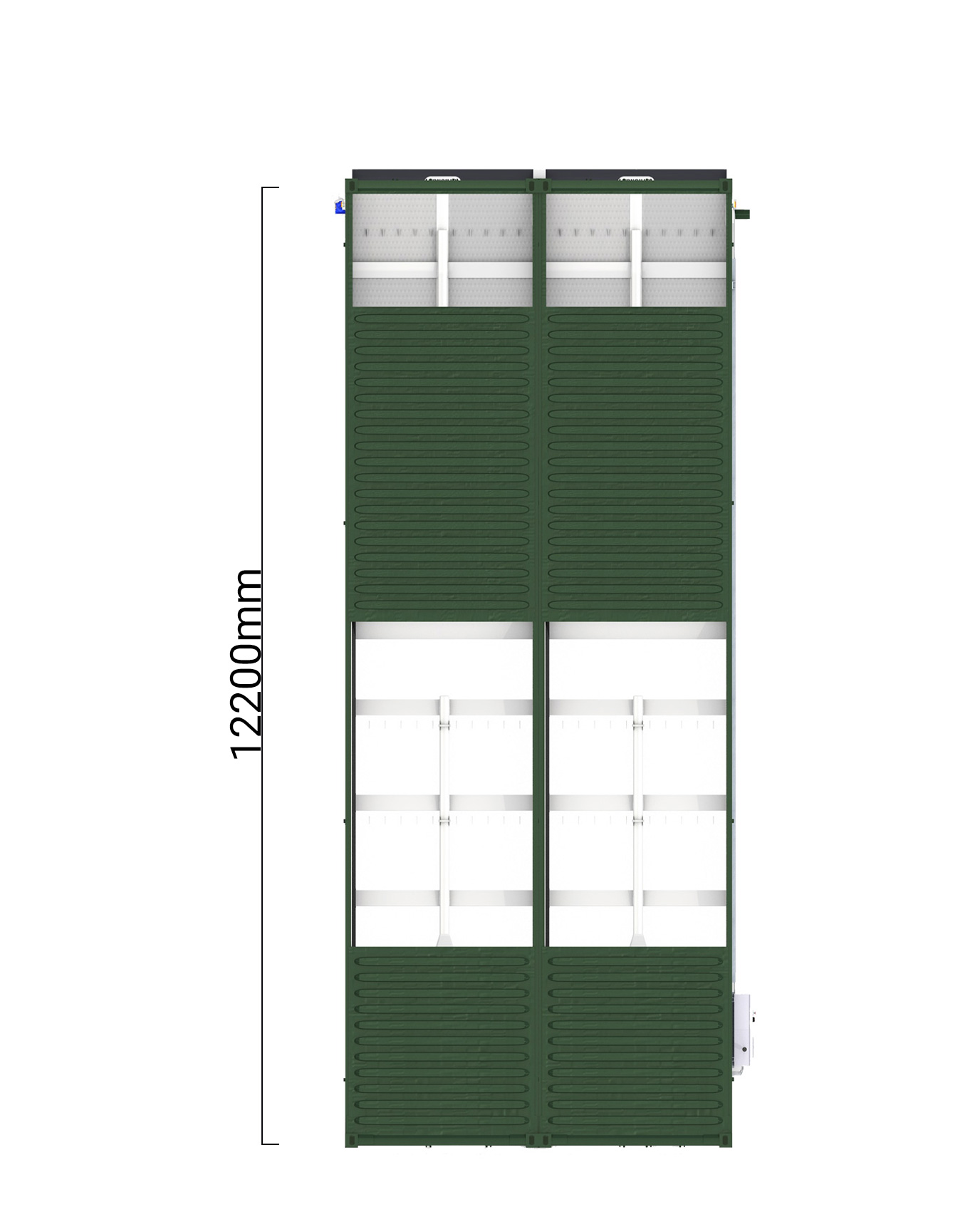
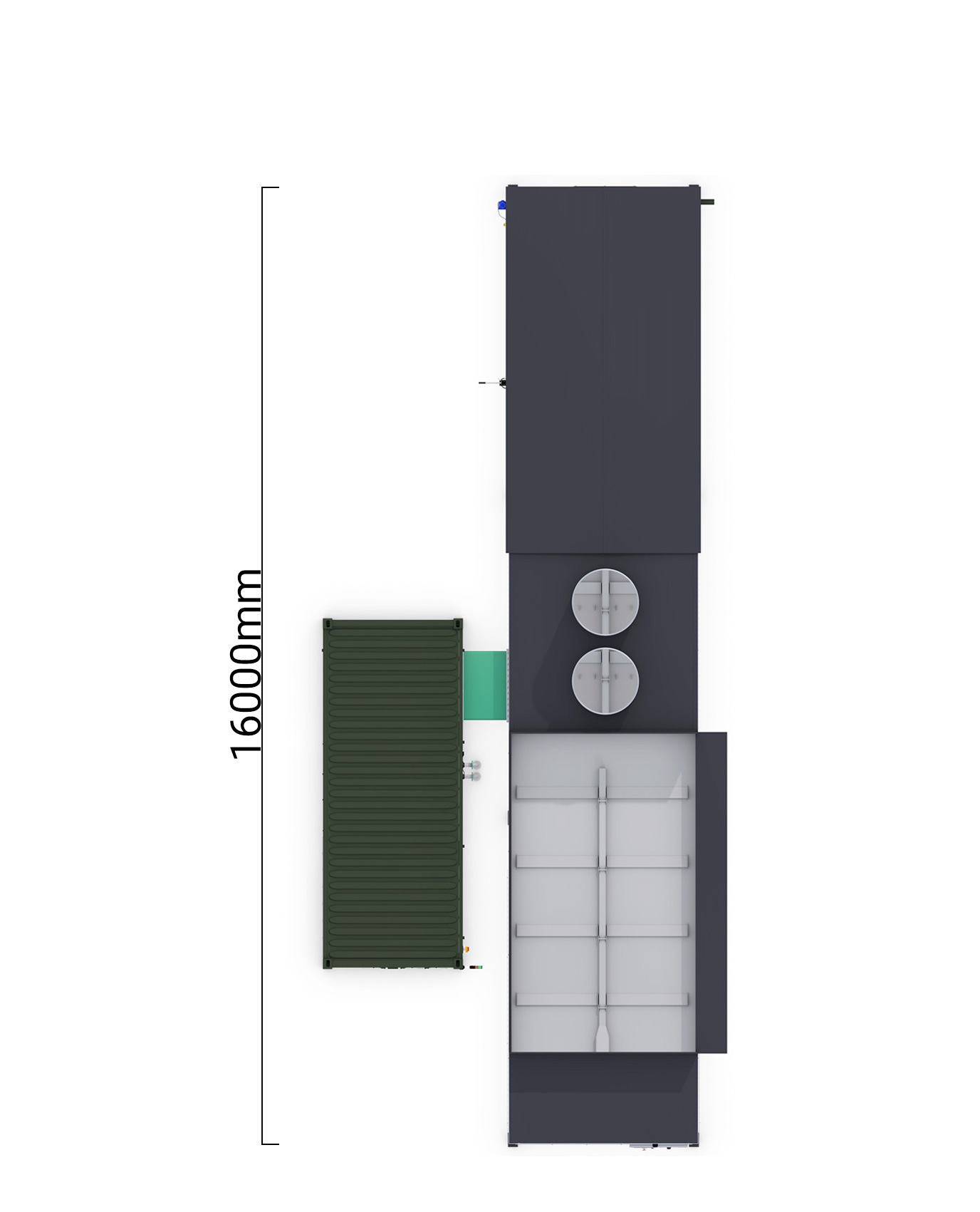
FlowDrya is application and scale engineered, giving customers clarity, once designed, on both dry throughput and capital cost at an early stage in the project. This approach recognises that customers cannot accurately size a dryer themselves; instead, Stronga provides a structured scaling process to align dryer capacity, throughput, efficiency, and investment with the customer's value objectives.
Sizing the FlowDrya is a project-specific exercise focused on delivering commercial value, required moisture removal and throughput — typically defined in tonnes or cubic metres per hour. Dryer size (bed width and length) is configured around the customer's material and energy availability to maximise throughput, while location and seasonal factors such as ambient temperature and humidity are also accounted for. The visualisation below gives an indication of varying scale FlowDrya dryers.
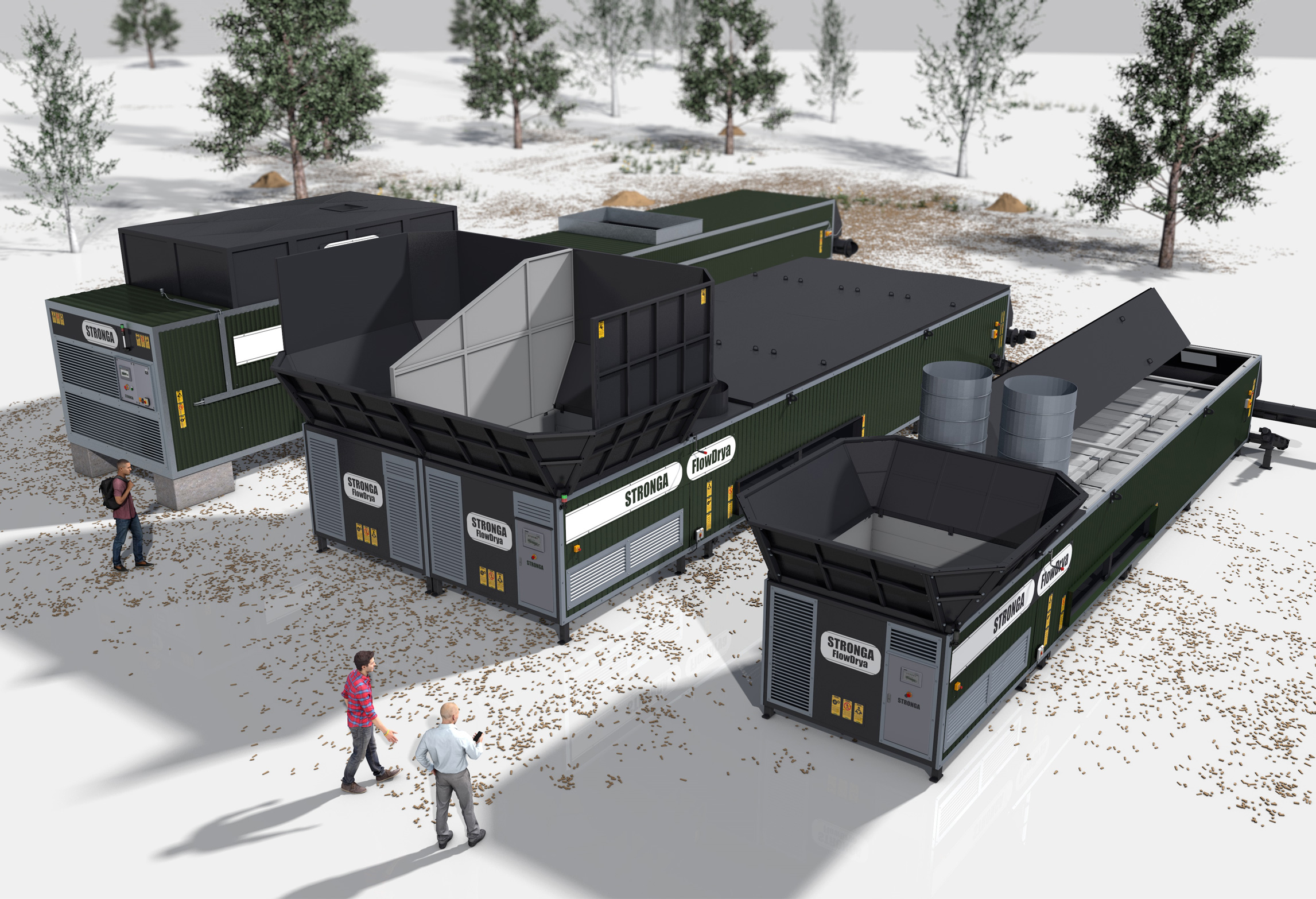
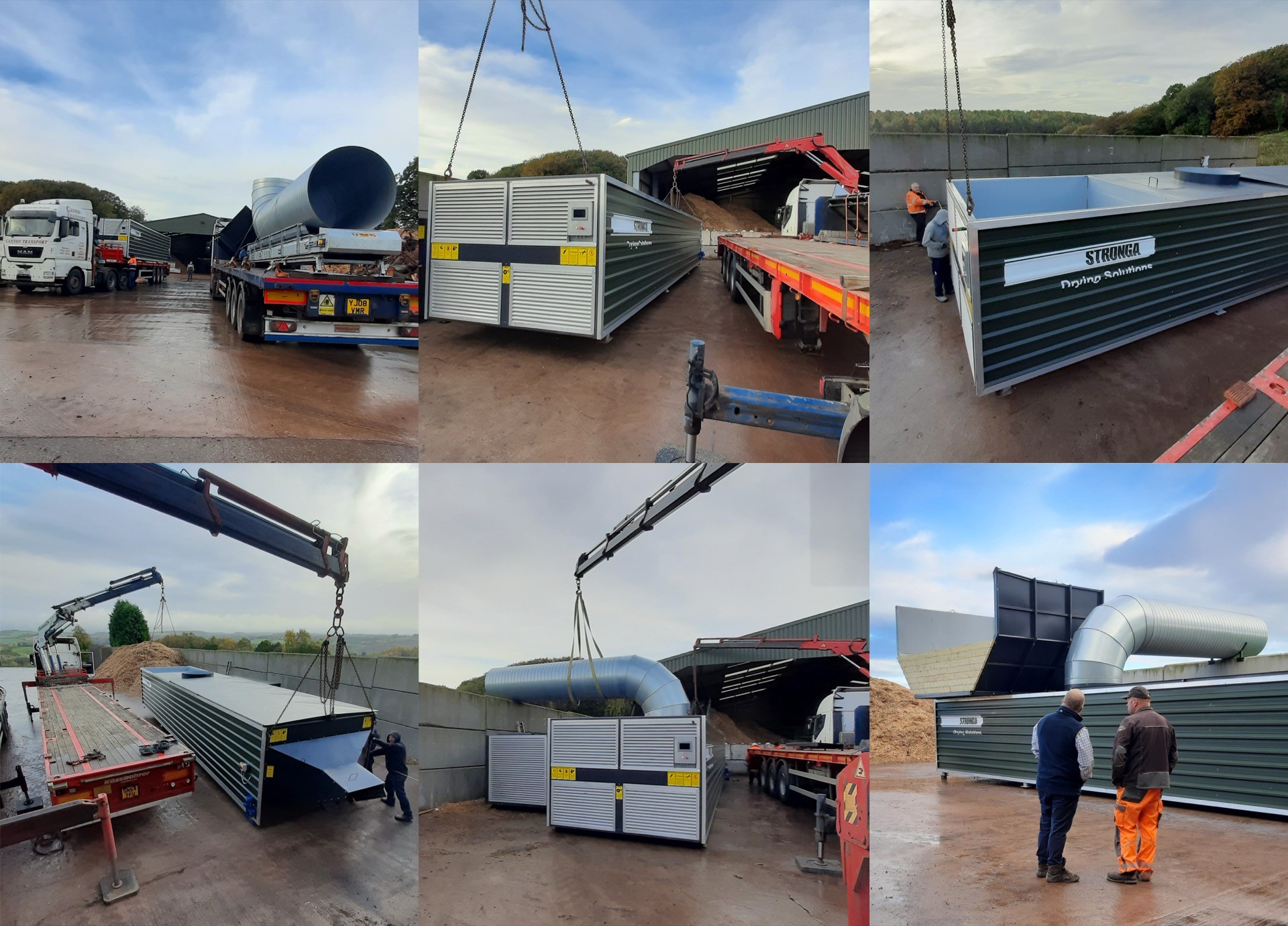
FlowDrya equipment is engineered, fabricated, assembled, and acceptance-tested in a controlled factory environment as fully-functional sub-assemblies — not site-built machines assembled from a kit of parts. These factory-assembled modules are hot-tested and performance-verified before delivery, then transported as pre-assembled sections for fast and efficient installation on site. This approach ensures consistent build quality and proven reliability from day one.
| Adaptable Feature | How FlowDrya Can Be Configured to Optimise Project Constraints |
|---|---|
| Infeed Hopper | Hopper volume is optimised to maximise time between reloading with capacities suited to the properties of each material. Longitudinal or transverse hopper layouts are available to suit site layout and loading direction. Hopper discharge automatically provides even material distribution across the drying bed. |
| Drying bed surface area (m²) | Total drying bed surface area is optimised to provide the required level of evaporation. Longer dryers provide increased residence time and greater moisture removal. Increased width allows higher throughput for a given target moisture reduction. Overall length and width are adjusted to balance footprint, throughput and drying performance. |
| DryStation™ control software | The dryer control software - PLC system and DryStation™ HMI – is configured to suit the level of control required by the client. HMI functionality can be configured for manual and auto drying bed operation, self-protection, fault monitoring, alarms, data logging and more. Integration with site-wide SCADA or plant control systems is available, where required. |
| Hydraulic control | The hydraulic power pack is selected by Stronga to suit the properties of the material being dried. The Stronga technical team balance material bulk density, moisture content and throughput requirement to select the optimal hydraulic pump and power pack configuration, ensuring reliable operation, optimal drying outcomes and long-term component life. |
| Air intake | Air intake into the sub-floor plenum of the flow dryer can be positioned to suit the site layout while optimising drying performance and optimal dryer airflow. |
| Roof configuration | Open-top, fixed roof or hydraulic folding roof options are available depending on weather protection requirements. |
| Exhaust air flues | Exhaust air flues are engineered in quantity, size, shape and routing to slow down exit airflow. Exhaust flues can be configured to exhaust air from buildings or downstream air filtration or abatement equipment. |
| Materials of construction | FlowDrya is available in high grade carbon steel or stainless steel depending on the material to be dried. Certain materials that are corrosive, abrasive or hygiene-sensitive will requires the stainless-steel package. |
| Airflow zoning | Dual airflow zones are included and optimised for material-specific drying profiles. The ability to build-in varying airflow intensity at different phases of the drying process speeds up drying, further improving thermal efficiency. |
| Support legs | FlowDrya can be designed on strong supports legs of adjustable height to suit discharge equipment, hopper loading constraints, foundations or uneven sites. Overall dryer elevation can be configured to integrate with existing conveyors and material handling systems. |
| Dry discharge equipment | Discharge chutes, augers, conveyors, bunkers or interfaces with screening and storage systems can be specified to collect and handle the dry output – automating the process and reducing labour. These various options can be orientated and sized on a project basis to meet individual site requirements. |
| Fines fraction auger | Geometry and capacity of the fines fraction auger can be tailored to suit fines volume and material behaviour. Where required, customers can choose an additional auger to return fines back onto the main drying bed. Most commonly, customers choose to separate fines into a dedicated dry output discharge stream. |
In summary, FlowDrya is not a fixed dryer design but a configurable and modular drying platform, engineered to adapt around variable material properties, site constraints and performance objectives.
Across a wide range of sizes — in 2.5, 3, 5 and 6 metre widths (and more) for higher m³ per hour throughputs, and in 12, 14, 16, 18, 24 metres and longer configurations depending on moisture to remove — each FlowDrya is tailored in length, width, orientation and configuration to achieve efficient evaporation in continuous duty, 8,000+ hour per year operations.
By carefully balancing dryer geometry, airflow management, material handling, structural configuration and control systems, Stronga delivers high performance drying solutions that are purpose-built for real-world applications, ensuring reliable operation, consistent output quality and long-term reliability across every installation.
Frequently Asked Questions
The cost of a FlowDrya cannot be defined with a single fixed price because each dryer is optimised to meet the specific needs of individual projects. The final cost depends on many variables, including the characteristics of the material to be dried; wet basis and target dry moisture percentages; throughput requirements; ambient temperature and humidity at the installation location; level of controls required; discharge equipment supplied as part of the package; and more. Since every FlowDrya is uniquely configured to achieve optimal performance for its intended application, pricing is provided on a case-by-case basis after Stronga learn the full project requirements. Speak to our team to get your bespoke FlowDrya price.
Fundamentally, FlowDrya is a continuous, hydraulically-powered moving-floor dryer that uses controlled drying air to reduce the moisture content of a range of wet materials — biomass, forage, agricultural residues and more.
The FlowDrya differs from belt, on-floor, rotary drum and other dryer types through its simple, robust design with few moving parts, compact, modular design, extremely low electrical demand and unique PulseWave™ agitation that ensures even drying. Unlike belt and on-floor systems, FlowDrya uniquely offers long service life, minimal maintenance, super low fire risk, precise control over drying time, large hopper capacity, compact footprint and integrated fines material separation. These combined advantages mean FlowDrya delivers the most efficient, controlled, low-labour and cost-effective solution for drying biomass, while competing systems rely on complex mechanics, high energy use, shallow drying beds, manual labour, limited control and greater safety risks.
FlowDrya is best in class for drying a very wide variety of materials — including wood chip, wood shavings, bark, sawdust, shredded wood, bark and other woody biomass; separated digestate fibre from anaerobic-digestion plants; SRF / RDF / waste-derived fuels; paper pulp; agricultural biomass such as chopped forage or hemp; compost, organic fraction waste, poultry manure, insect frass and more.
Because each material stream has different particle size, wet basis bulk density, moisture content, friability and drying requirements, each FlowDrya is custom-designed. The factors tailored to match the specific feedstock include drying bed width and length (m²); in-feed hopper type, size and orientation; flow dryer floor design; depth on the drying bed; dry discharge equipment; exhaust flue system; support leg design and more.
The FlowDrya is supplied with clean drying air from the Heatex unit which can draw on a wide range of heat sources. Residual process heat options include waste or residual heat from combined heat and power (CHP) plants, cement kilns, AD biogas plants, hot water from biomass boilers, or steam; while direct fuel options include LPG, diesel or gas-fired burners. This flexibility allows each flow dryer to be matched and optimised to whatever heat source is available on the client's site. Economically and environmentally, residual process heat options are the preferred solution.
Choosing the right FlowDrya model begins with a detailed assessment of your requirements. Because every installation is unique, Stronga evaluate the project's key parameters such as material type and properties, wet basis and target moisture content, available heat source, site layout constraints, local climate conditions and any specific handling or discharge conveying. Using this information, the technical team design and specify the optimal dryer configuration. We then produce 3D visuals of your bespoke system so you can review and agree the final configuration before placing an order. This tailored process ensures you receive the correctly sized and configured FlowDrya model for efficient, reliable performance in your drying application.
The overall footprint of a FlowDrya varies widely because each system is optimised for the project's individual requirements. As a guide, the smallest FlowDrya models (FD17) are typically around 11,500mm long and 2,700mm wide, while the upper limit is essentially unrestricted: the Stronga team can add modules to increase width for higher throughput or extend the dryer length to achieve greater moisture removal. This modular flexibility means the footprint is always optimised for the required drying capacity and the space available on-site. Due to the unique deep-cycle-drying on the drying deck, the footprint of FlowDrya is often 2-3X smaller than equivalent drying solutions.
The throughput of the FlowDrya is determined by the client's set parameters. The team at Stronga consider the factors of material type, particle size, moisture to remove, evaporative rate, optimised airflow, and local climate conditions - including seasonal factors. The throughput can be customised. For example, FlowDrya can be size-matched for 1 tonne per hour wood chip throughput, 5 tonnes, or generally around the customer's residual process heat availability. Speak to Stronga to discuss your throughput requirements and we will size the dryer accordingly.
FlowDrya is designed to offer the lowest-labour-cost per tonne dried thanks to full automation through the DryStation™ HMI, together with super-large in-feed hoppers which offer the longest period between refilling compared to other dryers available in the market. Many customers leave the flow dryer running independently for multiple hours after filling the hopper with wet material.
The drying process, agitation cycles and safety protections are all automatically managed, while the discharge equipment can be configured to continuously and automatically feed dried material to the next stage of processing. In contrast, other dryer types have little or no hopper capacity and require constant operator presence and frequent refilling — making them far more labour-intensive and costly to operate.
Yes — FlowDrya systems are designed for seamless integration with a wide range of ancillary equipment. The DryStation™ controls can interface with external process machinery and can be fully connected to the client's SCADA platform for centralised monitoring, data logging and process control. On the mechanical side, discharge conveying equipment can be custom-sized and orientated to deliver dried material directly into storage bunkers, screens and trommels, conveyors, pellet lines or any other downstream process. This flexible integration ensures the FlowDrya operates as a smooth, efficient component within a larger production workflow.
While it is most commonly used as a continuous flow dryer, FlowDrya can operate in either continuous or batch mode, depending on how it is configured through the control system. Even in "continuous" mode, the drying bed works in a stop-start sequence, meaning that the machine "sleeps" between strokes to save energy and reduce component wear. In reality, the FlowDrya may only be operating for 15 minutes in an hour, and sleeping for 45, meaning that annually it is only operating for around 2,000 hours.
Operators simply adjust the strokes per hour on the DryStation™ controls to fine-tune residency time and achieve the desired output moisture content. This flexible operation allows the FlowDrya to match a wide range of materials and production requirements.
Yes — FlowDrya is equipped with comprehensive emergency shutdown, self-protection and fault-monitoring systems. While the dryer is highly reliable and self-protecting, critical sensors check key parameters such as oil temperature, oil level, hydraulic pressure and other critical operating parameters, automatically triggering fault messages or shutdowns if abnormalities occur. Any fault is clearly displayed on the DryStation™ HMI, allowing operators to identify and reset issues instantly, while the Andon beacon provides a clear visual indication of the machine's operating status from a distance. Detailed troubleshooting guidance is provided in the user manual, ensuring safe, reliable and well-managed high uptime cycles.
In control terms, the FlowDrya is designed to be a standalone machine. Control scope varies depending on the client's requirements, but all dryers come as standard with a very high-level specification, including a high-resolution, intuitive DryStation™ touchscreen HMI that centralises all key operating parameters. Typical controls include automatic and manual modes for the flow drying bed; adjustable strokes-per-hour; plenum temperature, pressure and relative humidity logging; operating hour count; service intervals; real-time performance data; self-protection functions; comprehensive fault reporting; and Heatex (where supplied) fan speed and airflow control.
The FlowDrya controls team are highly capable and experienced to accommodate client's interface requirements. Stronga can enable stop-start signals for ancillary conveying equipment (wet input or dry output material). This flexible but robust control platform ensures precise, reliable and intuitive operation for every flow dryer.
Yes — whilst the drying bed moves at a pre-set speed, the number of strokes per hour is adjustable via the HMI to achieve the target moisture content. The stop-start drying bed is controlled by setting the number of strokes per hour: fewer strokes increases residency time and removes more moisture, while increasing strokes reduces residency time on the bed for higher-throughput, lower-removal requirements. Operators can also adjust the bed depth, using "deep-cycle drying" for greater throughput. These variables — strokes per hour, bed depth and airflow — are fine-tuned during site commissioning to determine the optimal settings for the material and moisture target.
Yes — the FlowDrya can be configured with a stainless-steel package to handle corrosive materials like digestate fibre, wastewater sludge, animal manures and other corrosive feedstocks. These stainless-steel upgrades allow the flow dryer to operate reliably with challenging materials while maintaining a long service life and high resale value.
The level of dust from the flow drying process depends on the particle profile of the material. With wood chip, dust generated from the drying process will be partly determined by the client's wood chipping process. Blunt blades on the chipper and incorrect blade setup can both contribute to increased dust generation.
When specifying a dryer, Stronga request photos or a sample of the material to establish particle profile of the material to be dried. Where high levels of dust are likely to be present, FlowDrya is designed with various counter-measures. Dust reduction strategies may include managing the air volume over the drying floor or selecting a special type fan. The exhaust flue arrangement can also be designed to reduce exit air speed. Prevention is better than cure; our team do everything possible to avoid dust generation from the drying process. In some cases, it may be that cyclone is required.
Prior to delivery, all FlowDrya units are fully assembled and factory-tested at Stronga's works, before being disassembled and prepared for shipping. On-site installation of the FlowDrya is typically completed within days, depending on the client's preparedness, as well as the dryer size and configuration supplied. Once installation is complete, the site commissioning process commences; this includes training of nominated operatives; start-up operation; shut-down procedures; optimisation of dryer performance and energy-use; user manual handover and more. A full "hot test" is then carried out. We don't leave site until the dryer is operating correctly, safely and at optimal performance.
The typical lead time for delivery and installation of a new FlowDrya is around 12-14 weeks from the point of order and deposit payment. This timeframe can vary depending on several factors, including the dryer's specification, overall size, site location, and even the time of year, as production demand fluctuates. In some cases, lead times may be shorter or slightly longer — but we always communicate realistic timelines and work closely with you to meet project requirements.
Regular checks and maintenance on the FlowDrya are minimal compared to more complex systems like belt dryers which have many more moving parts. Simple, routine FlowDrya service includes checking hydraulic oil levels, ensuring the machine remains clean, changing oil filters at suitable intervals, and checking auger bearings and related components. These straightforward inspections are scheduled on a monthly, annual, or bi-annual basis depending on the item, keeping upkeep simple, predictable, and low-cost.
Yes, spare parts for the FlowDrya are readily available direct from Stronga's UK and European factories, however, parts requirements are minimal because the system has very few moving or wearing components — there are no belts, chains, sprockets, or other high-wear items. The simple, robust design keeps maintenance super low, and if parts or support are ever required, Stronga's after-sales service team responds quickly to ensure smooth, reliable operation.
The expected operational lifespan of the FlowDrya is in excess of 30 years thanks to its simple, robust design, stop-start moving-floor operation, and very few moving parts, all of which significantly reduce mechanical stress over time. Many real installations — such as the Calendar Estate FlowDrya, still operating with super high duty cycle over 8,500 hours per year, after more than 14 years — demonstrating the system's durability in continuous use. Actual lifespan depends on the material being dried and overall utilisation; highly abrasive materials may require occasional replacement of components, but the core dryer structure is built for decades of reliable service. The resale value remains high years after the dryer has been first installed.
The electrical energy consumption of the FlowDrya is extremely low, around 4X lower than other dryer types, particularly belt dryers which rely on numerous motors and gearboxes. Key factors in the low energy use include FlowDrya's unique "stop-start" system and low power requirement compared to mechanically-operated dryers which are naturally more energy-consumptive. There are many factors which combine together to deliver FlowDrya's world-leading energy-efficiency and low energy consumption. It does more with less.
Actual energy consumption varies depending on the specific FlowDrya configuration — factors like the number of augers, the size of the hydraulic pump and other project-specific design choices all influence total usage. Even so, the FlowDrya consistently stands out as one of the cheapest dryers to run on the market, not only in terms of electrical demand but also labour and overall operating costs.
FlowDrya Enquiry Form
Drying is a specialised and technically complex process. To ensure Stronga can progress your project efficiently and provide an accurate quotation for your drying equipment, we require specific information that will allow us to scale the solution to your exact needs. The questions below are those our technical team will cover during the consultation phase. Providing as much detail as possible at this stage will help us keep your project moving forward at best speed.
Ready to Start Your FlowDrya Journey?
Connect with our specialists to discuss your drying requirements. Whether you're drying wood chips, digestate, SRF or another material, we'll design a FlowDrya solution tailored to your needs.
Contact Us Today View Reference Sites