Biochar has become recognised as a transformative resource for amending soil and improving land management, offering benefits such as enhanced soil fertility, improved water retention, and excellent sequestration of atmospheric carbon. Its simple, one-time application to land offers significant potential for sustainable agriculture and climate change mitigation, reducing the nitrous oxide and methane released from soil and the volume of carbon released into the atmosphere.
The potential of biochar is HUGE.
Stronga understand the environmental benefits of biochar are closely linked to the quality of the product. One critical step in optimising biochar properties is the drying of the selected biomass feedstock, prior to pyrolysis. Adequate drying not only improves the efficiency of the pyrolysis reactor process but also enhances the structural and chemical characteristics of the resulting biochar, ultimately maximising its overall environmental benefits.
Drying the feedstock matters in biochar production, because it unlocks:
- Higher yields
- Improved carbon retention
- Improved efficiency of pyrolysis process
- Improved thermal efficiency
- Improved carbon stability
- Reduced harmful moisture related emissions (VOCs)
- Improved reactor lifespan
- Lower operating costs
- Increased overall profitability
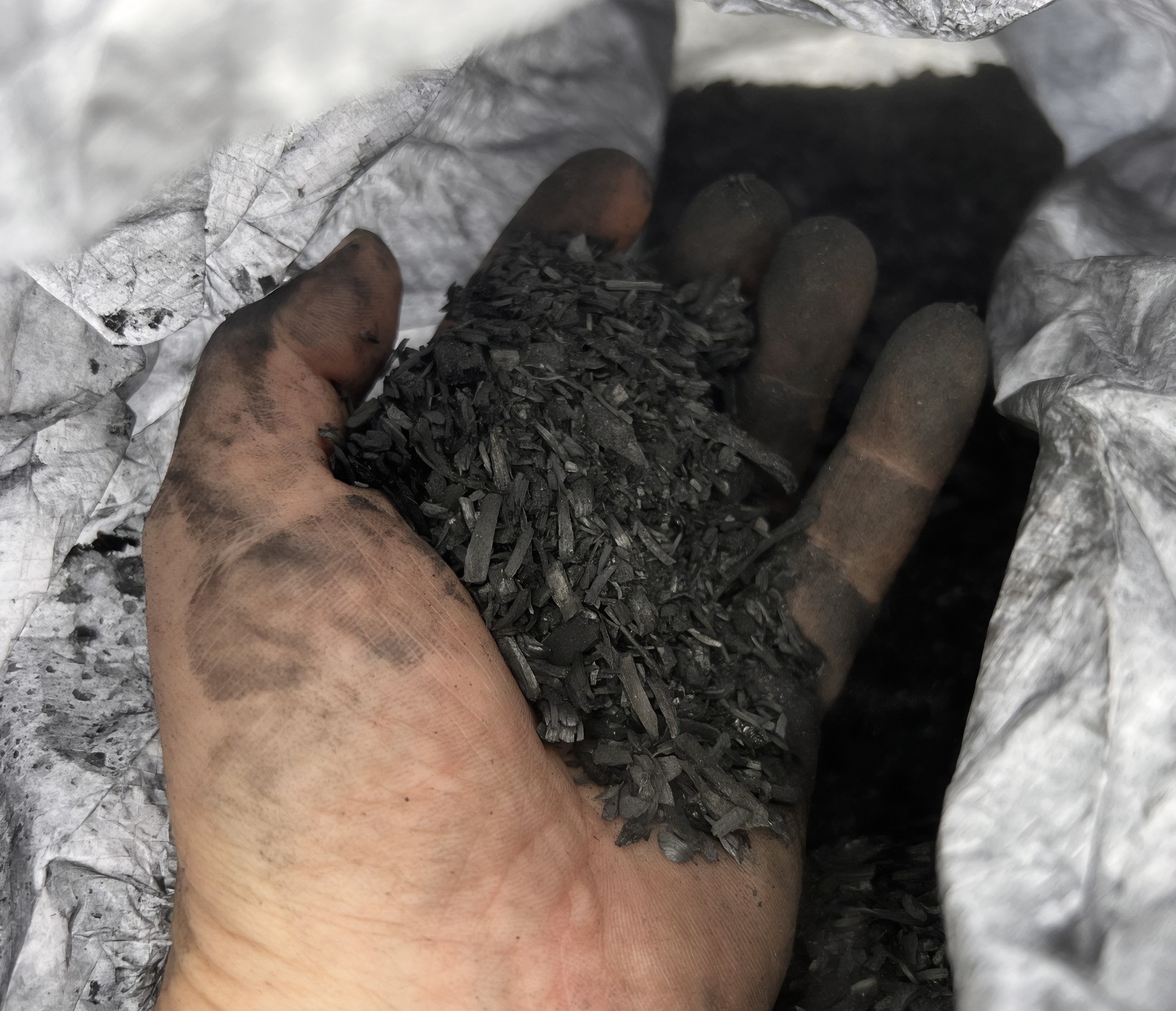 Biochar produced from dry feedstock
Top 10 Benefits of Drying Biomass Feedstocks
1. Improved pyrolysis / energy efficiency – delivering dry feedstock into the pyrolysis chamber reduces operating costs and residency times. This means that, in the reactor, higher temperatures are achieved faster, allowing for complete carbonisation of feedstock and a higher thermal output.
2. Higher biochar yield – FlowDrya directly increases biochar yield, increasing the proportion of biomass that is able to be converted into biochar by removing excess moisture in the feedstock.
3. Enhanced carbon retention – dry feedstocks enable stable carbon formation while minimising carbon losses to volatile compounds.
4. Better biochar quality – drying enables the production of better-quality biochar with more consistent porosity, surface area and carbon structure.
5. Reduced process emissions – lower moisture biomass decreases the CO₂, VOCs, tars, methane emissions and other steam related pollutants from inefficient combustion of pyrolysis gases.
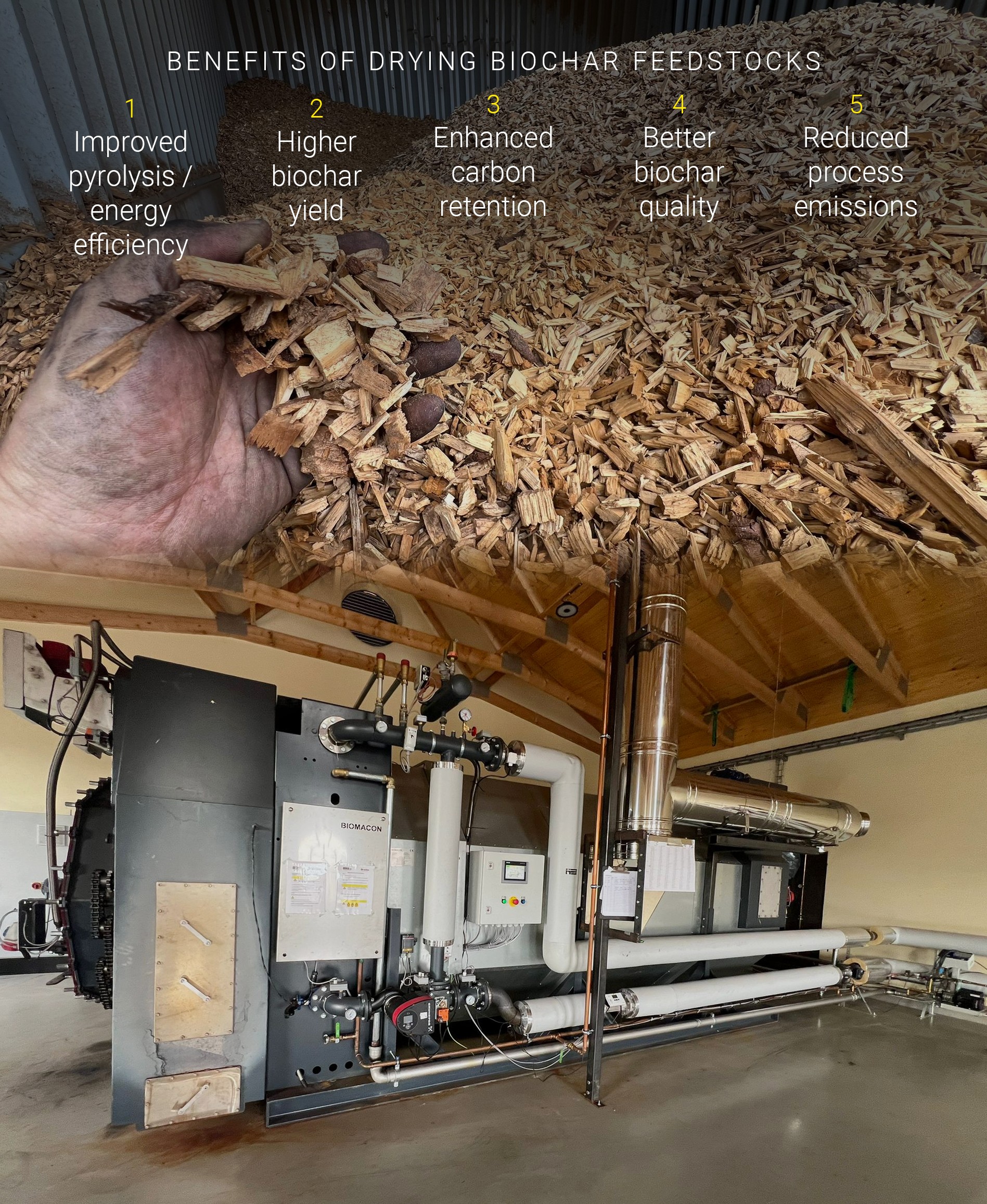 Top 5 benefits of drying biochar feedstocks
6. Stable thermal profile – dry biomass allows for better control over temperature in the reactor, heating rates and residency times.
7. Lower operational costs – less energy is wasted evaporating water, reducing fuel and electricity requirements associated with the pyrolysis process.
8. Minimised tar, condensate formation – dry feedstock reduces the formation of problematic condensable volatiles.
9. Improved reactor throughput – faster heating and carbonisation of dry biomass directly increases production rates. The lifespan of reactor equipment is also improved. Drier biomass minimises clogging, rust and corrosion of components.
10. Reduced storage & handling issues – dry biomass is less prone to microbial degradation, mould growth and spontaneous heating whilst in storage.
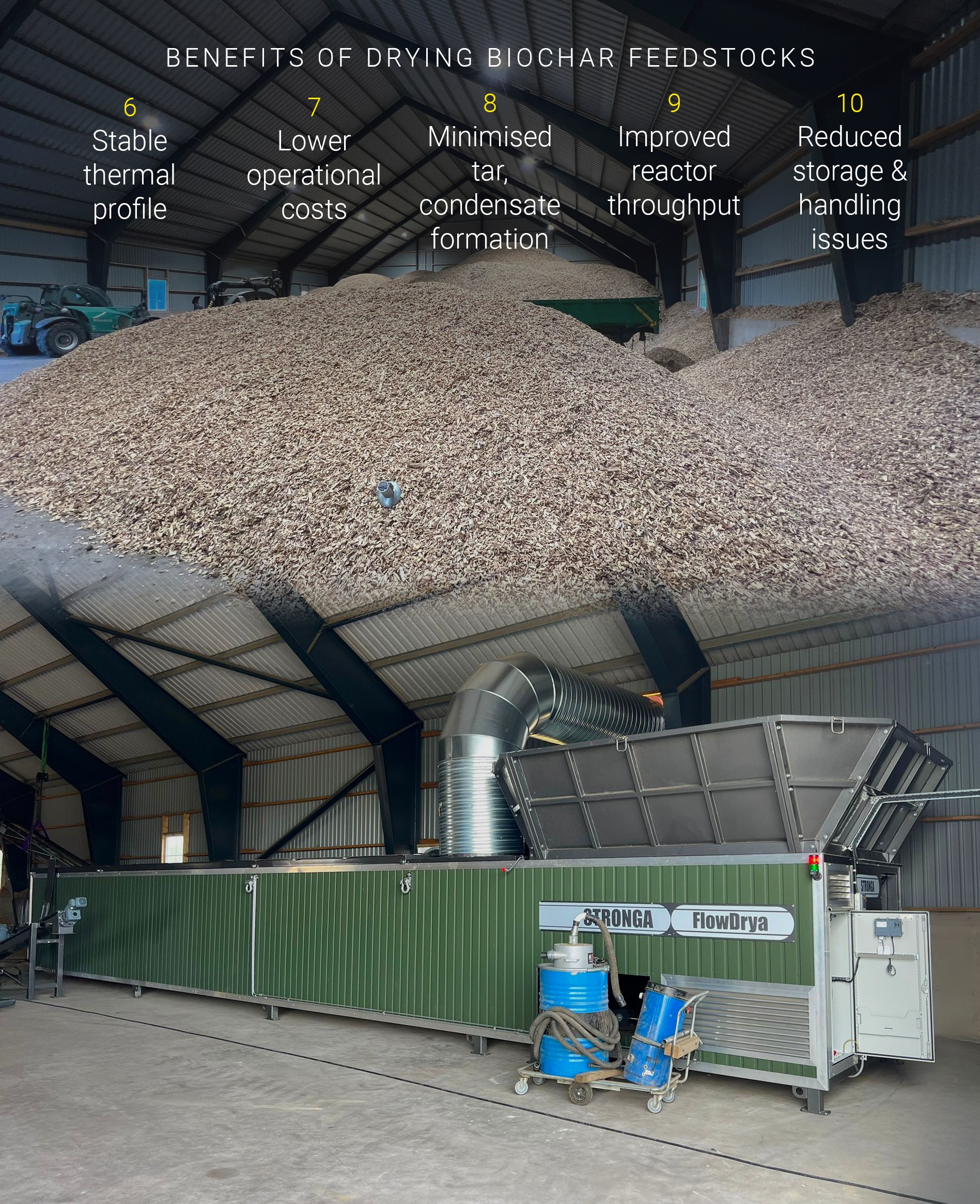 FlowDrya drying biochar feedstocks - benefits 6-10
What are the Effects of Using High Moisture Biomass in Biochar Production?
| Forms of Waste | Cause of Waste | Impact on Process |
|---|---|---|
| Waste heat / Energy loss | Energy diverted to evaporate water instead of pyrolysis | Lower process efficiency and higher fuel costs |
| Water vapour emissions | Steam generation from moisture | Carries heat away, reducing thermal efficiency |
| Unconverted biomass residues | Incomplete carbonisation due to cooling effect of water | Lowers biochar yield |
| Increased tar formation | Moisture alters pyrolysis chemistry | Clogs equipment, requires additional cleaning/disposing |
| Diluted syngas | Steam mixes with pyrolysis gases | Reduces calorific value of syngas |
| Increased CO² emissions | Incomplete combustion from unstable temperatures | Contributes to air pollution and GHG emissions |
| Sludge & condensate wastewater | Condensation of steam with organics | Produces contaminated liquid waste requiring treatment |
| Solid waste from reactor fouling | Tar and biomass deposits | Reactor downtime and disposal costs |
| Biochar with poor structural integrity | Rapid steam release during heating | Produces friable, low-value char |
| Storage losses | Microbial degradation in wet biomass | Mass loss, CO² emissions and odour emissions |
How Does Dry Feedstock Improve Biochar Quality & Consistency?
High moisture content feedstock = low carbon content biochar. FlowDrya delivers:
- Higher fixed carbon content and stability, ensuring effective long-term soil improvement and carbon sequestration.
- Increased biochar yield per unit mass of feedstock, allowing for higher carbon percentages in the biochar output.
- Better biochar quality with a higher fixed carbon content. Less moisture leads to more complete pyrolysis, higher fixed carbon content and lower volatile matter in the final product.
- Higher surface area and porosity, improves microbial colonisation and nutrient retention. Improved porosity also improves water absorption rates in the soil.
The Effect of Feedstock Drying on Biochar Profitability
| Parameter | How Drying Affects This | Impact on Biochar Price & Revenue |
|---|---|---|
| Moisture content (%) | Drying directly reduces moisture | Dry feedstock = less weight, lower transport costs, better shelf life - higher net revenue per tonne |
| Fixed carbon (%) | Drying allows more complete pyrolysis - higher carbonisation efficiency | Higher fixed carbon = carbon credit eligibility + high-value soil markets |
| Biochar yield | Drying before pyrolysis improves biochar yield by reducing energy losses | More efficient carbonisation; increasing the biochar (kg) output significantly |
| Volatile matter (%) | Wet feedstock may quench pyrolysis - higher VM left | Too much VM = low carbon permanence = lower price or rejection from carbon offset markets |
| Contaminant-free (low PAHs, heavy metals) | Wet feedstock can cause uneven heating - formation of PAHs; drying reduces this | Cleaner char = certifiable, opens up premium markets |
| Ash content (%) | Wet / improperly dried feedstock can lead to incomplete combustion or more ash | High ash dilutes product value = lower price/tonne |
| Surface area (BET m²/g) | Dry feedstock enables more uniform pyrolysis and pore formation | Higher specific surface area = value in filtration, water treatment |
| Porosity | Better drying = better structural preservation of char | Higher porosity = better microbial colonisation, more valuable in premium agricultural markets |
| Soil fertility | Improved nutrient retention, enabled by higher quality biochar output | Slow release of nutrients into the soil, improving microbial activity and soil / plant health |
| CEC (Cation Exchange Capacity) | Enhanced indirectly by proper pyrolysis (enabled by adequate drying) | Better nutrient retention = higher price in soil blends and amendments |
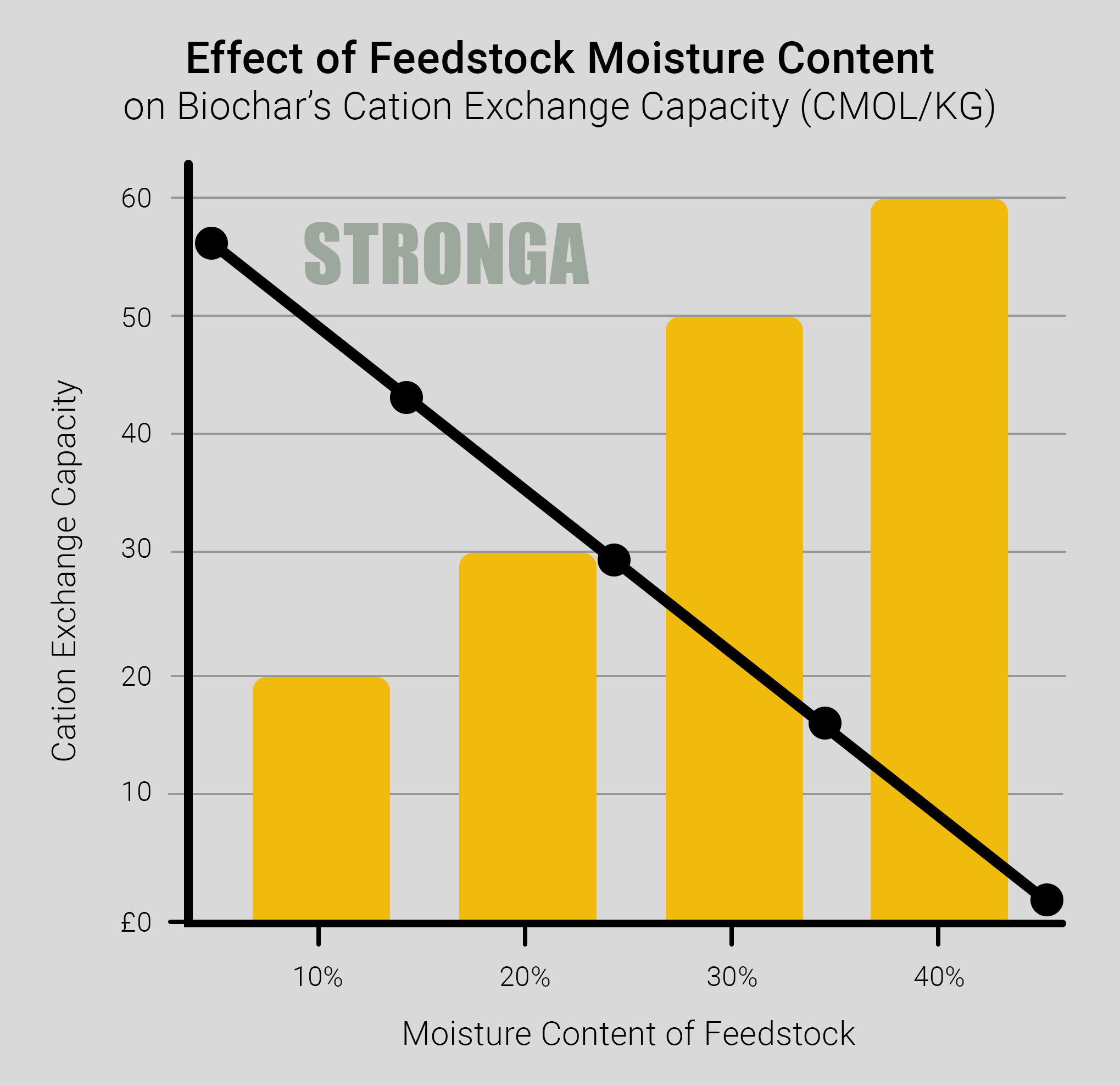 Effect of feedstock moisture content on biochar's Cation Exchange Capacity
FlowDrya is a Master of Moisture Removal
FlowDrya is a master in moisture removal for biochar feedstocks. The list below details the unique features of the FlowDrya:
- FlowDrya equipment is modular and scalable to suit the customer's requirements. The Stronga team consider location, feedstock and throughput requirements to ensure each dryer best reflects each unique operation.
- The design of the FlowDrya is simple and low maintenance without belts, chains and sprockets, ensuring the highest long-term operational efficiency.
- Semi-autonomous, minimising increasingly expensive labour requirements.
- Unique PulseWave™ agitation motion ensures a consistent and even heat profile across the entire biomass load.
Click here for more FlowDrya information
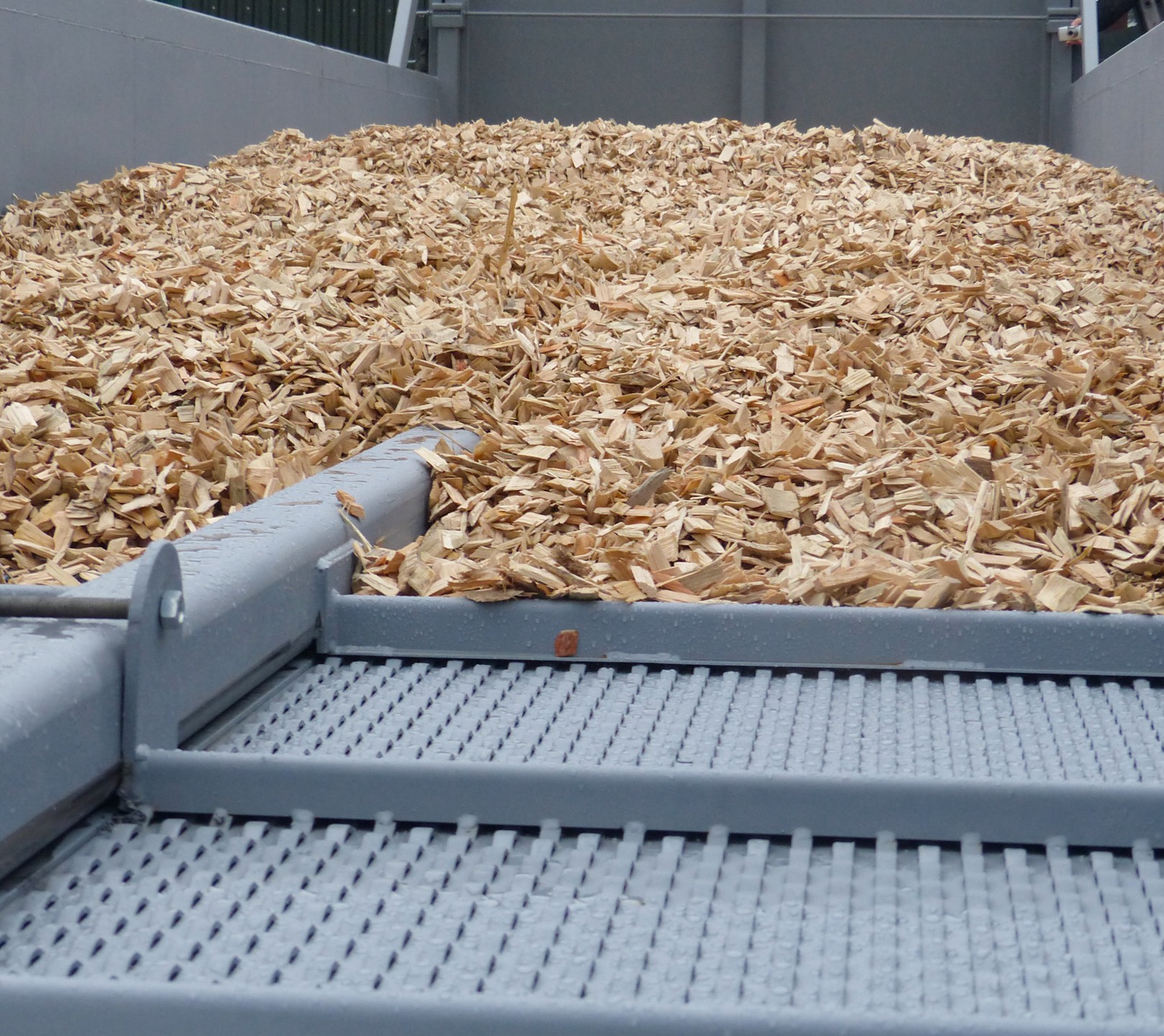 FlowDrya PulseWave™ agitation in action
Elevate Your Drying Process
Contact Stronga today to learn how FlowDrya equipment can take your biochar production process to the next level. Efficient drying means better biochar quality, higher yields, and healthier soils; don't delay getting in touch.