From Wood Residue to Revenue: Sawmill Biomass Opportunities
While sawmills, forestry owners, and tree surgeons primarily focus on sawn timber, pulp, and wood-based products, there’s significant untapped potential in converting wood residues into renewable energy.
Fluctuating timber markets, rising operational costs, environmental regulations and global demand for renewable low-carbon energy creates a significant opportunity for sawmills to expand beyond traditional sawn timber management. Recognising these market shifts and capitalising on modern biomass-processing solutions allows sawmills to transform wet, low-value wood residues into profitable, energy-rich dry products.
FlowDrya woodchip drying equipment is a market-leading solution that enables sawmills to process wet timber residues into valuable dry biomass fuel. Many sawmills already have spare boiler capacity for kiln drying wood or wood-gas power plants producing electricity and heat. Residual heat from these operations can be efficiently used with FlowDrya to produce dry woodchip fuel, creating a circular energy economy and new revenue streams.
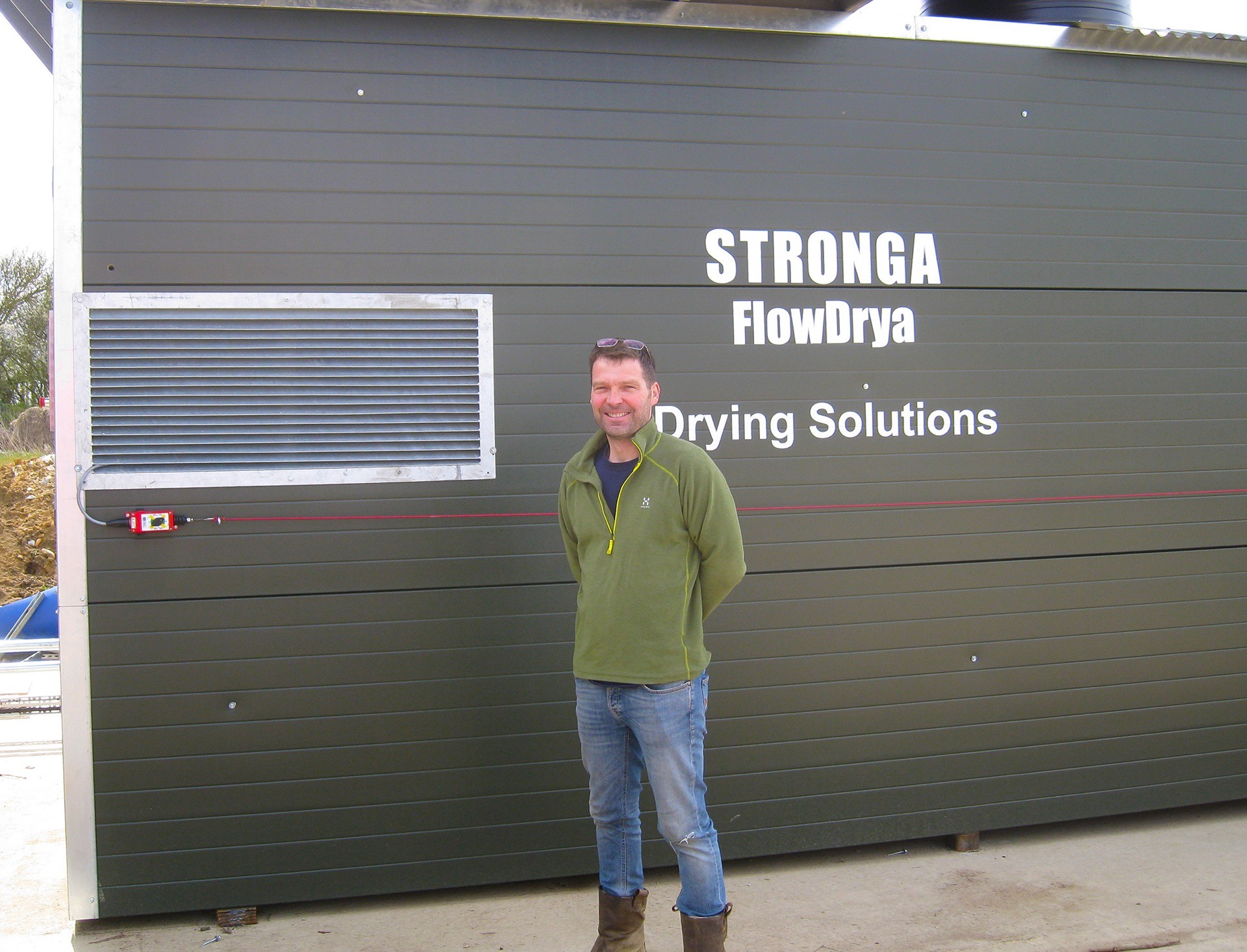
FlowDrya drying solutions at a sawmill facility
Why Should Wet Woodchips be Dried?
Producing dry, high-quality woodchips:
- Increases the calorific value of woodchips
- Reduces transportation weight of goods
- Improves storage conditions and reduces moulding risks
- Increases revenue potential
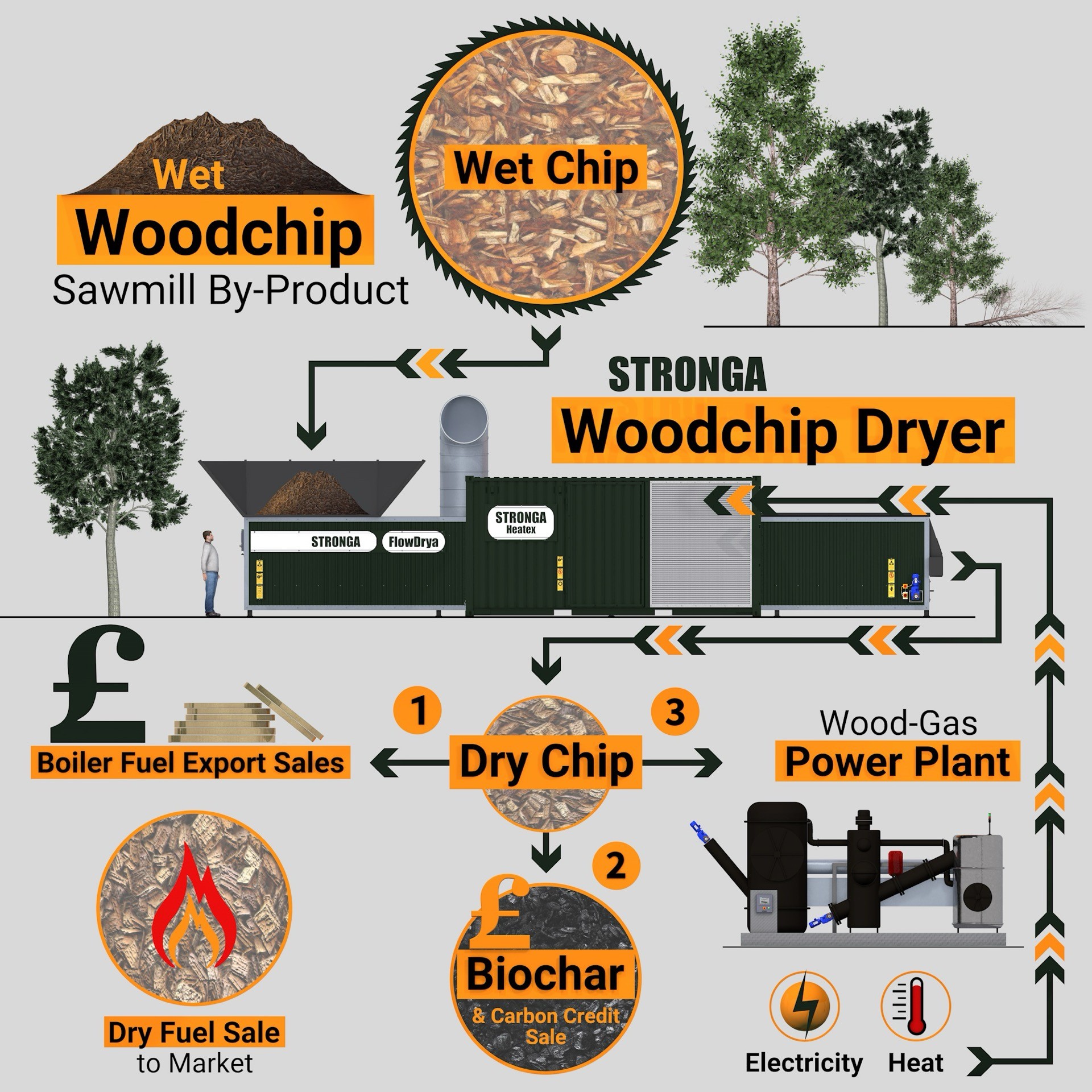
The wet woodchip drying process using Stronga FlowDrya equipment
Wood Fuel: High Demand, Profitable Markets
Dry woodchips and biomass fuel are consistently in high demand worldwide. By transforming wet timber residues into dry woodchip fuel, modern sawmills can generate significant profits. Sawmills can sell their dry woody output to:
- Commercial and residential biomass boiler owners
- Poultry farms and agricultural operations
- Non-fossil fuel energy users
FlowDrya equipment enables an entry-point to the energy sector by reliably drying wood fuel to increase calorific value, turning by-products into profitable output.
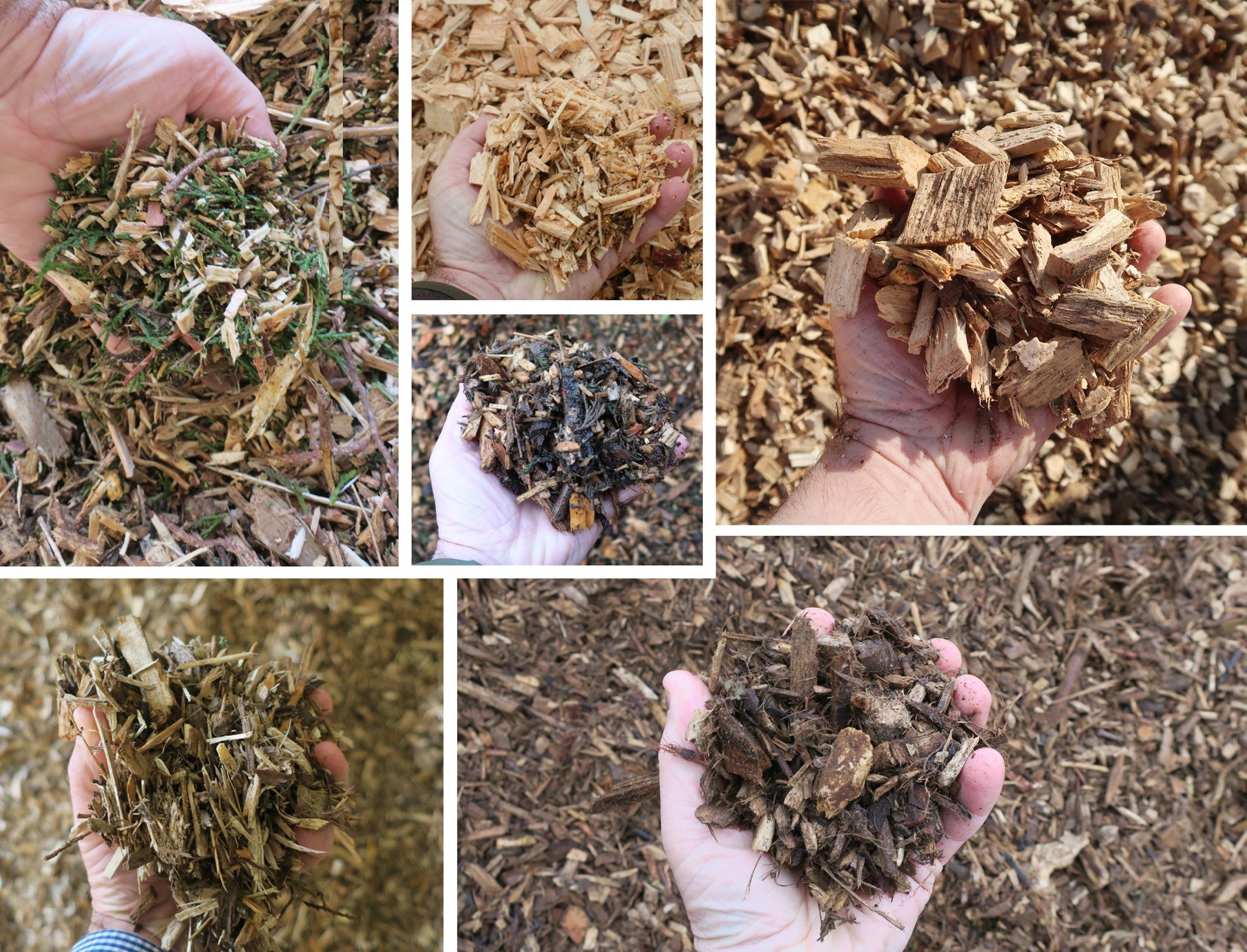
Variety of woody-based sawmill by-products and residues including woodchips, brash and bark
The Value of Drying Waste Wood
Investing in a woodchip dryer offers sawmills a strong financial return by converting low-value wet residues into high demand biomass fuel. Many sawmills experience attractive payback periods due to the rising value of dry woodchip, reduced waste-disposal expenses and new revenue from renewable energy and carbon-related products. Drying woodchips onsite also increases efficiency - utilising surplus heat generated from existing boilers and kilns.
Wet wood can disintegrate over time and become unusable, encouraging landfill disposal while increasing operational costs. Drying chip allows sawmills to avoid waste and become eligible for environmental grants aimed at reducing CO₂ emissions and increasing carbon capture (biochar production).
Energy Independence: Local Biomass Production Benefits
Sawmills can significantly improve local energy security by producing biomass fuel on-site. With the rising uncertainty in global fossil fuel markets, dried wood fuel offers:
- Export potential to biomass power plants for thermal decomposition and combined heat and power (CHP) production
- On-site use as boiler fuel to generate electricity, heat buildings, or power equipment
- Biochar production, creating carbon credits and soil improvement opportunities
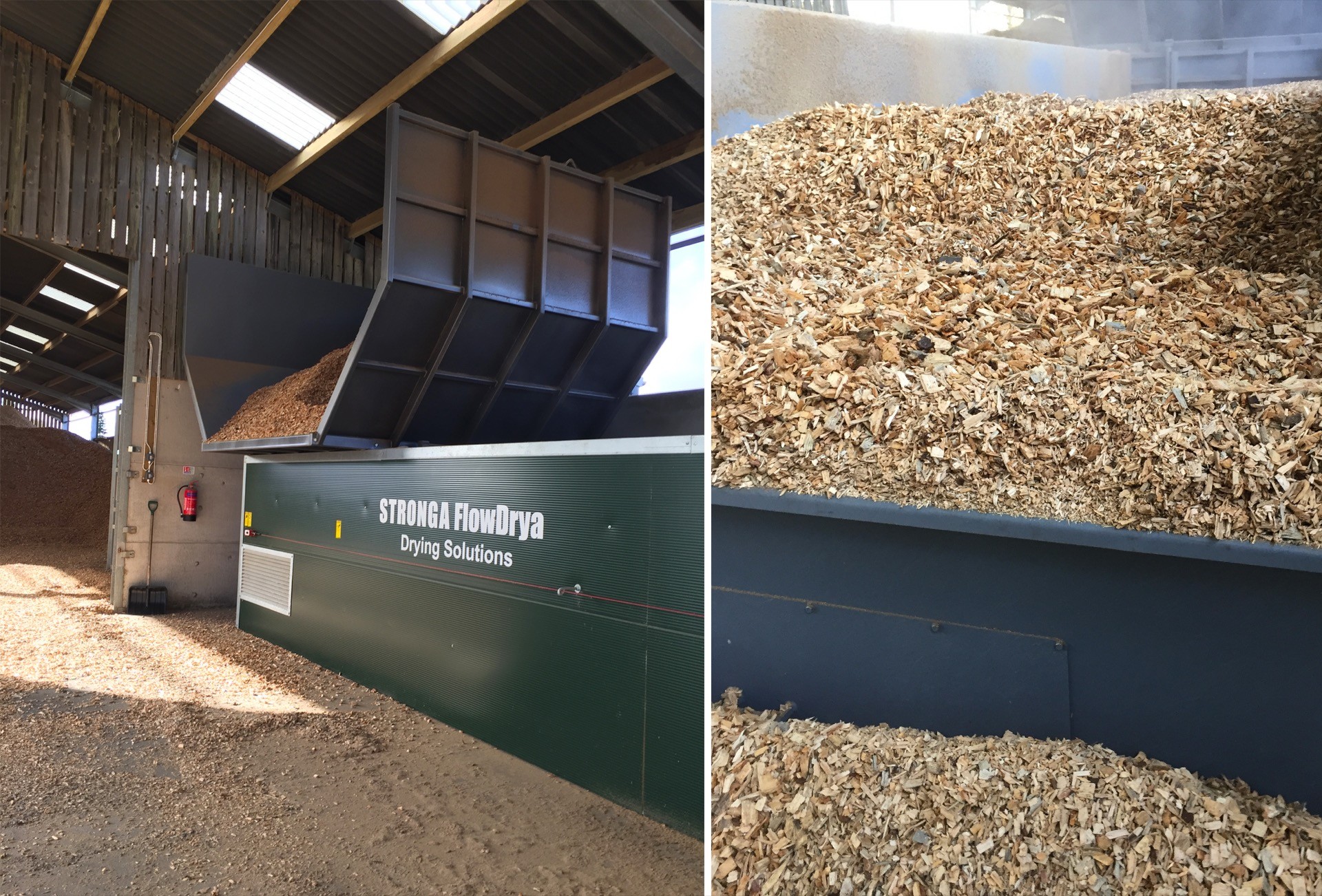
FlowDrya equipment at a sawmill facility in the UK, drying woodchip
Matching Fuel Supply with Boiler Specification
Fresh woody by-products typically contain high moisture levels, 50-60%, severely reducing boiler efficiency, thermal output and increasing emissions from the flue. Optimal boiler performance usually requires fuels at 10–20% moisture.
The experienced Stronga team matches fuel supply with boiler specification, ensuring optimal boiler efficiency, maintenance and output. FlowDrya continuous drying solutions ensure sawmills produce biomass fuel with consistently uniform output moisture content, increasing fuel quality, calorific value, reducing emissions and improving profitability.
Higher wood fuel moisture content directly increases exhaust gas emissions
Dry Biomass Applications: Pyrolysis & Biochar Production
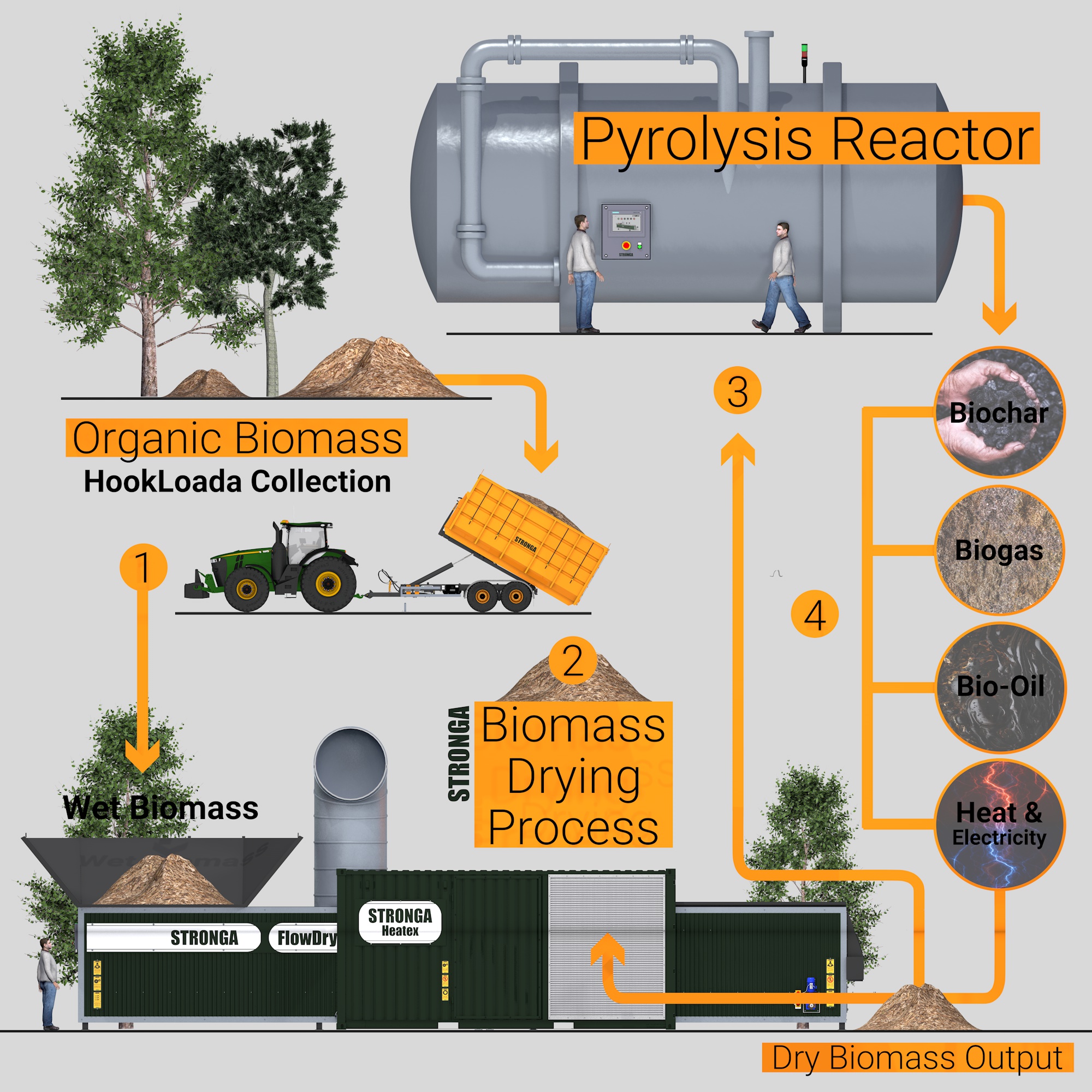
One potential avenue for sawmills is to invest in wood pyrolysis to generate biochar, biogas, bio-oil, heat and electricity onsite. Biochar, an output of pyrolysis, is an excellent soil improver which is formed via the thermal decomposition of biomass in an oxygen-limited environment.
As long as the input fuel is dry, the production emissions and added energy required to create biochar via pyrolysis are minimal – especially when using residual heat as part of a circular energy economy, which FlowDrya facilitates.
Wood-Gas Production – Circular Energy Opportunities for Sawmills
Another option for sawmills is to invest in wood gasification which differs from the pyrolysis process in that it involves the conversion of biomass into gas, whereas pyrolysis involves biomass to liquid and solid products.
In wood gasification, wood biomass is heated to produce syngas which can be used in a cogeneration engine to produce electricity and heat. Drying wood fuel increases CHP opportunities, gasifier efficiency and syngas quality. Electrical output from gasification can be used to run small-scale on-site equipment or, alternatively, sold to the grid while residual heat can be used in the dryer.
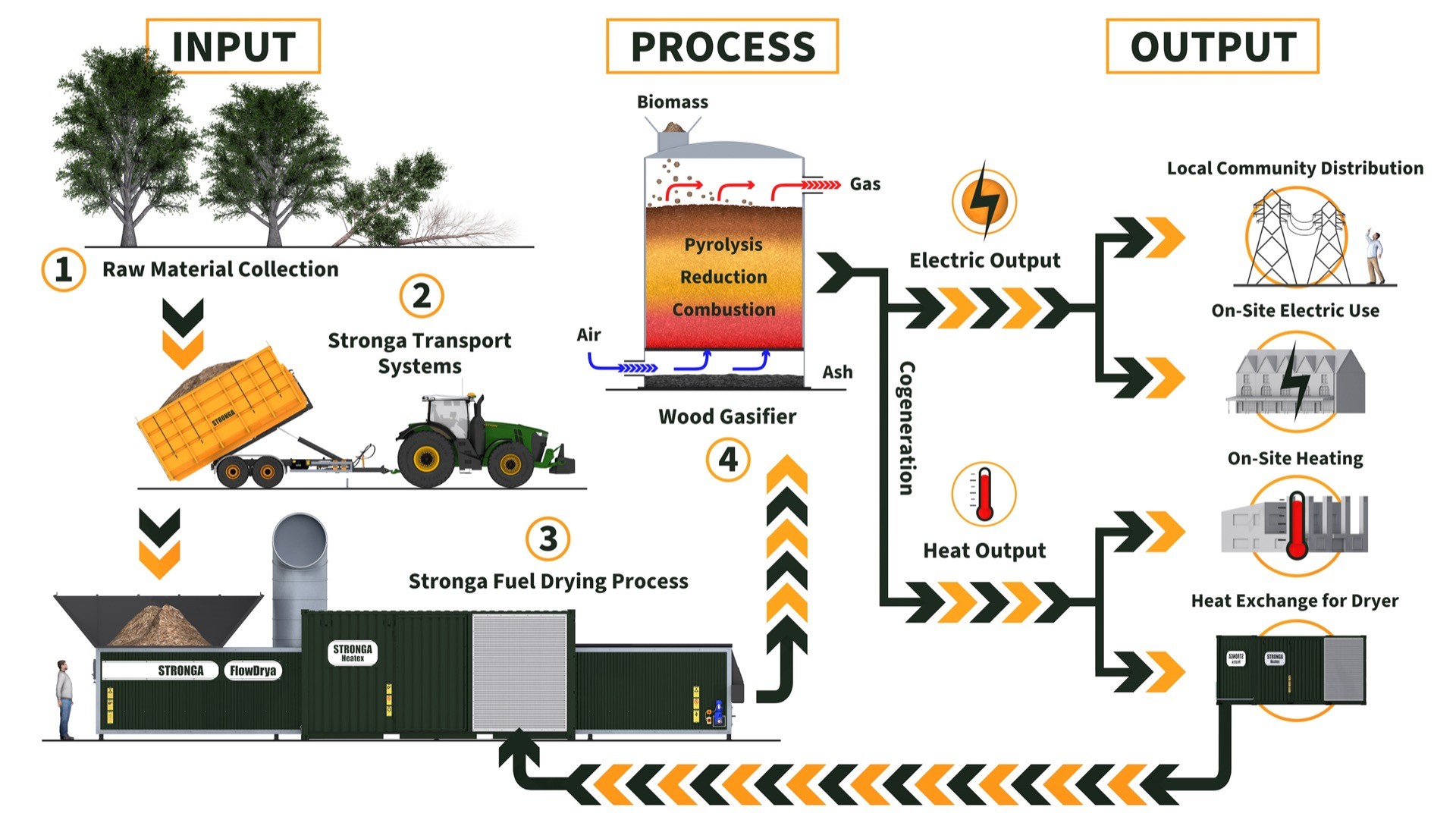
Wood-gas production and circular energy opportunities for sawmills
Stronga: Leaders in Wood Chip Drying Systems
Stronga have been manufacturing premium-level wood chip drying systems for many decades. Our experienced team have the know-how to design class-leading solutions for sawmills of all scales. Local climate, moisture content and wood species all have a significant impact on drying and energy production.
Discover the key benefits of FlowDrya and Heatex equipment:
- Simple and reliable design with no belts, chains or sprockets, allowing for lower operating costs, minimal maintenance and superb service life
- Hydraulic PulseWave™ moving floor system naturally agitates the wood biomass material at a set point depth
- DryStation™ HMI allows operators to control strokes per hour to achieve the target moisture content and throughput
- Fully insulated, reducing heat loss and encouraging excellent thermal efficiency
- Proven to operate effectively for over 8,000 hours a year
- Large hopper capacity with extension sides available, reducing labour costs
- Extremely low fire risks due to stop-start system and low-temperature drying
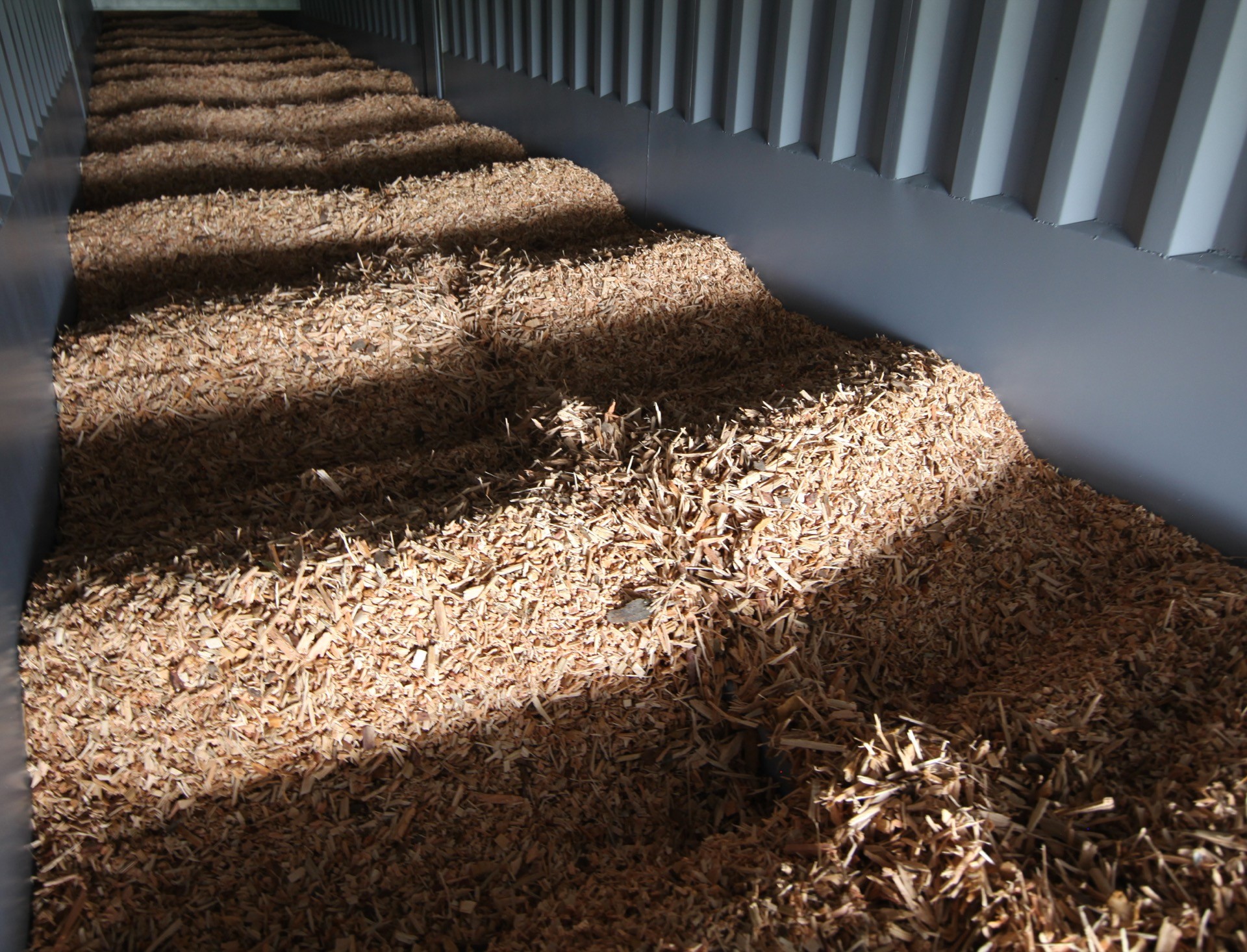
FlowDrya PulseWave™ moving floor, agitating and mixing wood biomass across the drying bed
Investing in FlowDrya wood chip drying equipment empowers sawmills to repurpose wet woodchip by-products into a valuable income stream. Stronga has decades worth of experience in drying woodchips of various grades, contact our team for advice relative to your specific wood drying project.