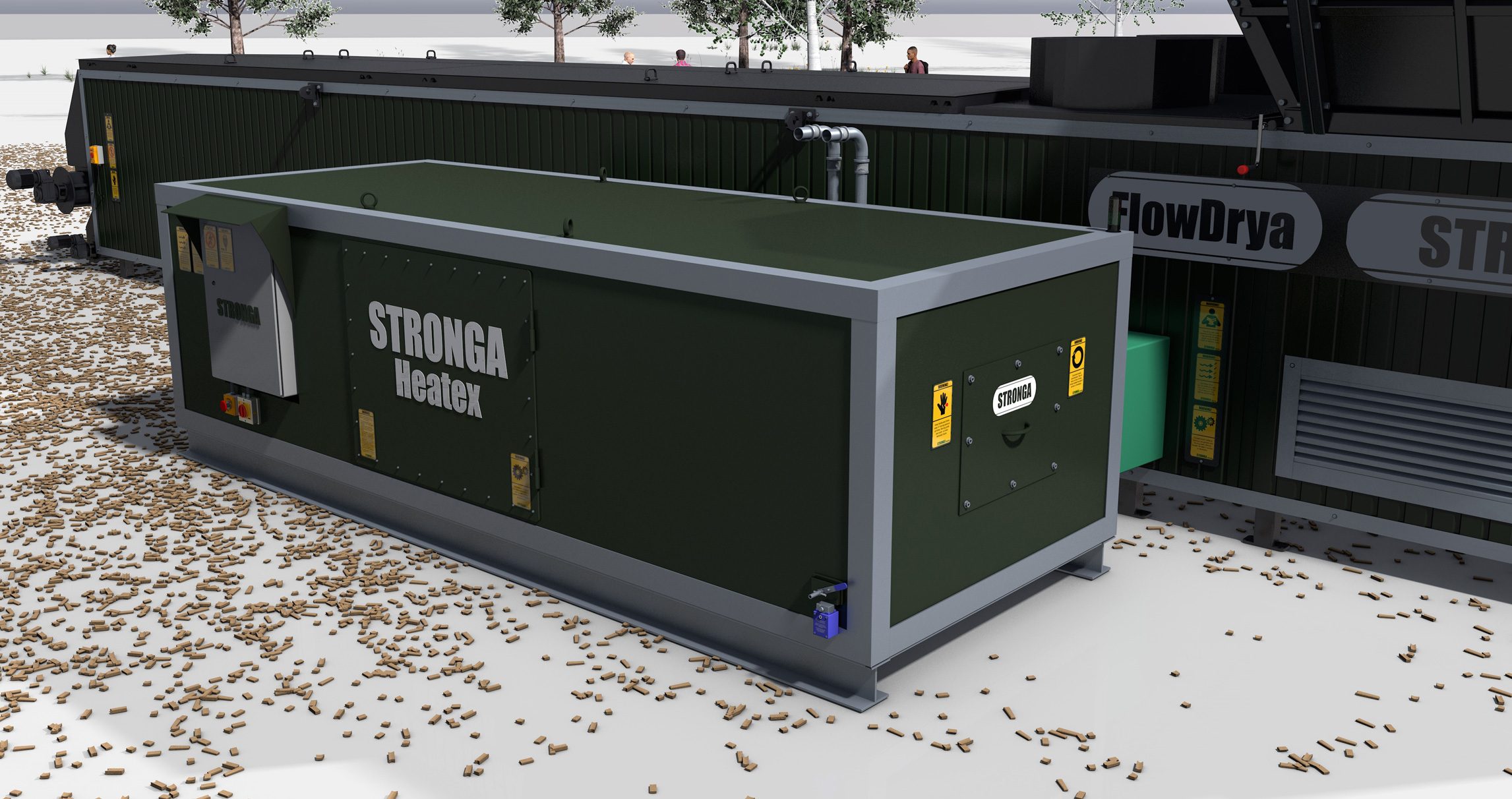
FlowDrya Heat Source Potential
Thermal Energy Solutions for Drying Biomass
Optimising the heated drying airflow is essential for delivering consistent, energy-efficient, and cost-effective drying of wet materials, including wood chip, SRF, RDF, and others.
FlowDrya is able to utilise thermal energy in many forms, across a wide range of temperatures and delivery profiles — including recovered waste heat from industrial processes, indirect gas burners, flue gas heat recovery and more. This flexibility allows each dryer installation to be optimised around the best locally available, lowest-cost, most sustainable thermal energy source, delivering reliable, high-performance drying for a wide range of materials - wood chips, digestate fibre, paper crumb, SRF and more.
From the customer's perspective, a key question asked is often…
"How much thermal energy is needed to dry my material, and what will it cost me per tonne dried?"
The answer isn't straightforward, and that's why we encourage customers to speak to the Stronga team. There are numerous interacting variables — residual heat availability, local energy prices, moisture content of the wet material, target throughput, material properties, and much more. Together with correctly-specified heat exchange systems, FlowDrya is bespoke-designed by the experienced Stronga team, specifically to optimise the outcomes from the available energy.
Instead of forcing the project to fit the dryer, each FlowDrya is sized and configured to fit the available energy. Modular width and length options allow the dryer to transform whatever heat is available — low-grade waste heat or high-temperature thermal energy — into drying value. This is a major reason why FlowDrya is widely regarded as class-leading for heat-source flexibility among other industrial biomass dryers available in the market.
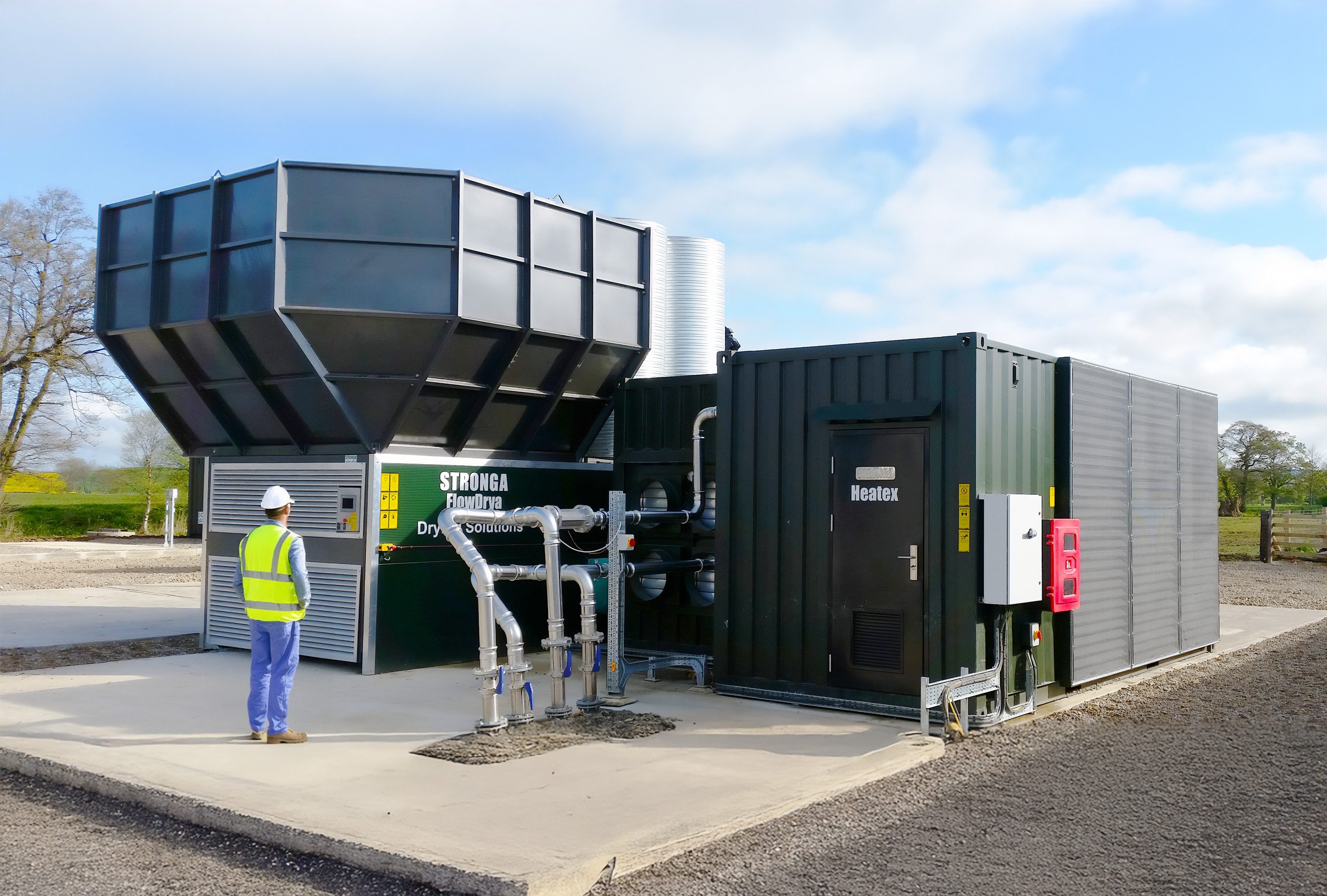
Thermal Energy Sources Compatible with FlowDrya
In combination with correctly-specified heat exchange, fan and airflow control equipment, FlowDrya works across almost all practical industrial dryer heat source solutions. Our goal is not to promote one solution over another, but to work together with the client to optimise the heat exchanger for the thermal heat source available, to deliver the optimal drying airflow to the FlowDrya.
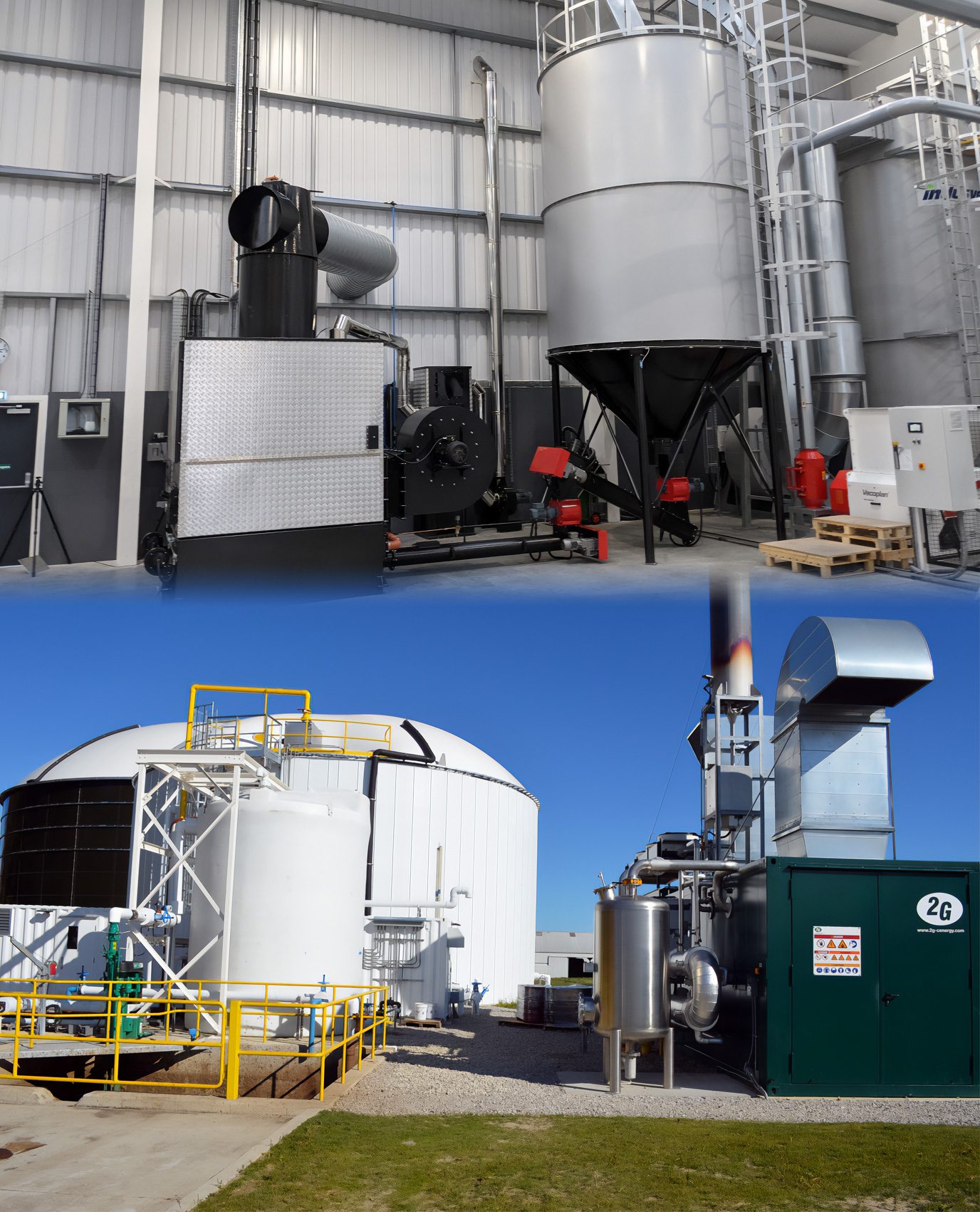
In theory, any industrial process that produces waste heat can benefit from a heat-recovery Heatex system. Common sources of waste heat that are readily re-purposed for flow drying wet materials include the following.
| Heat Source | Description |
|---|---|
| Hot Water Systems | Hot water supplied from biomass boilers, CHP plants, ORC systems, district heating networks, flue gas, wood gas and industrial cooling circuits. Common in sawmills, pellet plants, biogas AD plants, and energy-from-waste plants. Typical supply temperatures range from ~60°C using low-grade waste heat through to 95°C+. |
| Steam Thermal Energy | Generated by steam boilers fired with natural gas, LPG, oil, biomass, or recovered alternative fuels. Thermal energy to the dryer is delivered via steam-to-air or steam-to-water heat exchangers, into drying quality air. Steam offers excellent heat transfer, uniform temperature control, and compact, mobile system layouts. |
| Indirect Gas Burners | Natural gas, LPG, or bio-gas fired burners supplying clean drying air through indirect Stronga gas-to-air heat exchangers. Common in standalone drying plants, independent of central boiler infrastructure. Particularly attractive where gas availability is good and low-cost, seasonal operation, or simple system architecture is required. |
| Commercial Biomass Furnaces & Boilers | Fired using wood chips, bark, sawdust, forestry residues or agricultural by-products. Frequently installed at sawmills, panel board plants, pellet mills and biomass fuel depots. Heat outputs typically range from hundreds of kW-thermal to multi-MW systems, matched precisely by the Stronga team to the FlowDrya width, length, and evaporation target for the site location and local climate. |
| Flue Gas Heat Recovery | Thermal energy recovered from exhaust gases produced by boilers, furnaces, cement kilns, engines, or incinerators. Heat is transferred indirectly into clean drying air using a suitable gas-to-air heat exchanger. Common on cement plants, energy-intensive manufacturing, and waste-to-energy plants aiming to improve overall carbon footprint, repurposing waste heat into drying quality air. |
| Cement Industry Waste-Heat & Hot-Air Streams | High-temperature by-product air and gas streams from cement manufacturing processes. These include preheater/kiln exhaust gas, clinker cooler vent air, calciner exhaust (via indirect recovery) and bypass gas (after cooling). When recovered, these streams provide large, continuous, and highly economical thermal energy airflow for drying applications of SRF, RDF, and alternative fuel blends. |
| Waste & Residual Process Heat | Includes CHP engine jacket water and exhaust gas, biogas burner heat, compressor cooling systems, pyrolysis and gasification processes, and other industrial operations with surplus thermal capacity. Often represents the lowest operating-cost heat source when correctly matched to dryer size and duty, converting otherwise wasted energy into direct product value. |
| Electric-Element Air Heaters | Electric resistance or air-heater systems powered by grid electricity, on-site renewables, or surplus generation (solar PV, wind, hydro). Used where electricity pricing is favourable or where precise, instantly controllable heat delivery is required. Typically applied to smaller installations or as part of hybrid heat-source systems. |
| Specialist & Emerging Thermal Heat Sources | Including biochar and pyrolysis surplus heat, syngas systems, solar thermal, hybrid multi-source installations, and future low-carbon thermal solutions. Typically applied where innovation, circular-economy thinking, fuel flexibility, or long-term decarbonisation strategies are key drivers. |
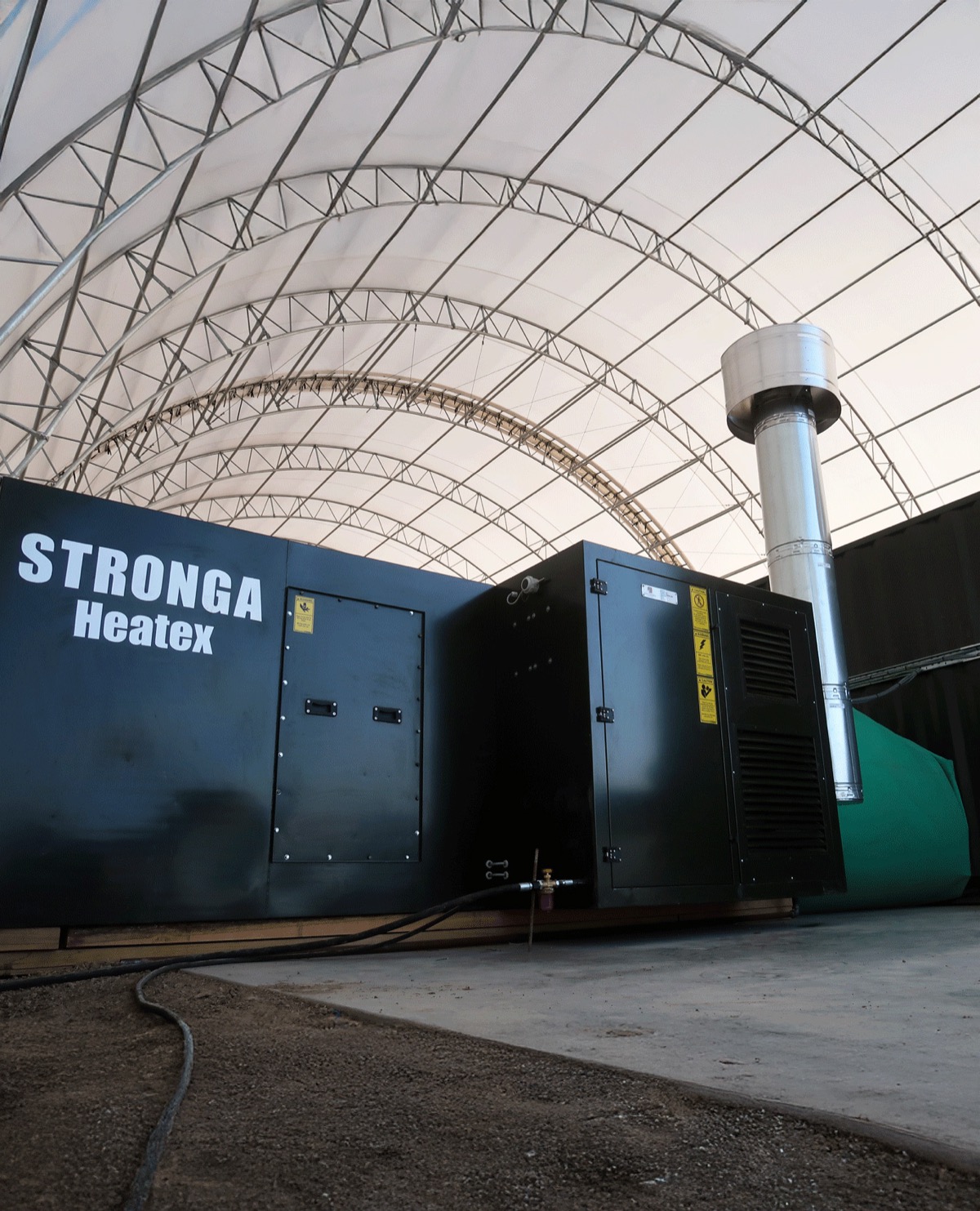
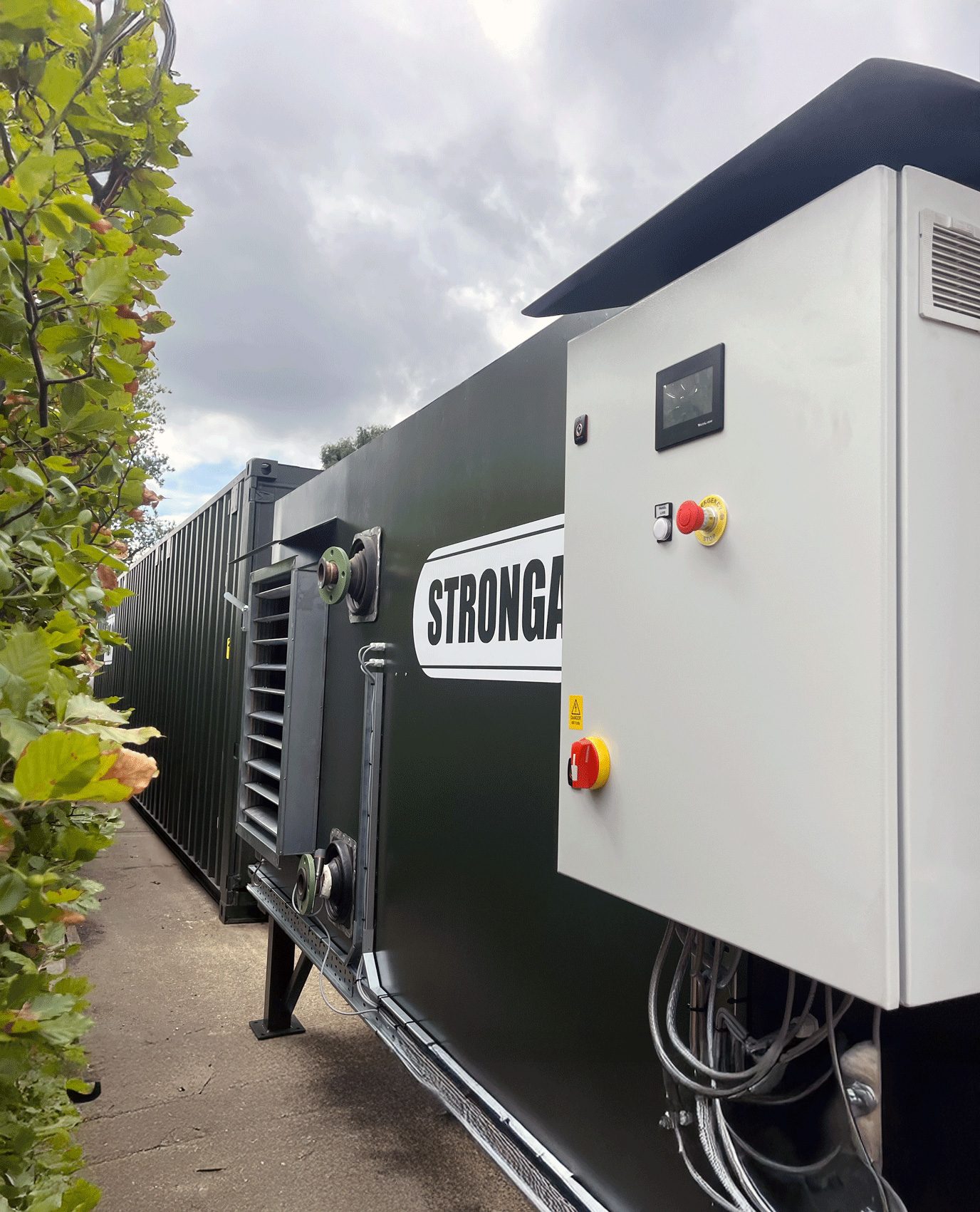
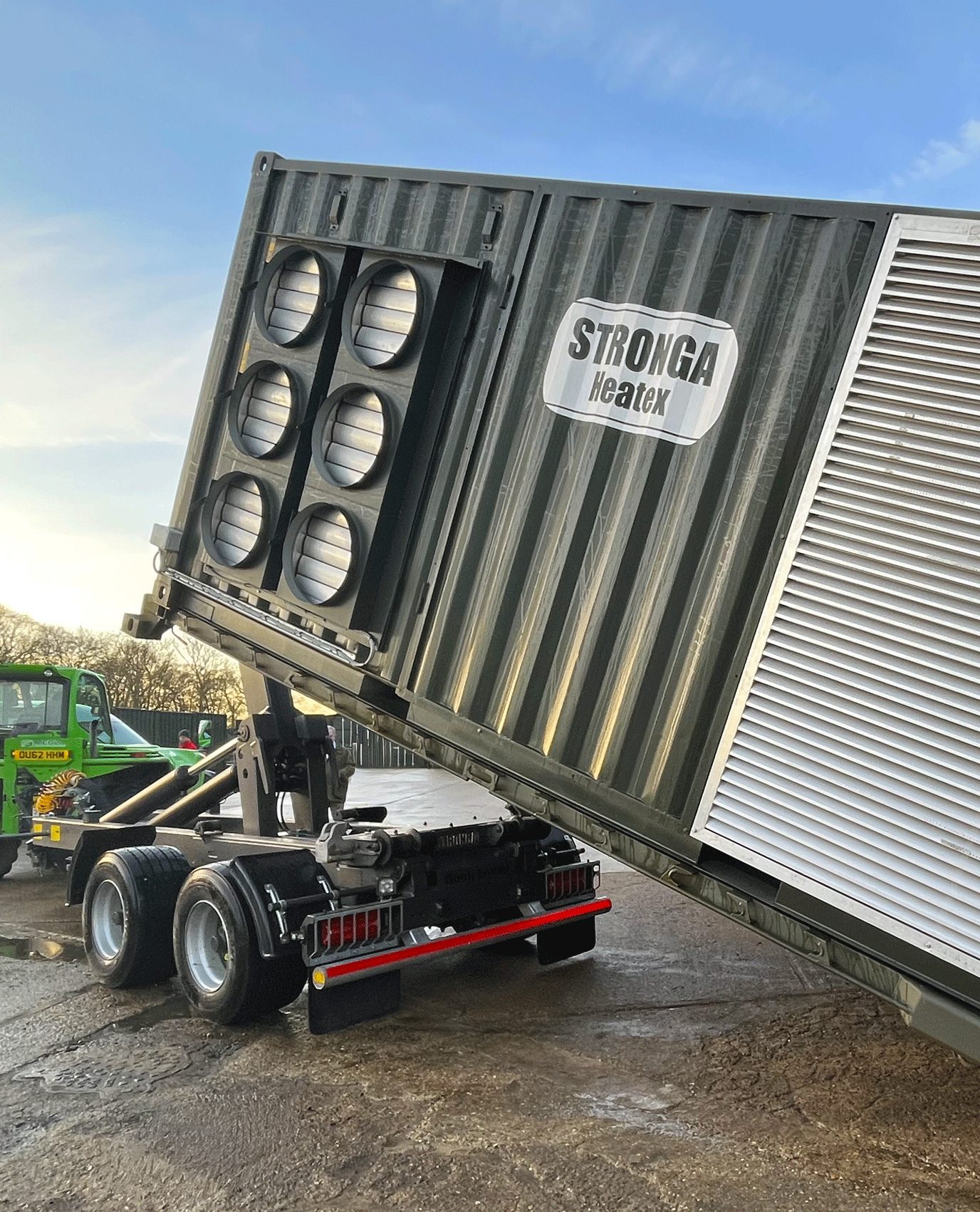
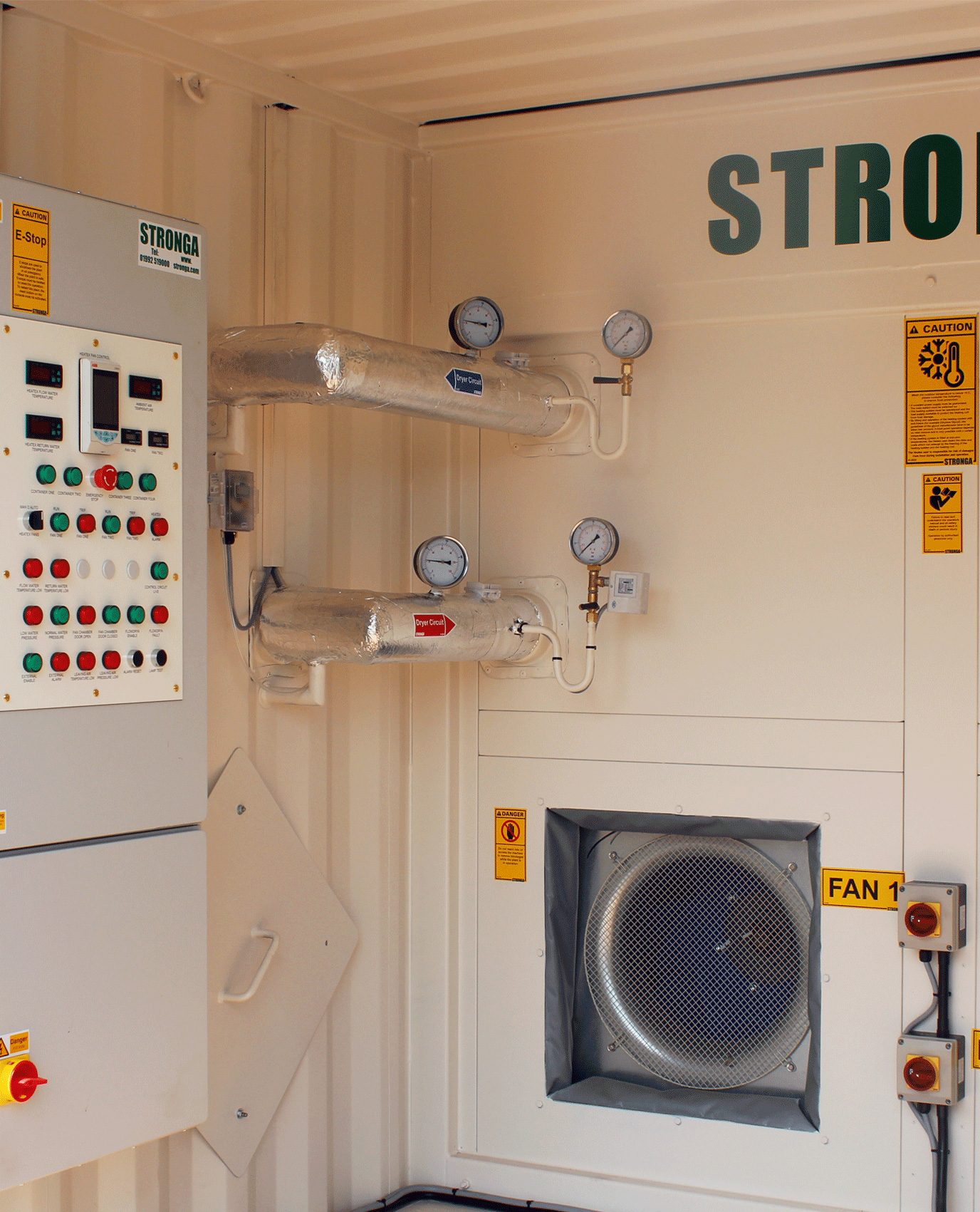
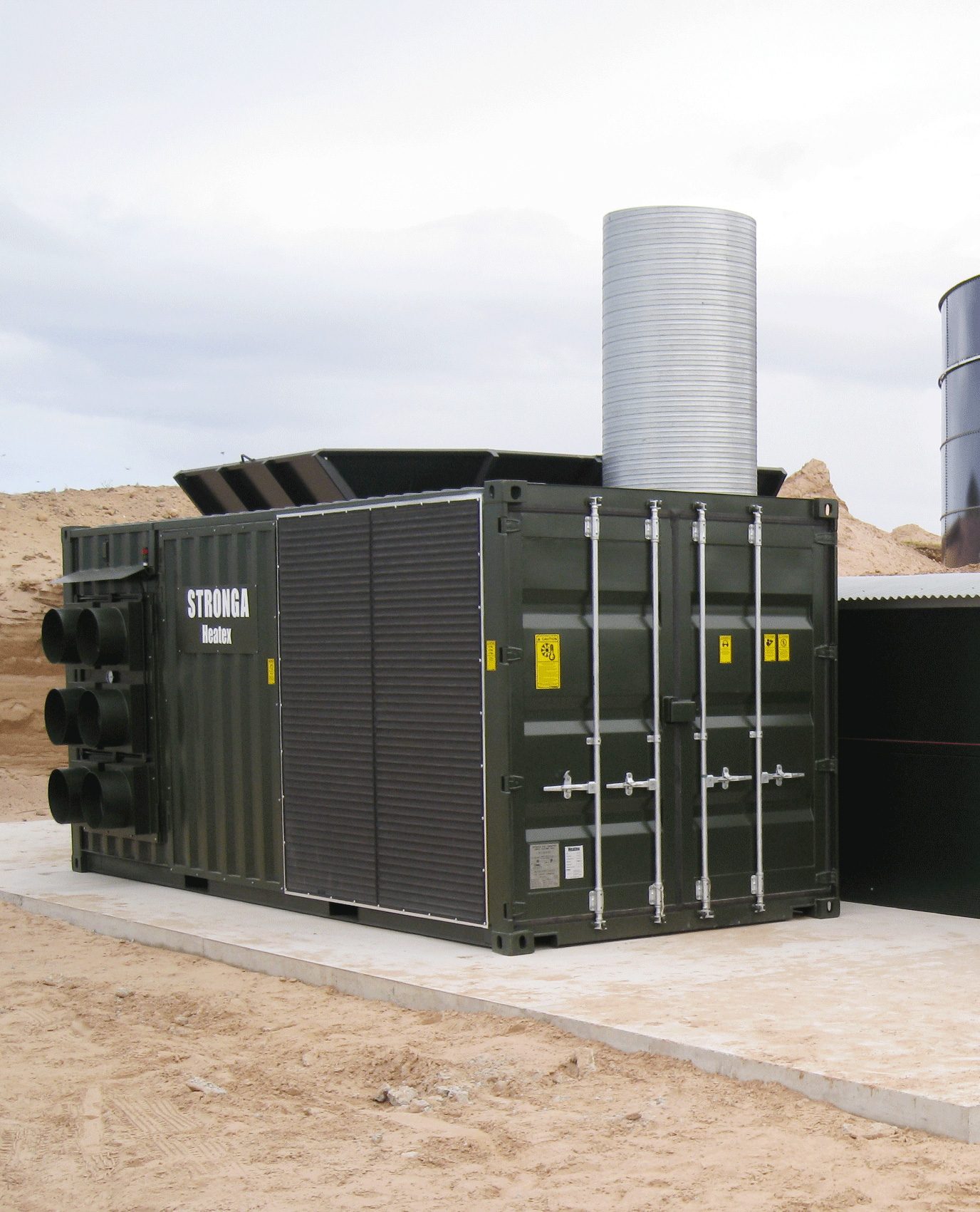
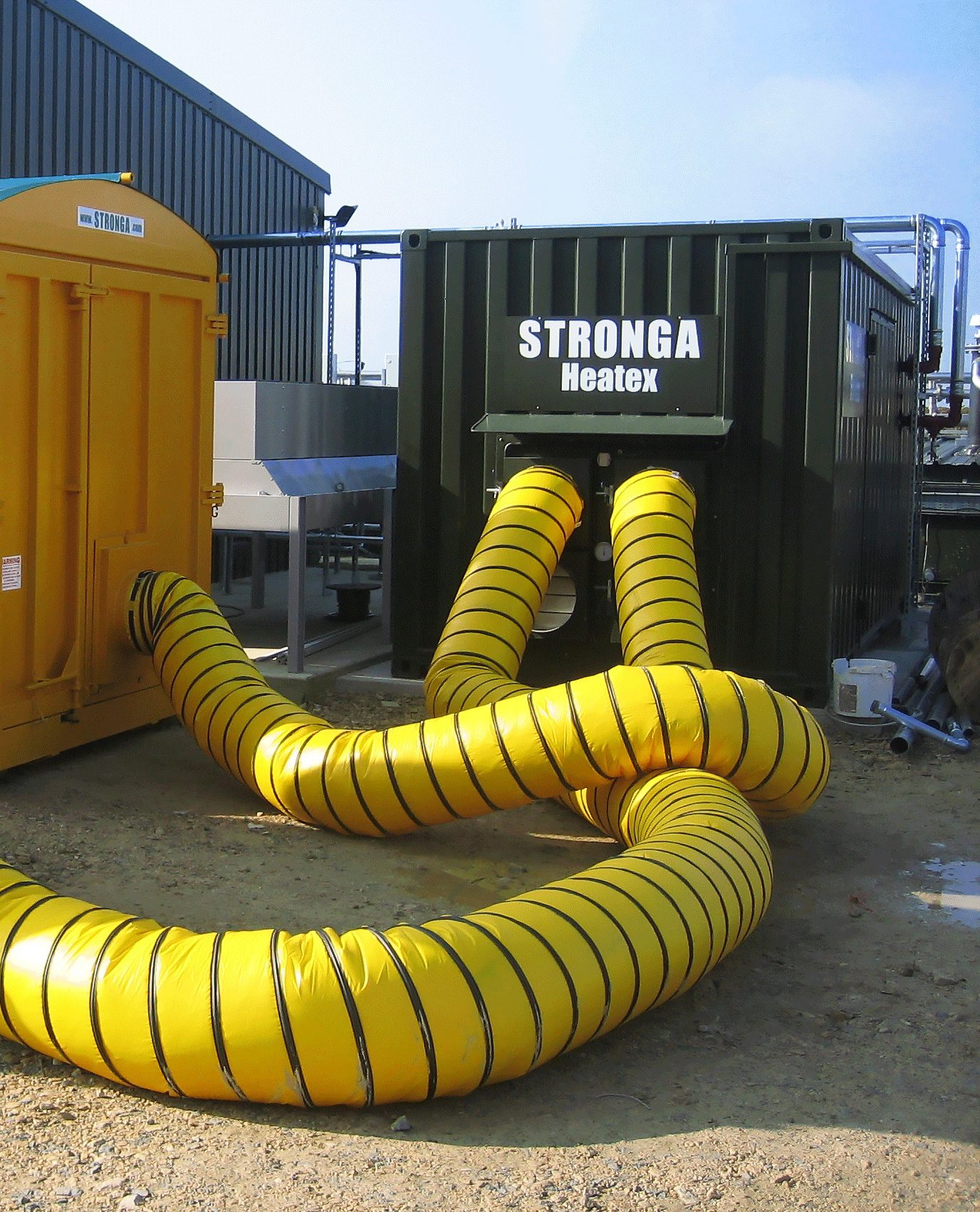
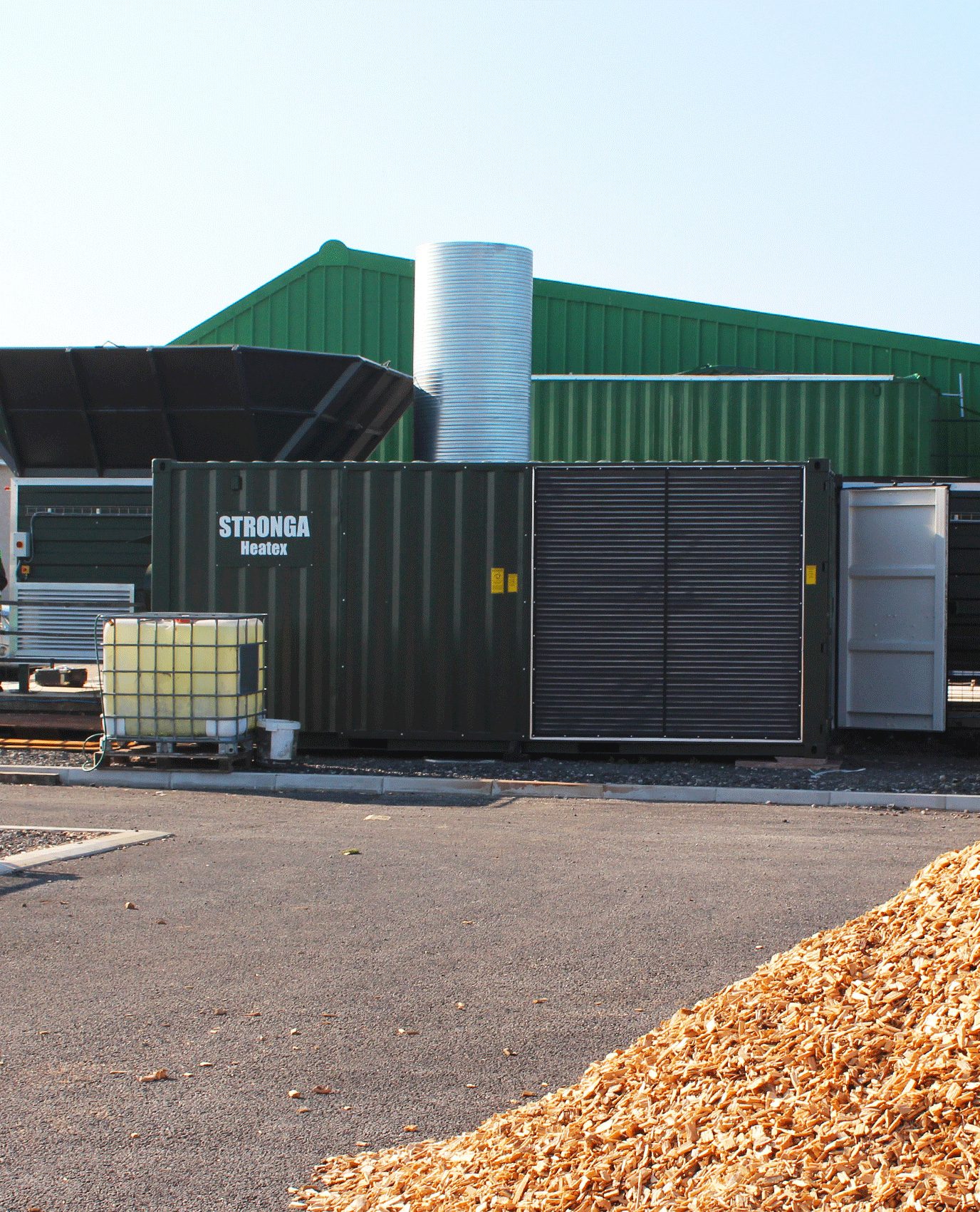
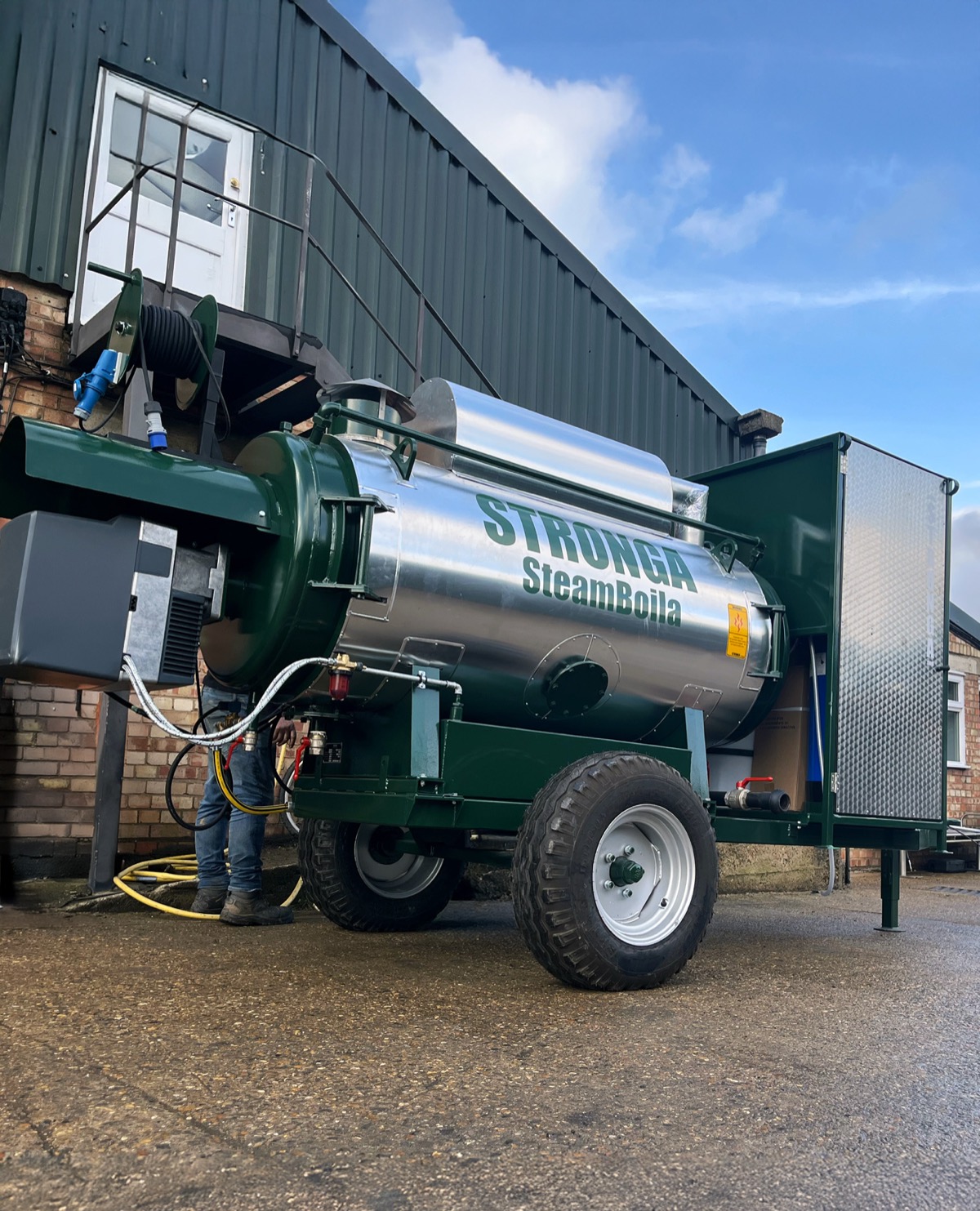
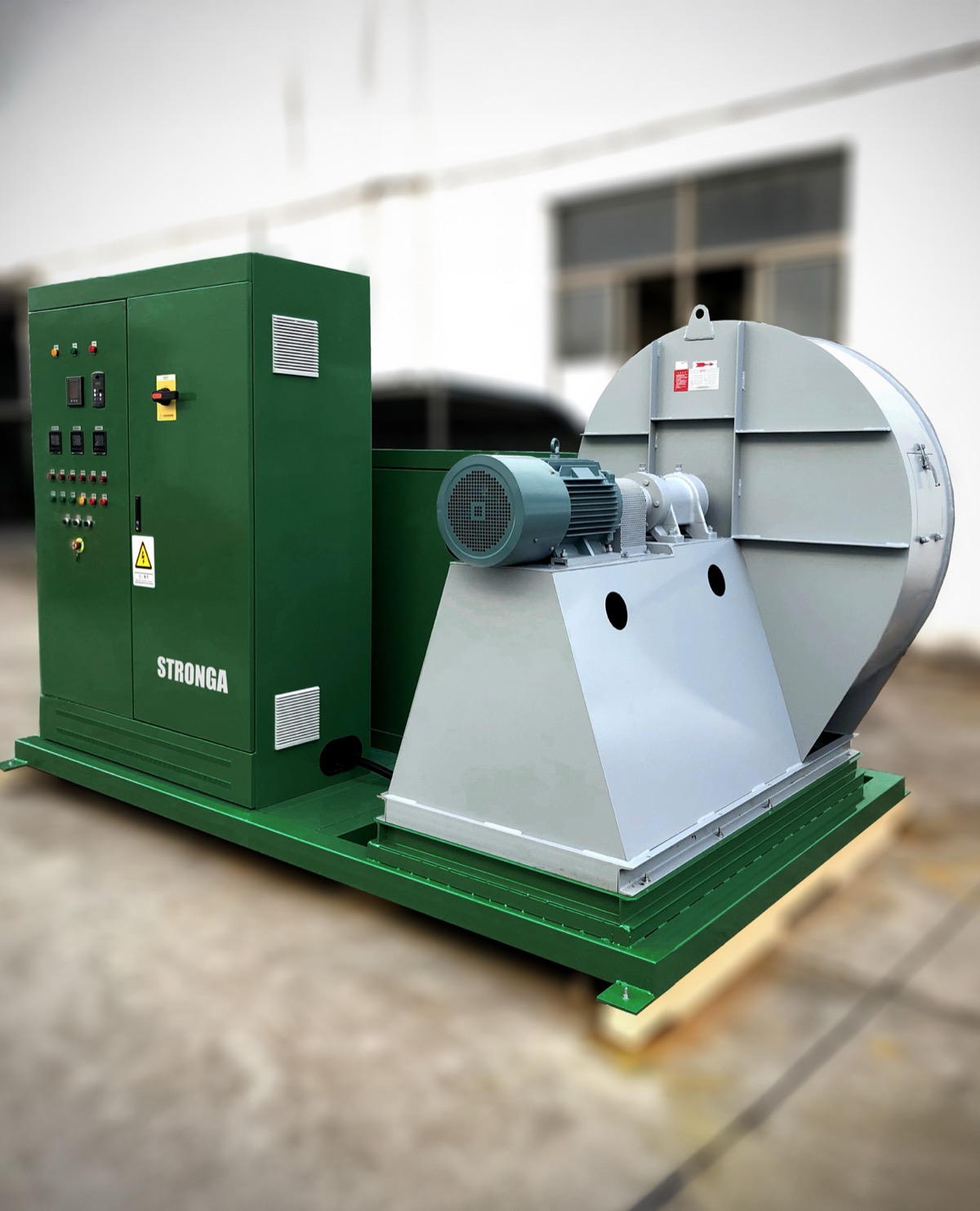
Intelligent Heat Utilisation
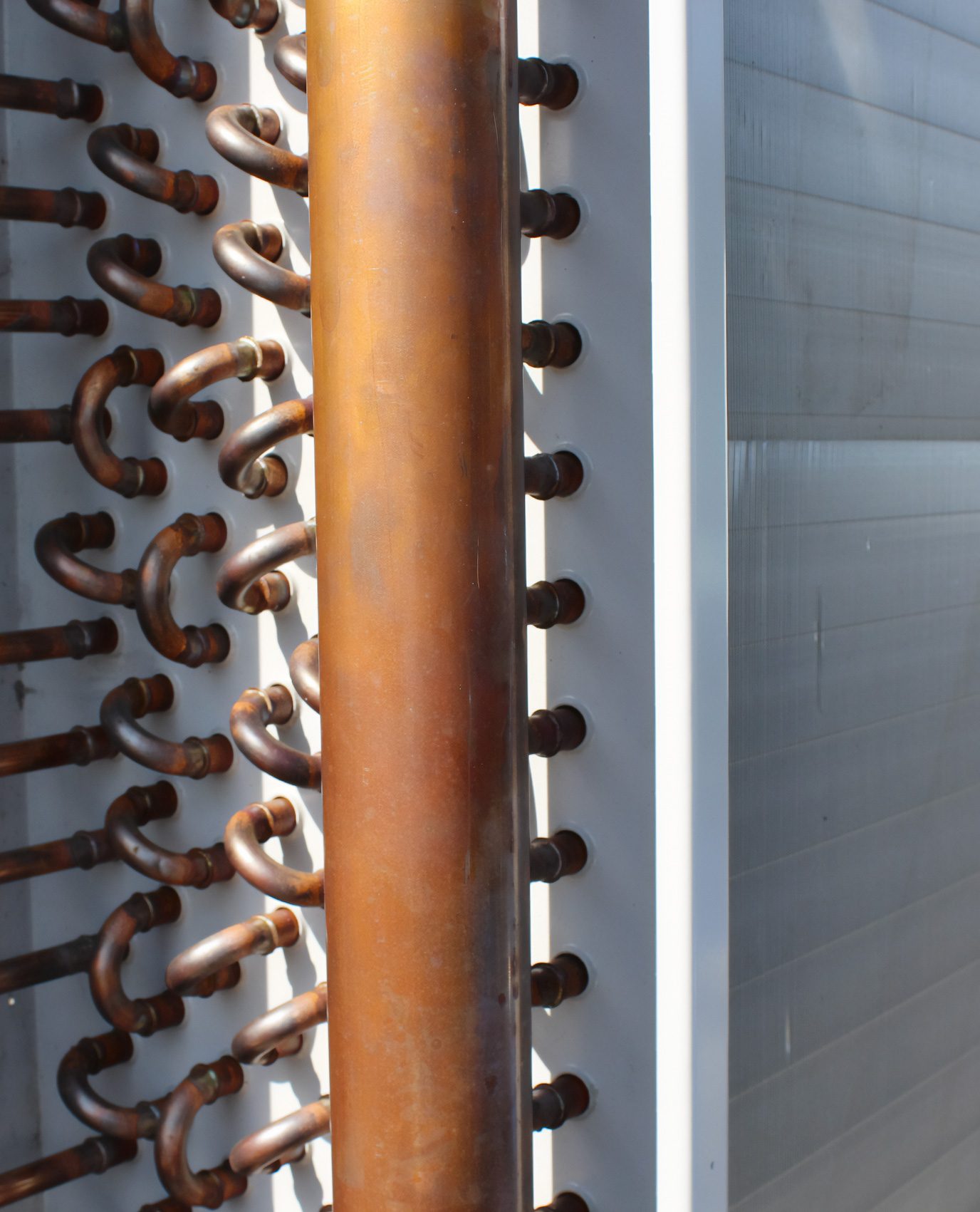
Heatex equipment offers the modular thermal energy interface for the FlowDrya, designed to convert a wide range of heat sources into clean, controlled, drying-quality airflow.
Rather than being limited to a single thermal medium, Heatex systems are engineered to accept heat in multiple forms — including hot water, steam, fuel-fired heat, and recovered process energy — and to deliver controlled-temperature drying airflow to the FlowDrya.
From 200kW plants to multi-MW operations, each Heatex installation is engineered as a project-specific solution, matching the client's available heat source, required air temperature, airflow volume, dryer scale, ambient conditions and more. In combination with FlowDrya, Heatex enables efficient and controlled drying of wood chips, sawdust, biomass fuels, agricultural products, and other air-permeable bulk materials. Discover the details.
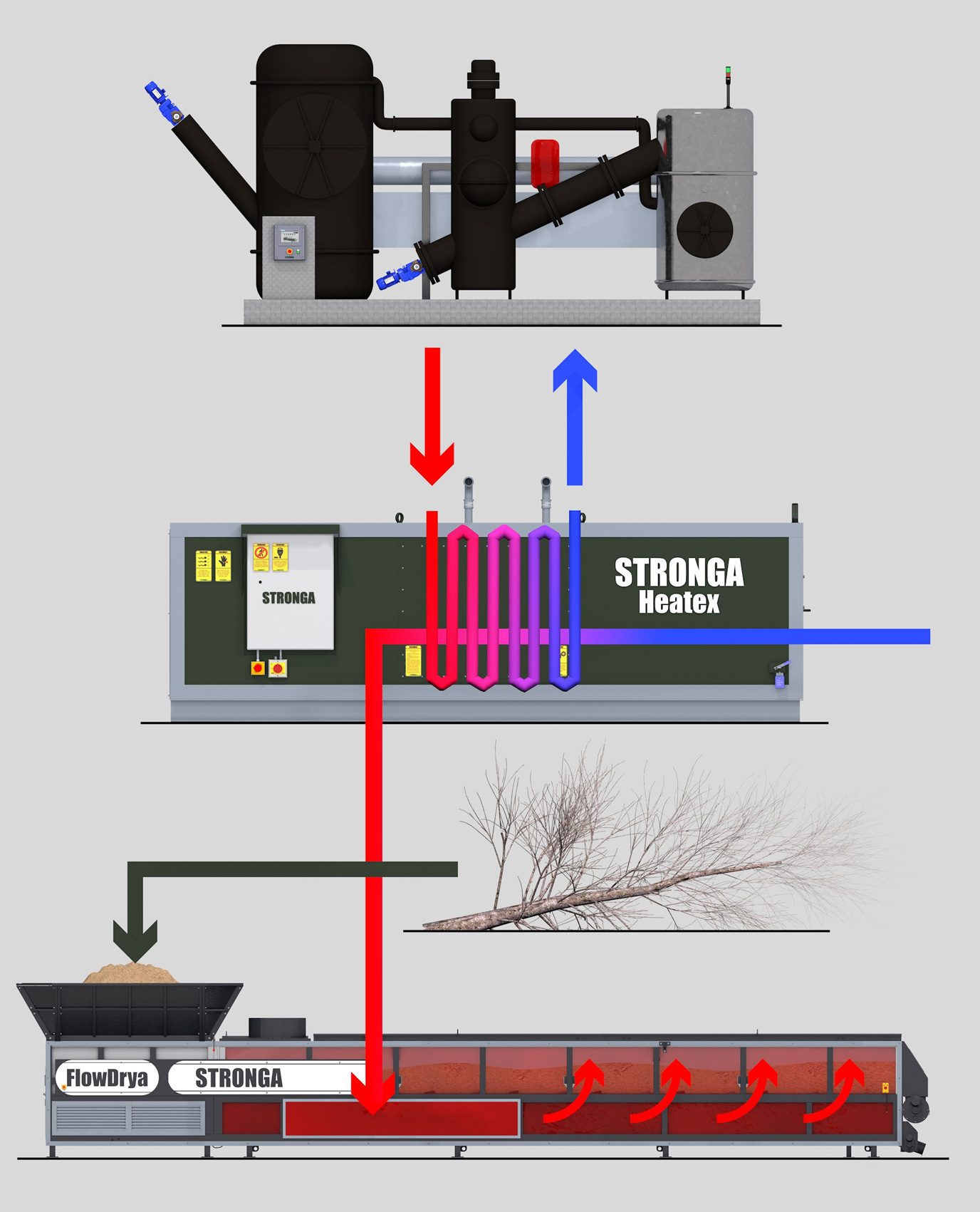
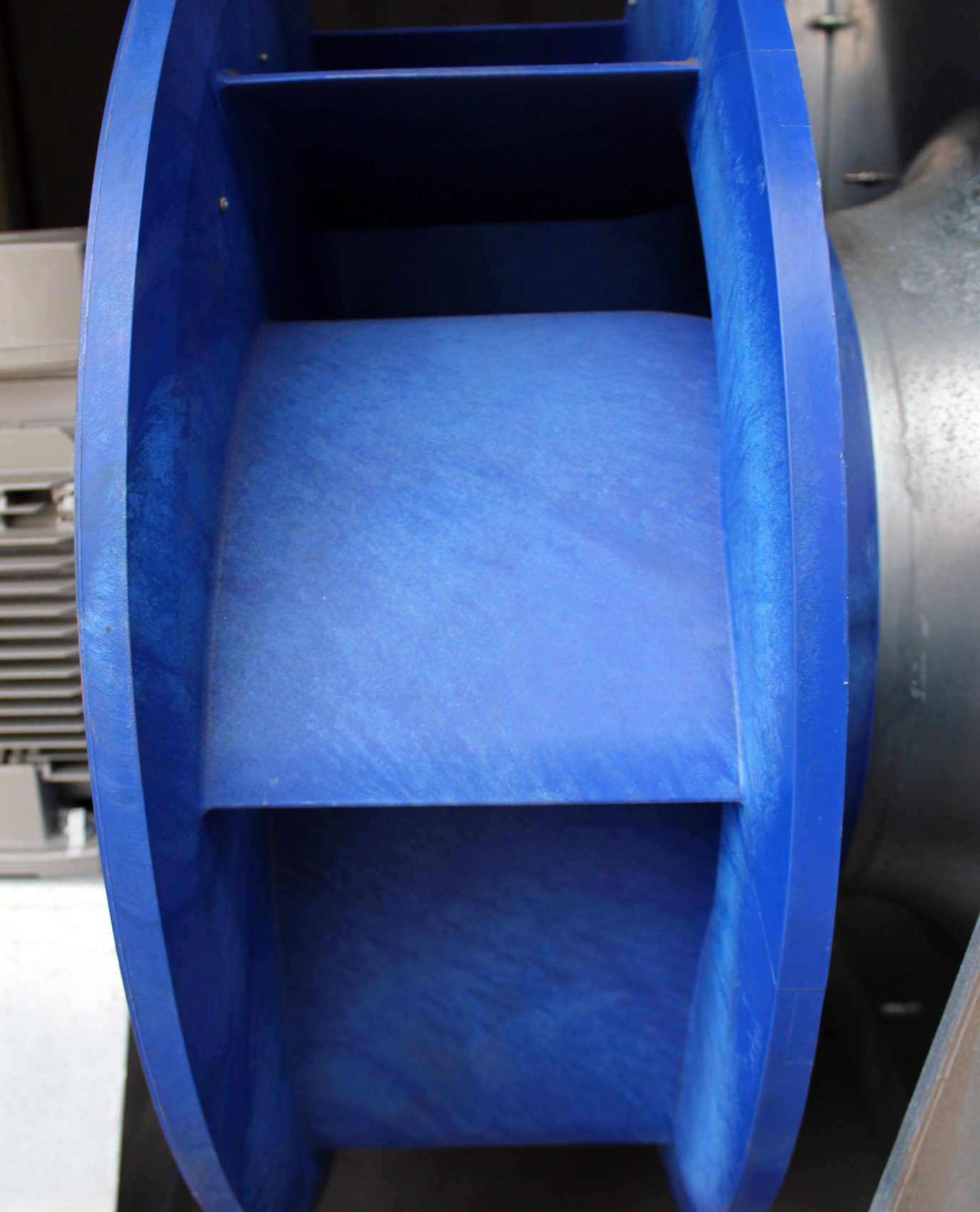
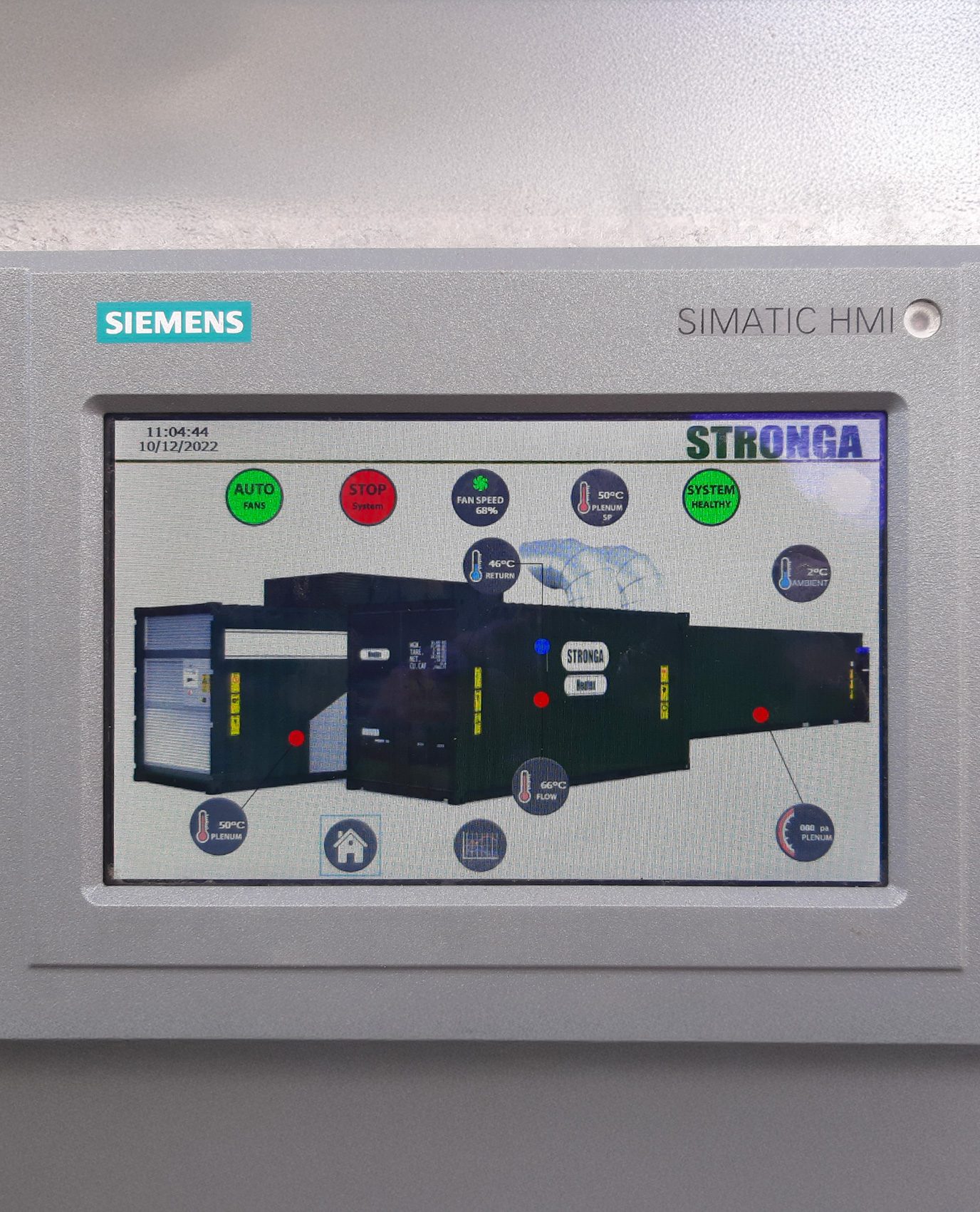
The effectiveness of a heat source for drying biomass materials is not only about the configuration of the boiler or burner — it is about how efficiently that heat energy is transferred through the material for evaporation. FlowDrya equipment features several components designed to optimise energy transfer…
Temperature-Range Potential
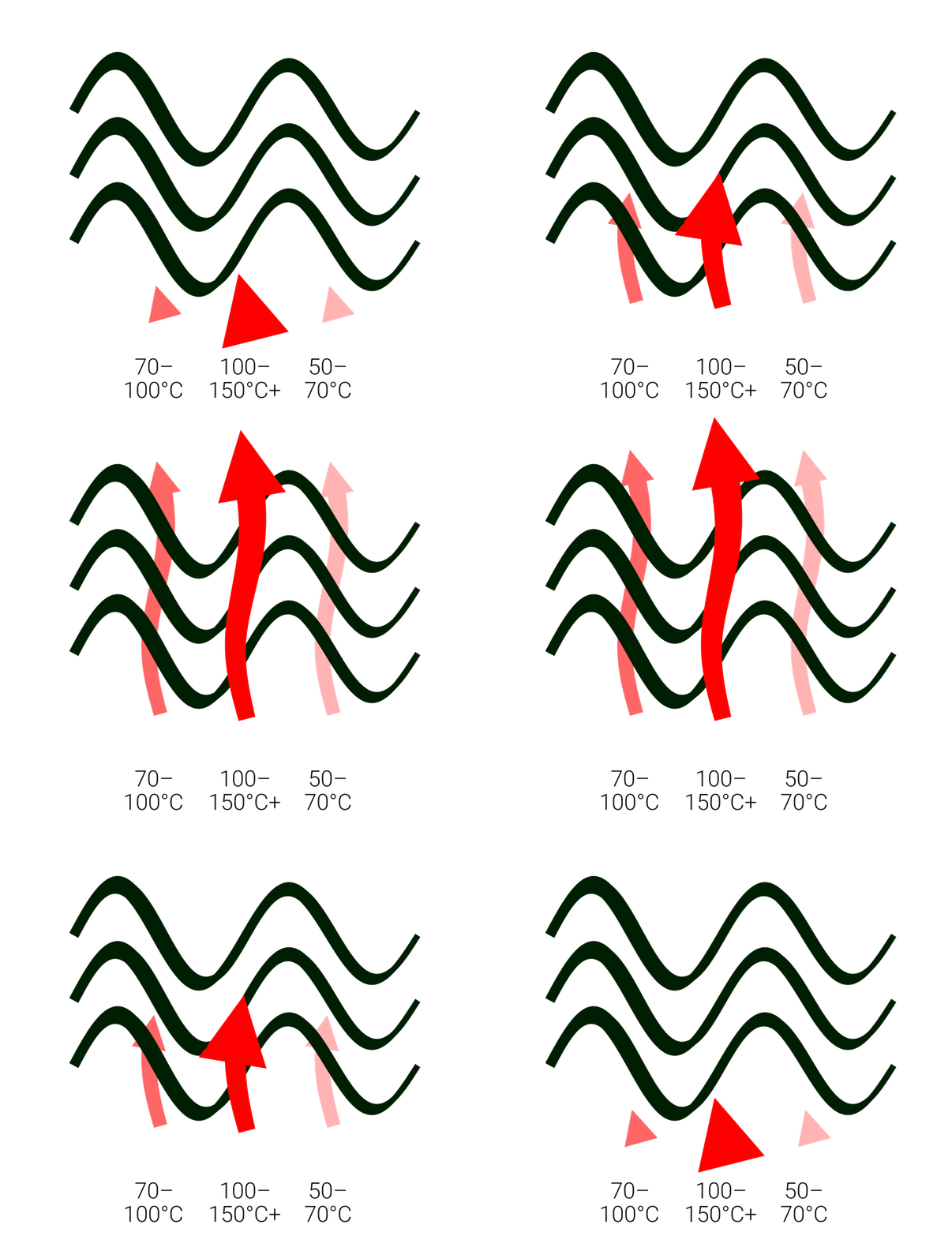
FlowDrya equipment supports a wide range of drying air temperatures, allowing optimisation of both energy efficiency and dryer throughput: Low-temperature drying (50–70°C); Mid-range-temperature drying (70–100°C); High-temperature drying (100–150°C+).
Lower temperatures deliver excellent energy efficiency but may limit m³ per hour while higher temperatures increase output but can reduce thermal efficiency beyond a certain point. These trade-offs are evaluated by our experienced design team, honestly and engineered correctly.
Sub-Floor Air Plenum
A full-width, full-length sub-floor air plenum manages air pressure and airflow direction across the overlying, perforated drying floor.
Optional internal baffles in the sub-floor plenum fine-tune air back pressure distribution and optimise airflow for the moisture profile of the material to be dried.
Air Intake Opening
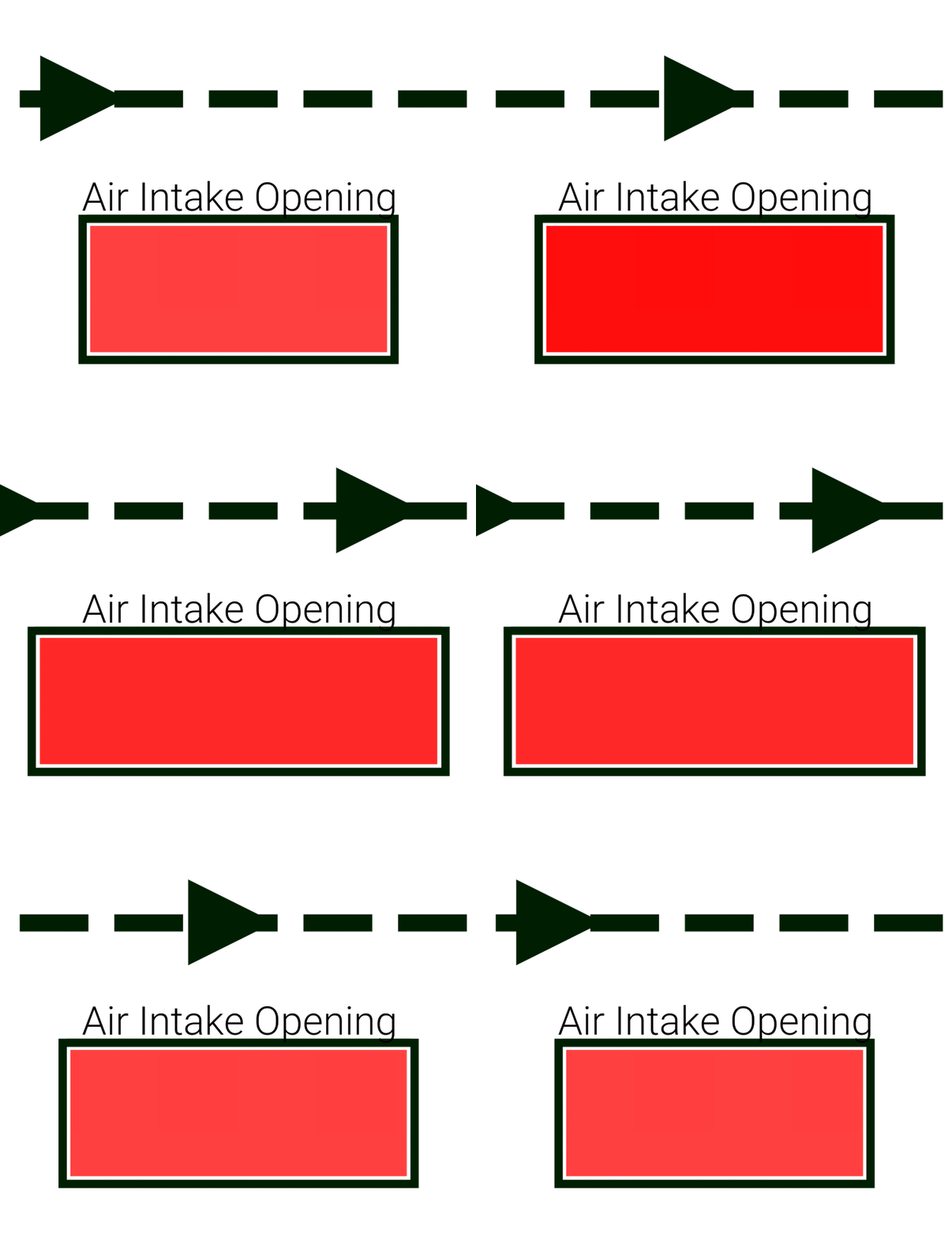
A large, variable-sized drying air intake opening allows high volumes of drying-quality air to enter the flow dryer sub-floor plenum at low-velocity air speeds.
The dryer air intake zone enables: reduced pressure losses; uniform airflow distribution within dedicated zones; more effective drying of dense and variable bulk-density materials.
Airflow Zoning: Wet vs Dry
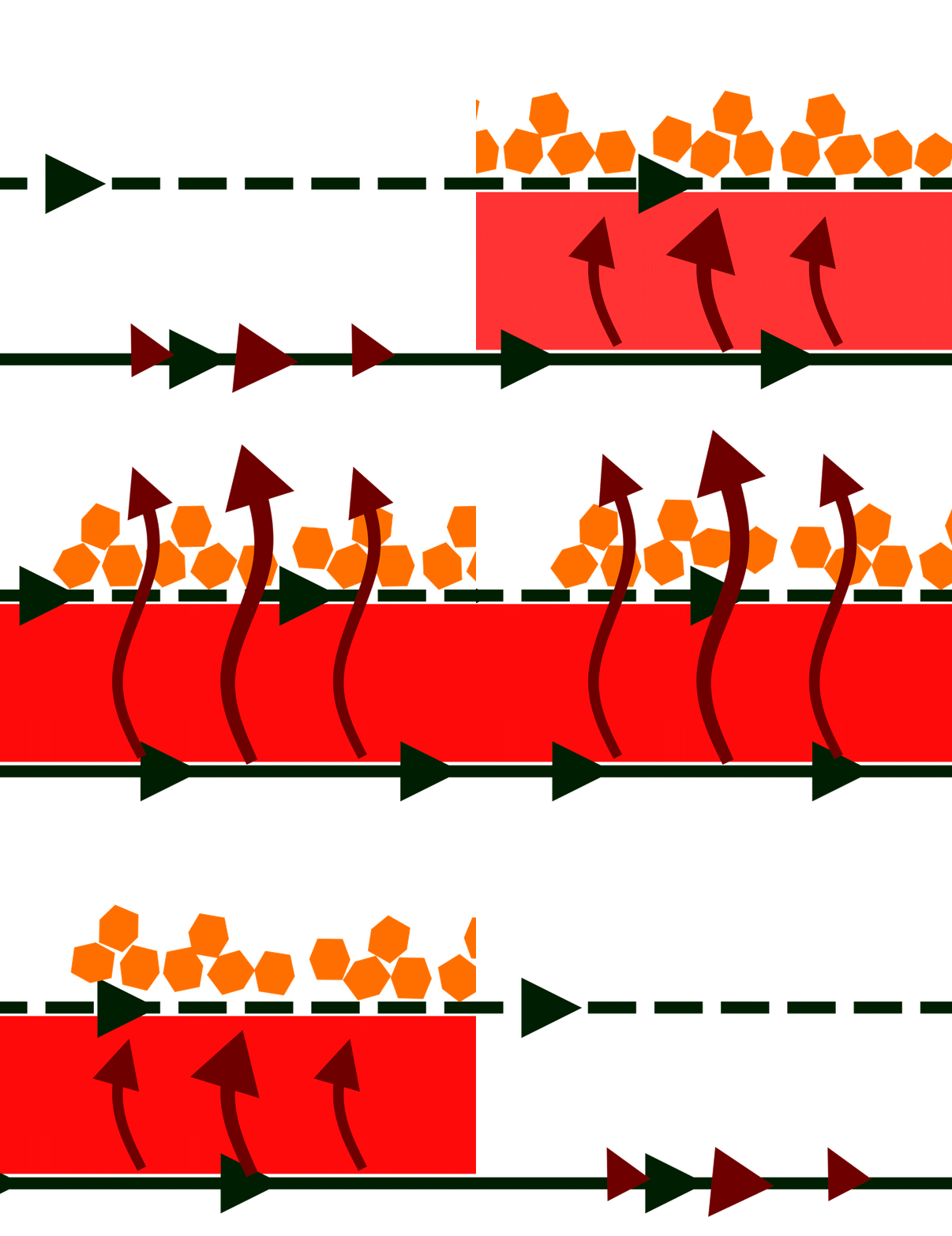
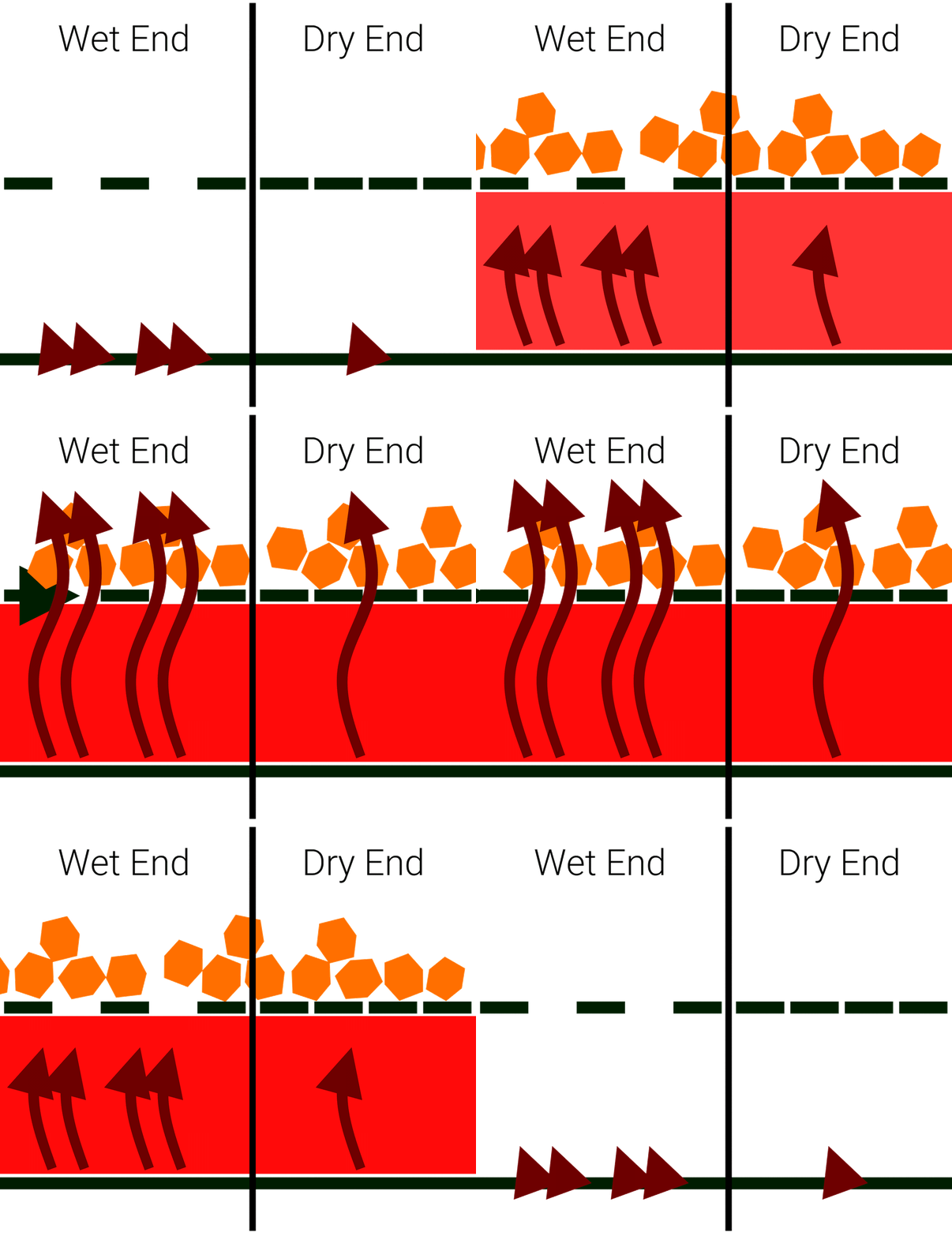
Through intelligent airflow zoning of the drying bed, optimised for each material, higher airflow and thermal energy is directed to the wetter end of the flow dryer with reduced drying airflow toward the dry discharge end.
The benefit is evaporation is maximised where it is most needed while thermal energy-efficiency in the biomass drying process is optimised.
Conductive Heating
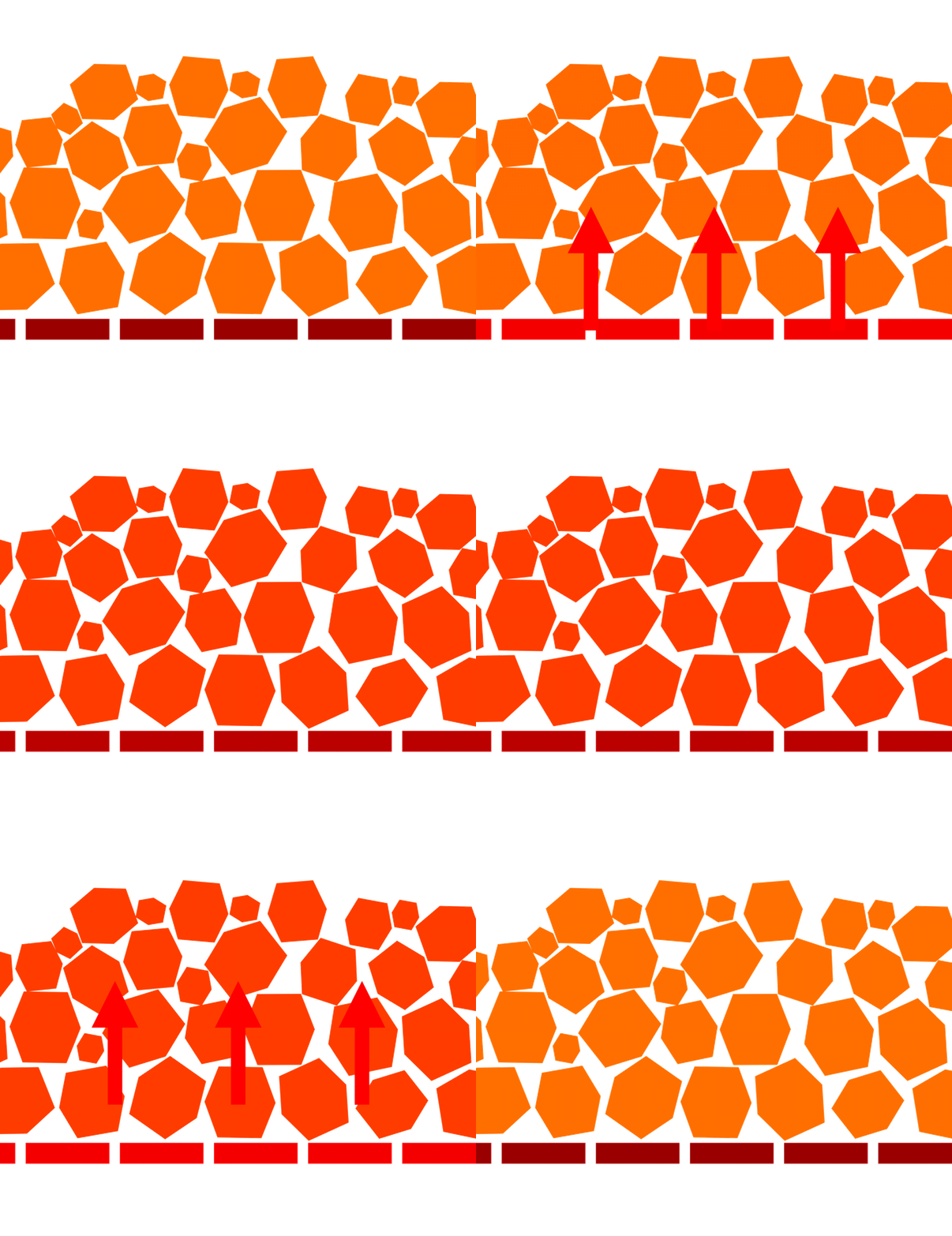
Thermal energy from the sub-floor plenum is conducted through the stainless-steel drying bed directly into the biomass material.
This rapidly brings the wet material up to evaporative temperature while maintaining uniform heat distribution in the material, even at deeper bed depths along the bed.
Convective Airflow
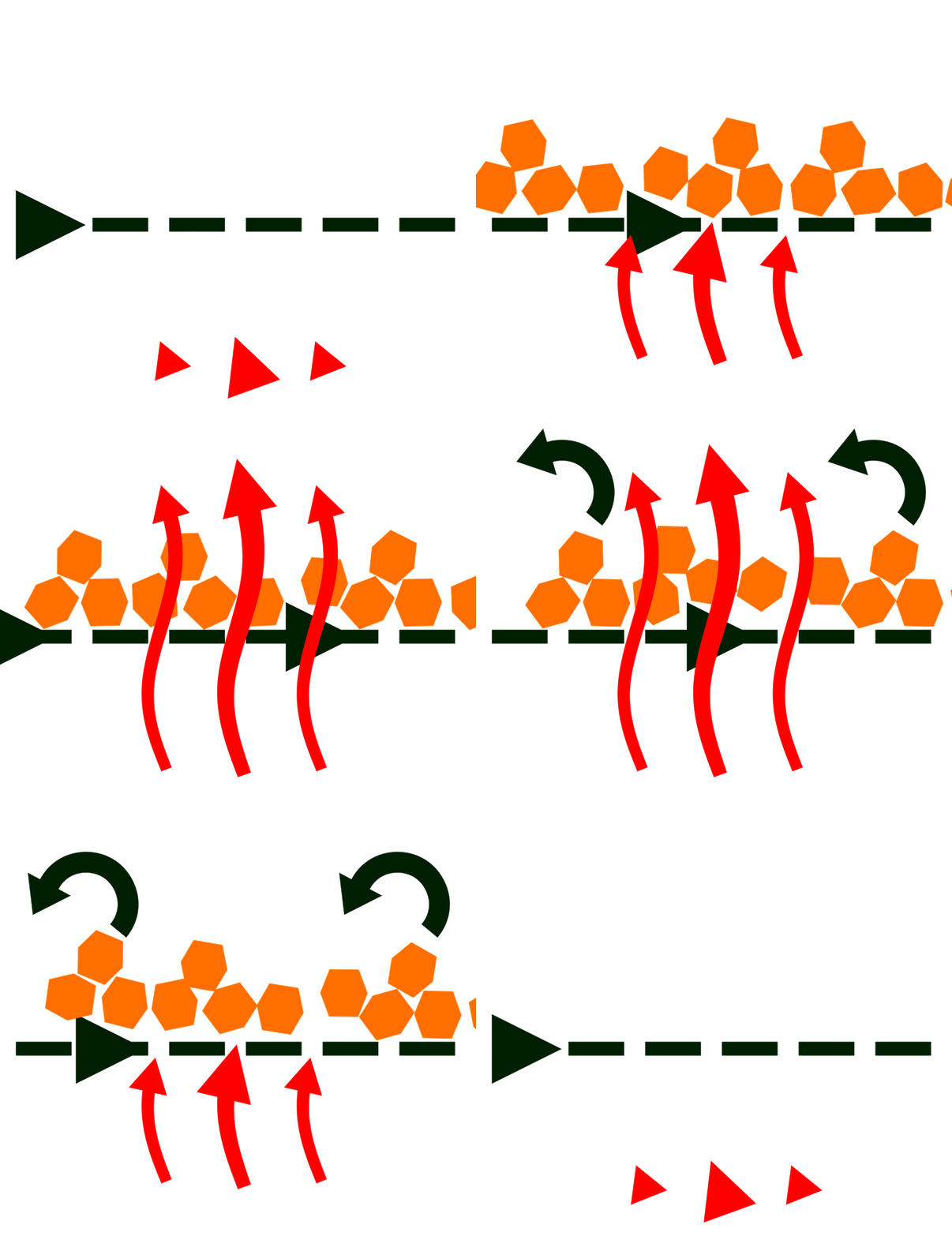
Heated air is pushed through a perforated, zoned drying floor, penetrating the full depth of the biomass load. Continuous agitation ensures every particle is exposed to drying air, preventing wet pockets or over-drying.
Compounding conductive and convective drying together: drying times are reduced; kWh-thermal per litre evaporated is minimised; output moisture content is consistent across the load.
Built on Real-World Experience
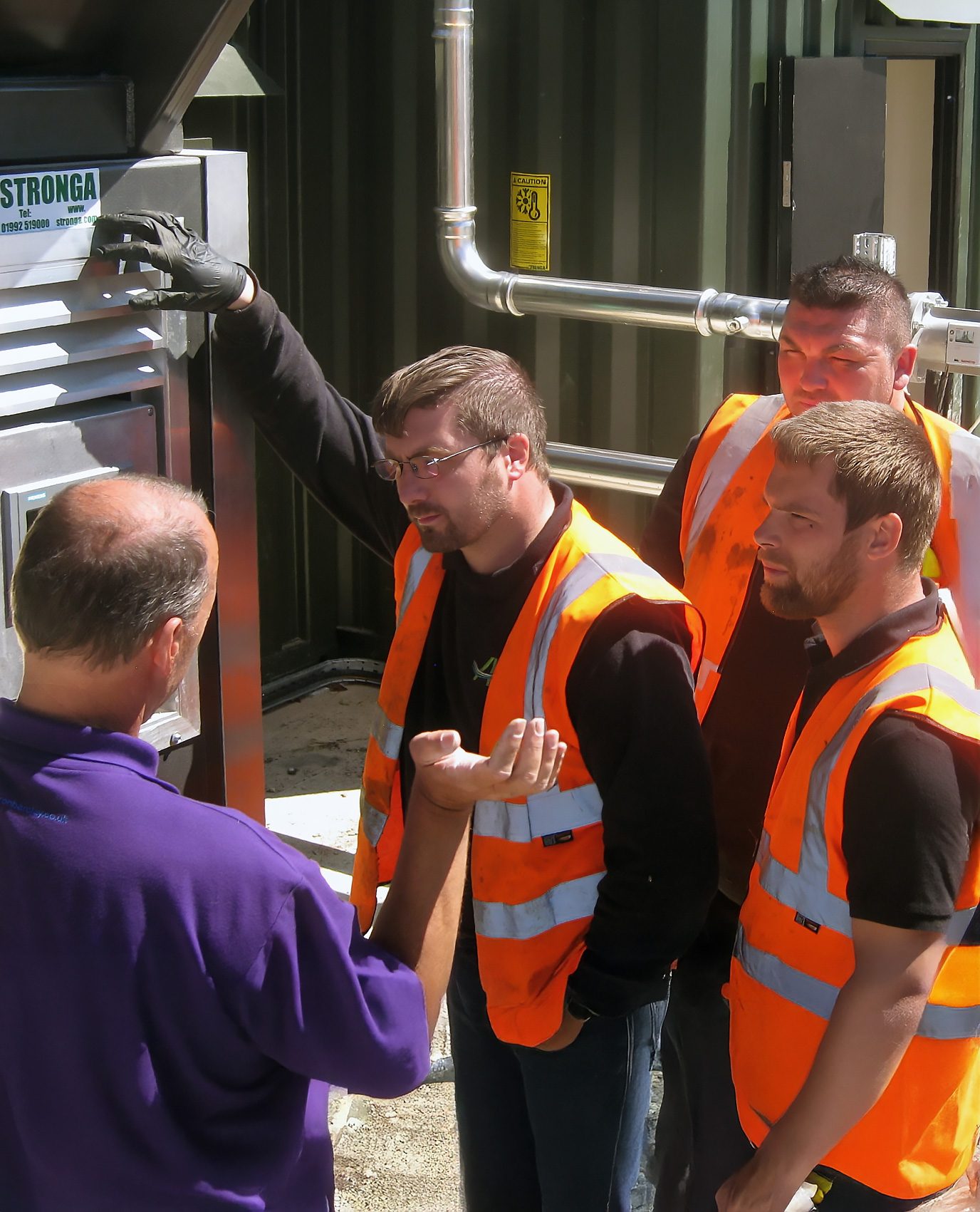
Choosing a dryer heat source is not just technical — it is a partnership decision made through collaboration between the customer and the experienced Stronga team. FlowDrya projects are shaped by:
• Clear communication and responsive engineering support • Technical honesty and transparent performance expectations • A problem-solving mindset focused on practical best-fit solutions • Strong operator empathy, safety culture, and long-term accountability • Hands-on experience with real materials — biomass, waste plastics, organics & more.
This approach ensures each FlowDrya installation delivers predictable performance, realistic operating costs, and long-term value — regardless of which thermal energy source is selected.
Because energy prices, materials, and operating constraints vary dramatically by location, there is no universal "best-case" heat source. The right answer is always project-specific. The Stronga team will help you evaluate your thermal energy source for dryers, match it to the correct dryer size and airflow profile, and convert available heat into maximum drying value — efficiently, reliably, and honestly.
FlowDrya Enquiry Form
Drying is a specialised and technically complex process. To ensure Stronga can progress your project efficiently and provide an accurate quotation for your drying equipment, we require specific information that will allow us to scale the solution to your exact needs. The questions below are those our technical team will cover during the consultation phase. Providing as much detail as possible at this stage will help us keep your project moving forward at best speed.
Ready to Start Your FlowDrya Journey?
Connect with our specialists to discuss your drying requirements. Whether you're drying wood chips, digestate, SRF or another material, we'll design a FlowDrya solution tailored to your needs.